
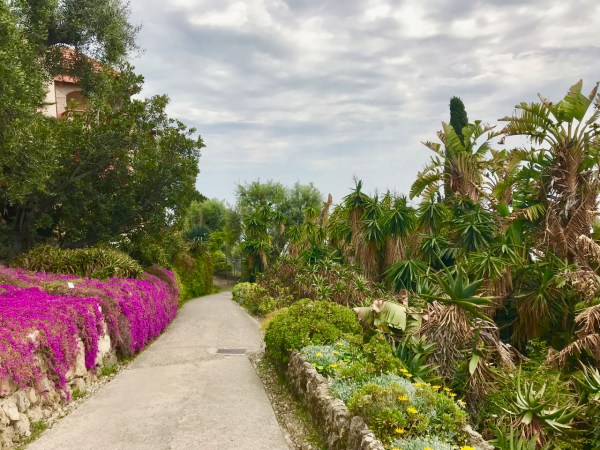
 When one is 35 years old and wishes to establish oneself, one can either join the entertaining society or one can entertain oneself by building a fine garden from scratch. In this garden it is not enough for the visitor to love flowers to see them; here one must climb down a height difference of 100 meters to see the end of the garden by the ocean – and another 100 m up again to exit by the gate. When deciding to establish themselves, Sir Thomas Hanbury and his brother Daniel did not choose a garden site with step-free access.
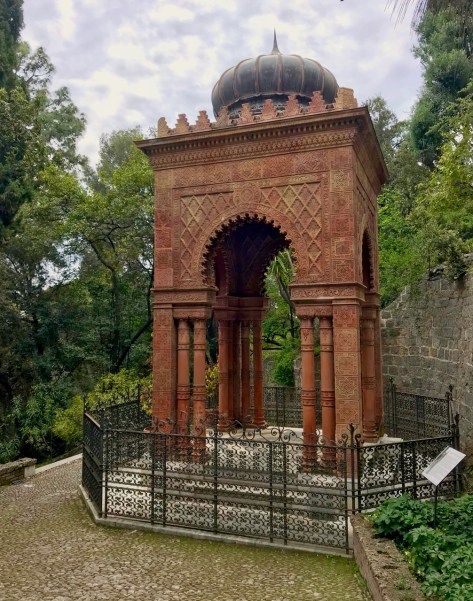 To compensate for the viewer’s labors, in the late 19th century the La Mortola garden was one of the most famous gardens in the world: nearly 6,000 different plants; many exotic and brought home from Asia by Sir Thomas himself.
The garden has been destroyed and reborn several times due to war and bad management. Today it is owned by the University of Genoa and is in better shape than it has been for decades. While it is lovely, and age has only made the buildings and structure more charming, I could not help but think that it lacks the more orderly feel of an English or German garden (Hanbury’s head gardener was German). Perhaps this slightly topsy-turvy current state befits a garden which after all is on Italian soil.
 (La Mortola, Italy; April 2018)
 The owner of this place must have been ambitious. And quirky: she had gazelles, monkeys, and a mongoose in her garden.
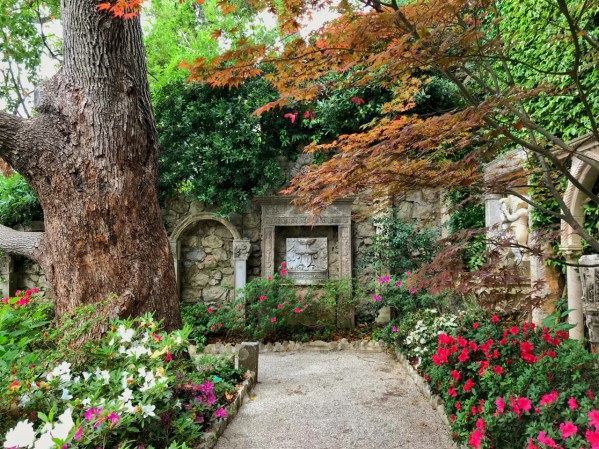 She was no angel either, because just as her husband, she liked gambling, too. Her gambling room in her pink (yes of course, pink) villa is quite something. And if she was not entertaining there, she was being entertained in a casino in Monaco.
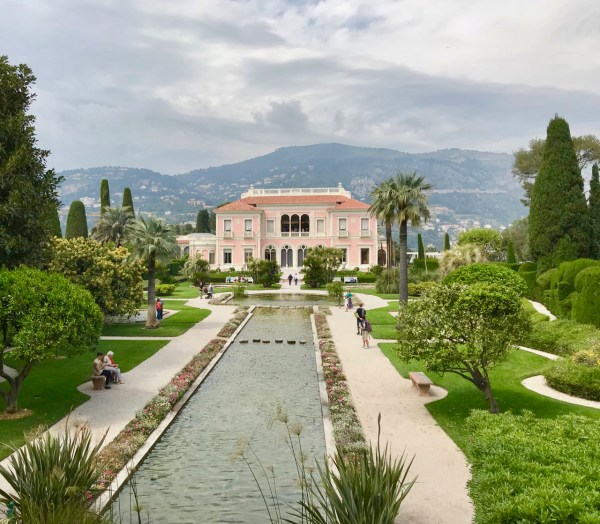 Béatrice Ephrussi de Rotschild lived the most extravagant life a divorced woman in the turn of the 19th century could. She commissioned an incredible villa and garden – not for herself but to see and to be seen. But was she happy? Perhaps she was in some ways. Women in those days found themselves unfit for any mold if they were divorced, unmarried, and wealthy. Perhaps she was shallow and happiest when entertaining. Or perhaps she felt lost in her role and happiest doing all the things she should not: play tennis, ride horseback on a man’s saddle, drive a car, and even fly a plane. Did she find meaning in her life? Perhaps. And at least one cannot blame her for not trying hard enough.
 (Cap Ferrat, France; April 2018)
 When I grow old I do not want to look at four walls. I do not want to become a person who is afraid to go out of the house. I do not want hospital food unless the hospital is my only option. When I grow old I do not want to endure long, dark winters. I do not care if I will remember things or not. Most likely I will not. That is fine, as that is how life goes sometimes.
 Saint-Jean-Cap-Ferrat: for those who have yachts to spare, or those who wish to take a lovely harborside stroll. The trick is to find parking, and most likely you won’t, so consider taking a bus here. While Nice and Monaco and the rest of the Riviera is becoming almost too developed, Cap Ferrat is still lush, with extravagant mansions hiding from view under much greenery and at cul-de-sacs. Because here one can pretend to be just anybody, many royalties and aristocracy have preferred this place. But who was (saint) Jean?
 (Cap Ferrat, France; April 2018)
 This blue marble