 As I stood by the DUMBO waterfront I tried to calculate how many people these huge boxy buildings on the opposite shore would contain, any given moment in time. This is the Manhattan skyline as as we know it. “As WE know it”. Because really, just 150 years ago it was like any old town. And just 500 years ago, when Europe was restless because of religious reformations against the Catholic church and Shakespeare wrote his famous plays, Manhattan was mostly swampland. With mosquitoes.
Times Square was a crossing of two rivers and a beaver pond. There were salt marshes and grasslands and forests, all home to turkeys, beavers, elk, and those mosquitoes. The area holding up the skyscrapers I was looking at was sea floor (much of lower Manhattan is landfill). This is the real New York. If this is news to you you might like this excellent article by the National Geographic.
My view of Manhattan is a fart in the history of time. Quickly formed, possibly also not very durable. And yet this is the “iconic” New York “we all know”. Hudson, visiting in 1609, knew the beavers. I doubt city kids today know beavers from anything else than school books (sorry, educational internet websites).
Were do New Yorkers go to rewild? Is Central Park enough or does one have to leave this once so lush and bountiful island?
Lower photo humbly borrowed from “Before New York”, National Geographic, September 2009
(New York, USA; April 2019)

 Swoosh: across the Alps and into a way-too-fancy airport hotel where I spent a good 6 hours in a meeting. All I truly experienced of Italy was the sveltering heat outside and a plate of penne all’arabbiata.
 The prettiest work meeting location. Lots of energy for performance indeed. Why do I not conduct walking meetings much more often? As my primary office (aside from home-office) is in London, I should really try to remember the beautiful little park we have across the street.
 As with everything in society, there are cemeteries that are more trendy than others. Cemeteries that are elite and attract many notable people, and celebrities wishing to be notable. In the case of such cemeteries, to be cool one unfortunately has to be dead and buried. This is how it is at Assistens Cemetery in Copenhagen: the list of poets, philosophers, American jazz musicians (?!) and scientists buried here is long.
  If you are into grave-sightseeing (really!), two notable graves on your list should be Hans Christian Andersen, the man behind the fairytales The Little Mermaid and The Emperor’s New Clothes; and Soren Kierkegaard, the man behind existentialism.
  If you are just into strolling and picnics, a basket of delicious goodies and lots of time is recommended. And no, it is not morbid to have a picnic here – people do it all the time. When the cemetery was first built, 250 years ago, it was so far from the city center that people probably made a picnic out of the trip anyway.
 (Assistens Cemetery, Copenhagen, Denmark; June 2019)
 A weekend in Finland: summer sun, an idyllic little ironworks village, and bluegrass music. In the style of our family we arrived five minutes before the last gig ended. Oh well, we can still claim we attended the bluegrass festival at the ironworks. Even if it was mainly for a stroll and an ice cream in the sun.
 For nearly a year these perfect picnic spots have been mine to explore while traipsing around the backs of my little home town. There never was a picnic, though, and I never saw anyone else on a picnic, either. Perhaps because of the shockingly high number of ticks in any grass around here: if I just sit in it for a while I can count the black dots crawling my legs.
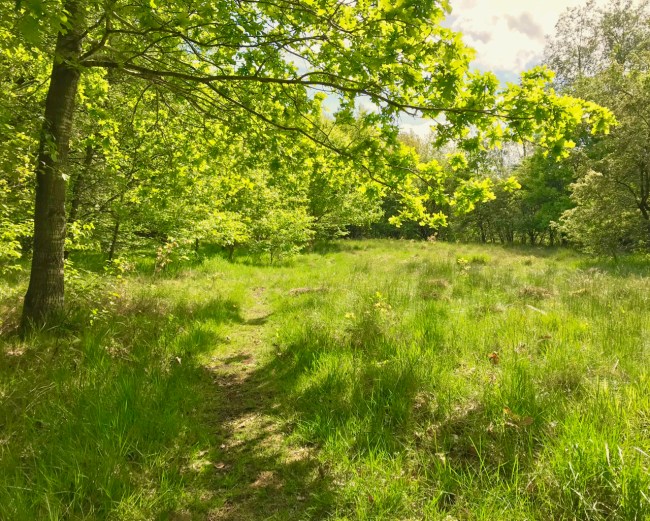 The boxes have been nearly packed and in a week’s time it is time to open the door in a new apartment in a proper town. Hopefully it is also time to open the door to new friends and hobbies nearby.
 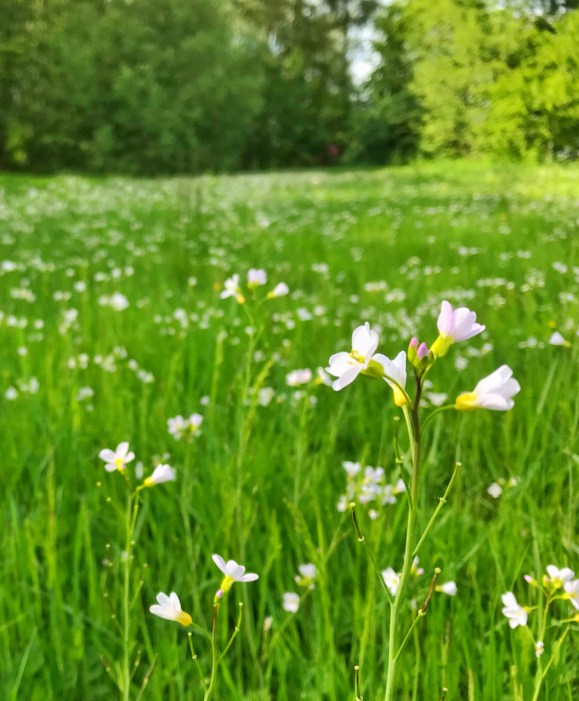 (Brande, Denmark; June 2019)
 This watermelon has nearly no seeds, a very thin rind, and barely any green flesh at the edges. Seedless watermelons exist – and who knows when one might run into an almost rindless watermelon in the grocery store?

 One random wing shot in my smartphone camera roll. I cannot remember where I was going, or where I came from. Helsinki, Copenhagen, Billund, London, Stockholm – could be any of them.
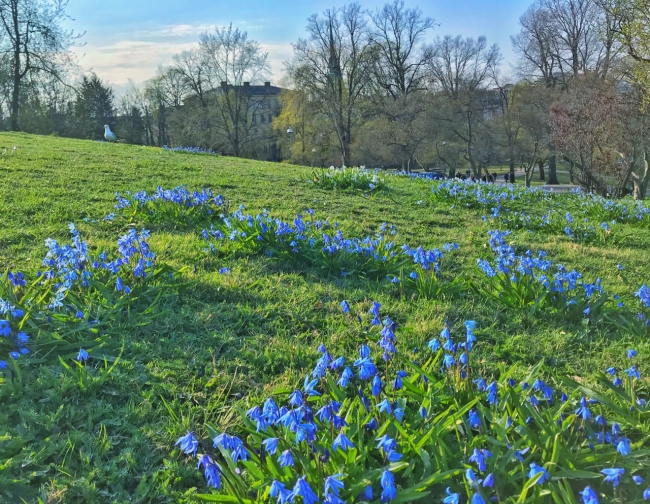 Spring in Helsinki means carpets of blue scilla. Someone must have started importing these plants from the Middle East and Caucasus, and now they claim their own space in every garden and park.
 In my hotel room there is an old aerial map of the London docklands, the way they were when the Port of London was the largest port in the entire world. The Thames river winds across the land, out to the sea, and Londoners built basins between the zigzags of the river. In the late 19th century dozens of docks, basins, and ponds created a mosaic map with exotic names such as Lavender Dock, East India Dock, and Canada Pond.
 This blue marble