
 Right out there, outside of Kotka, a huge sea battle raged in 1790. Swedish forces sank 80 Russian ships, even if Sweden was severely outnumbered. It was the largest naval battle in the history of the Baltic Sea. It was also caused by a king who wanted to prove himself to be as great as the past kings he admired so much – and to shift the attention away from the problems he had in his own country.
In order to reclaim Finnish territories now in the hands of Russia, king Gustav III decided to go to war against his own cousin, Catherine the Great of Russia. Why not? Surely kings of the past used to do that all the time. Well, Catherine beat the poop out of Gustav’s army outside of Kotka the first time around, in 1789.  In 1790, Catherine was probably furious, preparing to put down her cousin for good. But the wind blew up from the wrong direction, the waters were shallow and underwater rocks were strewn everywhere. Over 7,000 men died for her, compared to the much smaller loss of around 600 Swedish men.
As I am not a historian, I cannot quite understand what was gained by any party in this battle. The borders were returned as they were, and even after this great victory, Gustav III’s grand plans never advanced far enough to recapture the lost Finnish territories. His few small attempts were beat down by his cousin. Perhaps both parties were reeling from shock so much that they gave up? The tip of Kotka is now a beautiful maritime park, with gardens, sheep, picnic grounds, and an ice cream stand which always has a long line during sunny days. And it is difficult to imagine the countless ships, cannons, and human bones lying on the bottom of the sea, where it not for the soldier-like ship timber erected by the waterfront as a memorial for the (arguably quite meaningless) great battle.
 (Kotka, Finland; July 2020)
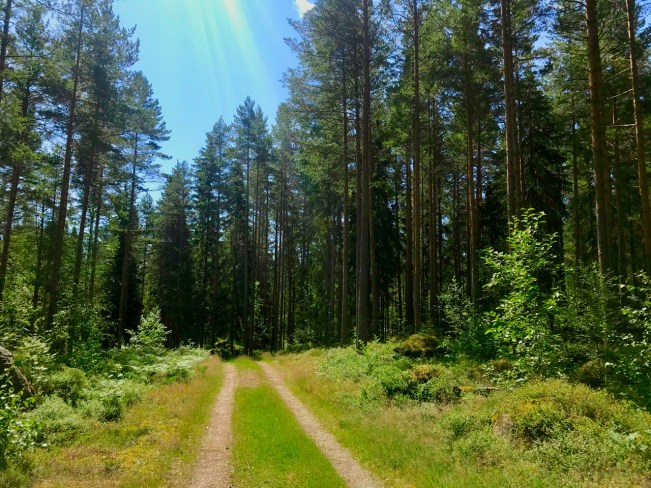 Shinrin-yoku, or forest-bathing, every day. The Japanese prefer slow mindful sauntering instead of aerobic hiking. As a form of nature therapy, shinrin-yoku means not only crossing through a wood, but bathing in it: letting it fill one’s lungs, ears, nose, and eyes. It means not talking or listening to music, but listening to the birds, the grasshoppers, and the wind in the trees. And it means wandering off the path to caress the warm, dry bark of a tree, just because it feels like the best thing to do at the moment.
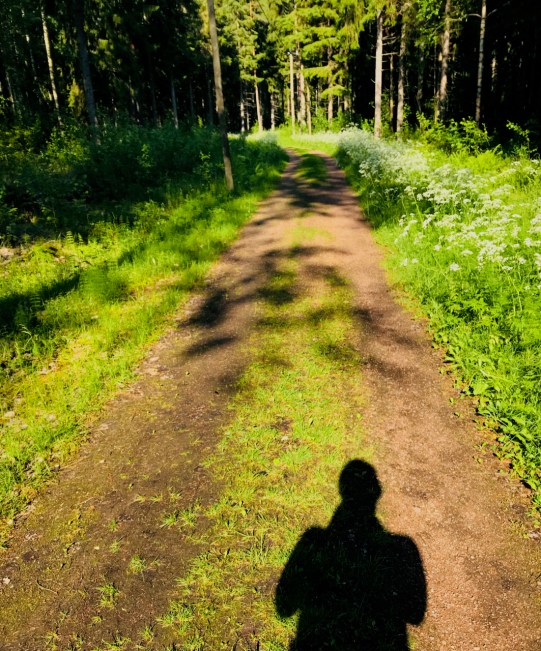 That is why forest-bathing is best done alone. And while I like to alternate between running and walking through the forests in Loviisa, I still do it every day. And I come out from the forest feeling very centered and alive.
 (Loviisa and Kotka, Finland; June 2020)
 My home office for the rest of June. Hot, humid, and a bit overgrown. Emails and surfing are to be managed on a cellphone hotspot, and video conferences to be taken from the porch of my parents’ house, in self-isolation from them for the first 2 weeks.
 (Loviisa, Finland; June 2020)
 I have not been grounded for as long as 3 months in over 10 years. And because in Copenhagen I was unable to fly to see my colleagues AND to spend time with my family, in mid-June I challenged the lockdown and flew home to Finland for the summer.
 (Copenhagen, Denmark; June 2020)
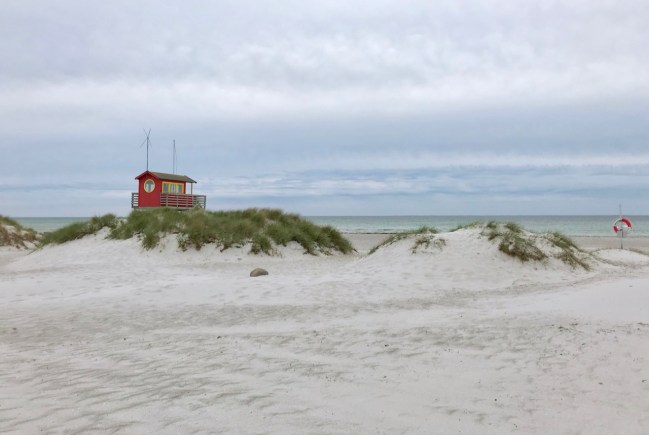 During the coronavirus lockdown I had some urgent private matters to attend to in Sweden. And somehow I ended up having a fabulous lunch with a fabulous friend, in Skanör of all places. You know, the curly southernmost tip of Sweden – the one with the famous seals.
 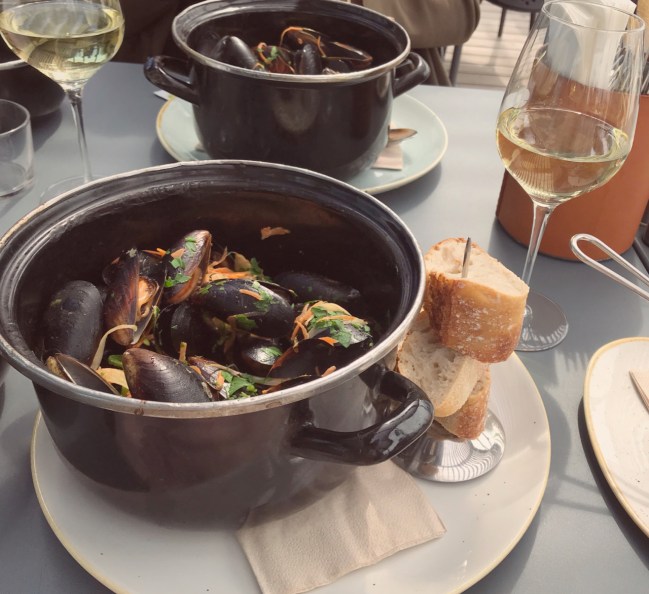 It was windy and not too warm – it was only May, after all. But the restaurant had a shielded terrace, and gas heaters and blankets. There were huge pots of fresh blue mussels, and crisp white wine. And lots of good girl-talk. It felt good to break out of the daily hunkering-down in my apartment: the home-office, the daily runs and walks in the parks to keep my sanity. Yes, it felt good to simply sit down and share a meal with a friend. Face-to-face meetings are a rare luxury this year.
 (Skanör, Sweden; May 2020)
 Probably a once-in-a-lifetime: 48 hours of departures on one screen, at Copenhagen airport in May. The direct international connections seem very random: Frankfurt, Amsterdam, Doha, Tallinn, Oslo, Stockholm, and Sofia.
 (Copenhagen, Denmark; May 2020)
 Surprise: there is a Helsinkigade in Copenhagen! It is in Nordhavn, the urban swanky neighborhood built on a landfill island and housing among other the regional UN/WHO headquarters.
 Africa, Bali, Bali & Malaysia, Singapore & Bali, Spain. Wish I had written travel journals also from the Brazilian Amazon, Kenya, Nepal, and Crete. And even way before, during my previous life, from Thailand, the USA, and elsewhere. But I am glad I corrected my mistake and began to write. These journals have always served as raw material for my blog posts – and the blog posts may serve as raw material for something else I’m working on.
 Nyhavn has never been this quiet on a weekend as it was one morning in April. All shops were closed, and tourists gone. Walking around Copenhagen any given day in March or April felt like being out on an early Sunday morning.


 (Copenhagen, Denmark; April 2020)
 This blue marble