
 Langkawi. What a touristy-sounding destination. Never was on my travel bucket list. But somehow I ended up there anyway – and instead of my cliché come true, I was whisked away into the middle of a 10 million-year-old rainforest and by a large reef, on a wonderful private beach. The Andaman Resort makes an effort to educate visitors about the jungle, the ocean, and the reef. It claims to run a sustainable, green policy, which seems reasonable giving-back, in return of being allowed to run a resort in the middle of a nature conservation area.
Unfortunately, the cliché did manifest itself one day with a long dry spell. We drove down to Pantai Chenang. What a mistake. As we sat enjoying teh tarik by a beachside café, conversation was difficult due to the distractions of banana boats ripping through waves, parasailers being dragged around by fast boats, and jeeps transporting people from pickup points to watersport stations, and back. The water was criss-cross -littered with floating dividers in different colors, making out swim lanes and divisions between swimmers and motor equipment. I am glad to report none of us seemed inclined to buy a fanny pack, a souvenir T-shirt, and a beer; and as the sun set we happily drove back to our little corner of the island. Not even a photo remains of this experience.
The night was long, just the way I prefer: with philosophical conversation, a few bottles of wine, sounds of the beach, frog song, and the darkness of the rainforest. The essence of Langkawi is its gorgeous (and brave) nature. Only one person was reported killed due to the 2004 christmas tsunami – the reef right outside our resort took the blow and saved the island. While others party away on Pantai Chenang, the people of the resort collaborate to reconstruct the reef, giving back thanks of survival. This is the Langkawi I like and will one day return to. Because, again, my snorkel gear remained useless in my backpack.
(Langkawi, Malaysia; September 2016)
 It is a simple fact that one cannot avoid becoming wet when swimming. Thus it should not matter if one swims in sunshine or rain.
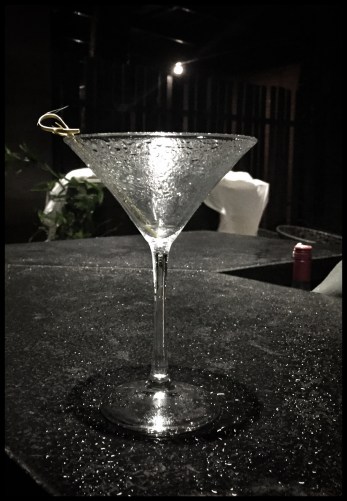 (Langkawi, Malaysia; September 2016)
 It was dark upon arrival on Langkawi. My checked-in backpack was slathered in oil. Ants had mysteriously infested our rental car and seemed to crawl in endless streams from its seams like a sequel to Hitchcock’s “The Birds”. My Malaysian friend drove into the jungle, without hesitation. We arrived on a pitch-black parking lot, entered a huge, empty hotel lobby, checked in, and hurried to get some sleep. I really had little idea where I had got to.
 (Langkawi, Malaysia; September 2016)
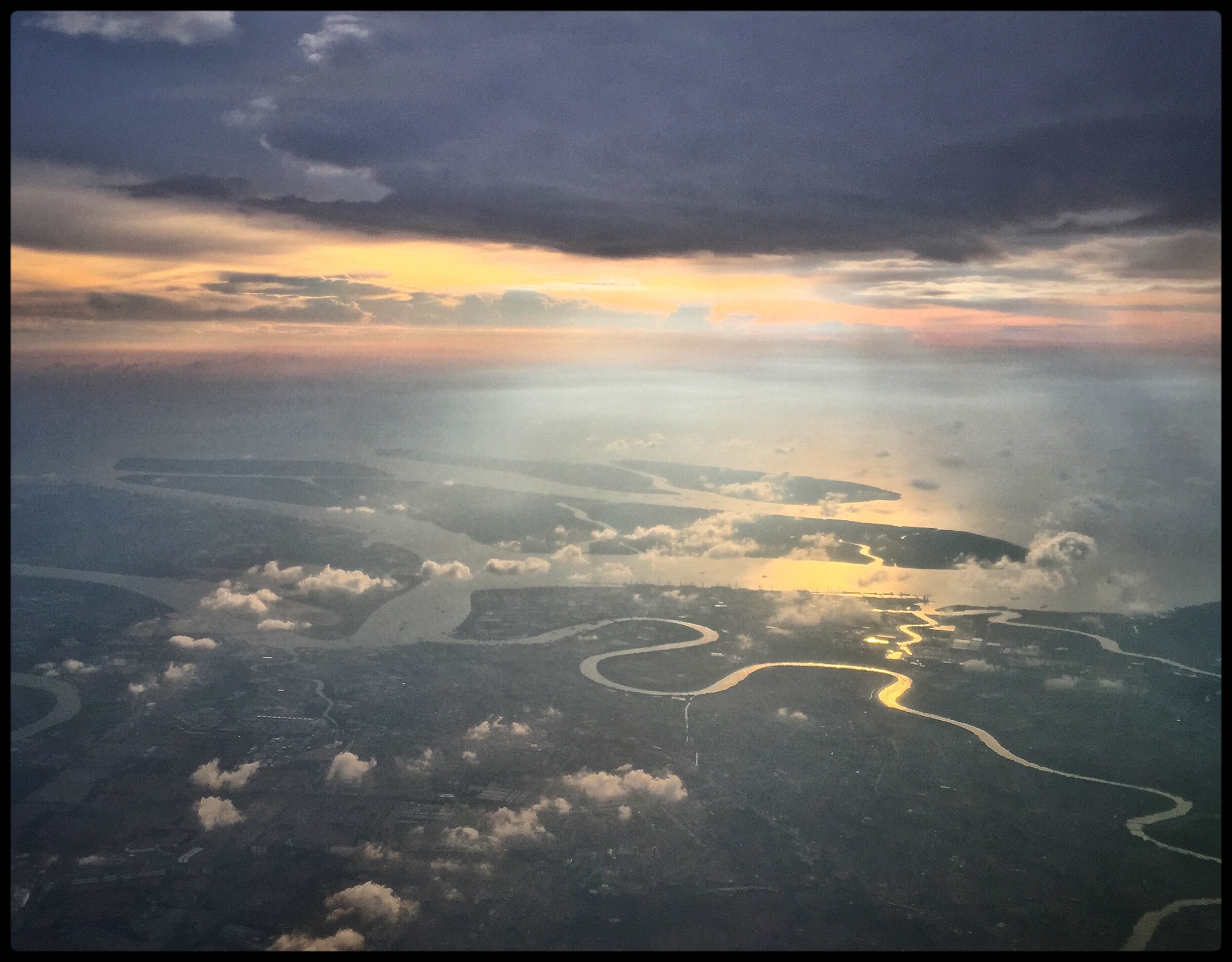
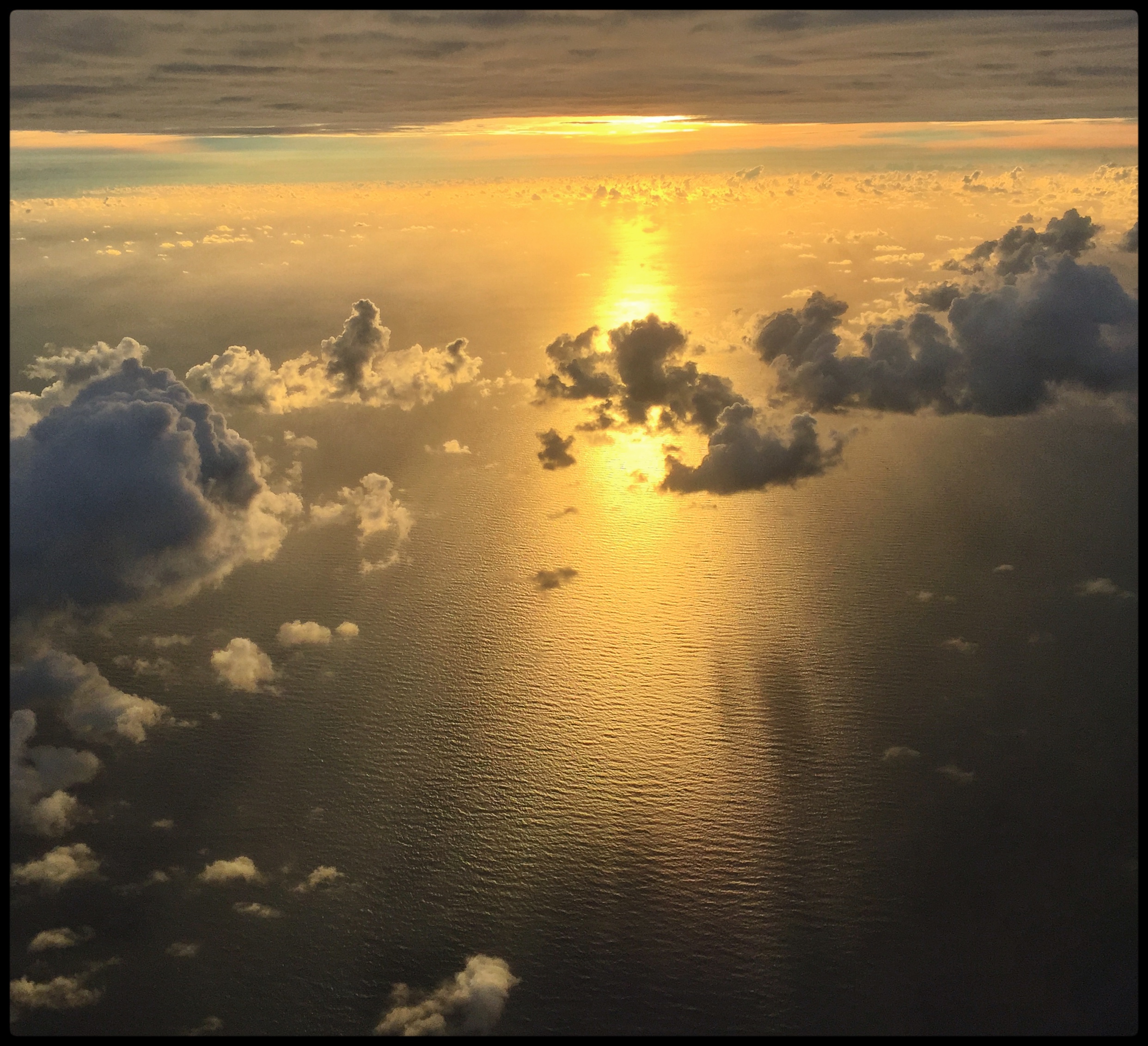
 Greetings from the fattest place of the Earth – or rather, from the stratosphere some 35,000 feet above it. After missing this goal both in Brazil and in Kenya, I am finally checking off one of my

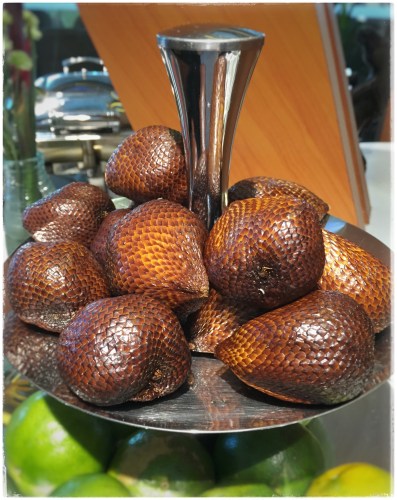 One more snake fruit before I board a plane and fly off this little lovely island. Everybody in this premier lounge is nicely dressed and carrying suitcases – and I came stomping in with a backpack, an old plastic bag, harem pants, and sandals. I have the highest elite tier of my airline alliance but right now I think my appearance here is a good joke.
 6 pm and the sun has disappeared into the jungle. The night cicadas have relieved their afternoon colleagues from the concert shift. While I sit in a luxurious open-air lounge, sipping on my sunset drink, I cannot help but feel something I can only describe as “colonial”. We arrived here from busy Ubud where we stayed at a little homestay B&B, rode around on motorbikes with locals, and ate simple food for about one quarter of the prices here. But “here” is a resort in the cool woods, where 4 bellboys fussed about our arrival and luggage, whisked us onto couches for welcome drinks and registration, and then showed us the way down to the spa – using an elevator in the jungle.
 I cannot help but wonder what the Balinese think of this ridiculous opulence. Indonesia gained its independence from the Netherlands in the 1940s, right after World War II. I understand that here it is difficult for a resident foreigner to own anything; everything has to be held in the name of a Balinese partner. It makes much sense. With the invasion of the Westerners who, like me, fall in love with Bali and want to stay, they would quickly outnumber the Balinese themselves and their capital, in practice reversing the sovereignty of the Balinese and their claim on their island and administration.
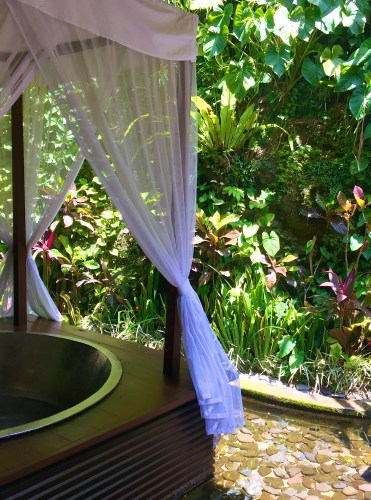 (Maya Ubud resort, Bali, Indonesia; September 2016)
 My yoga friend and I checked in to paradise. She is swimming lazily around in the infinity pool overlooking a river. The cicadas are playing, and the river, too. Swallows hunt for bugs between the trees in the sun. I might give the Balinese Jamu health tonic another chance to become a friend of mine.
 Yesterday night at a Tibetan bowl meditation session we conducted a heart-opening exercise, offering up all the pain and anxiety in us and replacing it with something positive. Letting the first thing that enters be acknowledged. I gathered all the hurt and the memories and the anxiety from every limb and vein and tried to push them out of my body if only for a second. From somewhere deep within me, the word that floated up to fill that vacuum space was “health”. Health of the body and of the mind. If the mind is ill, the body suffers, too. I realized I wanted to become healthy, in every possible way.
 Some time ago my body put a stop to both a beloved hobby as well as an activity my mind was pushing my body to do. I used to run 10-12 km every other day for years, until my knees literally told me to stop running, according to my ayurvedic doctor. I ran them out some time ago and needed surgery in one knee. No running anymore, possibly never.
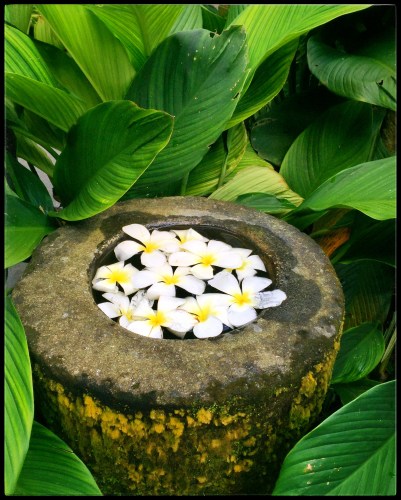 (Maya Ubud resort, Bali, Indonesia; September 2016)
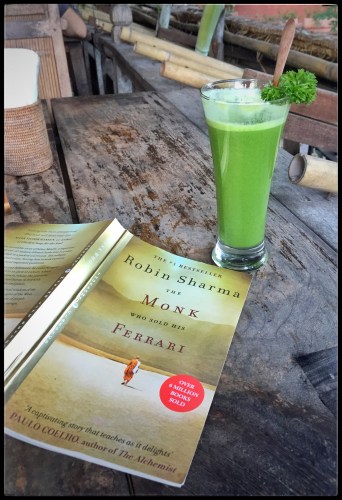 Ubud means green smoothie and light reading before an evening meditation class – every day if I like. And getting up with the sun. It took me 5 years’ worth of summer holidays and a Balinese ayurvedic doctor to understand that my natural tendency is to sleep too much. In today’s busy Western world, we tend to sleep late during the weekends when we can. I thought it was beneficial to catch up on sleep properly during weekends. But the dear doctor I consulted told me that with a pitta-kapha constitution I need to restrict my sleep to 8 hours, 9 hours maximum. And that the best sleep I can get is before midnight – to wake up at 6.30 am, right after dawn.
 (Ubud, Bali, Indonesia; August 2016)
 This blue marble