This blue marble

– and yet it spins


2 Comments

Zakopane style

Zakopane-1“Zakopane, isn’t that the town with the ski jump? Is it in Poland?” This question encompassed all my knowledge about the historical Polish ski resort my sister wanted to visit. I looked it up on the map one week before departure and noticed we would be going into the Tatra mountains, towards the Slovakian border. Not sure I even knew that Poland HAD a border with Slovakia.

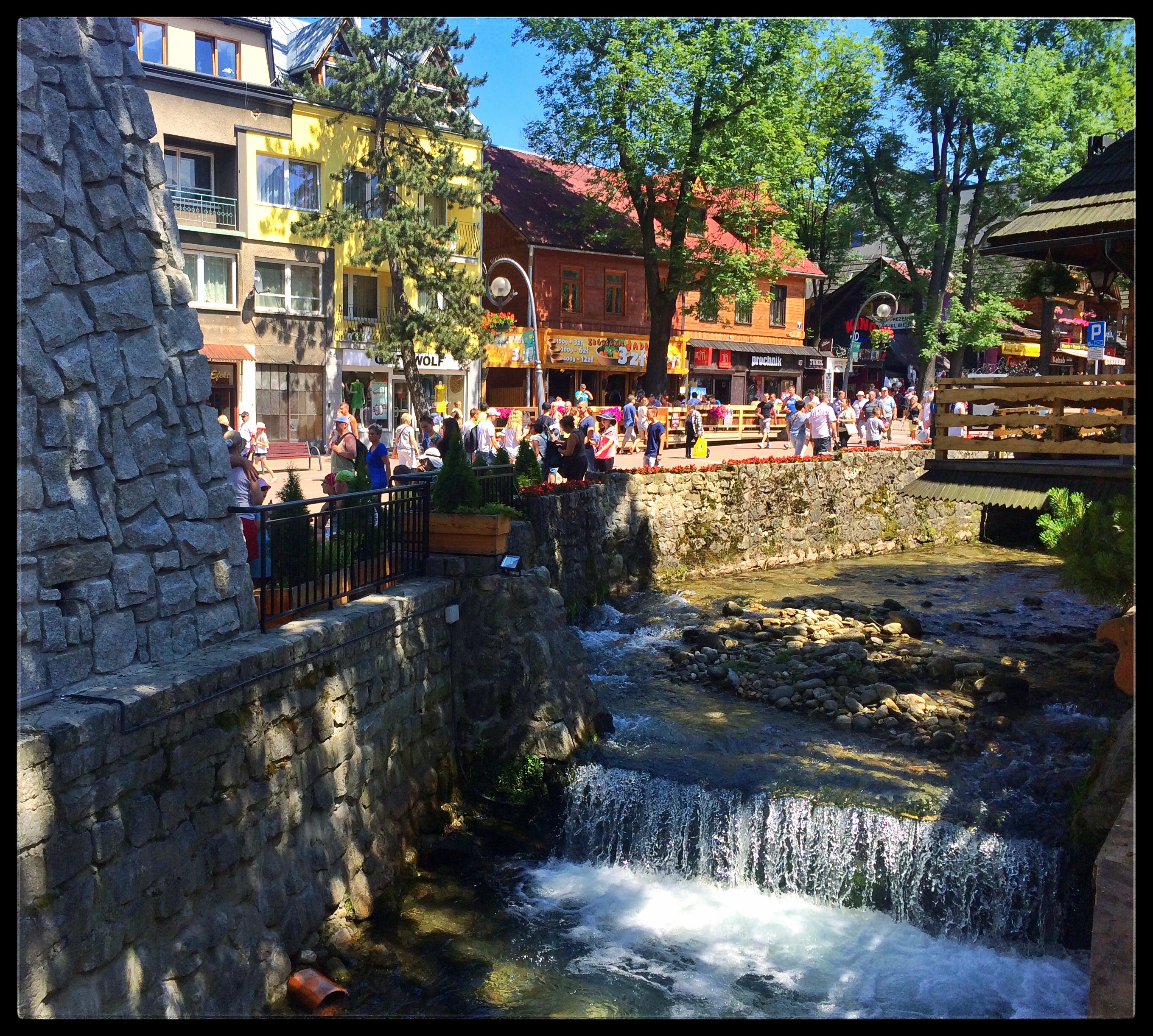
There may be many people as ignorant as I in Europe, but the Poles sure do know Zakopane. We joined the humongous crowd milling on Krupowki street, dazed, thinking we arrived at a festival day. “No, it is just a regular Saturday”, said the friendly hotel concierge. Indeed. And out on the hiking trails it was a regular Saturday traffic every day.

But if one manages to look past the crowds at the buildings in Zakopane, one is in for a surprise. The local style dominated in the early 20th century, born by the artist/architect Witkiewicz, who mixed Art Nouveau with folk carpentry. Zakopane-6Oh, the attention to detail! Each door post must have at least one flower carving.Zakopane-2And each house must have custom-made furniture.Zakopane-3And today the Zakopane style still inspires – for example to build hobbit houses such as this B&B. Only in Zakopane.Zakopane-4   (Zakopane, Poland; July 2015)


2 Comments

Wawel castle

Wawel-1How formidable Wawel castle looked like on the outside! Walls after walls, high up on a hill, as if nothing could ever get past it. And yet, when we did find a gate and wandered in, there was splendor and grandeur. It was as if each generation of rulers and architects had wanted to cram in another tower or another cupola just to leave a mark – regardless of whether the style fit or not.

But who cares about architectural pissing contests when there is Chopin’s music in the courtyard? Who cares about the battles and the intrigues, when there is a plastic (?!) piano and sweeping crystal-clear reveries floating among the pillars and porticoes?Wawel-2(Wawel castle, Krakow, Poland; July 2015)

Leave a comment

The seemingly square abbey

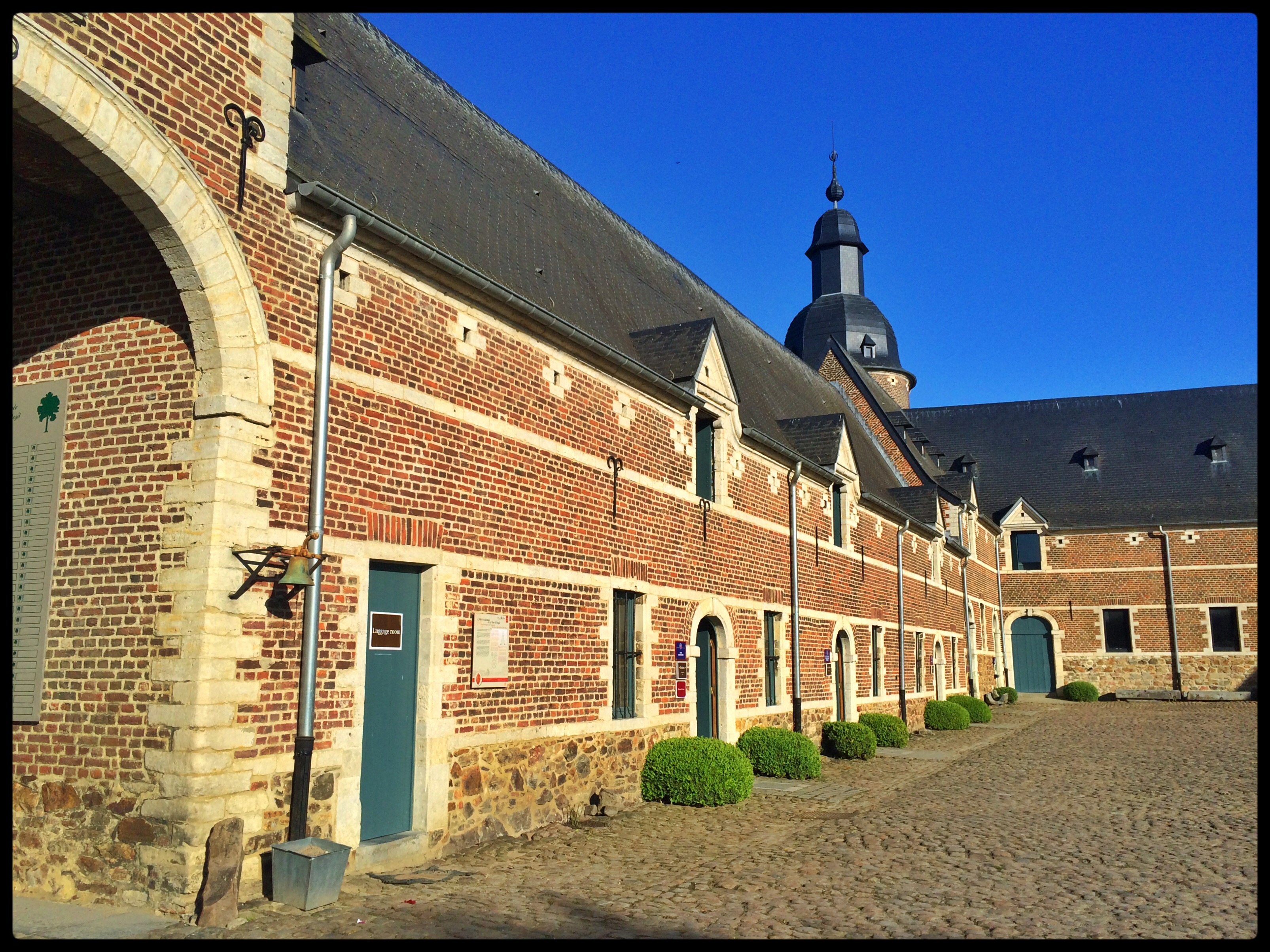
Belgiumspring-2 And suddenly, behind the trees alongside the road, was a red-brick abbey. Built by someone who had an organized mind. An abbey where horse-pulled wagons once clattered in through the vaulted gate. Where buildings and their bricks were arranged in strict geometrical lines – except for the bell tower that looked, well, strictly like a bell tower. Where there was no way to cross a quadrant except for trampling the daisies on the lawn, and where people adhered to walking along the angled pavements. Belgiumspring-3But we did dare to cross the daisy-scattered lawn and walk underneath the purple beeches, and arrived at a pond which was neither square nor circular. It was simply a pond. With black swans, no less.

Belgiumspring-4And when we dared to peek into the buildings, the scent told us a story of much less square people: those who indulge in the art of making abbey beer and cheeses. And who take the time to sit among the daisies on the lawn.

Belgiumspring-1

(L’Abbaye de la Ramée, Jodoigne, Belgium; May 2015)


Leave a comment

Newnham girls, you walk in beauty

newnham-5The beauty of Newnham college in Cambridge is hidden behind brick walls – girls need to be protected from the outside world. But let me show you the way in, through the gates…

newnham-6…and you are welcomed by roses, peonies, squirrels, and majestic red-brick buildings. And sometimes the faint melody of a flute or violin drifting through an open window.

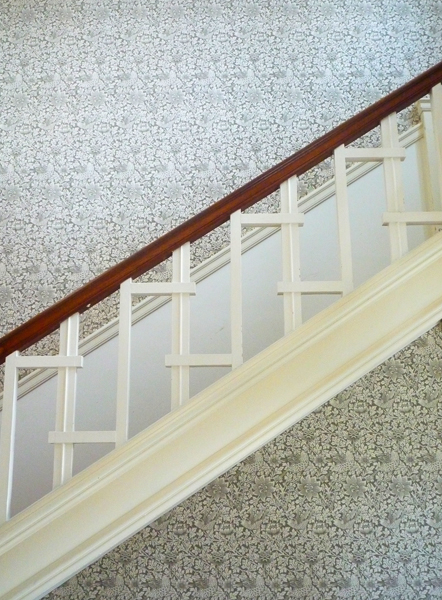
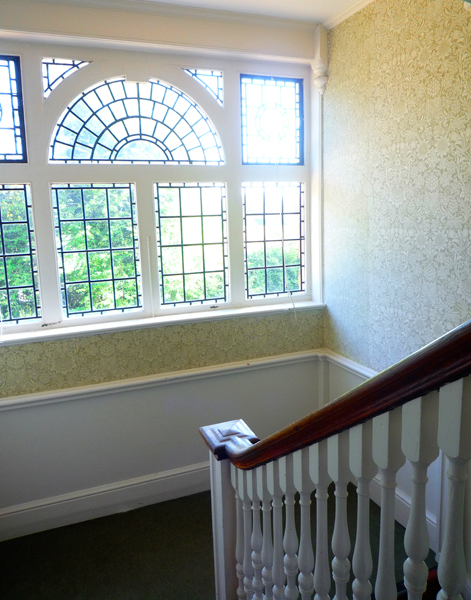
There is true beauty on the inside, too. Winding stairs…newnham-1…and Victorian wallpaper by William Morrisnewnham-2…and less winding stairs…

newnham-3…and sunlight…

newnham-4…and the ghost of a 19th century curly-haired girl in a pastel-colored muslin dress, reading a love letter by the window…

(Newnham College, University of Cambridge, UK; June 2011)


Leave a comment

Bhaktapur

nepal-29-web

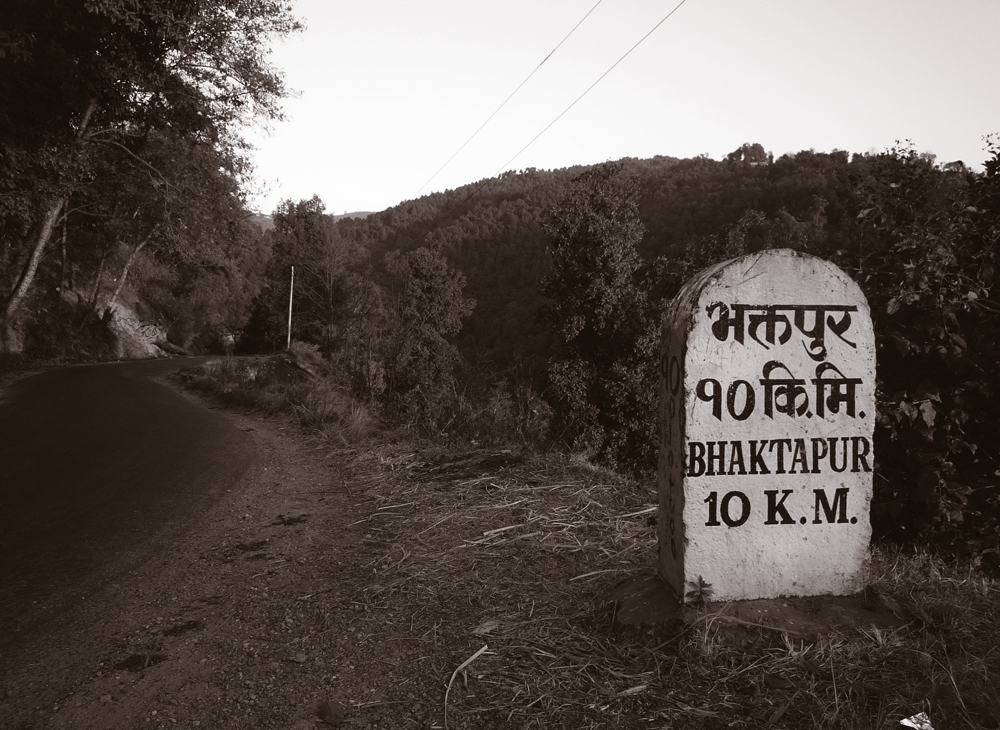
Once upon a time there was a late night drive into Bhaktapur. Paying the UNESCO World Heritage Site entrance fee to a dodgy guard in an even more dodgy booth lit by fluorescent lights. A guest house, dinner outside and a room with no heating.

And an early morning in bed, curled under the covers in a freezing cold room, sounds of drops heavily falling on trees in the courtyard. The scent of rain in the air. Monks chanting behind the courtyard in the temple square, chiming little cymbals and bells. Absolute calm.

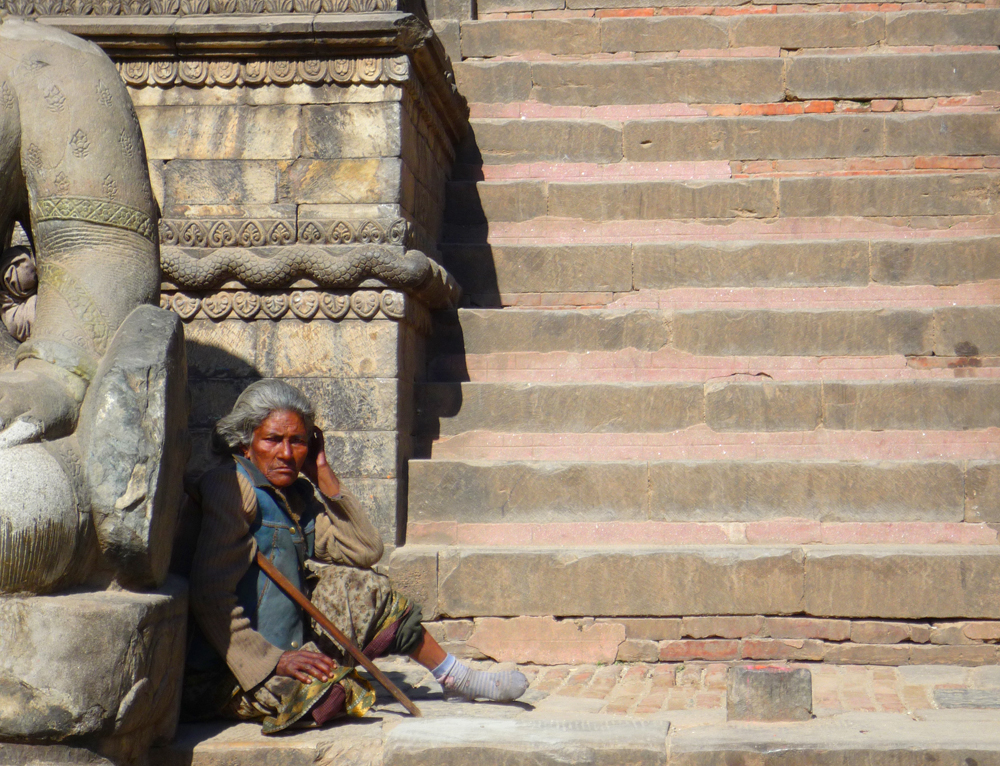
nepal-20-webThis time it was different. It was busy. It was weddings. It was school children swarming on the temple square. It was a lady without a leg enjoying the spring sun. It was a goat enjoying the spring sun. But it was still temples, thanka paintings, woodwork, and ancient red brick buildings fully determined to last many more earthquakes.

nepal-4-web

(Bhaktapur, Nepal; January 2015)


Leave a comment

By the Monkey temple

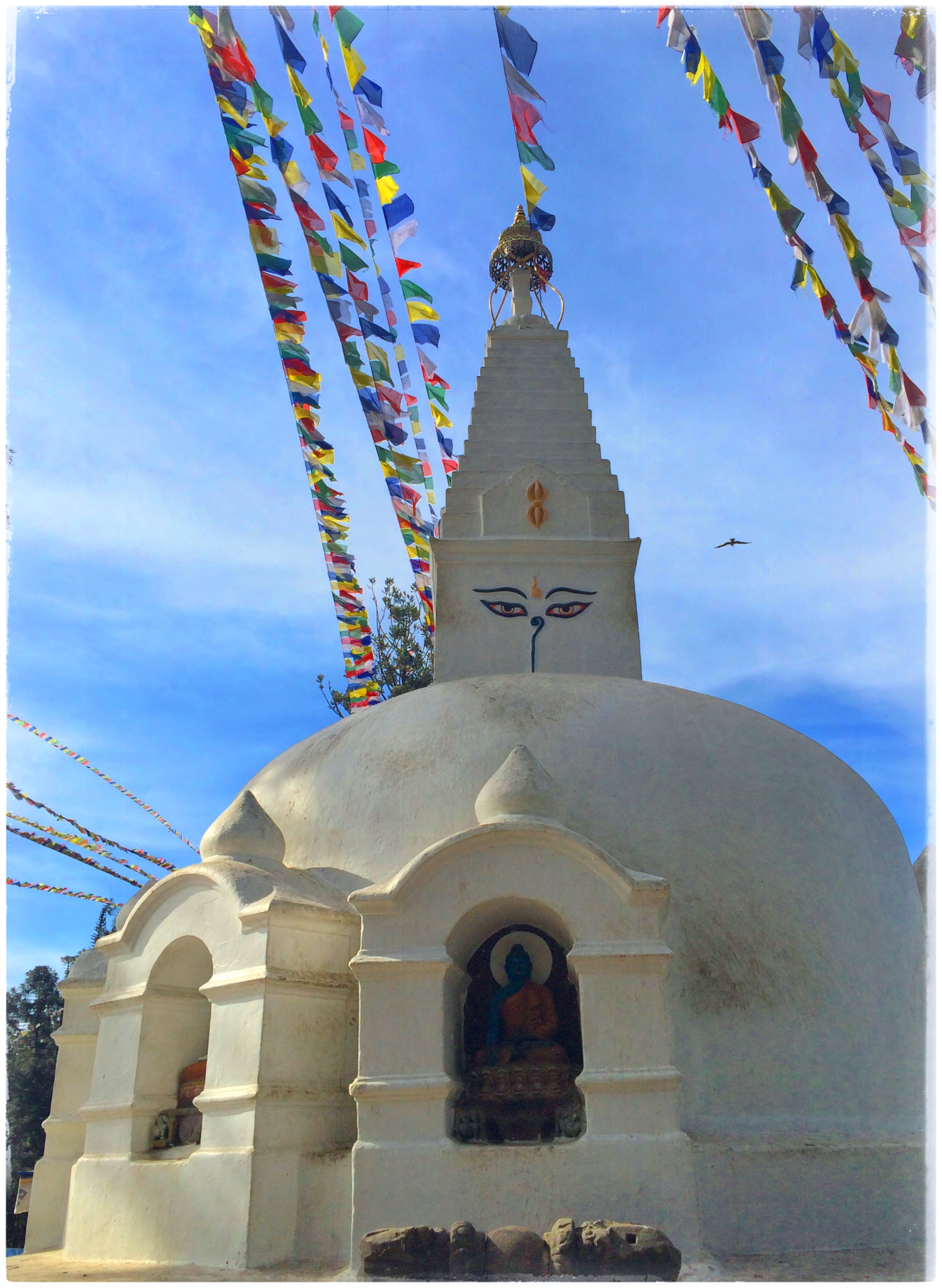
prayerflags-1Life is so much more present in Nepal than it is in Western countries. And so life is also much more present at Buddhist temples than at our Christian churches. There is no wheelchair access – one must often climb many steps to the top of a hill, where the view is stunning. There is no one solemn building but many places to worship: shrines of various deities and images of Buddha, and places to leave little oil lamps burning together with a thought or two. Or why not send a thought to the universe by spinning a row of prayer wheels?

monkeytemple-2Flower garlands, rice, and red tika dye color the holy statuettes with reverence. Prayer flags wave in color, tightly spun around trees. Incense slowly releases quiet prayers into the wind of the world. Here faith is an integral part of life and the philosophy of living. Faith is imperfection: old torn prayer flags beaten by the wind. Faith is equal: the wealthy mingle among street dogs and beggars. Faith is living: children chasing each other around the stupa. Faith is moving on: birds perched on the limbs of a deity feasting on offer rice grains.

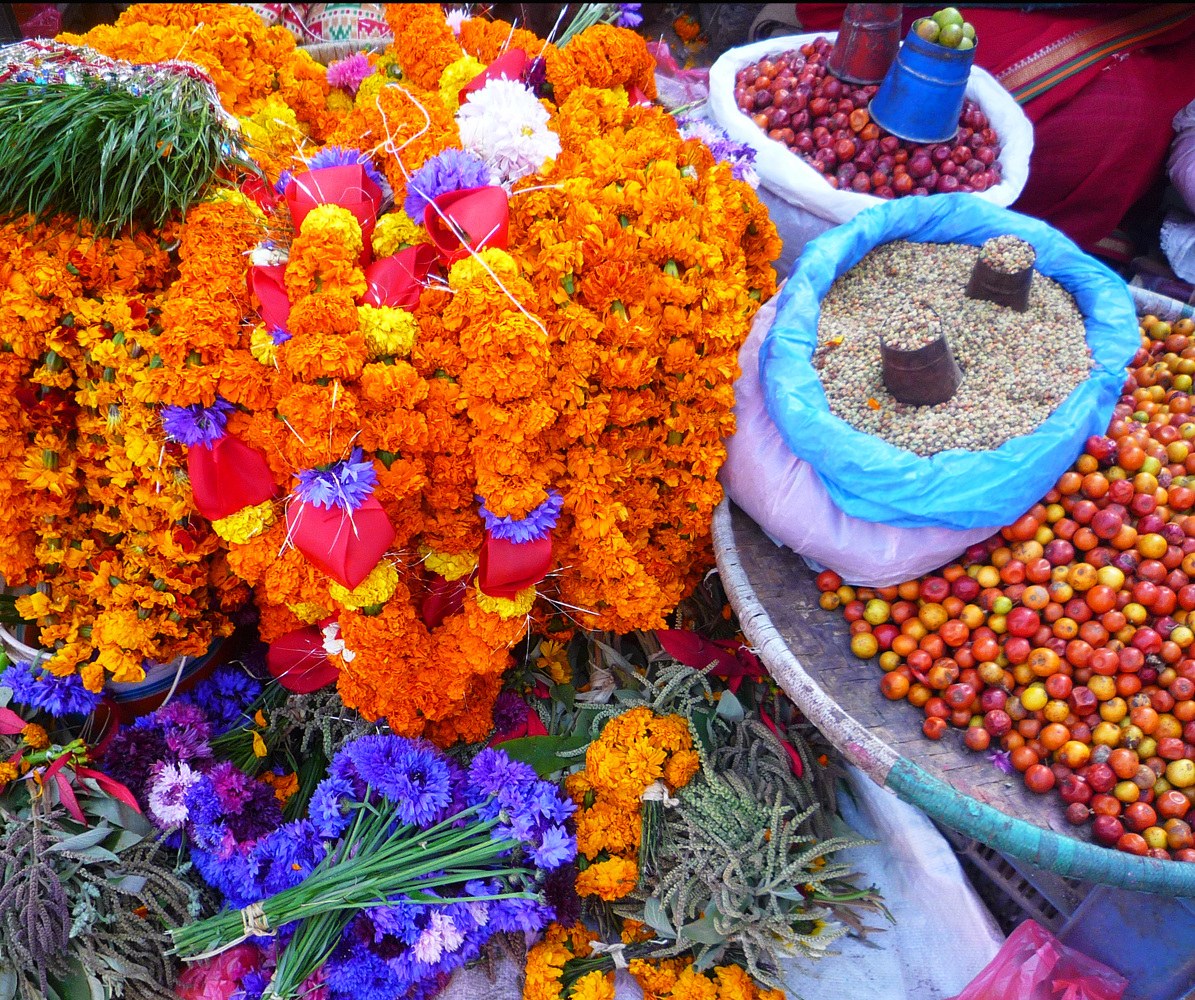
As I squinted at the eyes of Buddha on the stupa, ever watching over Kathmandu valley, I could not help but reflect on the difference between a Western church and a buddhist temple: in a church we are to walk in, wipe the smile off our faces, stop talking, light a candle, and sit down in solemn silence. In the Swayambunath temple we are to walk in together, gaze at the sun, talk with our family, light an oil lamp, and have moments of meditation at our own leisure. And perhaps offer a garland of strikingly orange flowers.

nepal-6-web(Swayambunath temple, Kathmandu, Nepal; January 2015)


Leave a comment

Ready for tonight’s performance

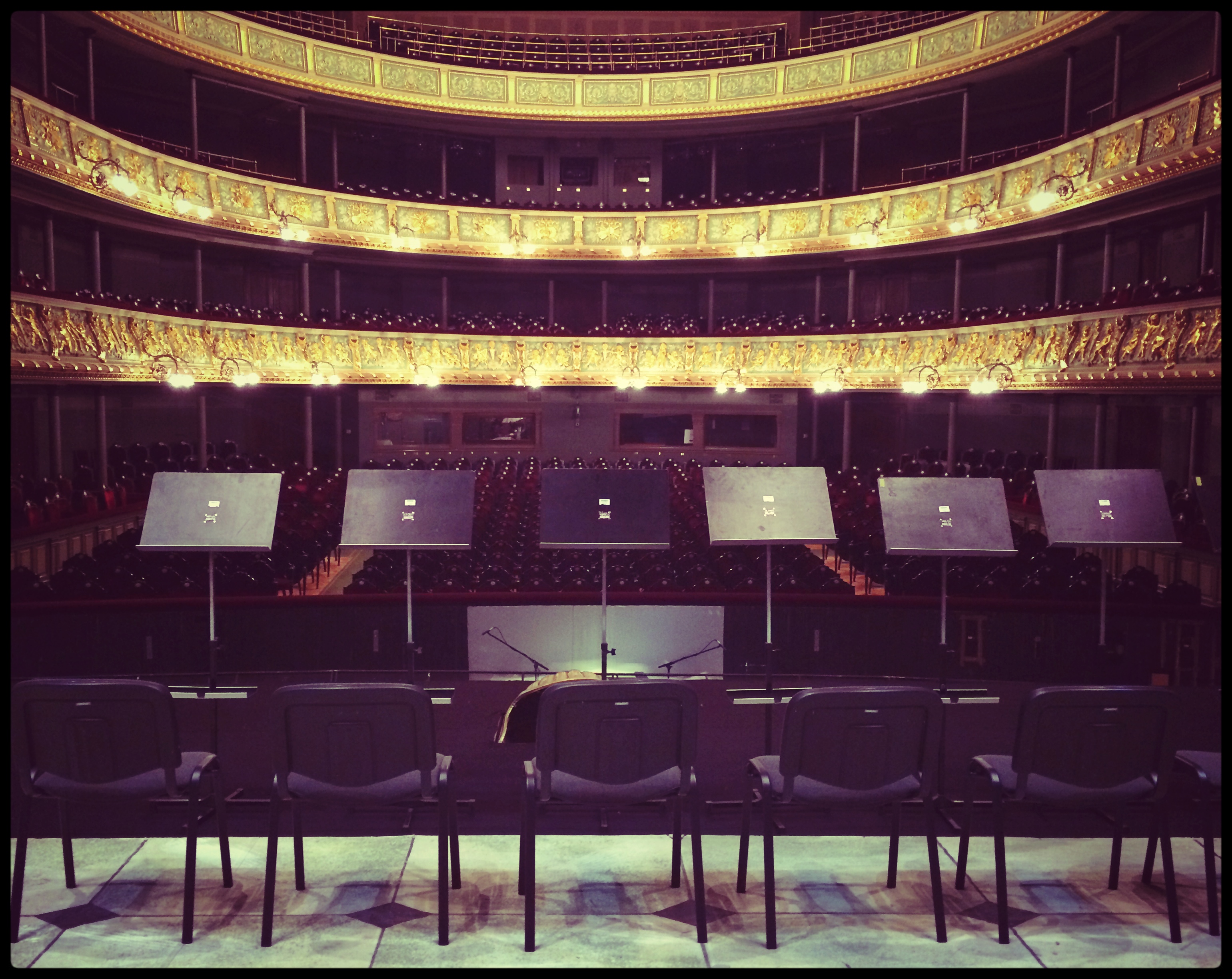
Riga-4Red velvet, a huge crystal chandelier, and four kilograms of gold make worthy premises for tonight’s performance. How lovely it would be to sit up there on the first balcony when the first tunes for the Barber of Seville shoot into the air. But alas, it was not to be this time.

Upstairs was a gorgeous red room with high windows that was once used as the rehearsal room for the ballet. This time its walls heard the most soulful arias accompanied by a single piano. And this was no rehearsal but a lovely surprise. How lucky we were.

Riga-3(Latvian National Opera, Riga, Latvia; January 2015)


Leave a comment

Finnish inherited blindness

aaltohouse-2

There were white surfaces, and light wooden floors. Clean edges and no frills. There were practical tables, durable chairs, and simple lighting. And it was all so Finnish we did not think it was all too marvelous. We shrugged; of course the home we grew up in had several Savoy vases. Of course we ate our kindergarten lunches on the Stool 60 and the table with L-shaped legs. They were designed by a Finn to be used by Finns.

And so it was difficult to set our minds on the wavelength of quiet reverence of the American party that joined us on our tour of Alvar Aalto’s home. What did they see that we did not? I washed my thoughts with images of American homes, focused really hard, and stared squinting at the Tank chair. After some effort I began to catch glimpses of how different the zebra upholstery and the simple curved frame was from everything that was ordinary across the Atlantic. How our fellow tourists saw the boxy, minimalistic shape of the house so extraordinary, and how everything Aalto is both Finnish and resonates so with the Japanese. I blinked – and the magic was broken. I was back in a room that felt homely and familiar.

Aalto is wired into our cultural inheritance, and it surfaces with symptoms of inherited blindness for things others consider singular. Things we consider for granted others collect as design items.

As I stepped back out into the bleary January Saturday I wondered how much we could learn about ourselves if we could only step out of our own cultural contexts? And how much more beautiful and wonder-full the world would suddenly become?

aaltohouse-1(Alvar Aalto house, Helsinki, Finland; January 2015)


Leave a comment

Gold rush blues

saloonBack to 1852 and the gold rush. When saloons were rowdy and smelled of sawdust. When bourbon was cheap. When paintings of half-dressed beautiful ladies on a picnic was considered daring art. When there was no plastic and no need for 4 “cash only” signs.

Last time I was here I drank cheap port out of a scotch glass. I debated with a bartender who looked like Dr Phil and had been banned from Canada. I listened to gray-haired hippies with cobwebbed trumpet sleeves singing blues.

This time I drank GT out of a proper glass. I was scolded by the bartender, a lady in her 60s. I listened to a fantastic gray-haired blues band and there was not a single hippie in the saloon. Life goes on. The saloon survived the 1906 earthquake. I wonder whether it will survive the next big earthquake. If that happens during my lifetime I will be back. Perhaps then it will be time for a bourbon and some more blues.

(The Saloon on Grant, San Francisco, USA; December 2014)