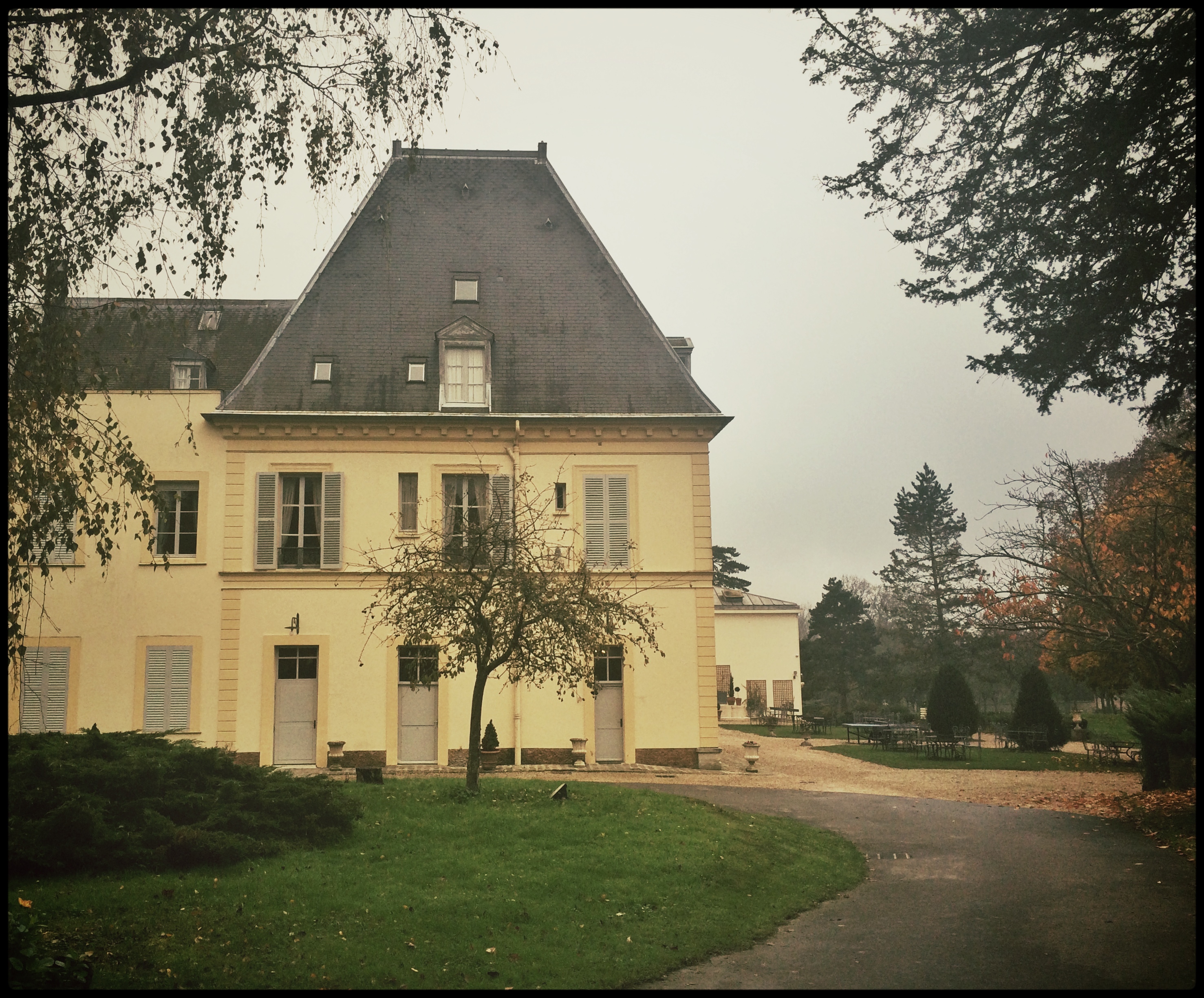
Any given day one could work in the office, or one could work in a château in the countryside. Preferably from the little attic room with the writer’s window.
(Château les Prés d’Ecoublay, Fontenay-Trésigny, France; November 2014)

Any given day one could work in the office, or one could work in a château in the countryside. Preferably from the little attic room with the writer’s window.
(Château les Prés d’Ecoublay, Fontenay-Trésigny, France; November 2014)
 Each city resonates with us in different ways. We all feel at home in one place and like a foreigner in another. We develop relationships with each city: one is a friend to have coffee with but not more than once a year. Another is a long-lost friend who instantly embraces and the past ten out-of-touch years are wiped away. A third is a contact who supports our everyday lives ambivalently like a shop clerk or a distant colleague.
And then there are the great lovestories and the great complications. Cities that love us but struggle to let us leave, amidst a thunder storm and airport strike. Cities that charm us initially but then turn to annoy us by closing the post office when we need it and ensuring everybody elbows us when we are carrying groceries.
Cambridge is for me a place of crossroads. It is a charming English cobblestoned bubble I struggled to leave, but it is also a place where I felt distress, turbulence, and where my life took a totally different turn. My Cambridge has equal measures of sunlight and darkness.
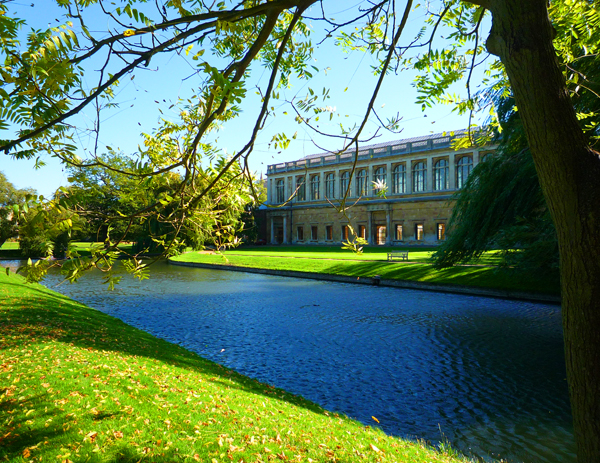
And so, as I stood in the full moonlight waiting to be let in to the chapel at King’s for evensong, I thought of a Cantabrigian friend who once said that life is bittersweet and that it is okay as long as it is more sweet than it is bitter. Surrounded by the college walls, the night air filled with wisdom of ages past and to come, I decided Cambridge weighs heavier on the sweet. And I let myself be enveloped by the city and its air that carries inspiration and intellect and science and art and life – the kind of life that is geared towards a better future.
 (Trinity College and King’s College chapel, Cambridge, UK; October 2014)
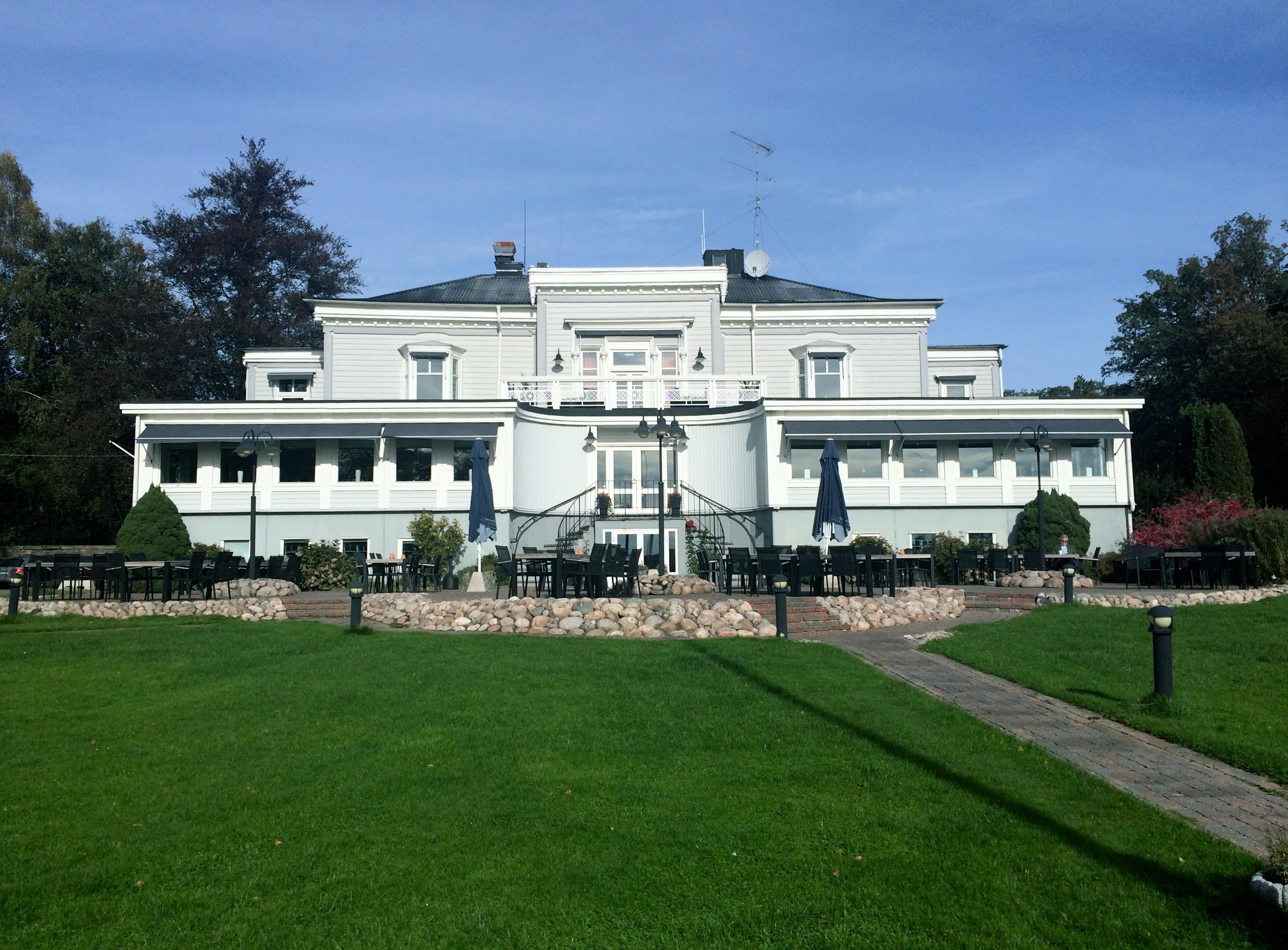 Ten minutes in the sunshine was all I had, before crawling back inside for yet another session. My ten minutes were less than a blink in the time of the manor, standing for 200 years on a foundation 500 years old. If time is an illusion, how many comedies, tragedies, and lifetimes happened all at once when I walked over the grounds?
(Aspenäs manor, Lerum, Sweden; September 2014)
 The manor had seen war, and hosted wounded soldiers. It had survived a siege and arrest of a rebel after being stripped of its handsome garden statuettes. When nobody cared about the past, and the future was spearheaded by the Olympics, somebody had the grand idea of clearing the Helsinki streets of drunkards and shooing them into the manor. Out of sight is out of mind, except for the house that diligently cared for them for forty years.
Two decades later the house cares for those who wish to escape, or gather, or simply breathe. Opening the creaking door I discovered a room more like a salon. Oh! the oriental rugs, the heavy chinz, the enormous crystal chandelier! And yet, how newly it all had been restored. Sinking down on the downy bed I stared out of the window, over the lawn towards the stream floating by. Garrison, hospital, drunk ward – in the storm of progress the appreciation of the past is often waved away. When space was the new tomorrow in the 1960s, all hardwood floors were covered with linoleum and everything that reminded of days gone by was swiftly cleared away.
Time, as we perceive it, only moves forward, but there is a major change in the third-millennial minds compared to the Atomic Age. We preserve traditions, restore old houses, and attempt to return to nature and pure values. I could not help but wonder: in this ever-accelerating world of ours, where technology races alongside science and our greedy minds, when, and how, did we end up appreciating the past, legacy, and crystal chandeliers?
(Hirvihaara manor, Mäntsälä, Finland; September 2014)
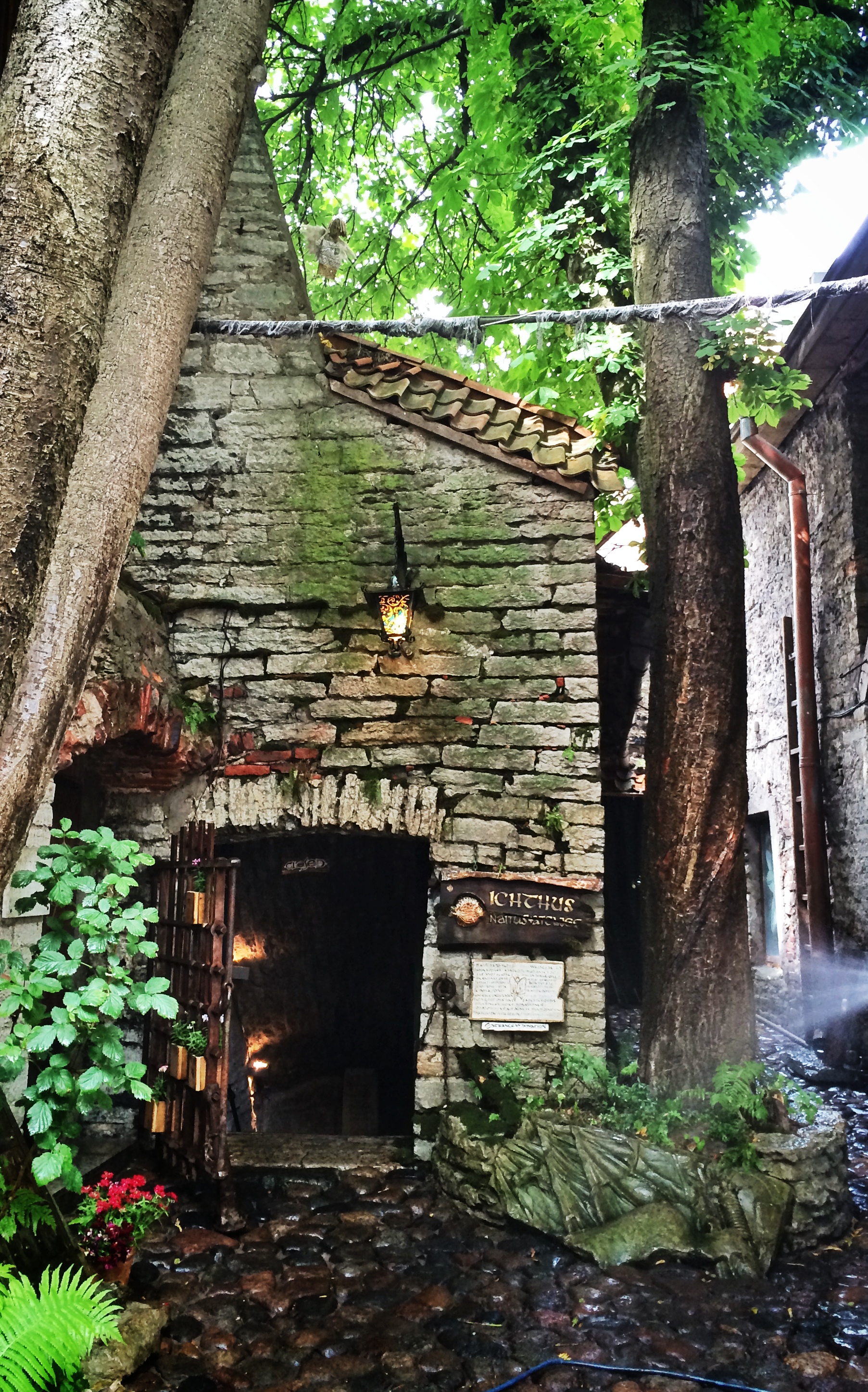
800 years ago she stood as a safe haven and retreat for those wishing to know God and themselves. She was created to bring the Christian God closer to the people, to open their hearts with the help of Dominican monks. She also had business sense: in the heydays she provided shelter to produce up to four kinds of beer for the good Blackfriars.
But the greatest wars on Earth are always about religion. Faith is another word for subjective truth. Congregations loyal to Rome were not in fashion when the Reform spread northward from Germany.
Reform in the 16th century meant also reform of the buildings of worship. And so she was dismantled, piece by piece. Some of her brick was incorporated into the great cathedrals of Tallinn. Other pieces were scattered into buildings and city infrastructure around the Old Town.
But the vault of Power remains. As I stood still in the center of the room I could hear my own rambling mind. Why, I think heard something else, quietly swirling by the tip of my ear. Centuries later, the echoes of the chanting monks still bounce off the walls. The worn stone floors invited for a moment of tranquility in this crazy hurried world.
And then a lady tourist in great awe of the ceilings kicked the candle on the floor. It flew a good meter, splashing stearine as it went. No more echoes of monks and no more impressions of power in the air. Amidst minor confusion, apologies, and good intentions we relit the toppled candle with a miniature matchbox strangely enough provided by the lunch restaurant just an hour ago as a gift to all customers.
Coincidence, perhaps, or perhaps not? One thing is certain: regardless of temples of worship and candle-lit moments, tranquility is a state of mind.

(Dominican monastery, Tallinn, Estonia; July 2014)

In brilliant sunshine began a perilous voyage. As we cast off, little did we know that mother Nature had decided to let the sun bask on the market square while shrouding the archipelago in thick mist. Soon the sea smoke rolled in and wrapped our little boat in a blanket of nothingness. No sound, no horizon, no nothing except for white stillness.
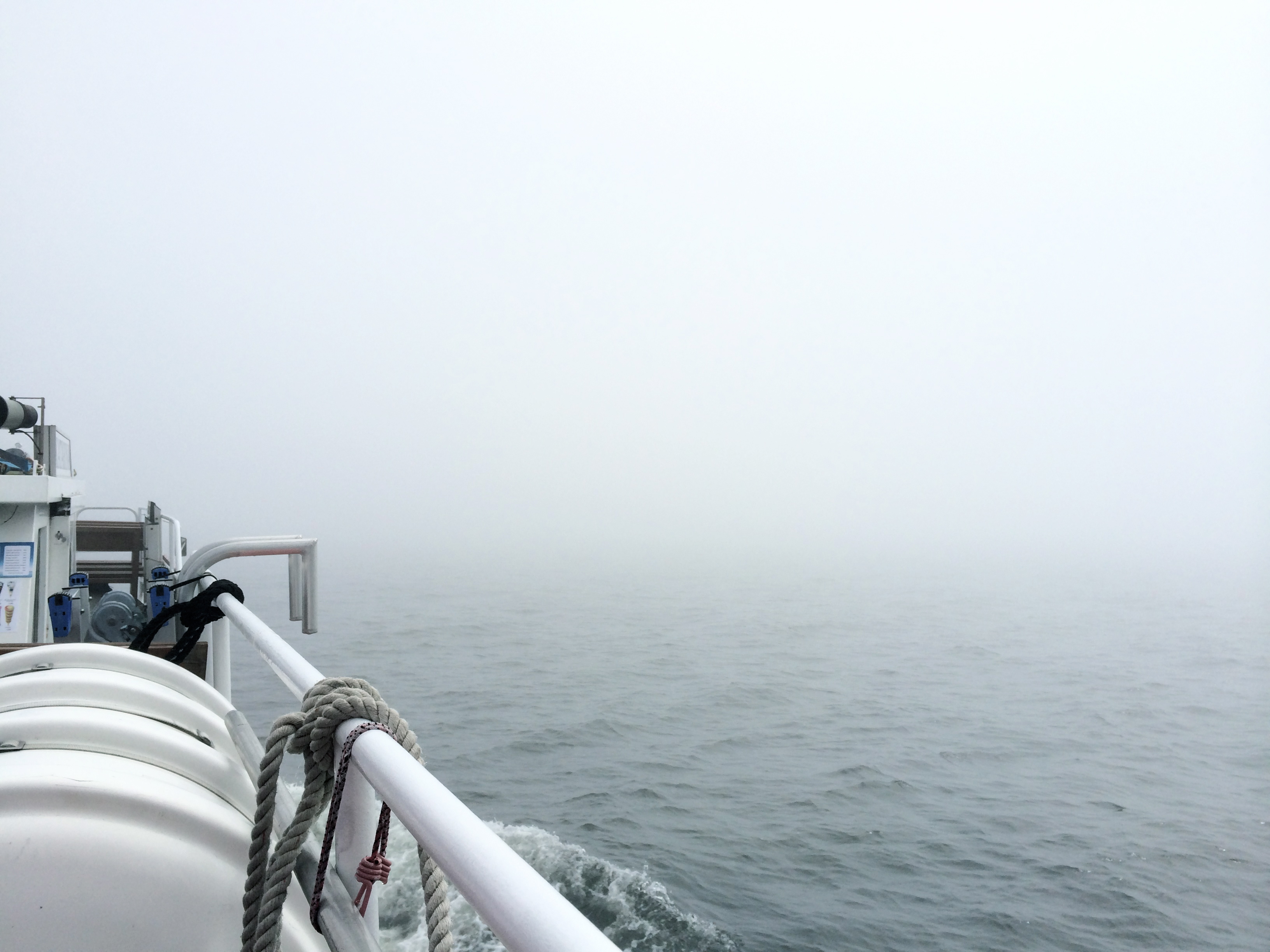
According to the charts, somewhere near us was a smattering of rocks breaking the waves. Perhaps starboard? Port? Who knows, even sufficiently deep under us fortunate souls? We wound down the engines and let the ship glide, hoping to discover our destination. Anguish, what does one do when the gadgets point to a few meters ahead but there is nothing but whiteness in sight? Hoooooonnnk the captain called with the horn, hoping for a yip, a yell, a hello, over here!
Indeed, over there it emerged from the shroud: Söderskär islet, all alone in the world between Finland and Estonia.
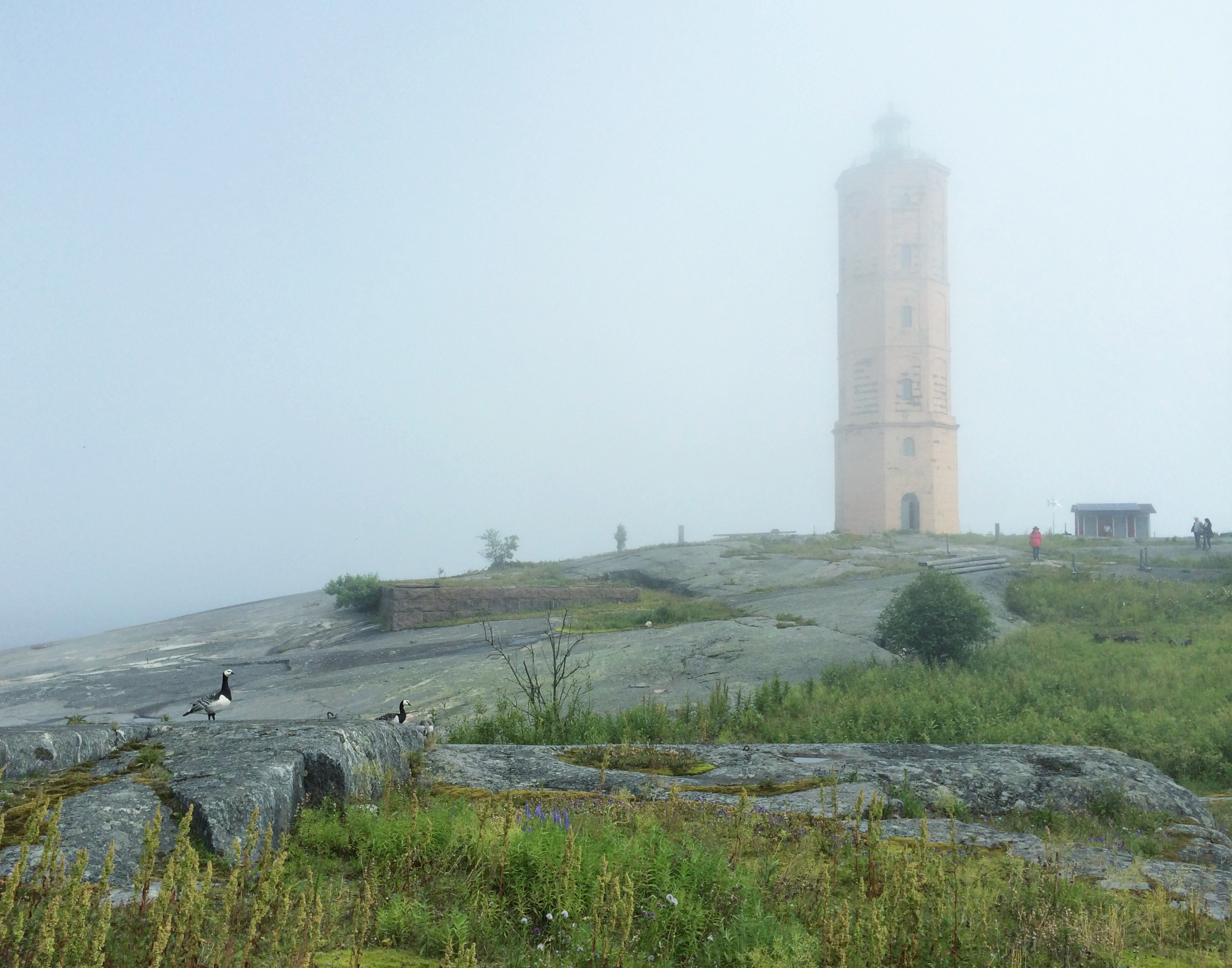
Once upon a time not so long ago a mariner pilot, the lighthouse master, the lighthouse guard, and their families called Söderskär home. Tempests, swells, and scorching sunlight were the bountiful bonus on the job – and off the job. Life was rough and lonely until some years ago when the light was finally extinguished forever. What once swept the horizon with a bright beam turned into a dark tower looming in the moonlight, the ghost hand that waves homebound ships welcome.
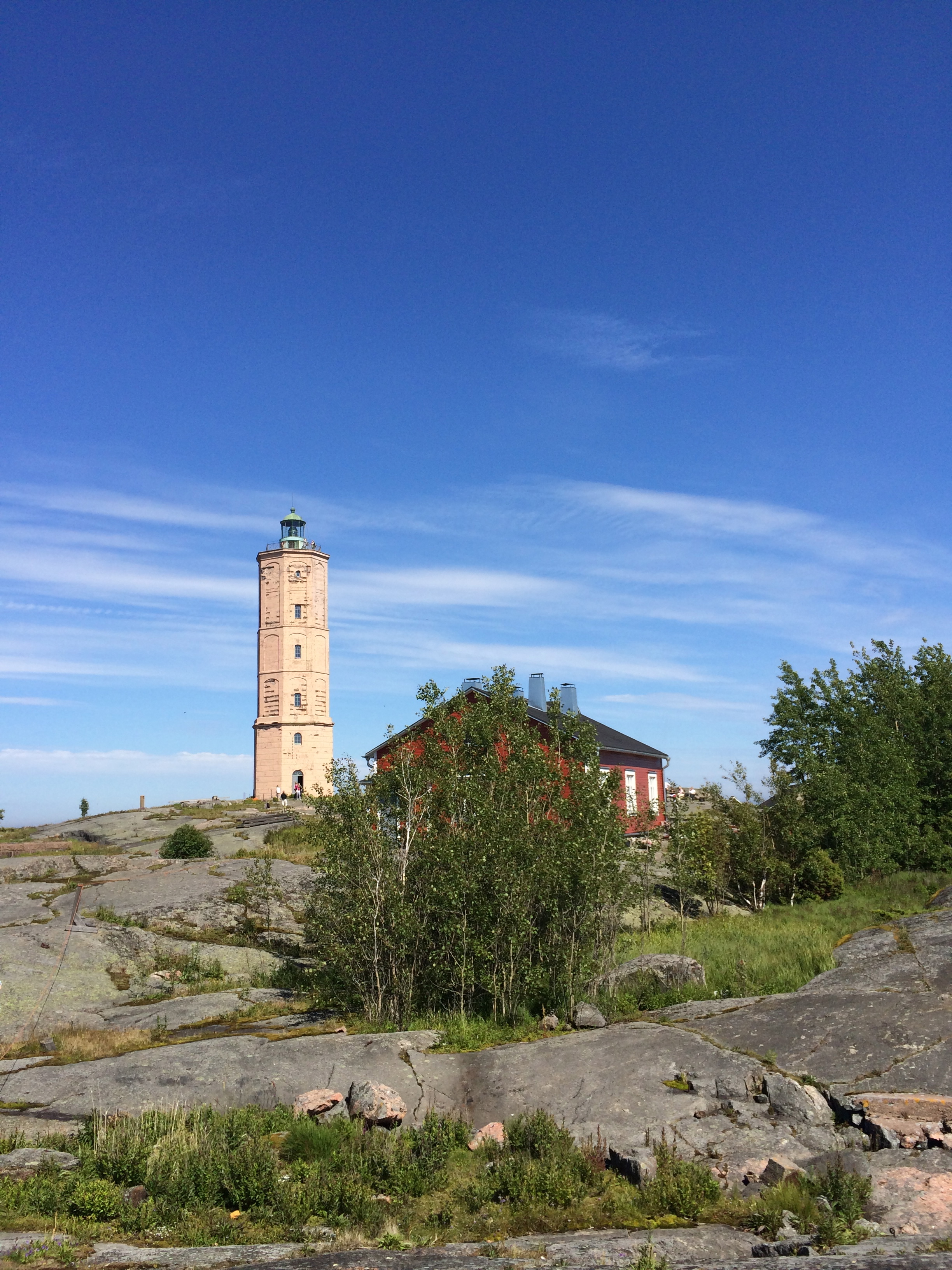
And suddenly dark towers and a gray white world were wiped away by the June winds and all that was left was a brilliant blue. On a beautiful day even a lightless lighthouse can come to life.
I stood by the lantern and looked over the cobalt vastness. Virgina Woolf’s poor heroine never made it to the lighthouse. Tove Jansson’s moomin family did complete the voyage, and spent a summer discovering themselves and the world beyond the known. At a lighthouse islet there is no escaping reality, no fleeing from the now whether it is sunshine, storm, or snow. Close your eyes and try to dream but the sea is always on the other side of your eyelids. Everything changes but the sea is constant.
“Moominpappa leaned forward and stared sternly at the fuming sea. ‘There’s something you don’t seem to understand,’ he said. ‘It’s your job to look after this island. You should protect and comfort it instead of behaving as you do. Do your understand?’
Moominpappa listened, but the sea made no answer.”
(From Tove Jansson’s Moominpappa at sea)
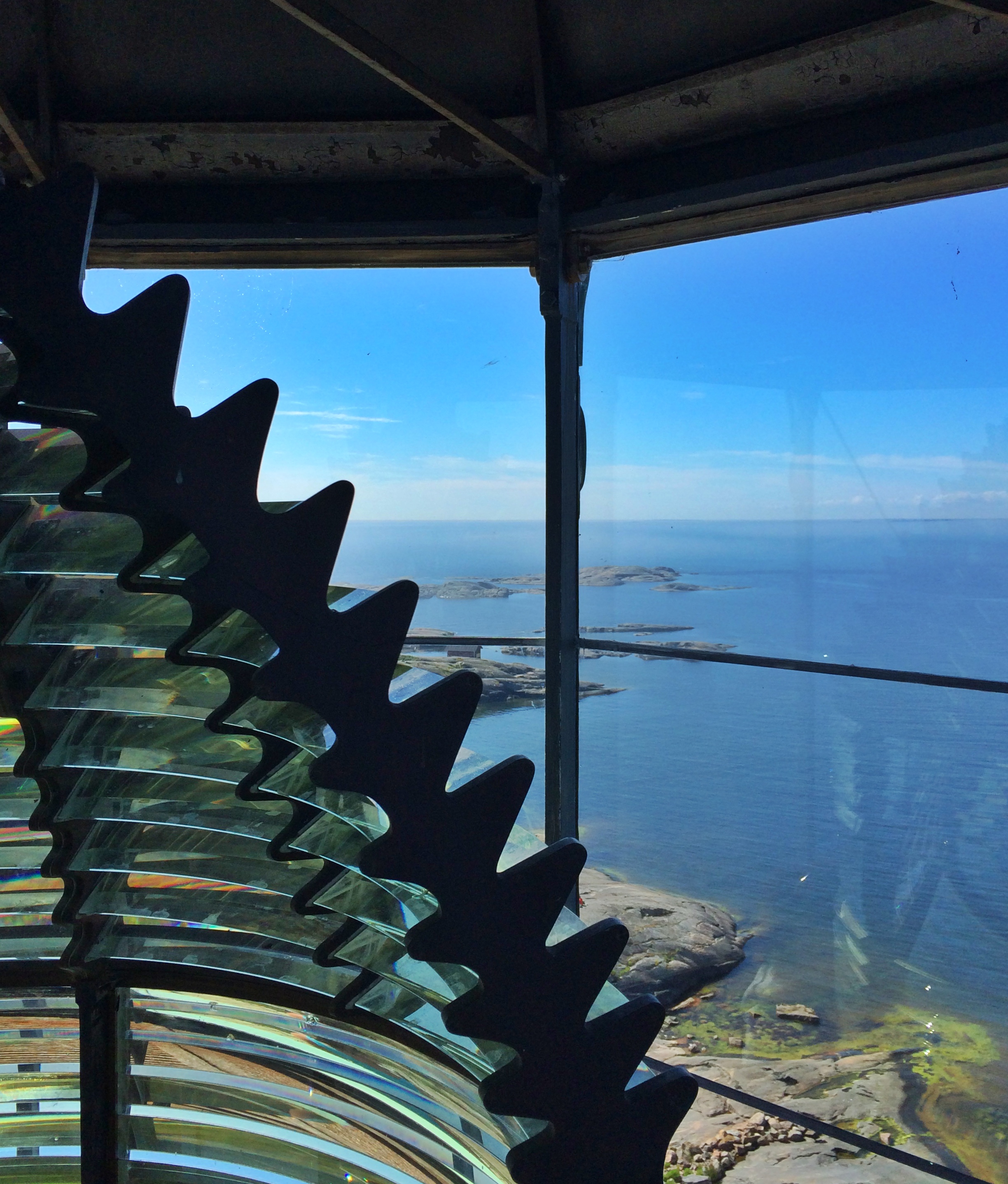
(Söderskär, Porvoo archipelago, Finland; July 2014)
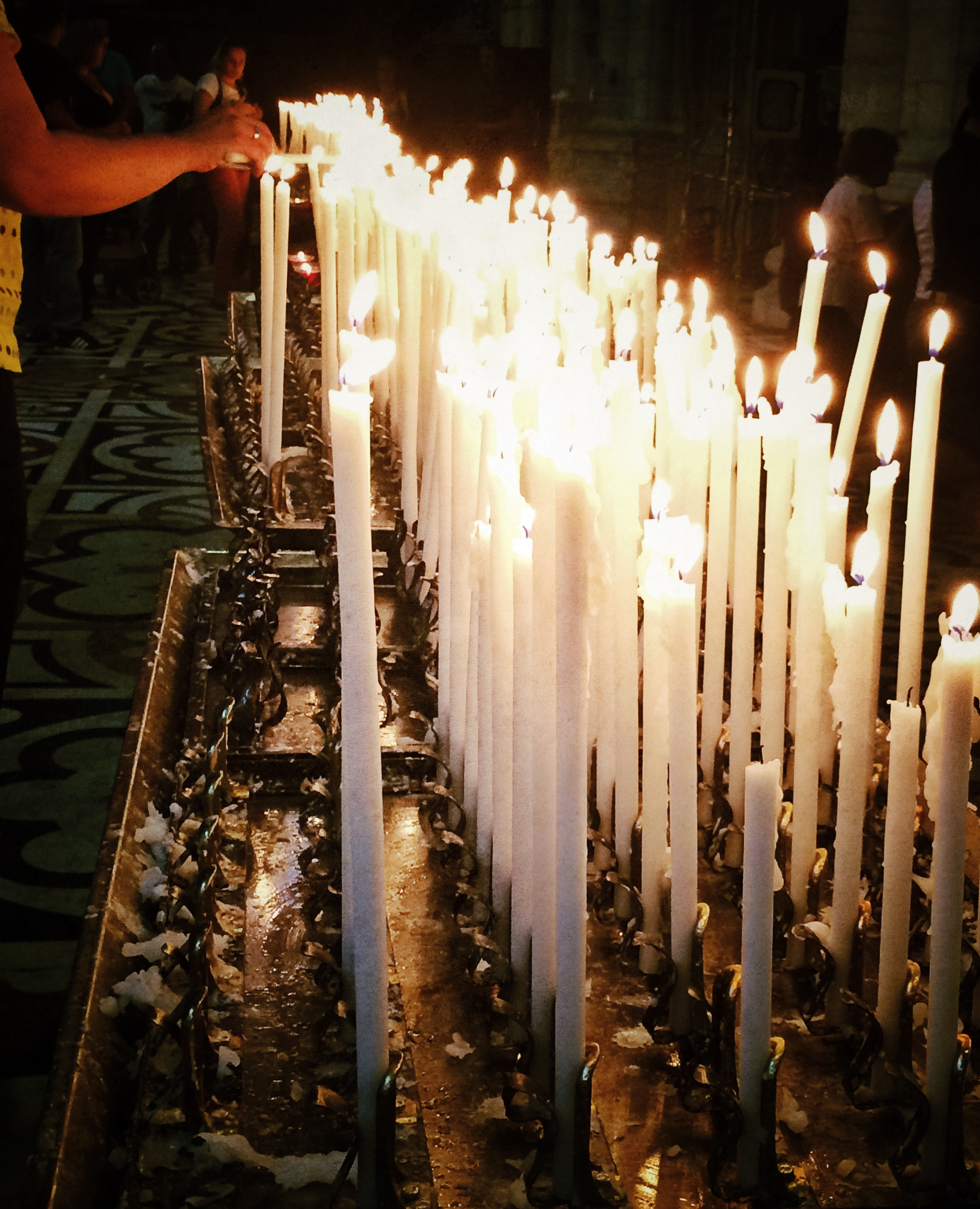
Four days of shuttling between Milano Congress and two hotels. Emails, conference calls, and on-site meetings; scattered with dashes to the shopping boulevards, late night dinners, and a crazy soccer game studio in the wee hours of the morning.
And then it was Sunday and the air was hazy and heavy from incense and slow tunes from the most grandiose organ. The Duomo does not shuffle its feet between passing centuries. It stands, never minding fashion fads, conferences, and people chasing the 25th hour of a day.
Regardless of which faith we claim, we all believe. And there are always candles to be lit in the Duomo – both in the last century and the next one. And so what is our rush really all about?
(Duomo di Milano, Milan, Italy; June 2014)

It is the things we did not do that we regret the most. The words not said. The moments not stolen. The experiences we let pass. Oh, how I regret not experiencing the La Scala theater in spring a year ago. I vowed to go the next time I was in Milan, oh, probably 5 years from now. There it was, a missed opportunity to live today.
But life gives second chances. The essence of karma is to correct an erroneous action. Good or bad, makes no difference. The karma that kicked me this June was the chance to make up for lost time with La Scala.
There was gold, dazzle, and fluttering ladies in fluttering evening gowns. And the most unusual program: the Young man and Death, a drama in a dance showing us how death fools the loving even after we leave life. And there was Petit’s Pink Floyd Ballet, famous in the 70s and still fresh today. I accepted the second chance and discovered electric guitar solos mix wonderfully with geometrically coreographed ballet and laser lights, blended with crystals, velvet, and champagne.
Even the tiniest regrets, those small like grains of sand, can pile up to fill a beachful. Karma is our gentle friend if we let it be. No regrets, not even in Milan.

(Milan, Italy; June 2014)
 Why puff around in mighty silks and wigs when the age-old story of a woman who strayed rings a bigger bell of bittersweet when it plays out in a luxurious and provocative night club? Sometimes it is the message and not the word that matters, and so a courtisan today may be scantily clad in latex hotpants and heels, shaking her booty to Verdi’s timeless tune. And when Violetta is revealed to be withering away, the flash and neon glow is transformed into an ugly glare.
In the midst of the heartache and arias of the tormented I step outside into the soft summer night and soak in the heat of the sun-warmed stones. Gazing over the blue waters I vow never to forget that we are only as trapped as we feel. There is always a way out, although we never know exactly where it may lead us.
 (Savonlinna Opera Festival, Savonlinna, Finland; July 2013)
 Hand over heart – did you really utterly love opera the first time you saw one? Did you melt into one hundred little streams of joy, or did you zone out before the end of the first act, when you realized you didn’t understand Italian or German or Hungarian and forgot to buy the libretto? And when it was all over, did you spend an infinity in your seat while the rest of the theater demanded four bows and fifteen minutes of ovation before you were finally allowed to leave?
Halfway into my third opera, gritting teeth, I remember realizing that the story is the tip of the iceberg. I let go, allowing the music to wash over me, and focused on the details: the intricate weave of notes, the gorgeous and creative stage set-up, the impossible notes sung by the coloratura soprano, and the way the conductor channeled another world through his body. An opera is not to be understood, it is to be felt. And sometimes, just sometimes, an opera house that allows you to walk all over it lowers the treshold – literally.
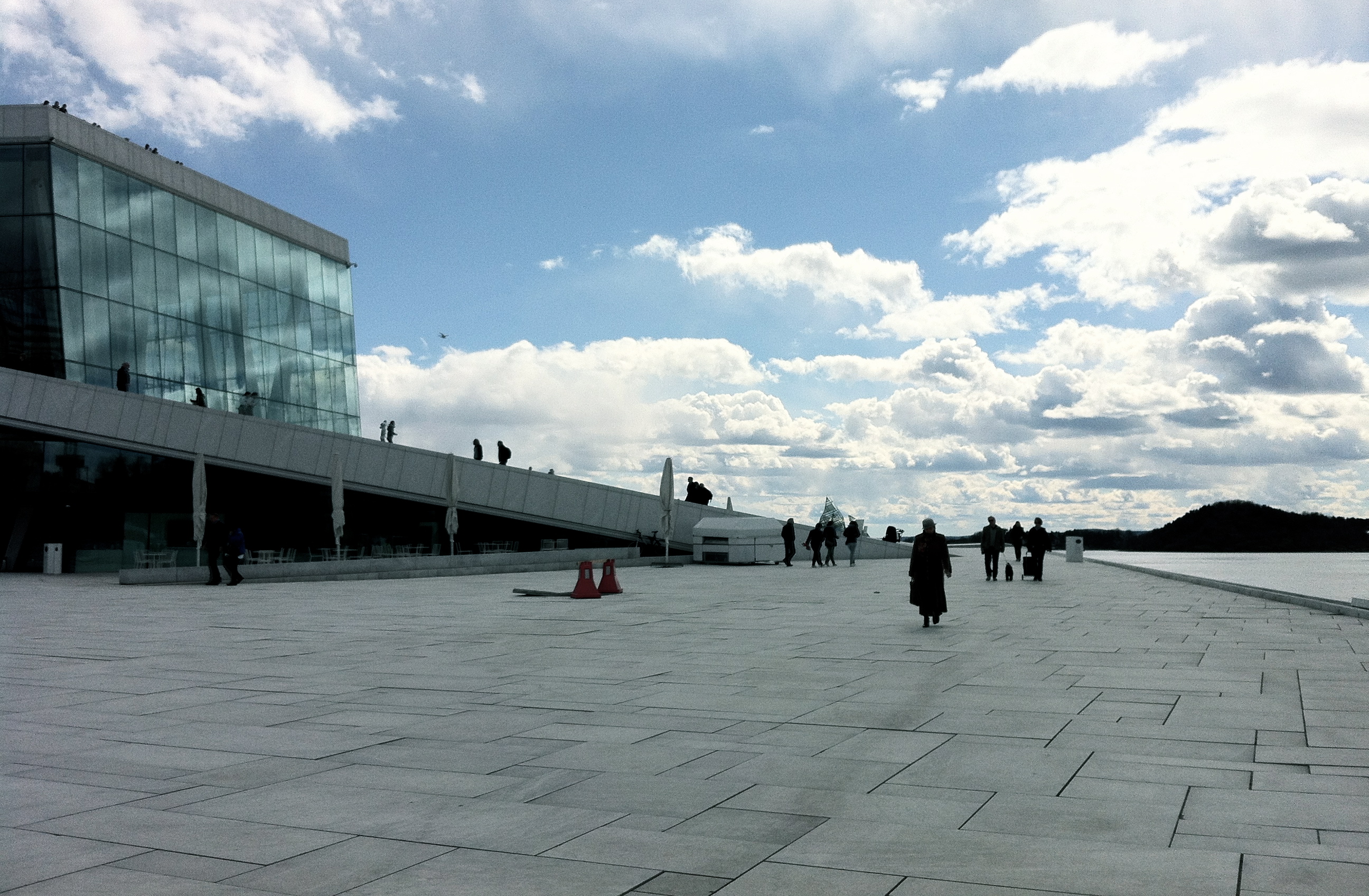
(Opera house, Oslo, Norway; April 2013)
 This blue marble