This blue marble

– and yet it spins


Leave a comment

Prisoner of Chillon

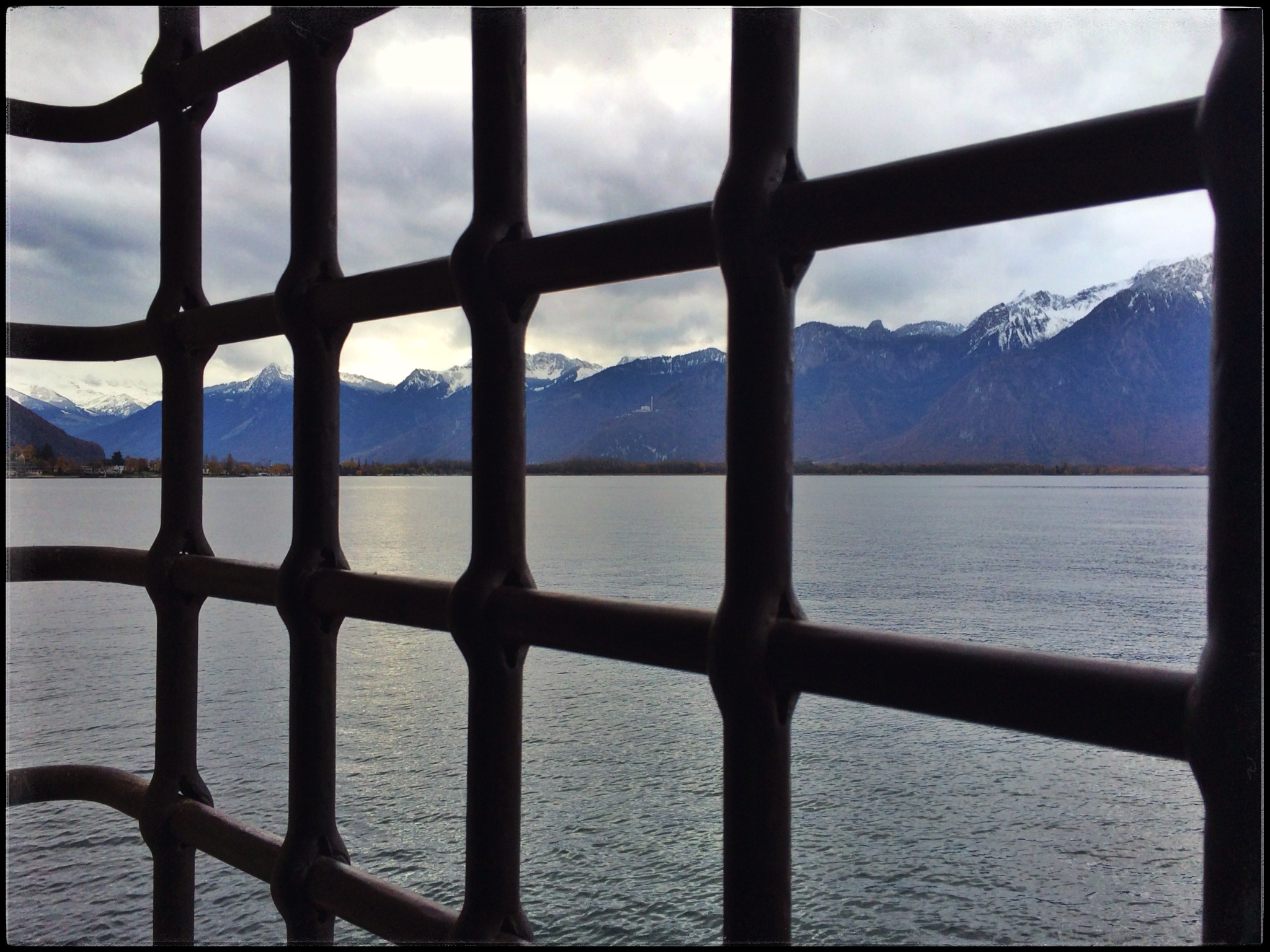
Chillon-2We reached the bottom of the staircase and stepped into a gloomy vault. Seven pillars held up the ceiling, barely lit by the lost rays of light that from time to time bounced into the dungeon. How dreadful it must have been for François Bonivard to sit here for six years, chained to one pillar. And how dreadful it is that once again the cause was that of faith; or supporting the Protestant reformation.

Lord Byron recognized the scent of drama, too, and it grew on him during the rainy, unforgettable “Year Without a Summer” of 1816. Oh, the most fantastic tales he, Polidori, and Mary and Percy Shelley conjured! Frankeinstein, Vampyre – and a curious, gloomy poem about a forgotten soul withering in the dungeon of chateau Chillon.

Perhaps Byron sat in the vault for hours. Perhaps he imagined what it must have been like to be chained to a pillar, believing oneself to be trapped below the water level. Perhaps he found nobility in that limbo between no-life and nothingness. As I thought of the selection of chilling stories chateau Chillon has collected during the centuries, I could not help but wonder why he chose to befriend the thoughts of a libertine prisoner who ended up free, instead of growing a liking to the sad fate of the many women tortured and then burned as witches in the courtyard? Chillon-1

A double dungeon wall and wave
Have made—and like a living grave
Below the surface of the lake
The dark vault lies wherein we lay:
We heard it ripple night and day;
       Sounding o’er our heads it knock’d;
And I have felt the winter’s spray
Wash through the bars when winds were high
And wanton in the happy sky;
       And then the very rock hath rock’d,
       And I have felt it shake, unshock’d,
Because I could have smiled to see
The death that would have set me free.
(Lord Byron)
Chillon-3(Chateau Chillon, Montreux, Switzerland; November 2014)

Leave a comment

Lost in the United Nations

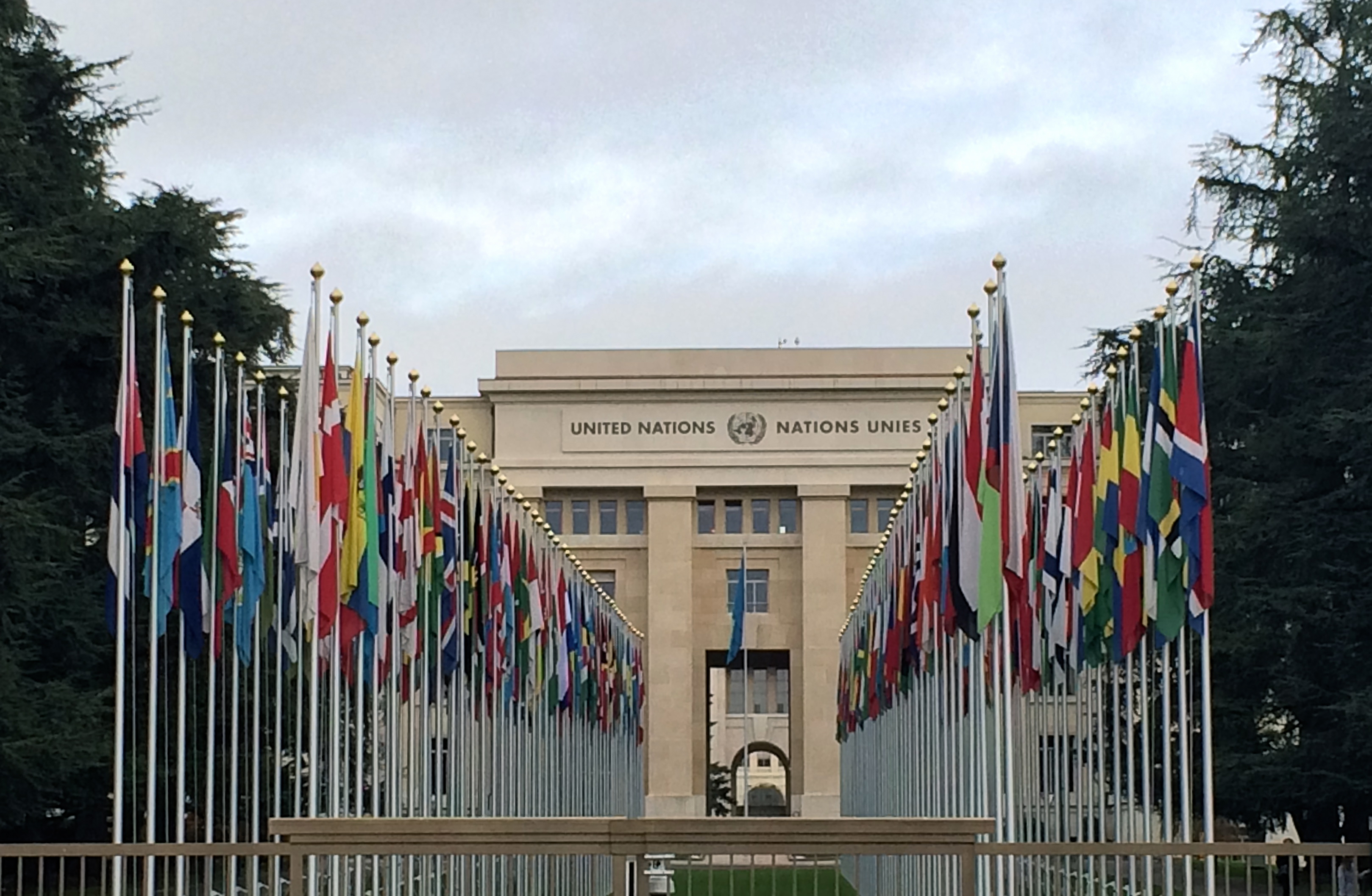
UN-4Four rows of colorful flags wave in the wind as one world in motion. Yet there is a back entrance. And a security check. Passport control. A photo is taken. And no, we are not entering an airport or US soil but a place standing for peace and security in a world that is less peaceful and secure.

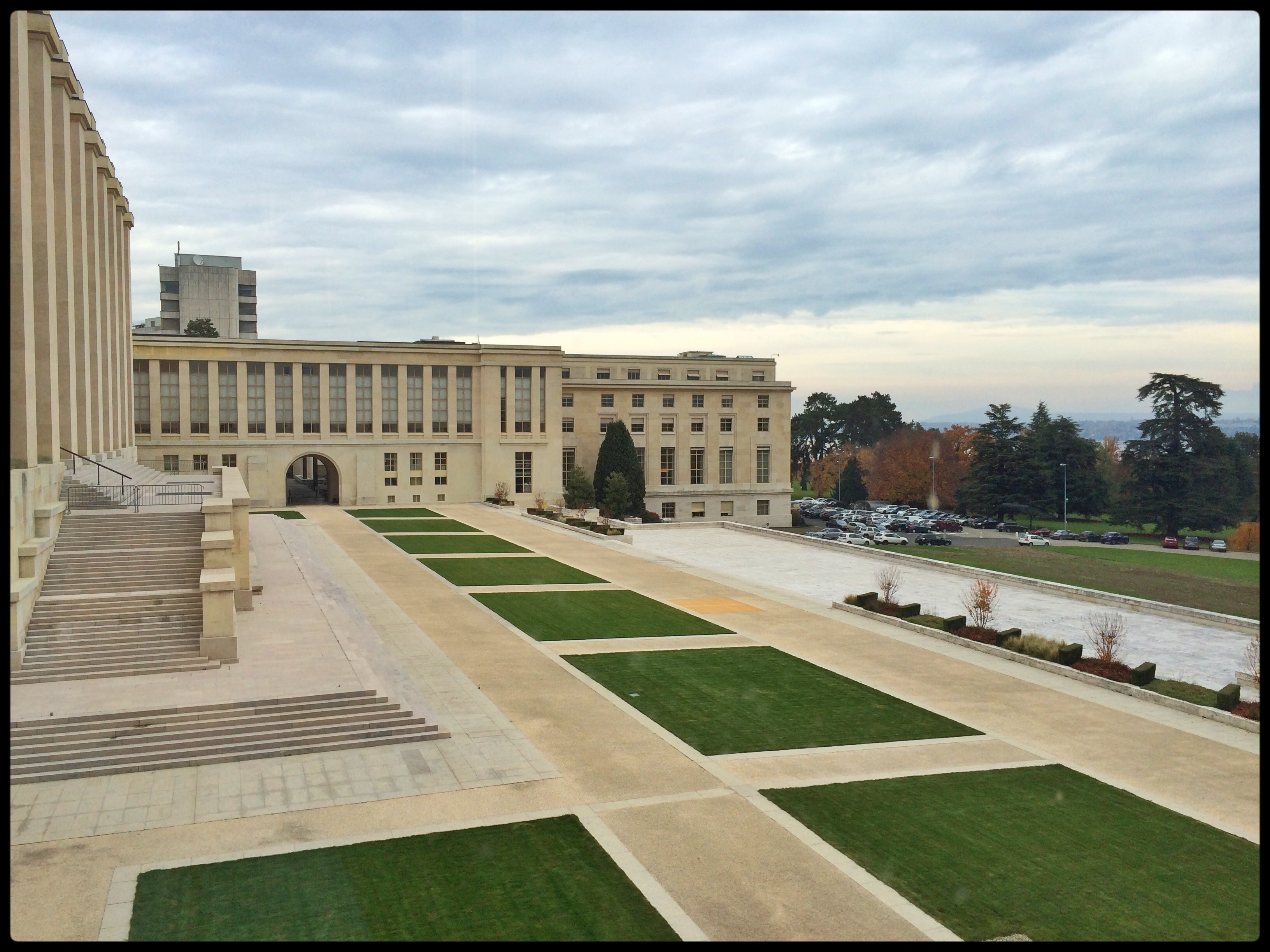
Once inside, one is welcome to be lost in the hallways and corridors of the huge building complex. While the United Nations is hallowed just as much as its Genevan office, many end up lost. While the world needs a grand building reflecting the grandeur of the ideology, some prefer to aim for a grand ego. And yet this troubled world desperately needs something called a “united nations”.

UN-1As I circled around the giant three-legged chair on the Palais Nations square, I thought of how everyone tires with age. Such fatigue may not be lack of energy, but it may be redirecting the energy from dynamic decisions and actions to analysis paralysis, while carefully working out ways not to step on anyone’s toes. Being connected to the What, or the Result, and how to avoid dissonance or disruption, replaces the aim of being connected to the Reason, or the Why. And we small simple people get caught in the How, or the Process, where a long-term view of the ultimate aim can be replaced by unfortunate quick fixes. We choose personal gains, and forget to be kind at heart. And so it is easy to be lost, even in the cradle of human hope and kindness and peace.

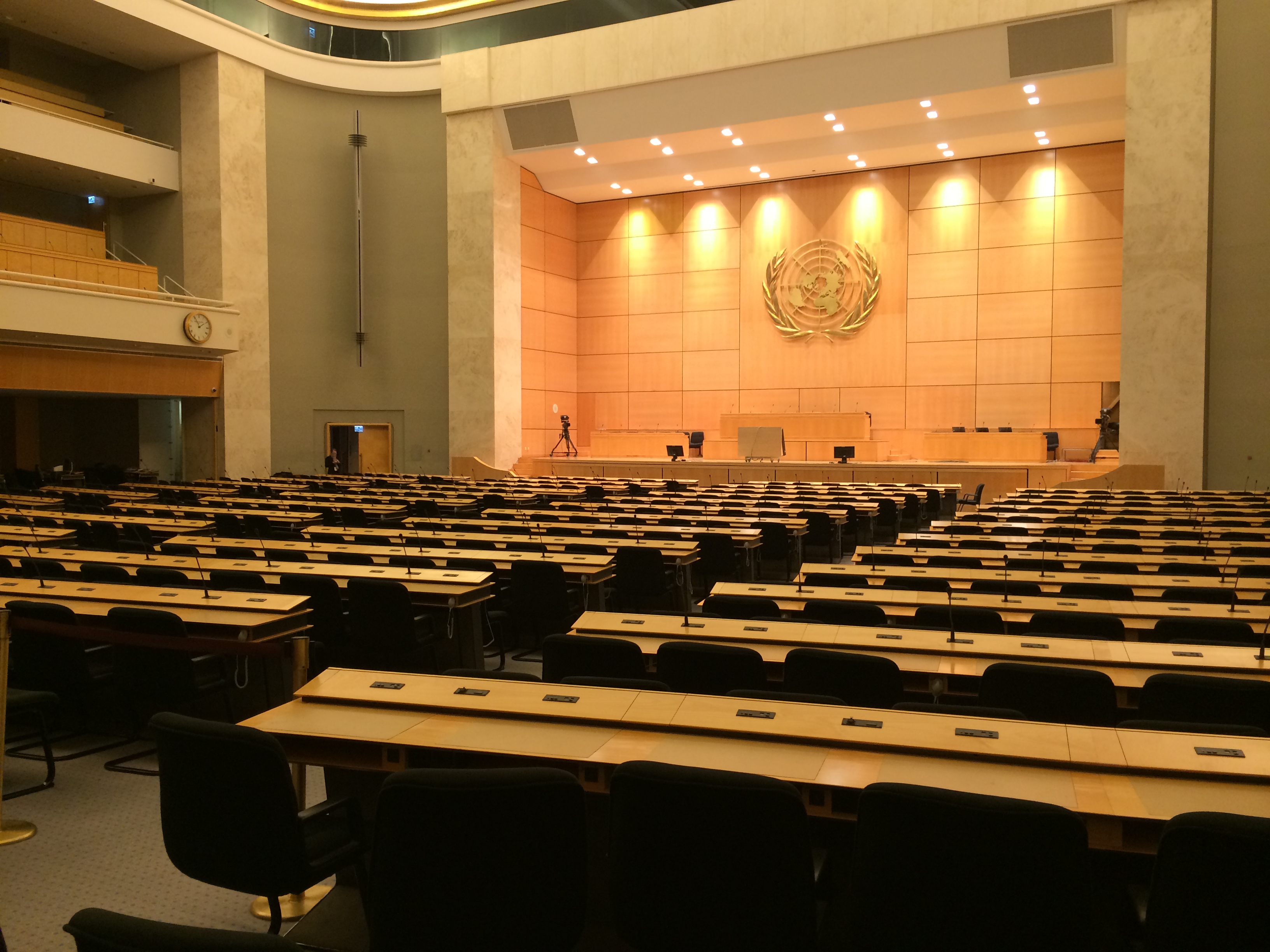
But fortunately the UN office is well sign-posted. It is almost impossible to not find one’s way to the General Assembly Hall, where each country has a seat, side by side – and a microphone, so each and every one’s voice is heard. Here’s hoping that also the entire United Nations finds a clear and sounding voice again.

UN-2(United Nations, Geneva, Switzerland; November 2014)


Leave a comment

Ours is a strange world

CERN-1What could be more mind-boggling than to think that everything we see, and everything we are, is mainly emptiness? The chair we sit on is space, even if we are told it consists of atoms. We ourselves are made of space. Apparently, if all space was removed from between the electrons, protons, and neutrons in the atoms, the consistence of the entire human race would fit into a sugarcube.

Oh yes, there is something just a little bit more mind-boggling: that the emptiness of space is not really empty at all but filled within something mysterious named “dark matter”. And that there may be as many as 11 dimensions – some of them curled (now please make an attempt at imagining how). And that gravity is not just a force but actually a particle too, just like light is, and there is no real difference between an energy wave and a particle. And the most mind-boggling thing of them all: scientists spent ten years building a huge machine to find out the “theory of everything”, spanning from the secrets of the universe at its birth to small subatomic particles that would explain dark matter, multidimensional universes, and gravity.

CERN-2Deep down under Swiss and French territory, the secrets of the universe are revealed in a giant synchrothron that spins the tiniest little parts of atoms around a 27 kilometer circuit at blinding speed. For the smallest possible particles to show themselves, a massive detector 25 meters in diameter is needed to catch every signal. The difference in size between the construction and the particles it captures is probably similar to the distance between one human being and a distant galaxy. After just a few years of operation, a particle beginning to unravel the mystery of gravity and supersymmetry was found – and with a Nobel prize on the tail.

Some make pilgrimages to churches, others to battlefields. But I… oh, I was walking on holy ground as I toured CERN. Oh, today was a happy day for this science nerd. Wandering among other science nerds I pondered of how little we really do know of the basic building blocks that hold our up the scaffold we perceive as our world. Buddha was right: everything truly is an illusion.

CERN-3(LHC at CERN, Geneva, Switzerland; November 2014)


Leave a comment

About cities as friends

september-1Each city resonates with us in different ways. We all feel at home in one place and like a foreigner in another. We develop relationships with each city: one is a friend to have coffee with but not more than once a year. Another is a long-lost friend who instantly embraces and the past ten out-of-touch years are wiped away. A third is a contact who supports our everyday lives ambivalently like a shop clerk or a distant colleague.

And then there are the great lovestories and the great complications. Cities that love us but struggle to let us leave, amidst a thunder storm and airport strike. Cities that charm us initially but then turn to annoy us by closing the post office when we need it and ensuring everybody elbows us when we are carrying groceries.

Cambridge is for me a place of crossroads. It is a charming English cobblestoned bubble I struggled to leave, but it is also a place where I felt distress, turbulence, and where my life took a totally different turn. My Cambridge has equal measures of sunlight and darkness.

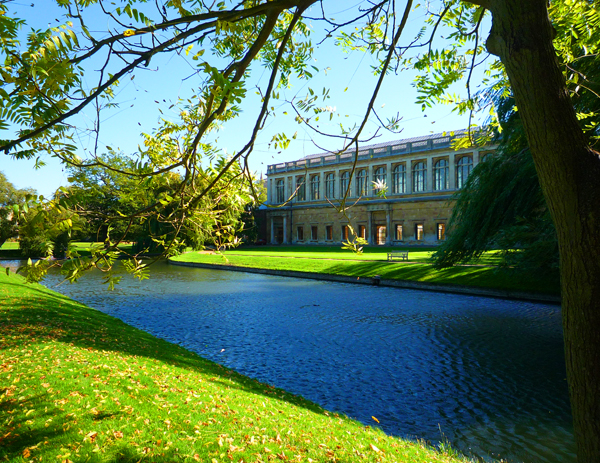
And so, as I stood in the full moonlight waiting to be let in to the chapel at King’s for evensong, I thought of a Cantabrigian friend who once said that life is bittersweet and that it is okay as long as it is more sweet than it is bitter. Surrounded by the college walls, the night air filled with wisdom of ages past and to come, I decided Cambridge weighs heavier on the sweet. And I let myself be enveloped by the city and its air that carries inspiration and intellect and science and art and life – the kind of life that is geared towards a better future.

Cambridge-1(Trinity College and King’s College chapel, Cambridge, UK; October 2014)


Leave a comment

A blood-red world

Tatemodern-2Up on the third floor of Tate Modern there is a room with six blood red paintings on its walls. It is guarded by human eye by day and by mechanical eye by night. In the center stands a long bench. Those who take the time to sit down will eventually feel things. The feeling that filled me was the world pressing upon me, and it was not a pretty world. It was an oxblood world.

Mark Rothko painted the nine Seagram murals for a fancy restaurant but they made people feel shut in and trapped, which is not good for business. Who knows if this was the train of his thought or not when he took back the paintings and returned the money. Today six of the paintings hang in Tate Modern in London in a room of their own.

After a while I closed my eyes and to my surprise the same images lingered, as an imprint of fleshy negatives stuck on my retina. I gave up, opened my eyes, and gazed at the paintings again. They had transformed into a window toward a blood-red world where everything was wrong.

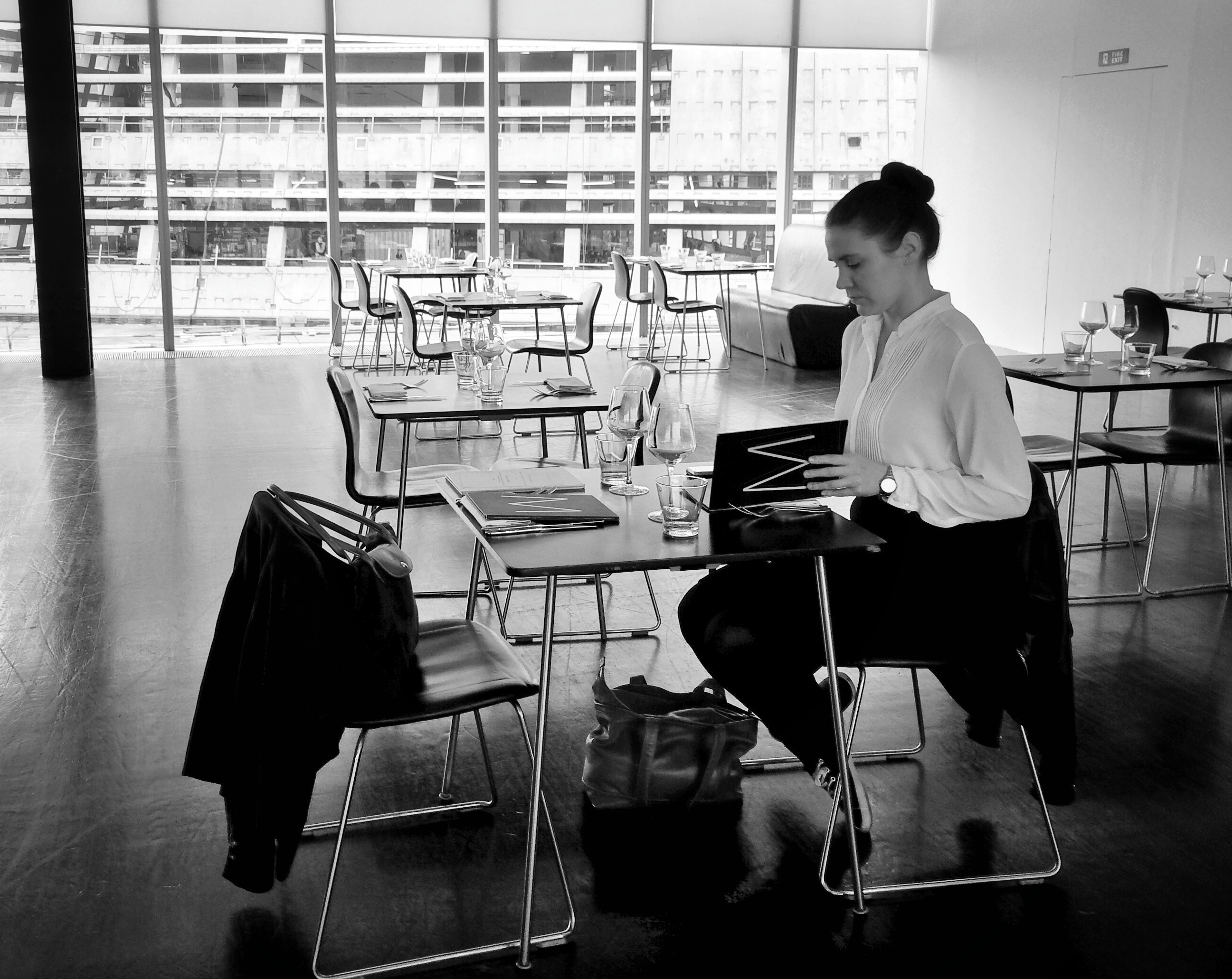
Oh, such a relief it was when we finally found our way back to a place where light is white and warm and not red and cold, and where the water of the Thames on this rare day reflected the blue sky. And where one could simply sit down, order a wonderful risotto with a fabulous verdeho wine, and breathe. The world isn’t doomed quite yet.

Tatemodern-1 (London, United Kingdom; October 2014)


Leave a comment

The other way to die

Nepal-1web_AEEndless puffs of smoke slowly wrap around the spires and pagodas of Lord Shiva’s temple. In Kathmandu death is not a failure, hidden behind green curtains and a cloud of desinfectant mist. When hope for a longer life is fading, the ambulance steers not towards the hospital, but towards the temple. Family is not called two days afterwards when making funeral arrangements, but on the spot. By the upstream waters of the river Ganges, friends, family, and colleagues flock to wish the departer well. While the ambulance zooms between temple buildings, orange flowers are bought and offerings to the Divine given. Loved ones wait by the water as the car reverses down the slope, doors open, and the dying exhales one last time with feet touching the water, draped in orange and covered in flowers.

Side by side with other dead, the spirit is set free from the body by fire and smoke. As the wisps linger between the pagodas I think of how many spirits make that final circle above the city each day.

In Nepal, death is not a taboo. It is not hidden, excused for, or feared. Death is simply a point of transmutation like midnight: a new day begins, both for the departed and those continuing their current dharma.

Nepal-3web_AE(Pashupatinath temple, Kathmandu, Nepal; March 2012)


Leave a comment

What happened to the Minoans?

Festos-2Once upon a time a powerful kind of people reigned on Crete. Nobody knows exactly where they came from. Nobody knows what they called themselves, but we call them Minoan based upon one of the legendary kings. We know how they wrote but we cannot decipher what they wrote, nor how they spoke.

With their plumbing, construction knowledge, rituals, and art they were perhaps even more sophisticated than the ancient Greek. They traded, fought wars, and sailed the seas. Like so many ancient civilizations they worshiped a mother goddess, before the world gave way to male main deities. They loved bullfighting thousands of years before the Spaniards.

AgiatriadhaAnd then the Santorini volcano blew up into a cloud of fire and ash, shook the grounds and seas, and threw never-ending walls of water against the coast of Crete. Villages were wiped away in by the tsunamis and ports and ships were shattered against the mountains. Badly crippled, the Minoan empire could not keep the Mycenaean invaders away. And when everything was almost lost, the Dorians arrived and wiped out the remains. And so what once was self-evident became fable. A thousand years later, Homer and Plato were reciting stories old as legends.

Standing over the ruins of the once story-spun palace of Festos, I cannot help but think how things would be today should Minoan smarts have survived. How would the world have turned out if they had not taken the secret of plumbing and flushing toilets to the grave 3500 years ago?

The answer is lost in the cacophony of afternoon cicadas and drifts away in the scent of dry pine needles and hot earth.

Festos-1(Festos palace and Agia Triadha village, Crete, Greece; August 2014)


2 Comments

Today is life. Tomorrow never comes.

matala-2“Welcome to Matala George. Today is life. Tomorrow never comes” with daisies on a dazzling white wall. Lazy afternoons grooving underneath a thatched roof. Tripping by the flipped A in  “Hakuna matata”. Happy people dancing, toes twirling in the beach sand, under the Matala moon. Soul searchers like Joni Mitchell, Cat Stevens, Janis Joplin, and maybe also George, the Beatles George. The tired ones retreat to their caves in the rock and sleep on beds once carved out for the Roman dead. At each creeping dawn, tomorrow peered at the Flower Children over the rock ledge and decided to go elsewhere instead, if just for a day.

One day tomorrow came, along with those who thought the ancient tombs were better held sacred when prawled by tourists in swimsuits. Curious people came in throngs, too, to feel just a tickle of the magic without ever daring to throw themselves into living for the day. Matala became a site of pilgrimage, where the last remaining hippies were photographed as they ambled about their homes.

I stayed just for day, too. Maybe, just maybe, after I and the hundreds of tourists had gone, somebody lit a fire on the beach. Maybe a few dark shadows with smiles gathered around the flames. A guitar, a drum, and a few breaths while staring at the blackened water. Then music swirling up towards the milky way, voices, joy, and chasing today beyond midnight.

Who knows, perhaps some are still searching their souls under the Matala moon.

matala-1(Matala, Crete, Greece; August 2014)


Leave a comment

Once upon a time there was a monastery

Tallinnmonastery-1

800 years ago she stood as a safe haven and retreat for those wishing to know God and themselves. She was created to bring the Christian God closer to the people, to open their hearts with the help of Dominican monks. She also had business sense: in the heydays she provided shelter to produce up to four kinds of beer for the good Blackfriars.

But the greatest wars on Earth are always about religion. Faith is another word for subjective truth. Congregations loyal to Rome were not in fashion when the Reform spread northward from Germany.

Reform in the 16th century meant also reform of the buildings of worship. And so she was dismantled, piece by piece. Some of her brick was incorporated into the great cathedrals of Tallinn. Other pieces were scattered into buildings and city infrastructure around the Old Town.

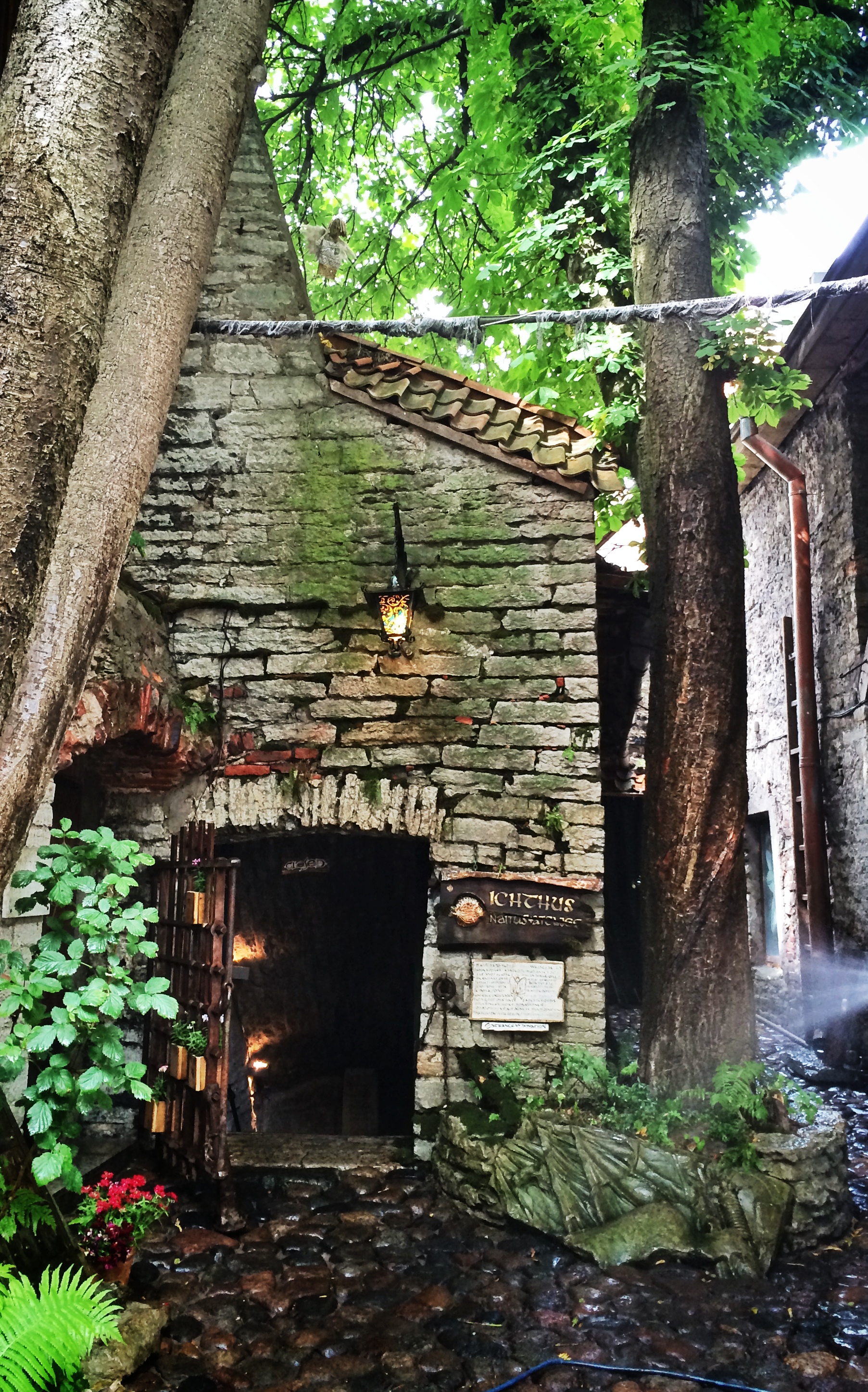
But the vault of Power remains. As I stood still in the center of the room I could hear my own rambling mind. Why, I think heard something else, quietly swirling by the tip of my ear. Centuries later, the echoes of the chanting monks still bounce off the walls. The worn stone floors invited for a moment of tranquility in this crazy hurried world.

And then a lady tourist in great awe of the ceilings kicked the candle on the floor. It flew a good meter, splashing stearine as it went.  No more echoes of monks and no more impressions of power in the air. Amidst minor confusion, apologies, and good intentions we relit the toppled candle with a miniature matchbox strangely enough provided by the lunch restaurant just an hour ago as a gift to all customers.

Coincidence, perhaps, or perhaps not? One thing is certain: regardless of temples of worship and candle-lit moments, tranquility is a state of mind.

Tallinnmonastery-2

(Dominican monastery, Tallinn, Estonia; July 2014)


Leave a comment

From thick fog to brilliant blue

soderskar-1
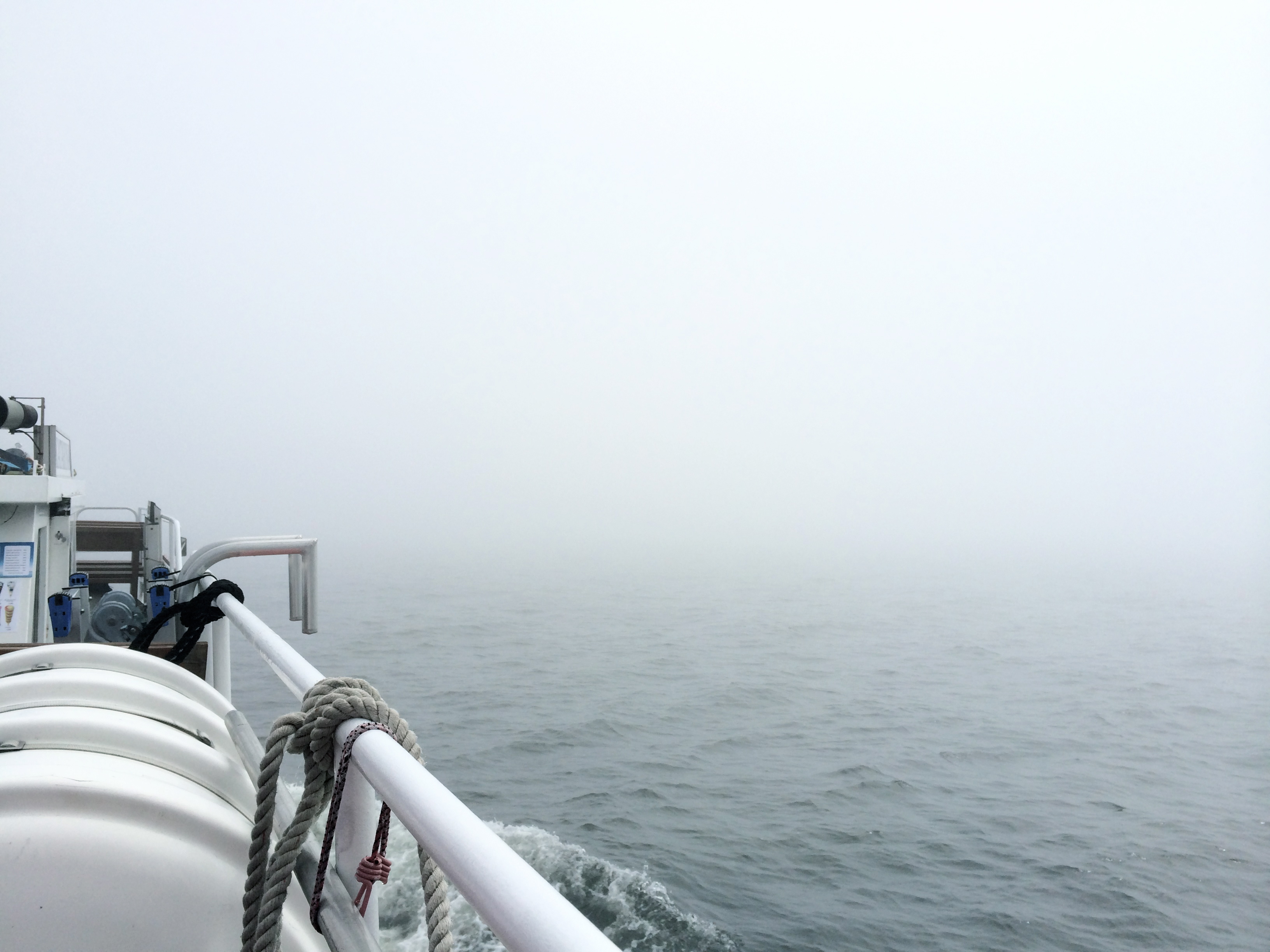
In brilliant sunshine began a perilous voyage. As we cast off, little did we know that mother Nature had decided to let the sun bask on the market square while shrouding the archipelago in thick mist. Soon the sea smoke rolled in and wrapped our little boat in a blanket of nothingness. No sound, no horizon, no nothing except for white stillness.

soderskar-5
According to the charts, somewhere near us was a smattering of rocks breaking the waves. Perhaps starboard? Port? Who knows, even sufficiently deep under us fortunate souls? We wound down the engines and let the ship glide, hoping to discover our destination. Anguish, what does one do when the gadgets point to a few meters ahead but there is nothing but whiteness in sight? Hoooooonnnk the captain called with the horn, hoping for a yip, a yell, a hello, over here!

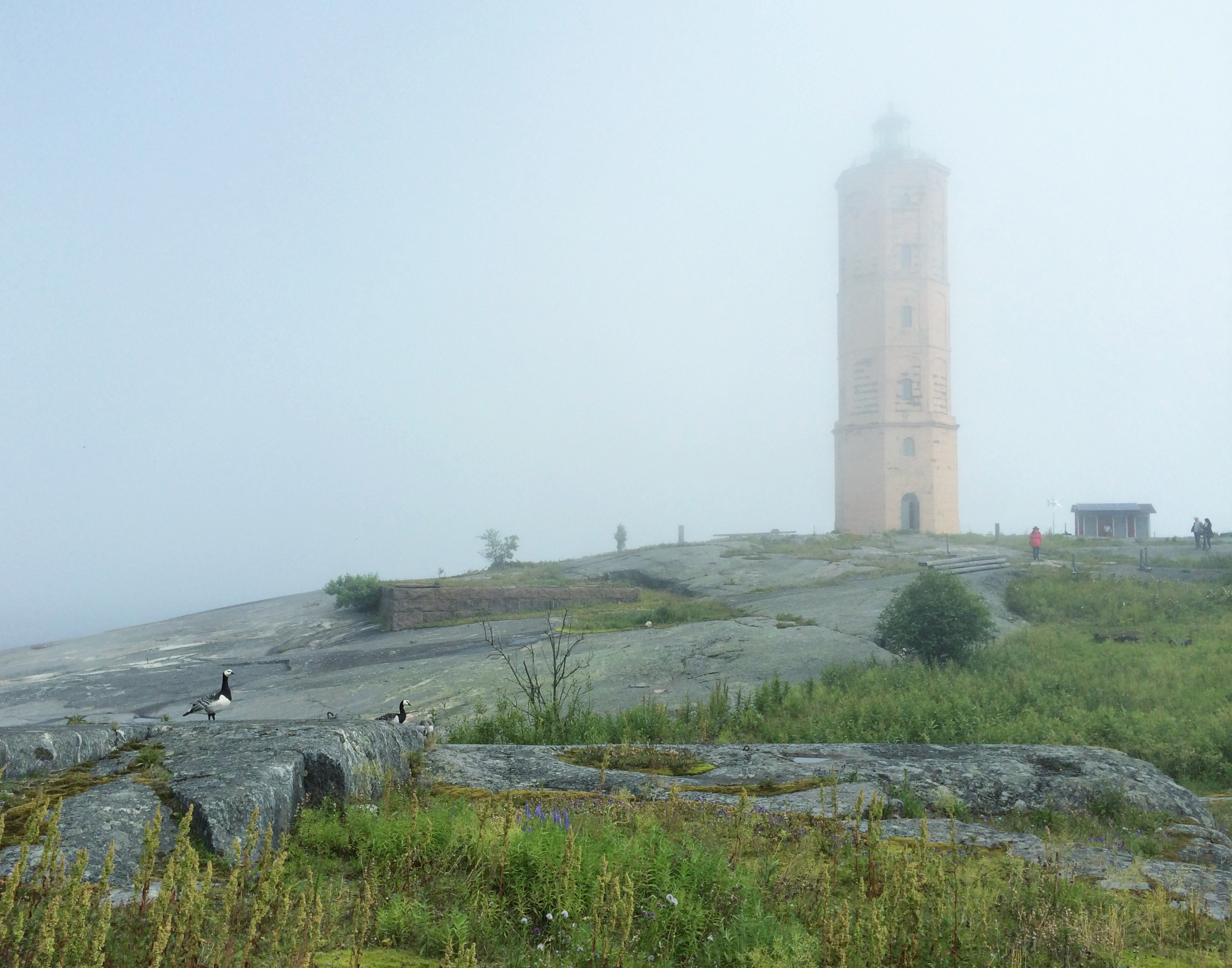
Indeed, over there it emerged from the shroud: Söderskär islet, all alone in the world between Finland and Estonia.

soderskar-4
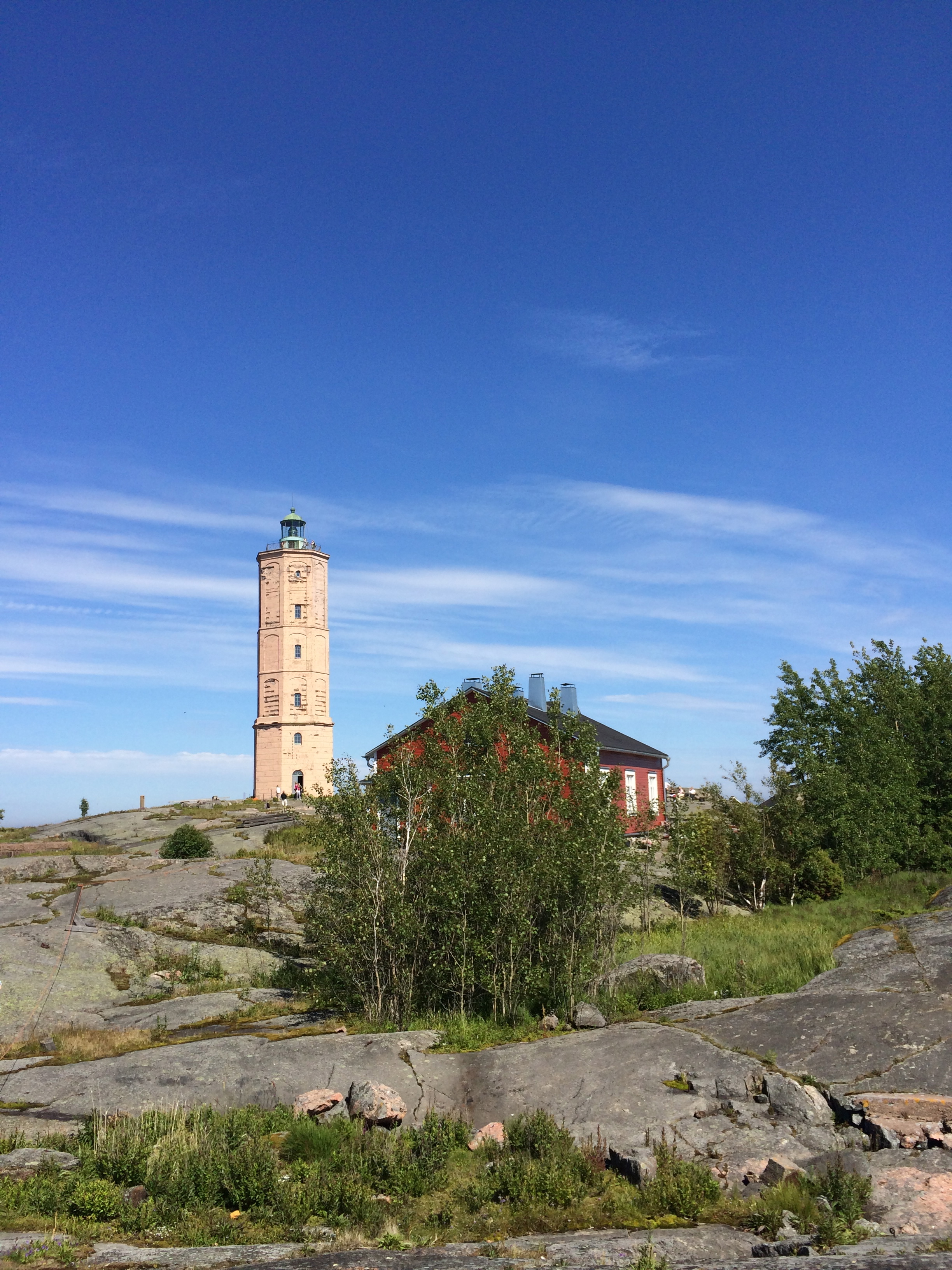
Once upon a time not so long ago a mariner pilot, the lighthouse master, the lighthouse guard, and their families called Söderskär home. Tempests, swells, and scorching sunlight were the bountiful bonus on the job – and off the job. Life was rough and lonely until some years ago when the light was finally extinguished forever. What once swept the horizon with a bright beam turned into a dark tower looming in the moonlight, the ghost hand that waves homebound ships welcome.

And suddenly dark towers and a gray white world were wiped away by the June winds and all that was left was a brilliant blue. On a beautiful day even a lightless lighthouse can come to life.

soderskar-3
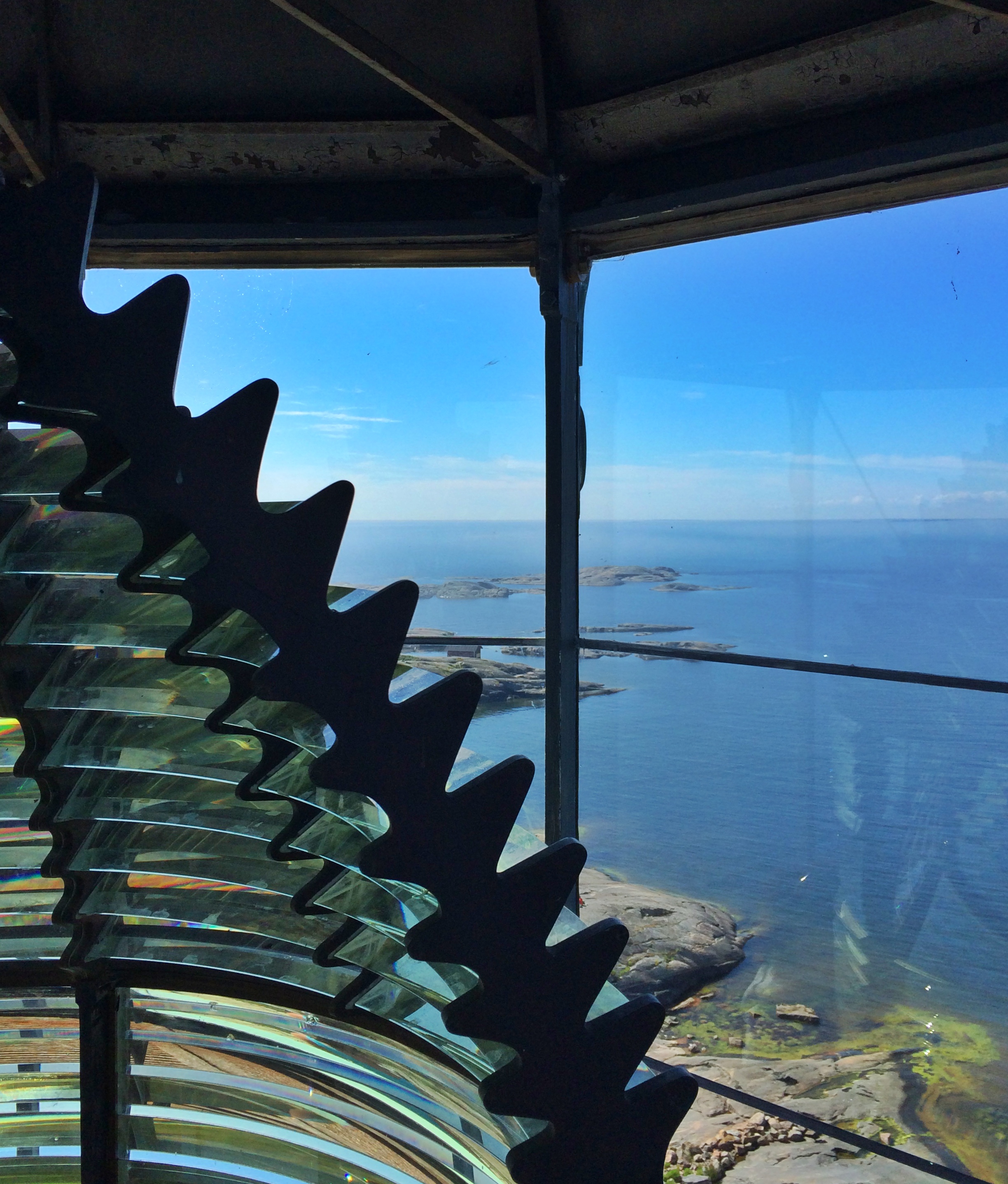
I stood by the lantern and looked over the cobalt vastness. Virgina Woolf’s poor heroine never made it to the lighthouse. Tove Jansson’s moomin family did complete the voyage, and spent a summer discovering themselves and the world beyond the known. At a lighthouse islet there is no escaping reality, no fleeing from the now whether it is sunshine, storm, or snow. Close your eyes and try to dream but the sea is always on the other side of your eyelids. Everything changes but the sea is constant.

“Moominpappa leaned forward and stared sternly at the fuming sea.  ‘There’s something you don’t seem to understand,’ he said.  ‘It’s your job to look after this island.  You should protect and comfort it instead of behaving as you do.  Do your understand?’

Moominpappa listened, but the sea made no answer.”

(From Tove Jansson’s Moominpappa at sea)

soderskar-2

(Söderskär, Porvoo archipelago, Finland; July 2014)