
 Tea houses, souvenir shops, cows, chicken, colorfully dressed people, even an Irish pub. If you are looking for undiscovered Nepal, do not consider the Everest Base Camp trail. Hundreds of people discover it each day before you do.
But the air is crisp and fresh at 2860 m altitude. Donkeys and dzos (hybrid between yak and cow) are lounging around, packed and ready to go, all the way up to Base Camp (poor creatures).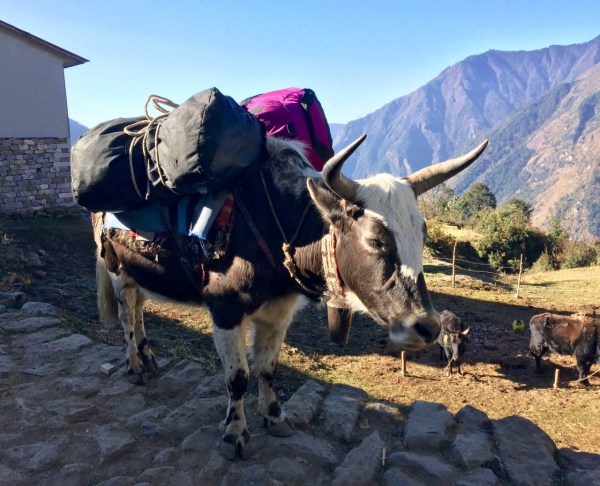 Tourist is as tourist does. Hence, all tourists must report to the Tourist Police at checkpoints along the way. With a photo. Surprisingly, Nepal insists of being aware of who is where, in case of a mudslide or an earthquake.
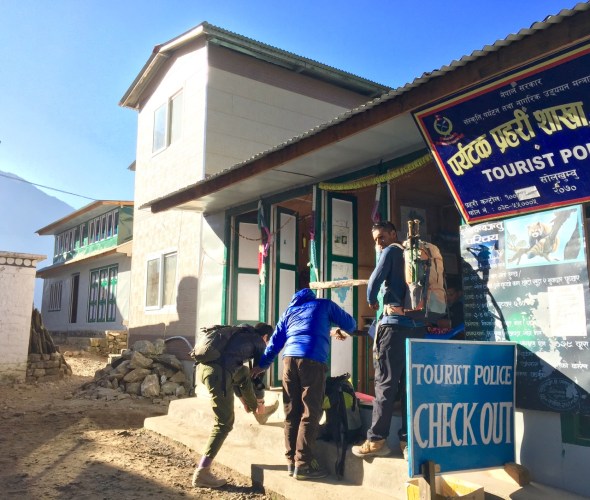 The thermometer climbed to 17 degrees centigrade during the day, and dropped down to -2 degrees at night. Later it would turn out we caught the last week of beautiful fall weather.
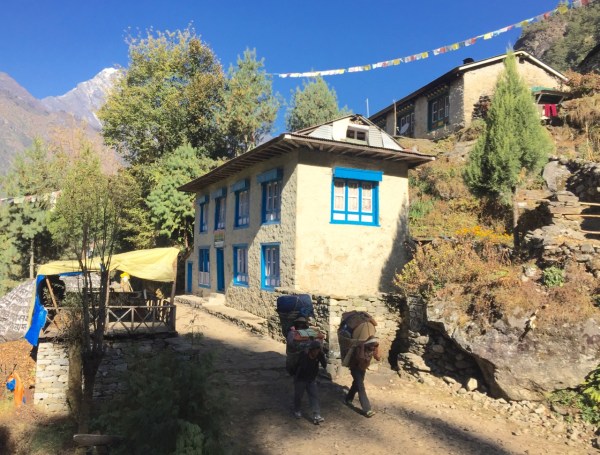 And upward we went, after the oxen and the sherpas and the rest of the trekkers. Towards the snowy mountains and the blue, thinning mountain air.
 (Lukla, Nepal; November 2016)
 “Give us a B-side of Kathmandu”, we had said to our guide, some hours and adventures earlier. “Something you wouldn’t show to first-time visitors, something hidden.” As we walked down the steps into a dark alleyway in Kirtipur, avoiding a suspicious-looking dog, I wondered what we were up for this time.
 Our tablecloth was what looked like a flowery bed linen, spread out on the carpet. We sat on the edges of it, sharing the floor as a table.
 We had to try the food he said. All of it. And the bread, too. I’m glad we did. It was delicious. Apart of the black beans that set my mouth and throat and everything below it on fire.
 (Kirtipur, Nepal; November 2016)
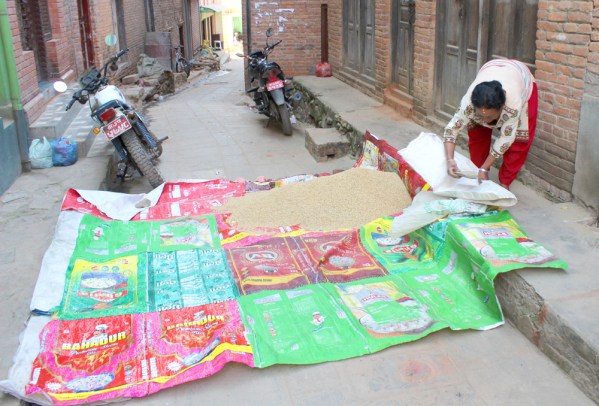
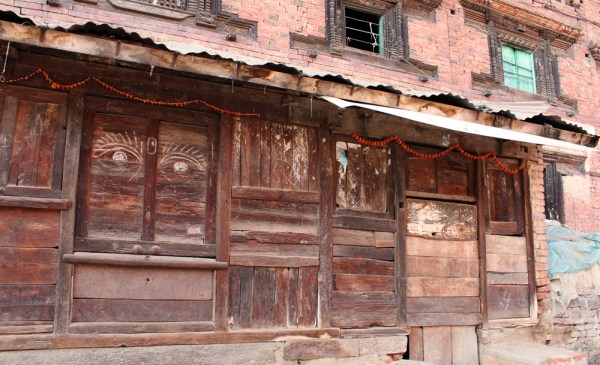 In Kirtipur it is easier to breathe. Easier to move, too. The only things to watch out for are ducks, and women working on the steps of their houses. Living is peaceful here. One can use the entire street to clean one’s daily rice harvest.
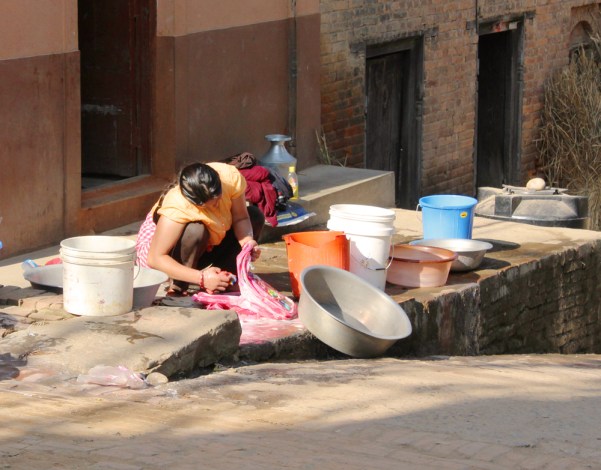
 One might prefer to wash one’s laundry in the front yard instead of the backyard. No passing cars around to soil it as the town is practically vehicle-free. And besides, the daily gossip fix is served, too.
 Kirtipur is a traditional Newar town. The Newar people are said to be the original inhabitants and owners of what most tourists identify as Nepal: the area around Kathmandu valley and all things Nepalese. “Nepal” is even a variation of the word “newar”.
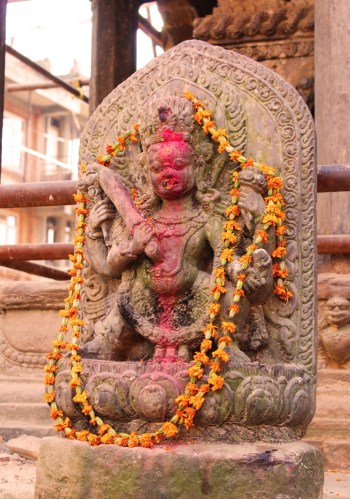 (Kirtipur, Nepal; November 2016)
 Oh, the crowds! It is a Saturday picnic in the middle of Kathmandu. People sit on blankets, eating and chatting. Dogs chase each other or their tails. Children chase pigeons and each other. All the commotion is to celebrate the completion of restoration of the Boudanath stupa, after the
  The community celebrates because restoration was a community effort, in a country where the government is very slow in rebuilding the premises of people’s lives.
 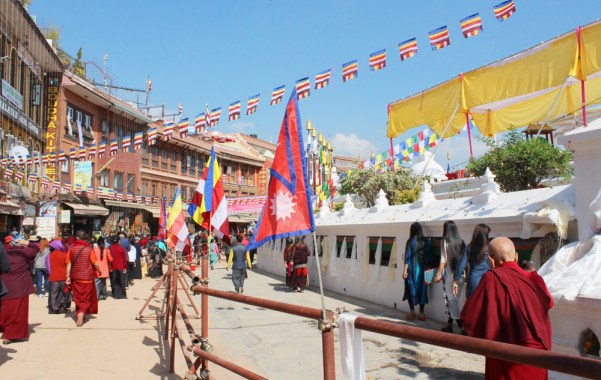 We joined the Tibetan monks in red robes in the kora, or circling of the stupa. In Nepal, every sacred Buddhist site must be circled clockwise. This means quite a lot of circumnavigations of mani stones, sacred stones with inscriptions, often sprinkled on popular trekking routes in the mountains. But this time the kora was celebratory. People spun prayer bells and walked along the shiny white wall accompanied only by their own thoughts.
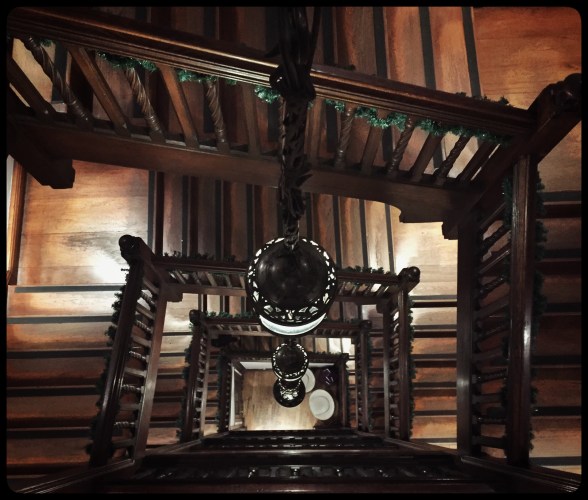 Here again. Of course. The only department store I know of with creaky wooden stairs and ancient elevators instead of modern escalators. Such a lovely place, filled with beautiful things one absolutely does not need, and that one rarely finds elsewhere. Thankfully it is usually sufficient to simply breathe in the atmosphere of days gone by.
 10 years later, I was back in Kuala Lumpur. I had vowed never to return. Everything had been arranged and I did not have much of a choice. And so we woke up in KL one morning and, since one of my friends was a 1st time visitor, ended up on Petaling Street. The famous once-flea-market, now tourist-trap street with the red lanterns. And apparently under a glass roof, these days.
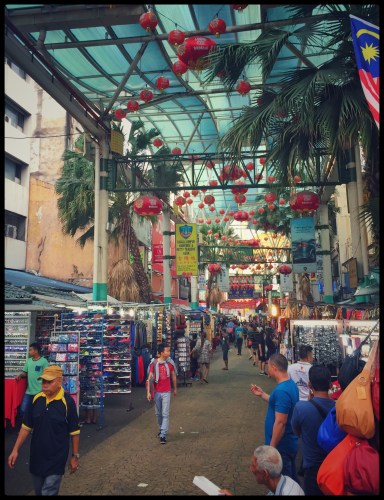 The shops lining the street did still sell traditional Chinese goods and foods, but the illegal copy industry of branded goods had taken over the whole street (how sad), save for a few stalls selling Indian print harem pants or street food. Otherwise it was sunglasses (Ray-Ban), “Louis Vuitton” bags, watches, “Gucci” T-shirts, and most, if not all, fake – of course. Apparently, if one is lucky one can find the real thing, sold on the street as an overflow product from a local factory. Most likely not, though, as such things would be sold in proper factory outlets, not out on Petaling Street.
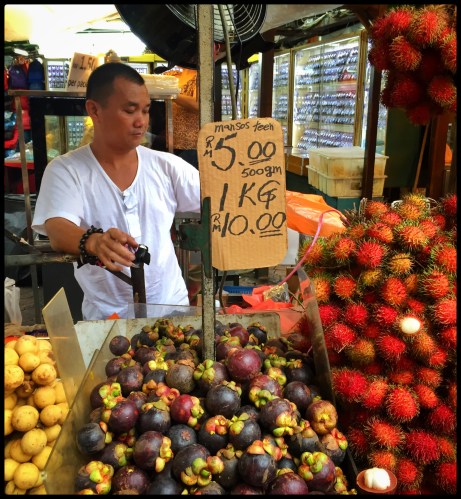 How surprising to an (apparently) naïve person that the market for fake goods is large enough to carry a size of business of Petaling Street. Who buys all the quite obviously low-quality “Louis Vuitton” bags and “Dior” sunglasses? Asians? European or Australian tourists? What kind of social classes?
 It will be interesting to come back in 5 years time (of course only on idea level – I’m done with KL), to see how the presence of hipsters changes the offerings on Jalan Petaling. The crowd found in the cafés around Petaling seems to be of the somewhat well-off and well-educated lot, one that, when they choose to, would spend much money on things it cannot get from elsewhere. Perhaps there is yet hope for Petaling Street.
 (Kuala Lumpur, Malaysia; September 2016)
 Greetings from the fattest place of the Earth – or rather, from the stratosphere some 35,000 feet above it. After missing this goal both in Brazil and in Kenya, I am finally checking off one of my
  After bustling Ubud, Uluwatu is silence, sea, and surfers. Hot, winding, dusty roads with bush and dry forest everywhere; a house here, a villa there. The air is steamy from the evaporating surf.
 The Uluwatu temple is one of the most sacred temples on Bali, alongside Pura Tanah Lot, the other temple ravaged by the sea and the wind.
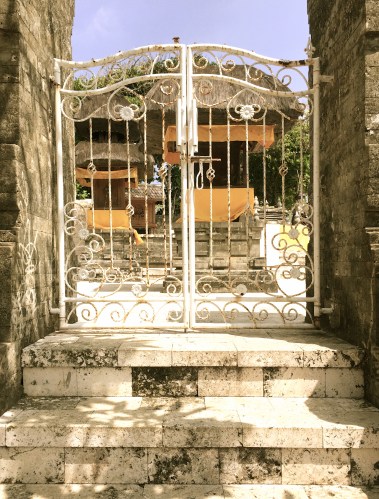 (Uluwatu, Bali, Indonesia; August 2016)
 Any given night in Ubud one can hear the insane, energetic beating of the Gamelan instrument. Follow the clear, metallic rhythm as it weaves out of a temple and you most likely come to a dancing spectacle. Young girls who dance with their eyes more than with their bodies. Ladies who dance with their fans and arms more than with their bodies. And men who grow into mighty warrior gods, darting here and there in the spotlight.
 (Ubud, Bali, Indonesia; August 2016)
 Question of the day: how does one get an invite to the Queen’s PJ party, also called Dine and Sleep? I hear she throws an occasional bash according to a strict schedule: the guests always arrange and depart by the same trains. And after-dinner discussions are short, but they are with the Queen of England after all. In gone times one could be invited to stay for days, but as our daily pace has quickened, so has the pace at Windsor castle.
 This blue marble