
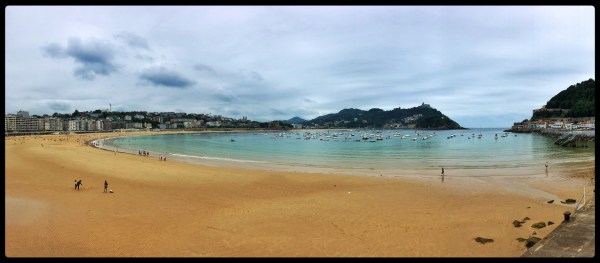
 Biarritz is Basque country. San Sebastian is Basque country, too – the heartland of it. Yet Biarritz is very French and San Sebastian very Spanish. The cast-iron balconies with red flowers, the music loud in cars and cafés, the chaotic lunch hour in a pintxo restaurant – it is all so quintessentially Spanish. Where the French are elegantly laid back, the Spanish are loudly casual. Where the French love white and light houses, the Spanish in San Sebastian use more heavy, dark colors to make a town lively, energetic, and a little chaotic, but equally beautiful as France.
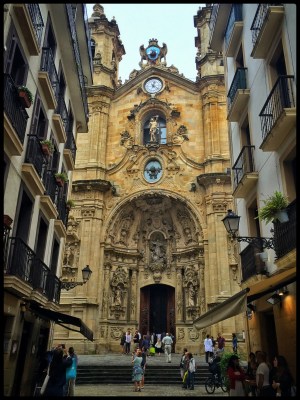 Strolling down the streets of San Sebastian old town (or Donostia as it is called in Basque language), I found it hard to believe that we were still in the same ethnic and cultural country, as so much has changed after the border between France and Spain split the ancient Basque country in two.
 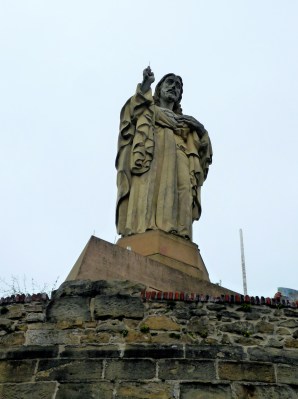 It is a strange thought how insensitively Spain and France divided the country, dividing at the same time an ethnic group in half. Perhaps a little similar to Ireland and Northern Ireland; or when Sweden and Russia tossed the Finnish borders around. Nobody asked the Basques, but they ended up in the middle, without a choice. Their language, food, culture, and way of life was suddenly divided. Families were divided (although EU now allows an open border). And in one way worst of all, the Spanish Basques have, with their sometimes unjustified actions through armed conflict, reached a level of autonomy that the French can only dream of. In France one must become French it seems. Nothing else is really acceptable in the long run. And so nobody seems to care about the Basques – except that they make nice cakes and goats cheese, and pretty colorful striped weaves.
 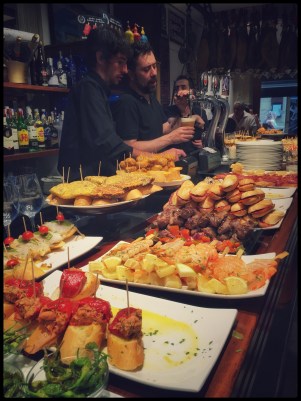 But we were simply ignorant day tourists who cared more for the lovely Belle Epoque time architecture, digging our toes into the sand of the La Concha beach, and the pintxos. Oh, the pintxos! I have no idea of what I ate half of the time, but goodness me it was delicious. Although, what can one expect when the San Sebastian night sky is bejeweled by Michelin stars, more than anywhere else on the globe compared to population count. It is weeks since we returned from San Sebastian now, but I can still taste every single pintxo I had that day. Oh what simple beings we humans are.
  (San Sebastian, Spain; July 2016)
Monthly Archives: August 2016
Trailing thoughts under the sea
 In Finland, most people are divided into two kinds: the lake people, and the sea people. This has to do with where one spends one’s summers. The lake people cannot understand why anybody would need storms, big waves, smelly water, and to be tangled in seaweed when swimming. The sea people on the other hand cannot understand why anybody can feel alive in the confined spaces of a lake in the woods, without the promise of vastness and escape, and with the mosquitoes, and the sour water.
If you have read my writings even for a short while you have probably figured out I am a sea person. I need the sea because it teaches me, like Pablo Neruda said.  The aquarium of Biarritz is one of the grand, old aquariums in Europe, originating in the 1880s. Since 1933 it has moved to a fabulous, art deco building that on the outside looks like it grew from the bedrock, and on the inside feels like you are part of a never-ending maze in the ground.
And so, I could spend hours wandering around the maze of the aquarium watching the strange and colorful world under the sea. The ocean is beautiful from the shore, indeed, but it is so much more astounding underneath the surface, where one rarely gets the possibility to peek. We think we’ve seen it all, but once we see phosphorescent creatures, fish with lamps growing out of their heads, fish with tiny legs, giant squids, and that weird thing called sunfish, we understand how limited our imagination really is.
Once I spent weeks tracking dolphins on the coast of Kenya. As part of the project, we also surveyed the reef. Like a kid I waited for the daily, one-hour immersion in 3D live-streaming television, better than any silver screen movie.
When girls grow up, they often want to work with animals, and thus hope to become one of three: a) veterinarian; b) horse trainer or rider; and c) marine biologist. I got a couple of points away from entry to veterinary school (I now know I took the better road), and I do have a biologist’s background training, but I never ventured into marine biology. Do I have regrets? No. But I have basic field training, and I ensure I have time to study the world under the water while tracking dolphins in the Amazon or in Kenya. And maybe one day I will find myself spending much more time with the sea than in the air.
Regrets are much more than wasted thoughts – they are misguided energy. So I try my best to choose how I live each day. And perhaps I one day choose to spend more time studying the sea. (Biarritz, France; July 2016)
By the bay of Biscayne
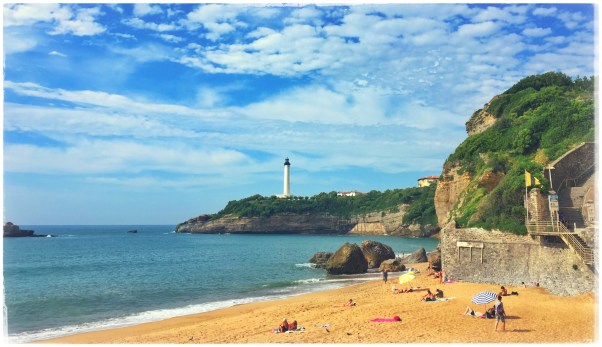 One sunny day we stumbled out of the train in Biarritz, by the bay of Biscayne. In the heydays of this Belle Epoque resort, the newly built train connection whisked one down in record speed: only 30 hours of train travel from Paris. Little did the turn-of-the century aristocracy know that their favorite summer playground could be reached within five and a half hours only 100+ years later.
After all the private beaches and beach clubs on the Riviera, miles and miles of free beach is a fabulous thought. Likewise is the realization that one does not need to have the bronzed, toned body of a Brazilian beach goddess to feel welcome in a bathing suit. As long as one minds the surfer-swimmer borders, and the lifeguards who infuse trespassers with shame by tormenting the vuvuzela. 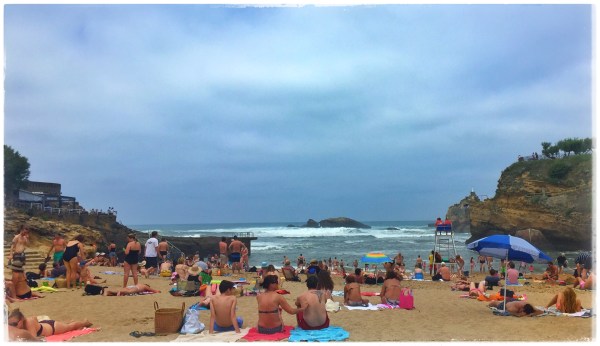 Beach weather in Biarritz is a game of roulette. In order to have any idea about tomorrow’s weather, one must look at three independent weather forecasts, take the rough average of them, and add a serious error margin. If a weather forecast says “full sun” it may be that the sun is indeed full – but not before 5 pm. And a day with 28 degrees and scorching sun may be followed by a day with 22 degrees and drizzle. And it can be T-shirt weather in December, according to our hotel landlord.
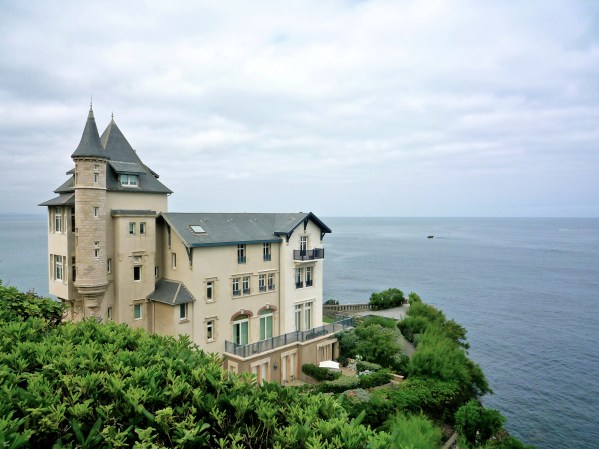 On a beautiful summer’s day one can feel the illusion that Biarritz is overlooking the sea. In truth, it is the sea that tolerates the presence of Biarritz. The bay of Biscay is a graveyard for ships even in this day. Fog, swells, thunderstorms, hurricanes, you name it. In the winter the bay of Biscayne is said to be a cauldron from hell. Which is exactly why storm watchers are drawn to it.
After just two days, I had not even noticed my little heart conspiring against my reason and firmly deciding I will have to come back. Not when the sun is shining, but when the sea is raging, the whales pass close to shore, and the lighthouse beam sweeps over the dark raging waters. The sea is always lit from the shore at night, and I can only imagine the magnificent view in October, November, or December. Especially from the Hotel du Palais standing on a bluff over the sea, and most especially when viewed with a cup of heated, liquid chocolate in one’s hands.
But for now, for this July day, I will savor the sunshine and watch some crazy swimmers feel brave in the nearly sleepy waters of the bay.
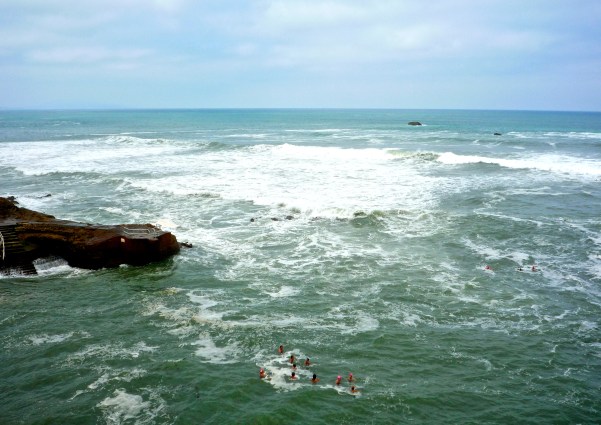 (Biarritz, France; July 2016)
When curls, cherub looks, and heels were the height of masculinity
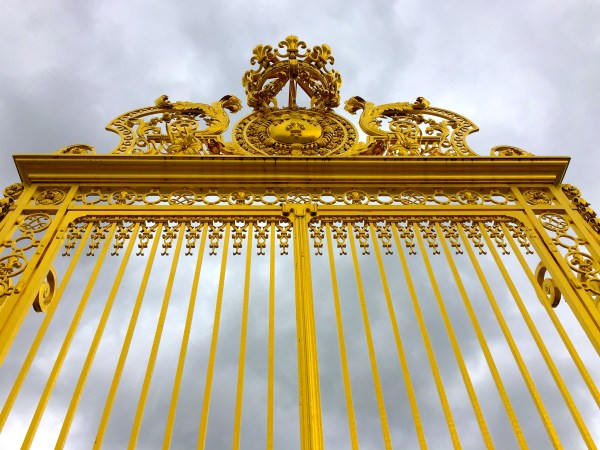 One day we ventured out to Versailles. Turns out we were not the only ones. During most of its history, Versailles has hosted a busy front yard bustling with horses, carriages, and working people. Today it can look down upon a few hundred meters of zigzagging, well-ordered lines of people waiting for entry.
 Versailles is a thing of beauty – feminine beauty by today’s standards. But a man of power and stature in the 17th century saw different ideals to aspire to. In Louis XIV’s time, the height of manliness was a soft, plump, slightly rounded middle-aged cherub face and angelic curls. A wig of course. And a man of court was to carry red or blue garments and a lace neckerchief; and wear high-heeled dancing shoes, along with shorts that left his tight-covered legs visible for admiration.
Yes. Men were admired for their curls and their legs, and their angelic appearance. Get used to it. Everything that is manly today was downplayed. Where was unruly, wild hair? A beard? A strong jaw, muscular arms, and a flat stomach? Things that are admired in men today were nonexistent in the French baroque and following rococo period. Only height carried over to today as a connecting trait. And the only manly physique displayed was legs, and ideally with strong calf muscles. Calf muscles! How fetishous should any woman be judged today if she drooled after calf muscles? As we watched the never-ending rows of paintings depicting some seriously flamboyant men, my sister pointed out that the function of the 17th century men’s sense of esthetics was to appear as peacocks, or those male tropical birds that show off with bright colors and dance and make decorated nests. Indeed. Louis XIV’s idea of a dream “man cave” was to decorate it with cherubs, gilded vines, Roman gods, and fountains. Not exactly a fanfare to masculinity in today’s terms.
 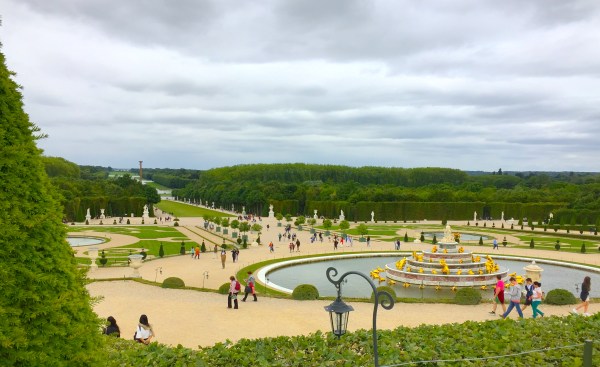 But men of the 17th century also saw warfare, murder, death, and violence as part of normal daily order of things. Being out in the battlefield, dirty and bloody, seeing comrades die was not too far from reality, even for the highest commander. Perhaps a balance was needed – and hence all the gilded vines and angels off-duty?
 As I walked through the flowery gardens of the Versailles, I could not help but wonder: were men of Louis XIV’s era emancipated in respect of a female identity alongside a very masculine identity? Or were they repressing their male identities in comparison to a strong, feminine-directed collective sense of esthetics? Did these men of the Sun King’s time truly consider cherubs cool interior decorations for their walls, or were they forced to think they needed to consider them befitting a man’s house?
And would I, the modern female, seem very vulgar and masculine in the eyes of the men of court of the 17th century? (Versailles, France; July 2016)
What makes a city a writers’ city?
 As I browsed through the stock-full shelves of the Shakespeare and Company book shop, I pondered what it is that makes a city a writers’ and artists’ city. Why is it that in the 1920s Paris was the place to be, and perhaps today one should be in Berlin? Why did so many artists congregate on the French Riviera in the end of the 19th century (was it just the peculiar light?)?
So I did what everybody does today when they have a question: I typed in Google, “What makes a city a writers’ city?” The top 5 search hits were about New York City: half of them listing why New York City is a writers’ city, and the other half telling writers to leave for better cities than New York City. Odd, however, that all the cities mentioned as great writers’ cities were located in the United States. 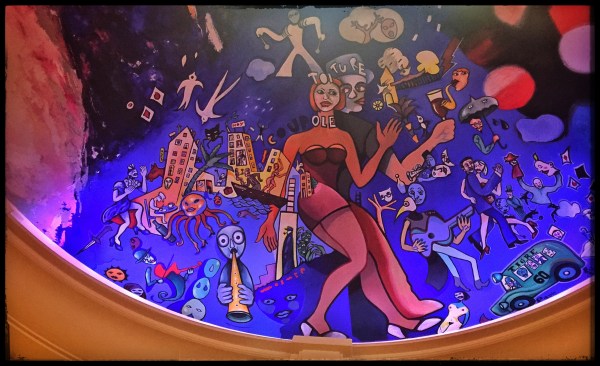 Google made me none the wiser, except for one important factor: money and cafés. A writer thrives in a location which is esthetically pleasing and has good cafés where one can observe life – but that even a poor creative soul can afford. Places like Brooklyn and San Francisco, and St Germain-des-Pres in Paris, used to be hot hangarounds for creative people – until so many came that the area became “too hipster” (now define it if you please) and the poorest but also coolest full-time aspiring artists had to move out to find yet another inspiring haunt.
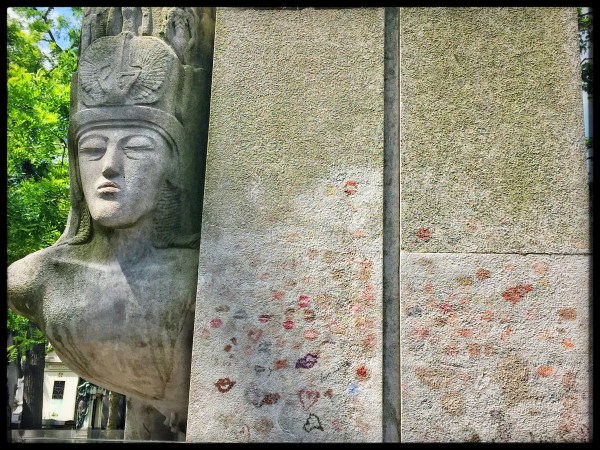 Perhaps it does not matter where one writes, as long as one is surrounded by things that inspire. Or perhaps it does help to be allowed to crash at for example Shakespeare and Company, to punch away on the age-old typewriter in the corner, or to bounce around ideas and angst with fellow aspiring writers in-between shop duty.
In any case, a picnic at Luxembourg gardens may help. Many have tried and succeeded.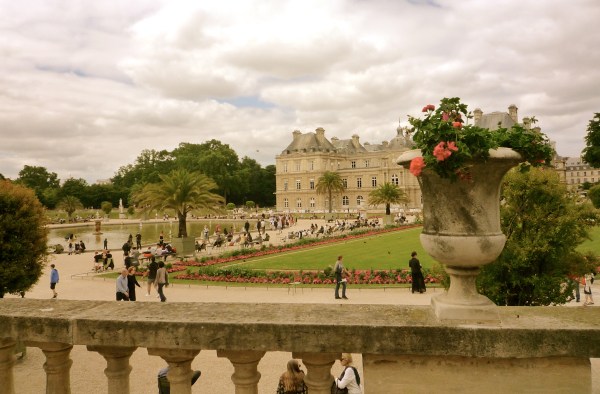
(Shakespeare and Company bookshop; the ceiling at La Coupole restaurant; Oscar Wilde’s tombstone; and Luxembourg gardens. Paris, France; July 2016)
 This blue marble