
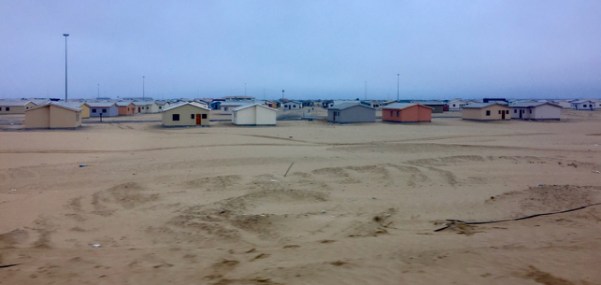
 On the way to Swakopmund I finally saw how the black community of Walvis Bay live: in an endless grid of houses and sand roads, on the outskirts of town, practically in the desert. There are no watered lawns, paved roads, and flowerbeds here. Most of the houses are built by the government and given to each family, especially after Namibia became independent in 1990. They seem sturdy and alright; and my perception is that most people in Walvis Bay have work and a decent standard of living.
My Kenyan friend says that many African people don’t have furniture because they do not perceive a need for interior decor. When everybody has sat on the floor for centuries, perhaps millennia, why should one need furniture? Why should one need a table to place a lamp on, when one can hang a handheld torch from a hook on the wall? Our Western need for beauty and order is different from that of many African people. It does not mean they do not have a need for beauty and order; it is simply differently defined.
Still, compared to Kenya I feel like I live in a holiday resort. No goats inside during the day or monkeys eating bananas in the kitchen at night. Not even centipedes or spiders. And the house alarm is always on.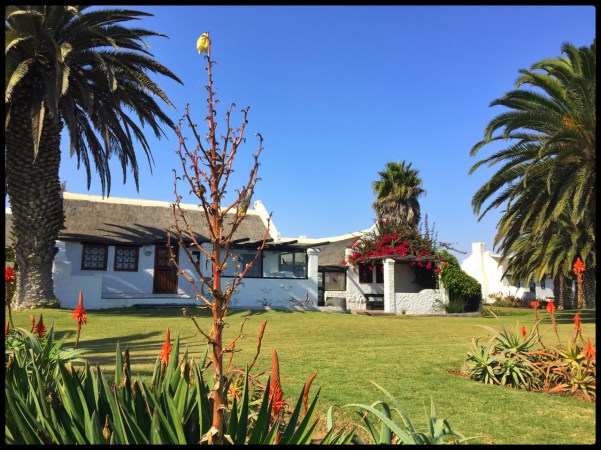 (Walvis Bay, Namibia; July 2017)
 In Walvis Bay one may not see dolphins for hours, but one is never alone. There is the Namibian Air Force, also known as great white pelicans….
 and cape fur seals, that steal joyrides on boats and ships of any size…
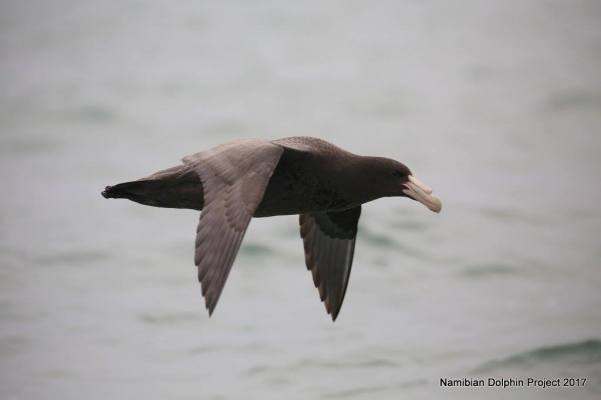 and giant petrels, and penguins. Yes, penguins. A swimming penguin looks like a drowning duck. I have no photos but please take my word for it.
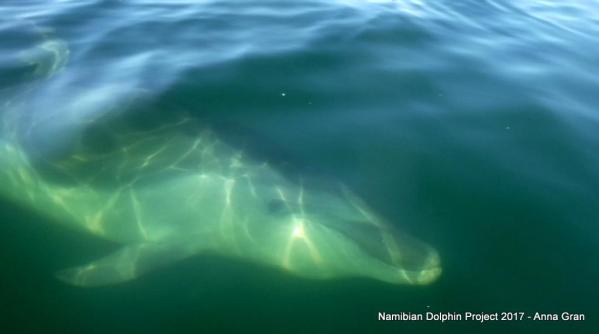 (Walvis Bay, Namibia; July 2017)
 Pharmacies and grocery stores are some of my favorite spots to explore when in a foreign country. But nowhere have I seen positively Victorian medicines manufactured since the 1850s (Celebrated Gripe Water, anyone?), or a large well-known pharmaceuticals company selling “Grand-pa” headache powders, with a branding from the 40s. Not to mention “Blue Death”, an “insect killer powder”. Thank goodness it is only for insects.
 (Walvis Bay, Namibia; June 2017)
 In places the Benguela current is like a thick soup, with swirls of orange or yellow plankton. There are patches with 5 jellyfish per square meter, just as far down as one can see from the boat. And lots of live jellyfish mean lots of dead, stranded jellyfish. Everywhere. Every day. People slip on them on the boardwalk like on banana peels.
 Walvis Bay on a Sunday is like an American suburb, except for the desert all around: the streets are empty, with wide avenues and watered lawns, and no white people walking anywhere. The houses are neat, modern, and boxy; and all are fenced off with cameras and security guards. Cars are mostly white (yes, but why?); and new, apparently because everything rusts quickly due to the fog rolling in from the sea.
 (Walvis Bay, Namibia; June 2017)
 Back on a boat – and with dolphins. This time with bottlenose and Heaviside’s dolphins, in the cold plankton and jellyfish soup that is the Benguela current. Walvis Bay has a large industrial port, which means dolphins often zigzag between ships and oil platforms. And we, too, alongside of them.
 (Walvis Bay, Namibia; June 2017)
 Hello from the Atlantic coast, but quite much further down than usual. I am still experiencing a reverse culture shock: where is the Africa I know? Was it all ordered up by the German colonialists? Everything simply works. The only confusion so far has been withdrawing money from the ATM: instead of Namibian dollars I got South African rands. Turns out it does not really matter here. How odd.
 In confusion, in Windhoek. Why is everything spotless, scrap-less, in straight angles, and surrounded by watered lawns? Where are the scooters, the rusty cars, the peddlers, the fruit stalls, the people living their lives on the streets; and the smells and the noise?
 From above, the Kalahari desert looks positively negatively habitable. This is not a place to run out of fuel or water on one of those spindly, straight roads. Unless one is an oryx and can live for weeks on desert shrubs and the abstract idea of water and shade.
 (Above Namibia; June 2017)
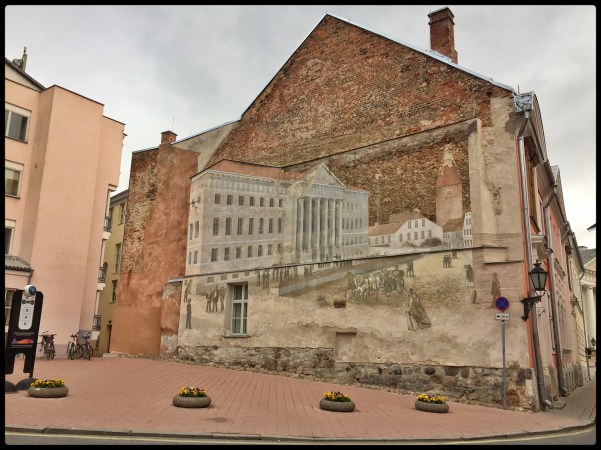 In Tartu today. How surprisingly charming this little Southeastern Estonian town is. Perhaps little for me, but it is the second largest city of Estonia after Tallinn, boasting a population of about 95,000 people. Yes, really. And who knows how many students.
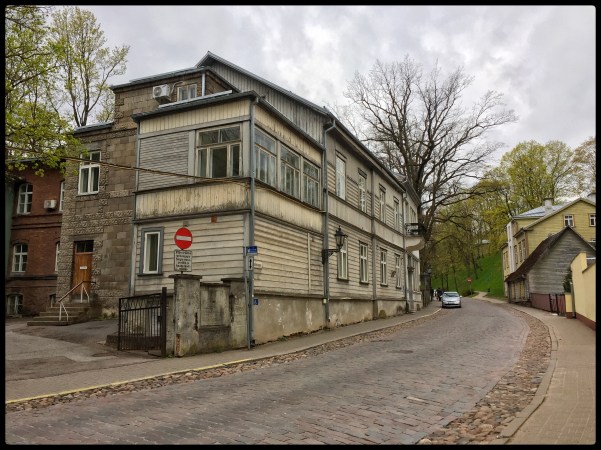 The vibe here is historic, hip, and smart. There are hipster cafés, cool murals, old wooden houses, and an almost Cambridge-y breeze in the air. Naturally I am here for the smarts and the science. It’s in the air, too.
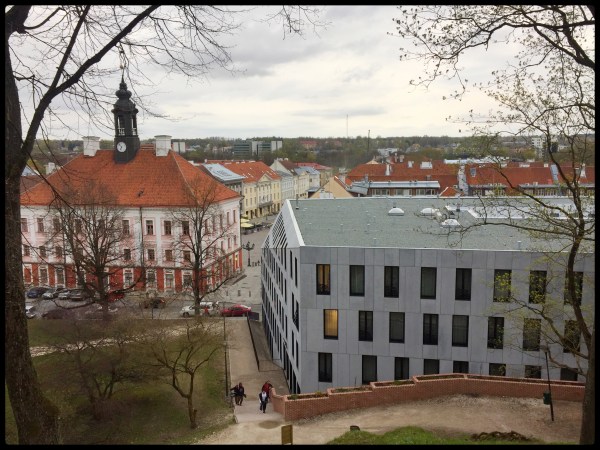 (Tartu, Estonia; May 2017)
 This blue marble