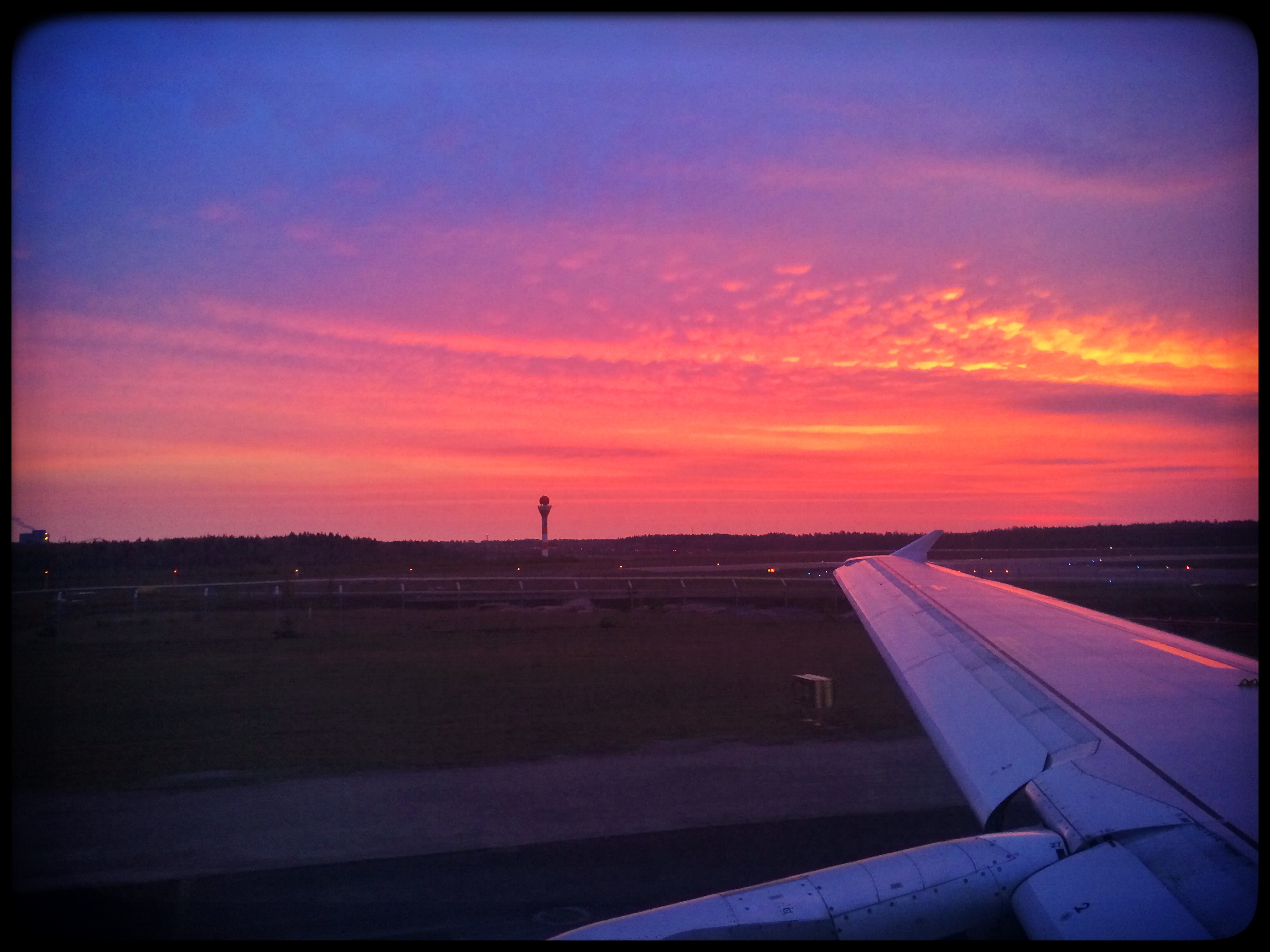
 Taxiing down as the sun comes up. Only cold mornings bring such crisp dawns. So often I forget that the sun always shines and it is the world that turns away at night.
(Helsinki airport, Finland; October 2014)

Taxiing down as the sun comes up. Only cold mornings bring such crisp dawns. So often I forget that the sun always shines and it is the world that turns away at night.
(Helsinki airport, Finland; October 2014)
 White puffy clouds sailed past in the brightness outside. The heavy week weighed on my eyelids and I close them for a moment. When I opened them the world had gone a deep shade of purple.
Suddenly there it was, the edge of the night. Literally. A dusk bending over the horizon, slowly unfurling a layer of dark from the East. And we flew right into it. As darkness enveloped our little aircraft I thought of the short film “Boat” by David Lynch.
“It was so bright. I couldn’t sleep. I thought, Nature contains many mysteries. There was a boat. And the man said, ‘we’re going to try to go fast enough to go into the night.'”
Our little plane did go fast enough, and the night came racing towards us, swallowing us whole.
(Boat by David Lynch: http://vimeo.com/70865173. Photo over Sweden; October 2014)
 Endless puffs of smoke slowly wrap around the spires and pagodas of Lord Shiva’s temple. In Kathmandu death is not a failure, hidden behind green curtains and a cloud of desinfectant mist. When hope for a longer life is fading, the ambulance steers not towards the hospital, but towards the temple. Family is not called two days afterwards when making funeral arrangements, but on the spot. By the upstream waters of the river Ganges, friends, family, and colleagues flock to wish the departer well. While the ambulance zooms between temple buildings, orange flowers are bought and offerings to the Divine given. Loved ones wait by the water as the car reverses down the slope, doors open, and the dying exhales one last time with feet touching the water, draped in orange and covered in flowers.
Side by side with other dead, the spirit is set free from the body by fire and smoke. As the wisps linger between the pagodas I think of how many spirits make that final circle above the city each day.
In Nepal, death is not a taboo. It is not hidden, excused for, or feared. Death is simply a point of transmutation like midnight: a new day begins, both for the departed and those continuing their current dharma.
 (Pashupatinath temple, Kathmandu, Nepal; March 2012)
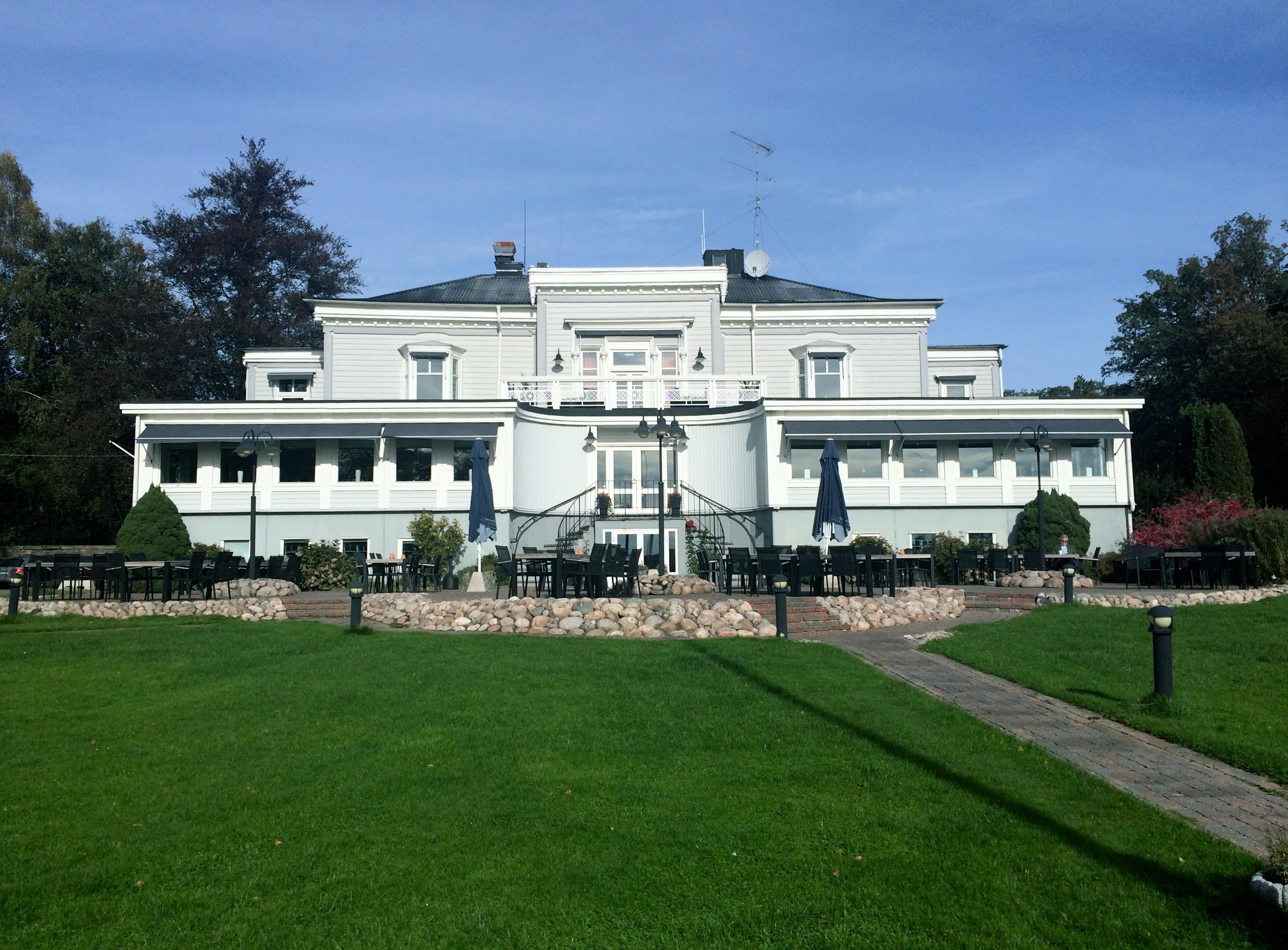 Ten minutes in the sunshine was all I had, before crawling back inside for yet another session. My ten minutes were less than a blink in the time of the manor, standing for 200 years on a foundation 500 years old. If time is an illusion, how many comedies, tragedies, and lifetimes happened all at once when I walked over the grounds?
(Aspenäs manor, Lerum, Sweden; September 2014)
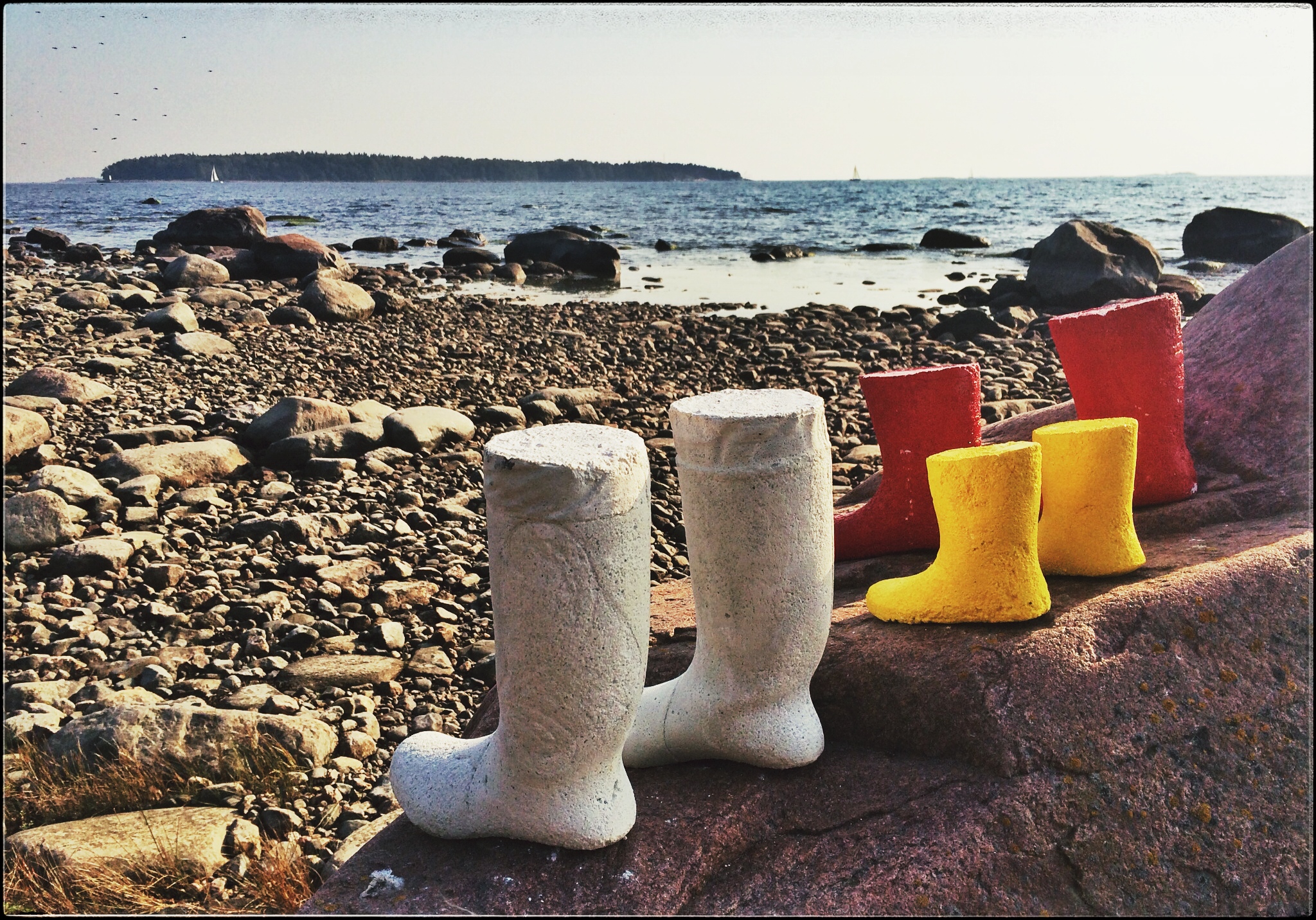 Summer warmth during the day does not fool anyone. The green grass by the waterline has a yellow tint and the half-submerged rocks are the lone companions of waves now that the water birds are gone. Only the dogs dare to swim.
While summer chooses to drop the battle and regain strength, elsewhere another fierce battle prevails. Victory has only one hand to extend, and after the game is over the dogs may not be the only ones swimming.
 (Helsinki, Finland; September 2014)
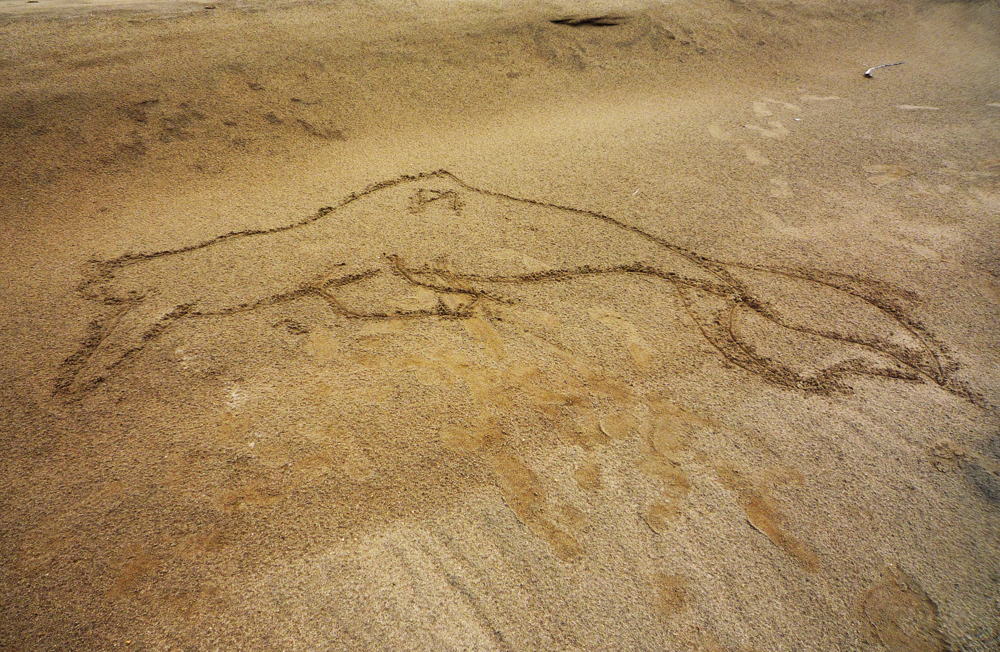
This blue marble may be the only planet we have, but it is also our playground, full of sand we can make castles of. Or draw pink river dolphins in. Or swim with the dolphins.
That beautiful place you’ve only seen in photos is really there, existing every day across the globe somewhere. What you consider a dream is everyday life and landscape for someone else. So why not set a date to go introduce yourself to that place and its inhabitants (dolphins or other)? 
(Amazon, Brazil; October 2012)
 Each morning, as the sun rose, I sat on the porch with my tea cup and watched a couple of thousands cormorants fly past out to the river mouth. For twenty minutes the air was filled with streamlined black missiles flying without other sound than the whoosh of their wings, determined not to miss breakfast. Each afternoon, a few hours before sunset, the black mass of birds flew back in to sleep in the trees.
Cormorants are skilled divers; yet their innate state is to float on the water. But are they buoyant because of their bones or their plumage? If birds did not have feathers, would they sink?
(Mamiraua National Park, Amazon, Brazil; September 2012)
 Any given Thursday one could sit holed up in the office with the colleagues, or one could hike in the woods with the colleagues. For those courageous ones who venture deep enough into the wilderness, reindeer may appear.
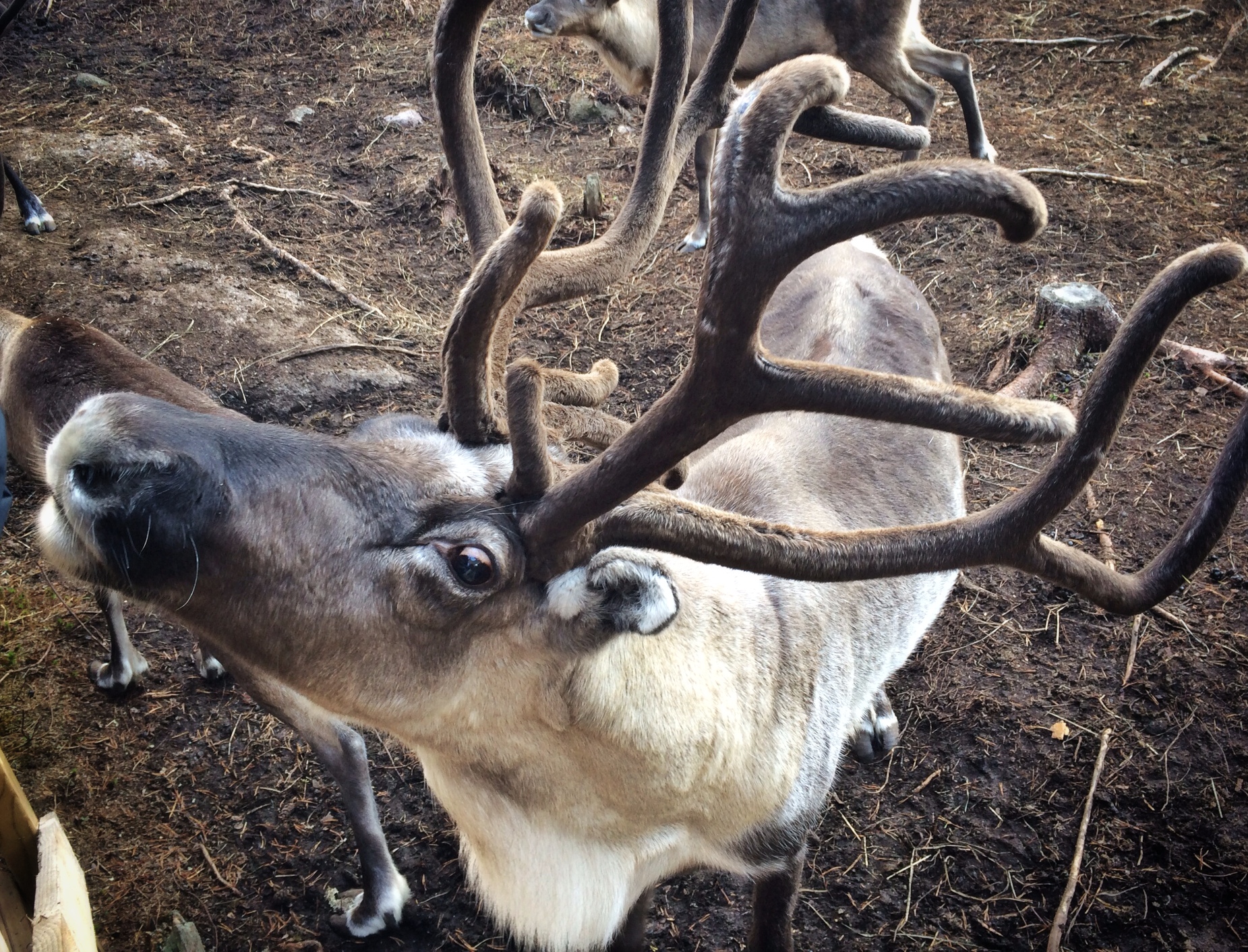 (Nuuksio national park, Espoo, Finland; September 2014)
 When the September sun lay low over the wheat fields we drove into town for a moment of music. As the last light wandered across the window, the church filled with crisp snow falling, bears and wolves wandering in deep pine forests, Nordic mythical beings dancing, and always, always an ominous backdrop layered under a wistful allure.
Many composers painted feelings. Jean Sibelius covered the canvas with nature landscapes. Sitting in the church pew I wondered whether Sibelius was a painter or a composer. Perhaps he saw tones where painters saw colors. Perhaps he was the most skilled painter, able to do what canvas painters never could: a bear illustrated by sound will ultimately conjure an image of a live, moving bear in our minds.
While dusk overtook the sunset, the double basses unleashed the bear’s heavy walk in the woods, followed by the celloes that sketched a fox trotting over the grass. And then the creatures were gone, overtaken by the wind in the pine trees, and my contemplations of the sinister undertow and what the inner world of Sibelius must have contained.
(Loviisa, Finland; September 2014)
 The best beds in town. The best cocktail bar in town. The best lounge for working, chatting with friends, or just lounging. The loveliest bistro, most delicious breakfast, and most attentive room service.
 And quirky angels in every room.
 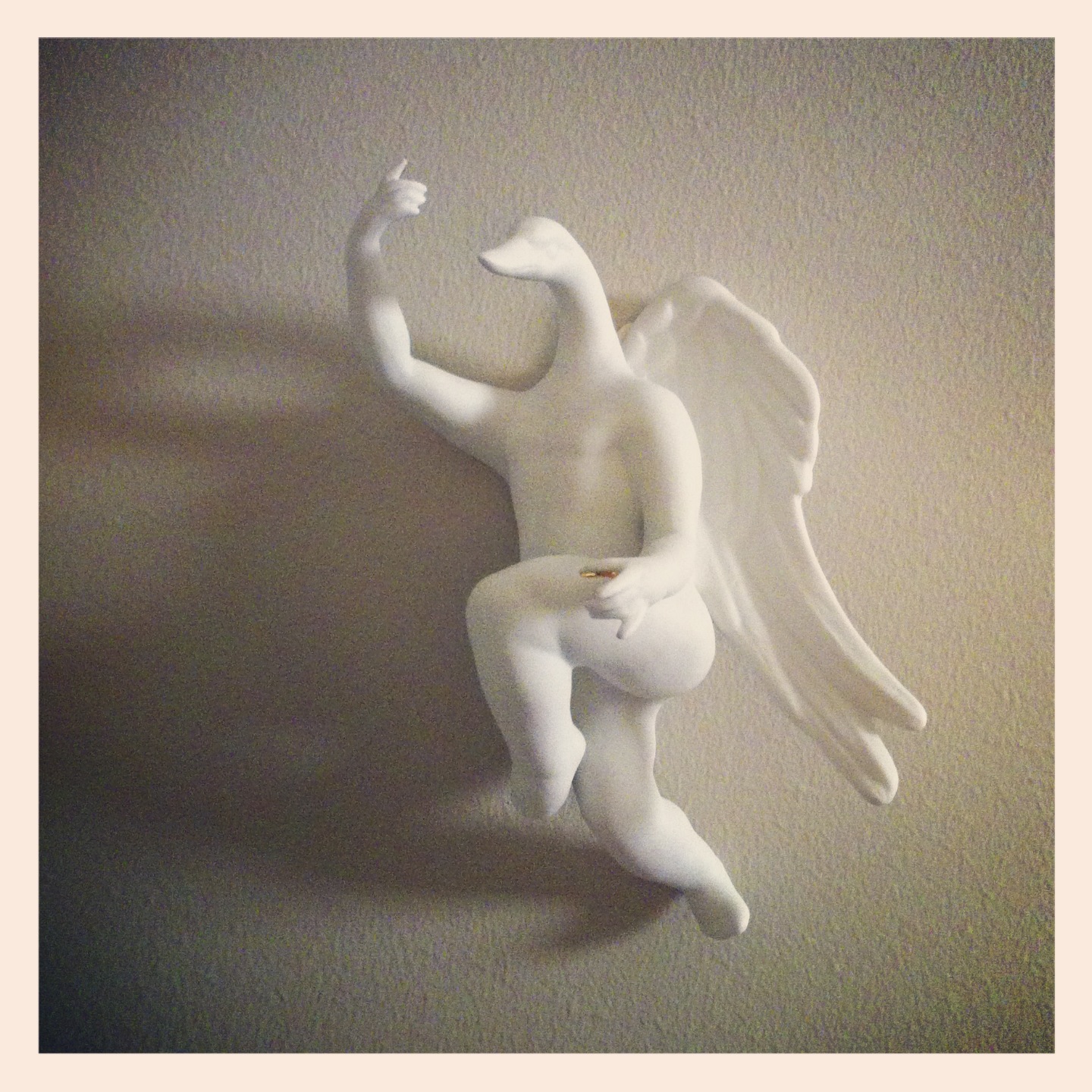 (Nobis Hotel, Stockholm, Sweden; September 2014)
 This blue marble