
 Winter days in Finland are short. Down South in Helsinki day length is 5 hours 50 minutes at its shortest, in deep December. After all, different from Copenhagen which is geographically not really Nordic at all, Helsinki is on the same latitude as Oslo, Kamchatka, Quebec, and Shetland Islands.
I thought of this when I took a walk on Boxing Day at 2 pm and the sun was nearing the horizon. In Copenhagen the length of day never goes below 7 hours and it is noticeable: there is always light or near-light at 8 am. And the cold; do not speak of the cold. I firmly believe it physically wears me out as my muscles involuntarily contract and shiver to keep me warm. Proper outdoor wear or not.
You may wonder why I write about this year after year (or you may already have stopped reading, bored). But I truly feel I was born unequipped to handle the darkness and the coldness that surrounds this part of the world 2/3 of the year. While Denmark is not exactly central Europe, I still feel a significant difference in my energy levels throughout this winter. Just like I did when I lived in the UK and in the Netherlands.
The ayurveda doctor I once consulted on Bali let me in on two secrets: firstly, I am physically an early riser. I found it difficult to believe as I could easily sleep until 11 am, but he was right: I went to bed too late, missed out on the optimal time of night to obtain deep sleep, and woke up too late and too tired to ever consider myself a morning lark. Secondly, he told me I sleep too much. “Eight hours of sleep time is enough. Eight and a half if you are stressed. Absolutely never more than nine”. The trick was, he told me, to “sleep less and rest awake more”.
After spending some time resisting this counter-intuitive advice, I decided to try it out. I began to go to bed by 9.30 pm and 10 pm the latest, instead of my usual 11-11.30 pm. And I set my alarm exactly 9 hours later, to allow for 8+ hours of sleep time. BOOM. What a difference. I began to spend my early mornings and time before bed writing, reading, crafting, meditating. Suddenly there was also time to rest while awake.
This was not just an experiment. Two and a half years later I am still continuing my new ways: going to bed by 10 pm on those nights when I do not travel late, waking up before 8 am (also in the weekends!), and spending more calm time. But the most significant difference is still Danish daylight.
(Helsinki and Brande; December 2018 and February 2019)
 Christmastime in Copenhagen means lots of mulled wine, strange sweet pasties and candies, and people still sitting outside (under gas heating). Yes, outside, because after all Denmark is not really geographically Nordic. It is on the same latitude as Edinburgh, Klaipeda, and Moscow.
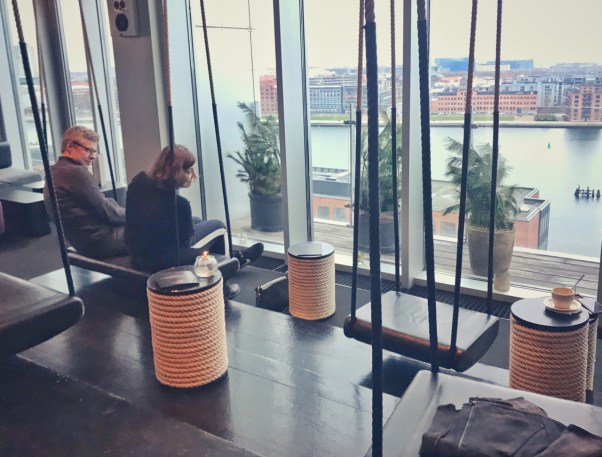 (Copenhagen, Denmark; December 2018)
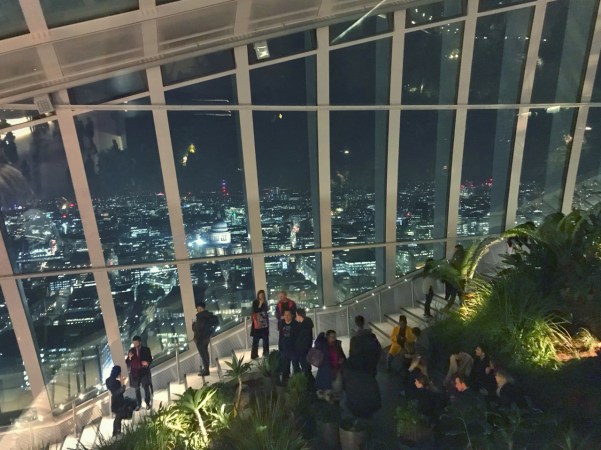 Last work trip of the year calls for celebration. Unfortunately my date for the night called in sick and I enjoyed dinner over London all by myself. It is quite a sight to see St Paul’s cathedral far down below.
 (Sky Gardens, London, United Kingdom; December 2018)
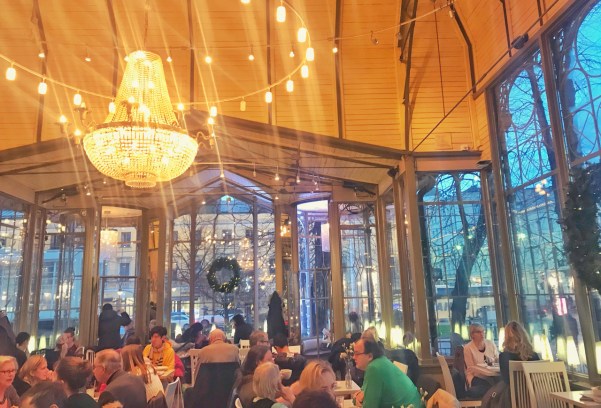 Somewhere along the way, months ago, Helsinki grew dark. In early December it remains dark even on a reasonably clear day. This is the time for salmon soup lunches, served hot with toasted rye bread. For mulled wine made in the Nordic way with berry juice blended in wine, with or without spirits, with raisins and sweet almonds covering the bottom of the mug. And this is also the time of frantic christmas shopping, for most people.
 (Helsinki, Finland; December 2018)
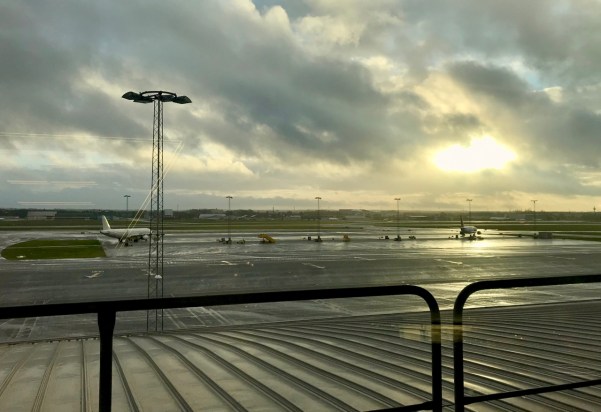 The only light of day here in Denmark may not be longer than five minutes. The sun only shows itself provided that the ever-ruling clouds give way. Sometimes weeks pass without direct sunlight. And I am struggling to remember that the sun has never left us. It is shining just as brightly, if only we fly a few kilometers upward in search of it.
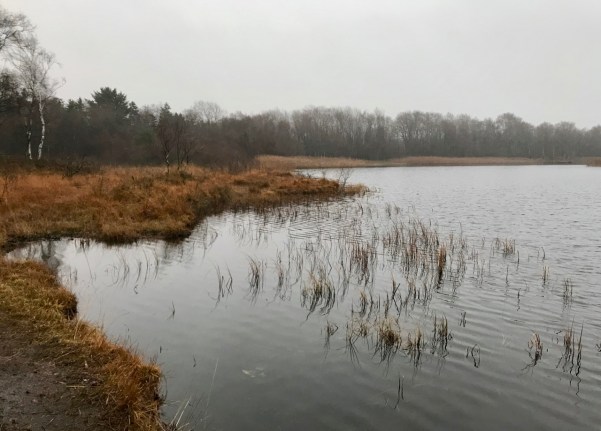 My favorite spot and
  (Brande, Denmark; December 2018)
 It was frosty in Stockholm this morning. Crunch-under-the-shoe and sneeze -kind of frosty.
 48 hours in Prague meant 48 hours in a glamorous old-bank-turned-hotel. And good thing too it was glamorous, as I did not see anything else of Prague than what I glimpsed from the cab window on my way in and out of the city, both times after sunset.
 (Prague, Czech Republic; November 2018)
 The lighthouse at Vejle fjord was much easier to reach than the one in Virginia Woolf’s novel. I recall it took the family ten years and a death in the family to finally set sail and arrive. Whereas we simply walked across the grounds of the old sanatorium and followed the path down the beach.
  The Vejlefjord sanatorium was built for wealthy Danes to “take the airs and waters”, especially if they suffered from tuberculosis (or “consumption”, as it was called back then). Today there still is a rehabilitation center, but it has given way to spa now installed in the new building. Two visits later I am still too consumed by the experience to manage one single photo from the inside. But imagine this: a simple, Japanese-inspired layout with natural stone and wood, lots of natural light, a forest sauna accessible by a walk outside (even throughout the winter), a hot outdoor pool, turkish baths and aromatherapy saunas and sound baths and light baths and meditation and yoga and spa treatments and free herbal tea and a healthy buffet and to top it all off: a thalasso spa with a salt sauna. One can easily spend 6 lazy hours without having the time to try everything offered.
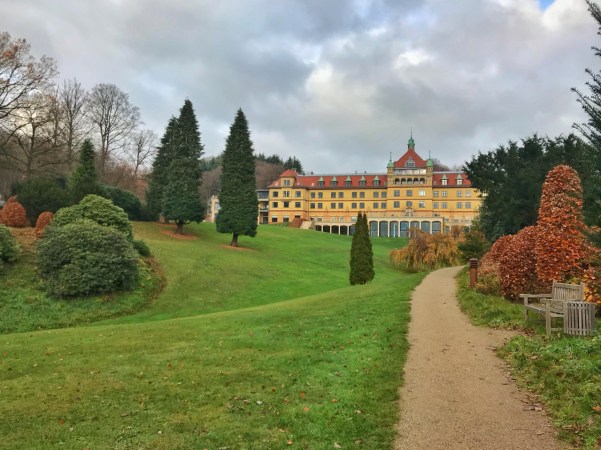 (Vejlefjord Spa, Denmark; November 2018)
 The more time I spend here in Denmark, the more I am struck by how it is not really much like the rest of the Nordics. Instead of fells or mountains, Denmark is (nearly) flat. Copenhagen, with its bicycles, canals, cobblestone streets, beer, waffles, and rain reminds me of the Netherlands. So do the roads and many smaller towns, as well as how houses are built. The forest is nothing like Nordic, impenetrable, shrubby spruce or dry, lichen-covered pine. Instead there are airy beech forests like in central Europe, with dead leaves rattling under one’s shoes; and pine and spruce plantations where trees live in rows or are, at the very least, standing far apart with a clean, green moss floor in-between.
 What is Nordic about Denmark is the language. And perhaps the setup of the social-democrat welfare society. Income tax is among the highest in the world, but schools, healthcare, libraries, child care, elderly care, you name it – are nearly or completely free of charge.
 (Silkeborg, Denmark; November 2018)
 This blue marble