
Storm sunrises are beautiful. Five and a half hours of bleak daylight were nearly compensated by the preceding, brilliant sunrise. (And three days later, the wind still howls in the chimney.)
(Loviisa, Finland; December 2020)

Storm sunrises are beautiful. Five and a half hours of bleak daylight were nearly compensated by the preceding, brilliant sunrise. (And three days later, the wind still howls in the chimney.)
(Loviisa, Finland; December 2020)

Christmas 2020: stilleben with mulled wine, gingerbread cookies, and face mask.
(Loviisa, Finland; 2020)

What is this strange apparition of light, visible for just five minutes on a brief, gray day in late December?
(Loviisa, Finland; December 2020)

In mid-December, I dug out my suitcases. A dusty one from the walk-in closet, stuffed behind the clothes rack, and the other from the attic, where rust-water from the leaking roof had dripped all over it, leaving a red puddle mark on its side.
I had intended to replace my trusty old Rimowa with its twice-repaired zipper and torn interior lining before my first business trip in my new job, but such an occasion has not yet arisen. I guess luggage companies are struggling through these COVID-times as well.
As I dragged both bags behind me on my way to the metro which would take me to Copenhagen airport, I felt the long looks of passers-by. They were certainly no looks of envy, longing, and a shared passion of exploring new places. Most likely they were intentionally cast, so I would feel ashamed for intending to contribute to the spread of the virus. 2020, please be gone soon.
(Copenhagen, Denmark; December 2020)

Lovely ones, even if I spent much time writing about creativity, introspection, and a quiet but robust sense of inspiration, just like most (all?) of you my 2020 was difficult, too. It seems that we all have gone through seismic shifts in our lives, even if many do not seem to relate to the coronavirus pandemic at all (perhaps they still do?). And so, while warming myself with a golden latte and new woolen socks, I want to share my journey.
I have spent much time this year thinking about high-independence relationships. I used to live with someone who needed much independence in order to feel free in a relationship. And if he was not feeling free, anxiety and unhappiness would slowly eat him from the inside.
The preference for high independence seems to be a millennial generation problem. Instead of getting hitched young and building up our selves in teamwork with a partner (a “cornerstone relationship” according to couples therapist Esther Perel), we first form ourselves as individuals and then, maybe in our thirties, we need to find a partner who checks all the boxes on our long list of demands. We look for someone who will maintain our individuality and help it grow (a “capstone relationship”). In our search for a life partner for whom we do not need to compromise anything, we run the risk of looking for a copy of ourselves. Yet, would a copy of ourselves keep us charmed and interested?
High-independence relationships take it a notch further. I did not even know this was a “thing” until I met someone who had all the arguments for why it was the best model: allowing each other the space to do what we liked and to grow as we liked sounded like just the right balance of teamwork and personal growth. “I do my thing and you do your thing, together” was his unspoken mantra. But when this philosophy ran into the minutiae of daily decisions, we ran into trouble. It would take us an hour to choose a movie because the only way for him was to choose a movie we both were in the mood for. Taking turns in allowing the other to indulge was not a worthwhile use of his time. Sometimes we got tired of searching and did not end up watching a movie at all. Choosing a restaurant was exhausting and 9 times out of 10 we gave up and went for sushi because it was optimal for his taste and health, and I did not mind compromising.
When we choose to live with a partner, we choose by our own free will to subject ourselves to a level of dependence. There is no way we can live with someone without depending on them. At the lowest level of functionality this means agreeing on how to share the contents of the fridge and how to stock it; and at the highest level, how to walk through life together in synergy as a loving, well-functioning team. “I do my thing and you do your thing” only works if both put the relationship first, not themselves. This is what clinical psychologist Stan Tatkin calls a “couple bubble”: a safe, loving, supportive space a couple creates and maintains around them, and which protects them from the rest of the world. It is also “an intimate environment that the partners create and sustain together and that implicitly guarantees specific promises.”
My partner and I never managed to create a couple bubble. I never truly felt I was included in his life plan. Often, I felt scared that his high independence would lead to a situation where he chose move to another city or country, and I would be given the choice to follow – or be left behind. Because it was against his values to ask me to forgo my freedom and come along, for his sake – and to say he needed me and he would support me in return, if I ever had a big ask for him. I felt afraid that he would not put our relationship first, and he felt shackled by my needs. There was much anxiety and anger. Living under the same roof was not sustainable, even with constant open communication and all the intimacy and love.
And so, just before the pandemic hit us, I moved across the country, to Copenhagen. On my own. And when the world locked down I realized that if I were to catch the virus, my partner would not have my back. I would have to create that bubble of safety, love, and support all by myself. And you know what? I found it quite easy to do because I, too, have enough independence to find my footing when the world is a windy place.
We millennials are a very individualistic generation, and along with our parents’ generation, we have in many developed countries pushed the divorce rate to fifty percent (and an increasing number of couples choose to not marry at all). And so, one year later, with better language to put my 2020 journey into words, I wonder whether it is possible to have a deep need for sovereignty and still share a household and a life with someone, in partnership? Is the need for high independence just a fear of unhealthy dependency? And what is the definition of healthy interdependence?
(Copenhagen, Denmark; December 2020)
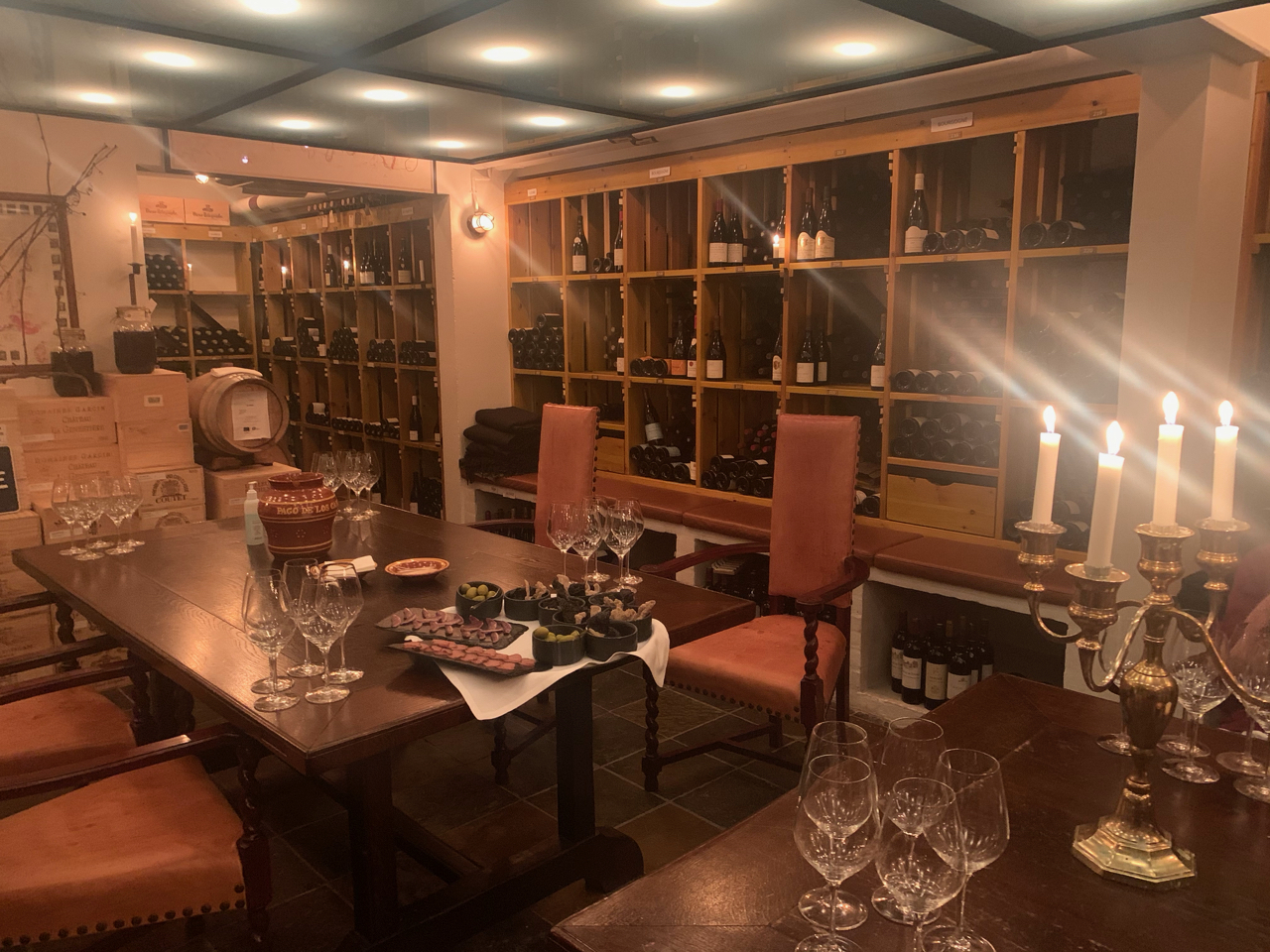
It was a windy, gray, chilling evening in early December. I had spent all day reviewing 2020 and playing strategy games with my new colleagues. My head was beginning to feel soft, but the time to relax had not yet come. First, I had to endure the test every new team mate goes through: opening a bottle of champagne with a saber. And I can tell you, while it looks fancy and impossible, it is way easier than tinkering with removing the wire net while pressing a thumb over the cork so it does not fly into the ceiling. All it requires is confidence, and a good determined swing from the shoulder, as the saber runs down along the neck of the bottle and sends the entire glass tip flying across the room.
And really, it was not I who broke the bottle; I merely supported the champagne in its desire to escape.
(Copenhagen, Denmark; December 2020)
Looking for reading inspiration? Here are the best books I read in 2020 (in no particular order):
(Copenhagen, Denmark; February 2021)

Lovely ones, here I am again. Spring sunshine and a Saturday morning to myself are the best remedy for clearing up any cobwebs in my little head. And boy have there been cobwebs, especially the last month of 2020 and the first month of 2021. Not because nothing moved inside, but because so much was going on that I had no time to tidy up. And so, this last weekend of February, I am finally sweeping up those cobwebs, organizing my thoughts and feelings as much as I am able, and opening the windows to let the sunlight in.
Just before christmas holidays, Denmark went into another lockdown – and I went to Finland for a month. Even with the still life and the darkness, I discovered so much. There will be a backlog of winter photos while I post all the things I wanted to share with you, without the headspace to do so until now. And we may well be half-way through spring before my ramblings here have caught up with the weather outside.
2021 may seem like a sluggish continuation of an unexpected 2020. Or it may seem like a fresh start into a post-pandemic time bursting with opportunities in a world that looks the same but will never be the same again. 2020 gave me the opportunity to rewrite my life plan more than once (Yes, literally. I have a life plan and it takes up 4 pages in my notebook). And I can’t wait to begin to live it, step by step. What about you?
(Copenhagen, Denmark; February 2021)

Kaamos is Finnish for “polar night”, the midwinter weeks or months when the sun does not rise above the horizon at all. Only about one quarter of Finland officially goes through gloomy kaamos weeks ever year, but all of Finland feel the lack of light and the long twilights in the morning and at night.
During kaamos, unless one lives very near the North (or South) Pole, there is enough daylight to go about daily activities: a never-ending blue twilight with deep shadows. Kaamos can be beautiful,too: in January and February, clear days roll through watercolor-washed skies of blues, yellows, oranges, and pinks, until the snow is colored a deep purple and finally sinks into the deep blue twilight again.
Copenhagen has a little over an hour more daylight than Helsinki, and I certainly feel the difference. Yet it is increasingly difficult to get up within the first half hour of my alarm clock. When there is so little color in the day, I crave color on my plate. While my digestion does not always agree with cold greens and salads in the winter, it helps to enjoy some of the last EU-produced colorful vegetables of the season.
(Copenhagen, Denmark; November 2020)

The beauty of Frederiksberg Gardens was once curated to the extent that no one poorly dressed was allowed in. And like a proper English landscape garden, the curves of the waterways are just a little too neat to be natural, and the tall waterfall looks gorgeous and natural – but out of place in flat Denmark. English garden styling is like the ideal image of natural beauty.
Scattered here and there between the trees, dozens of great gray herons hunker down for winter, standing like statuettes, necks warmly folded under the neck feathers. In windy Denmark, Frederiksberg Gardens is probably a nice resting place for birds. And on a cold Saturday in November, the park is a perfect place for a leisurely walk, some headspace, and good conversation.

(Copenhagen, Denmark; November 2020)
 This blue marble