This blue marble

– and yet it spins


6 Comments

On Bali every flower has a purpose

Baliflowers-2One lonely frangipani flower lies at the toes of a griffin carved in stone. A monkey statue has two red hibiscus flowers sticking out behind its ears. A buddha blesses a fresh, sun-orange marigold in his hand. On Bali, no flower lies anywhere by chance.

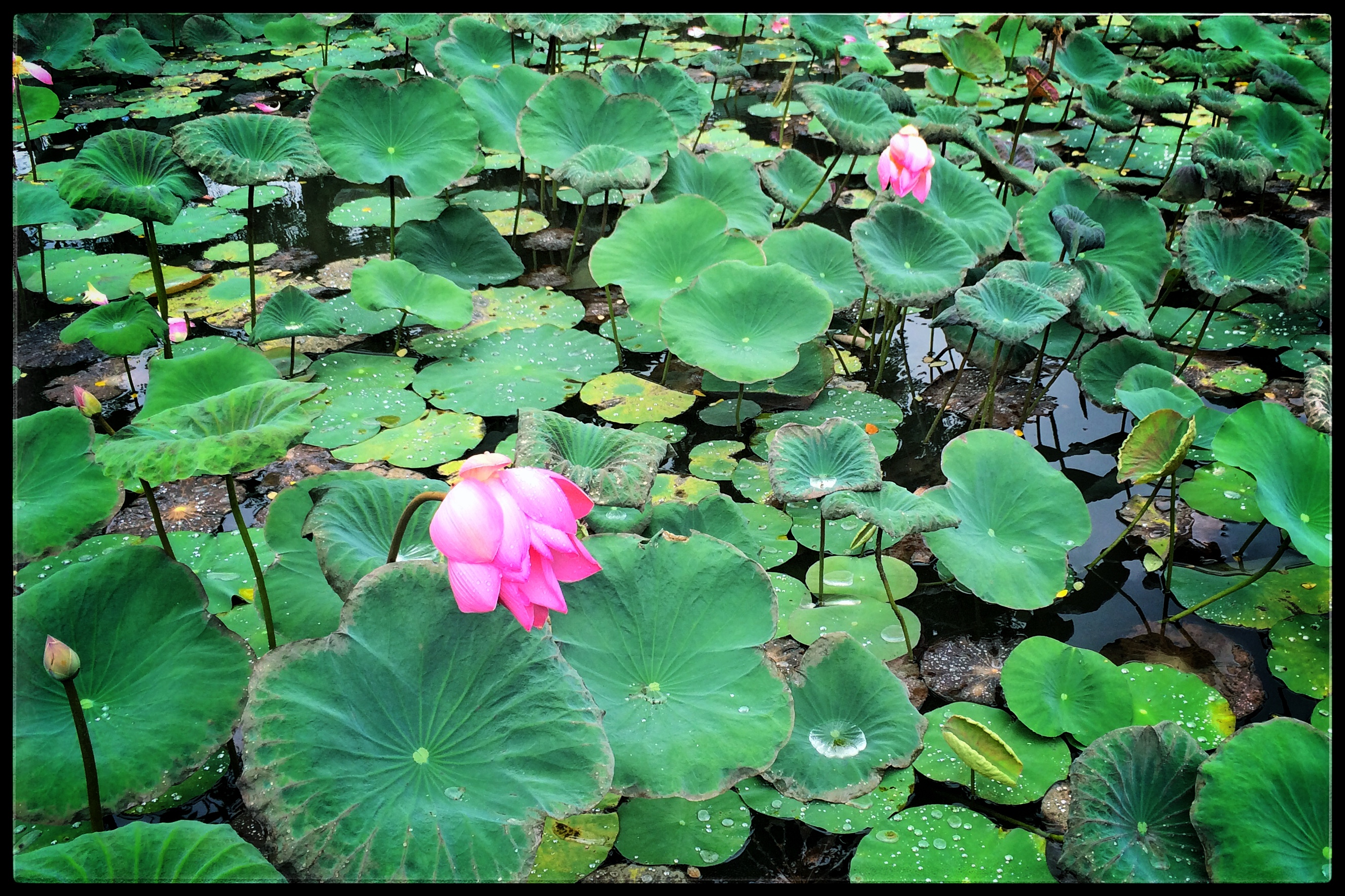
Baliflowers-3Every flower has a purpose. Godly forces and beings are everywhere, and everything man-made has a religious purpose or has been blessed for its proper use. And the lotus flower is the most sacred of all. It grows in every little pond and pot by the door, with its feet in the mud and its flower held high.

There is much muddy water in this world. Most of us wade or swim through it without ever knowing better. We forget what it was like to be a child and to skip on the surface, feet barely touching the dirt below. The lotus has realized that barely floating is not the best salvation: only by rooting into the mud it is possible to stretch and reach above it, and to enjoy the pure air and sunlight.

Standing by a lotus pond in Ubud I was wishing that I could grow lotuses home in Helsinki, too, as a reminder of what is within my reach, if I only remember how to reach for it.

Baliflowers-1(Ubud, Bali, Indonesia; August 2015)


Leave a comment

When the cat is gone the mouse….grows leaves??

cycad-1It was a cold morning in late June, and she was packing her bags, fretting about sunhats and hiking boots and cocktail dresses. By the size of the bags she would be away for a while. “Finally some peace of mind – and space all to myself”, the cycad on the kitchen windowsill sighed, relieved. She did not even say goodbye to her cycad friend. She rarely spoke to it. She thought that since its relatives had been around since the dinosaurs and they are known to push out one leaf per year when they choose to show signs of life, perhaps a word or two every five years would suffice.

The front door banged close and everything grew silent. For days. Until the sun broke out and the room filled up with song. Did you not know? If you listen carefully to the sunlight you will hear a faint tune, like a sun-fairy happily humming into your ear.

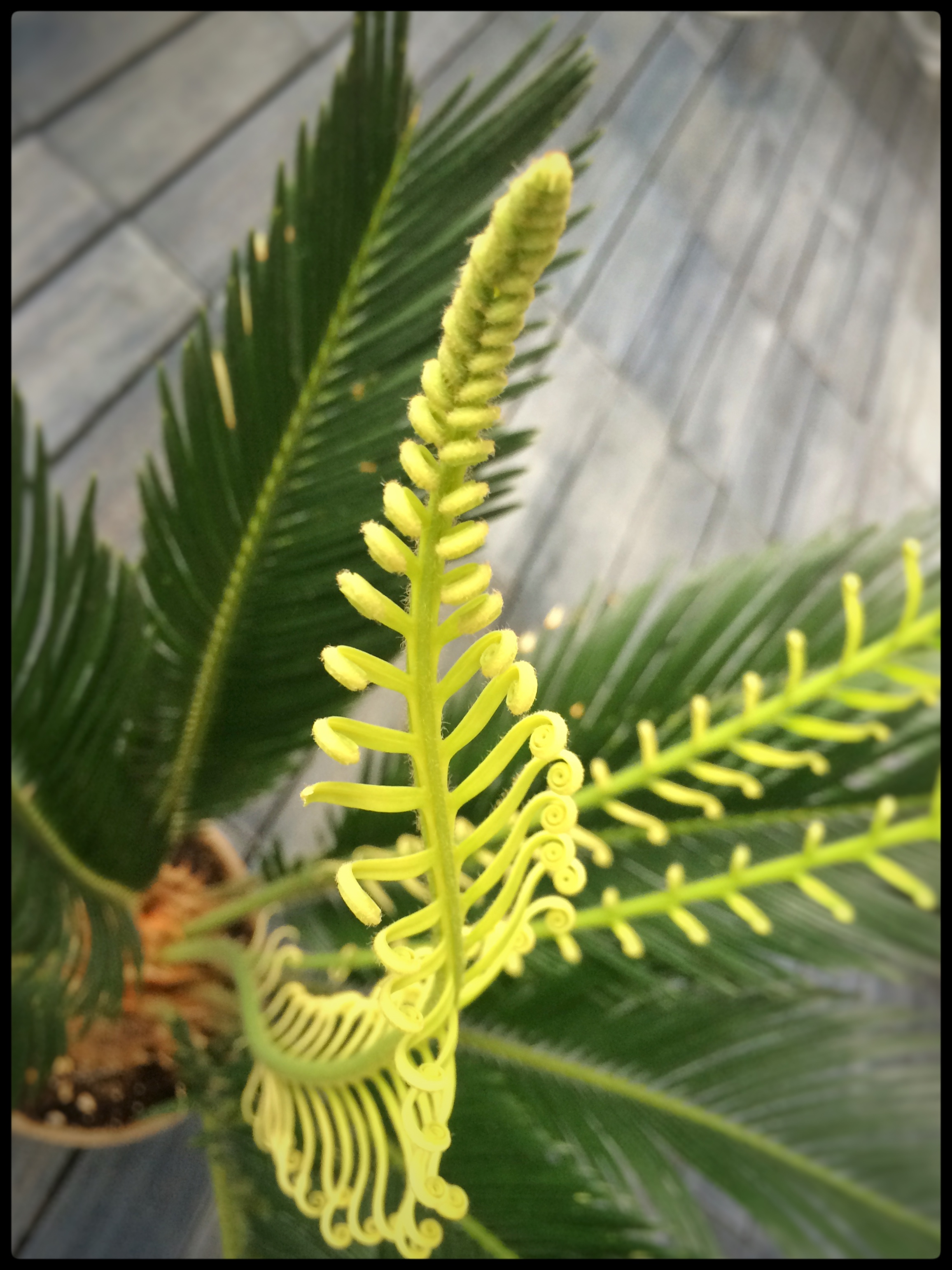
“Today is a good day to stretch my leaves” the cycad thought, with the sun-song whirling around the room. And it stretched, and stretched, reaching into all directions, until suddenly, two new fronds popped out. And a third one, still with its curlers on.

cycad-3“Whoops”, said the cycad. “Oops. I was going to save those for the moment when she chose to speak to me again.” In vain it tried to curl and roll and stuff them back into the cone. Oh well, maybe I can make a point of protest with them instead.” And it continued stretching and reaching and pushing in the sound of sunlight, until its new fronds were twice the length of the old ones, standing out like giant whiskers. “Now let’s see if she notices me at all” it said to itself, grooming the fresh, still curly leaves until they were sure to stand out.

Finally she came home. Unloaded her bag and busied herself with laundry, work, and cats for three days. On the fourth day she, an unlawfully bad plant owner indeed, remembered her green friends that might need water. And stared at the cycad, which stubbornly, insultedly showed her it had outgrown both its pot and its windowsill.

“You crazy dinosaur, you have gone cuckoo, you!” she exclaimed. And watered the cycad. And made a note of finding a bigger pot. And made a promise to speak to the cycad at least twice a week, if it promised her to make at least two fronds per year, and try to still fit that windowsill so the cats would leave it alone. Because in this household there is heart-space for both cats and a dinosaur mouse with giant whiskers.

cycad-2

(Helsinki, Finland; July 2015)


Leave a comment

About celandines and the fleeting nature of it all

yellowanemonesI saw them in the park, the little celandine suns. While kneeling to snap a photo I was joined by another photographer, with more serious equipment and the same intent: to snap a memory and impression of the golden and green and this particular spring day.

This is the essence of photography: it is not about taking beautiful pictures, but about recording reality. Most often it is about our human weakness of not accepting the elusive nature of time and precious moments. Photography is an incredibly technologically advanced method of attempting to store deep emotions, feelings of belonging, and moments that once were and will never return again.

As I carefully tread through the grass without trampling on the celandines, I reflected on the incredible size of market and business around clinging to past moments. I thought of how important it is to so many that share what we once saw and felt – the basis of social media. And I could not help but wonder, what would happen if we accepted that nothing is permanent? That after enjoying a moment it is time to let it go? That life is stock-full of moments and we might enjoy them more if we breathed through those moments with eyes open instead of fiddling with our smartphones?

(Helsinki, Finland; May 2015)


Leave a comment

About cherry blossoms and the brevity of it all

Hanami

If there were no cherry blossoms in the world
My mind would be peaceful

(Fujiwara Norihira)

When cherries bloom, the Japanese celebrate the beauty and fleeting nature of life. Not life as a continued existence, or life as an eternal soul. But life as that short moment of seven days where a cherry blossom opens, blooms, and drops its petals to the ground like snowfall. Life that, after blooming, has yielded a fruit and another life.

We Westerners mostly celebrate life without including its end, whatever it may be. Death, or transit to rebirth, is always a separate subject for attention. Standing under the pink cherry blossom boughs I wondered how it would feel to celebrate life, including the brevity of life as we know it. And yet, most of the sakura poetry I have stumbled upon is concerned with that brief moment when a cherry blossom petal falls to the ground. Life is uncertain, and the petal knows no more of its destiny than do we humans of our own fates.

A fallen blossom
Returning to the bough, I thought –
But no, a butterfly

(Arakida Moritake)

(Hanami festival, Helsinki, Finland; May 2015)


Leave a comment

A message from a lost world

/home/wpcom/public_html/wp-content/blogs.dir/ac4/44716536/files/2014/12/img_5820-0.jpg
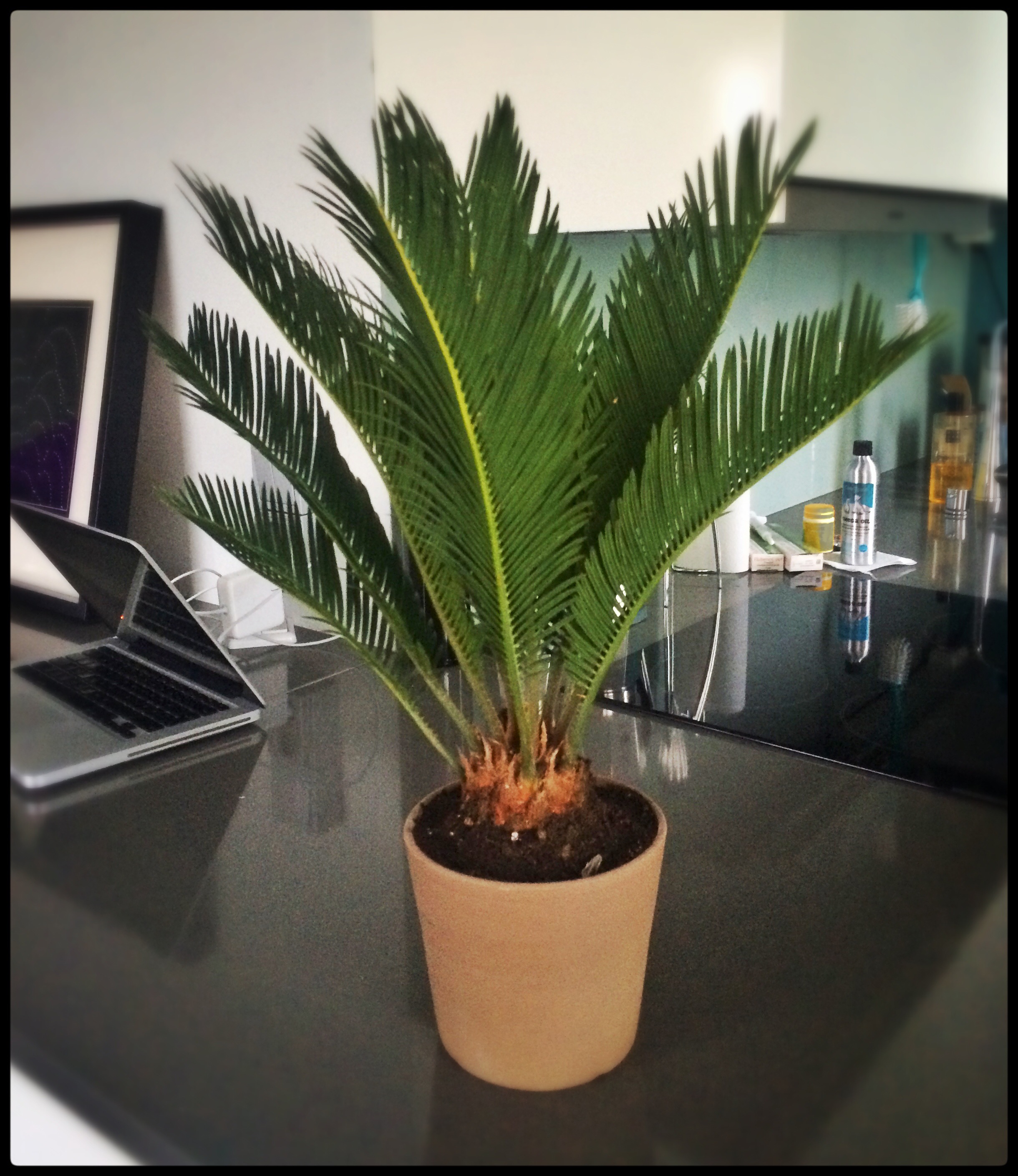
There it is, standing nonchalantly on my kitchen counter. Disregarding the clutter and the snow outside, this Cycas revoluta proudly stands as a messenger from 250 millions years ago. Yes, before the dinosaurs. What a joke, then, that I bought it at Ikea, that paragon for modernity and human everyday life, instead of a specialty garden shop offering a more worthy handling.

People go gaga for cycads. Some feel the presence of dinosaurs, others a cosmic connection, and many are fascinated by its botanical secrets. And then there are those who make money in cycad trafficking.

Yes, cycad trafficking. Indeed. Just like tortoise trafficking, or ivory trafficking.  There are those who go to great lengths to smuggle rare, CITES-protected cycads, in order to cash in thousands per plant. Not only botanists collect cycads, but also celebrities wishing to build a world-traveled, connoisseur image of themselves.

Even some botanists have faced jailtime. “Botanists in jail?!” you may ask. Indeed, botanists are usually not associated with rogue behavior. But there is something about the cycads. Is it persistence from the Permian age, regardless of herbivorous dinosaurs, ice age, and pollution? Is it in the palm-resembling looks of a plant that is closer related to the spruces and pines of our time? For me, cycads have been magical ever since the age of five when I went gaga over dinosaurs and the Jurassic age. The fascination was reinforced when I read Cycad Island by Oliver Sacks in my early twenties.

And so I carefully place my little cycad on my windowsill, sending it a silent thought to produce at least that one expected leaf per year. Perhaps it will befriend my bonsai trees and decide it, too, is here to stay.

(Helsinki, Finland; December 2014)


Leave a comment

From shade for dinosaurs to shade for humans

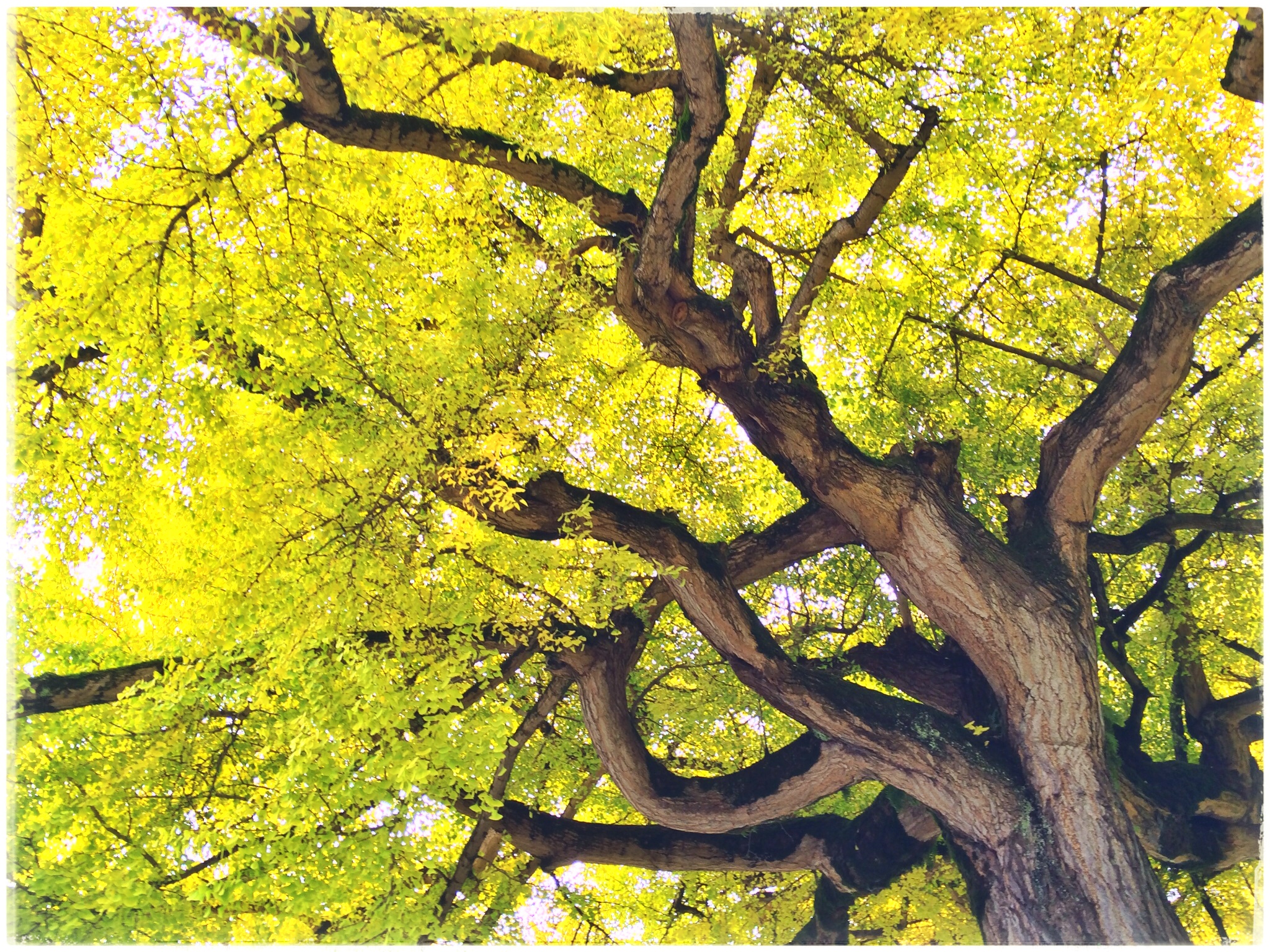
ginkgoAnd there it stood: the living fossil. A tree of a kind that is older than the dinosaurs, and the kind that even survived the Hiroshima atom bomb blast. A tree species does not live to become over 200 million years old without extraordinary resilience. Standing in the shower of golden fan-shaped leaves I marveled how age and survival does not mean one necessarily loses one’s beauty. The gingko tree is the poster queen of anti-aging. Many consider it to have medicinal qualities, but for me the marvel is in how the gingko has time-traveled and replaced grazing dinosaurs with a planet filled with humans – and without losing a single quality that makes it so extraordinarily beautiful.

Yet how sad it is to think that a tree does not live to become 200 million years old without losing all its relatives. There is no tree like the ginkgo in the world today. Survival and longevity ultimately also mean loneliness. What ever may happen to our world in the future, I do hope the ginkgo will not be the last tree standing.

(Montreux, Switzerland; November 2014)