

In the middle of a residential neighborhood towers a church comparable to the Copenhagen cathedral in size. A quick google search labels the wonky gothic-futuristic design as “expressionist”. It sure does express height, strength, and durability – all the opposites of the idyllic, sprawling cemetery across the road.
Resembling central European cities more than any other Nordic city, Copenhagen is populated with churches. Sleep-in mornings are impossible in my local Osterbro, as one of the churches commences a lengthy peal at 8 am, weekday or weekend, that frightens any traces of dream out into the daylight. (If you aspire to become a morning person I warmly recommend moving to Osterbro).
(Bispebjerg, Copenhagen; February 2021)
 In London there once was a General Lying-In Hospital. Sounds like heaven for busy workers. Or those with coronavirus. Yet, Google tells me that “lying-in” actually once meant childbirth. Was the actual mental image of childbirth so sensitive that it had to be referred to indirectly?
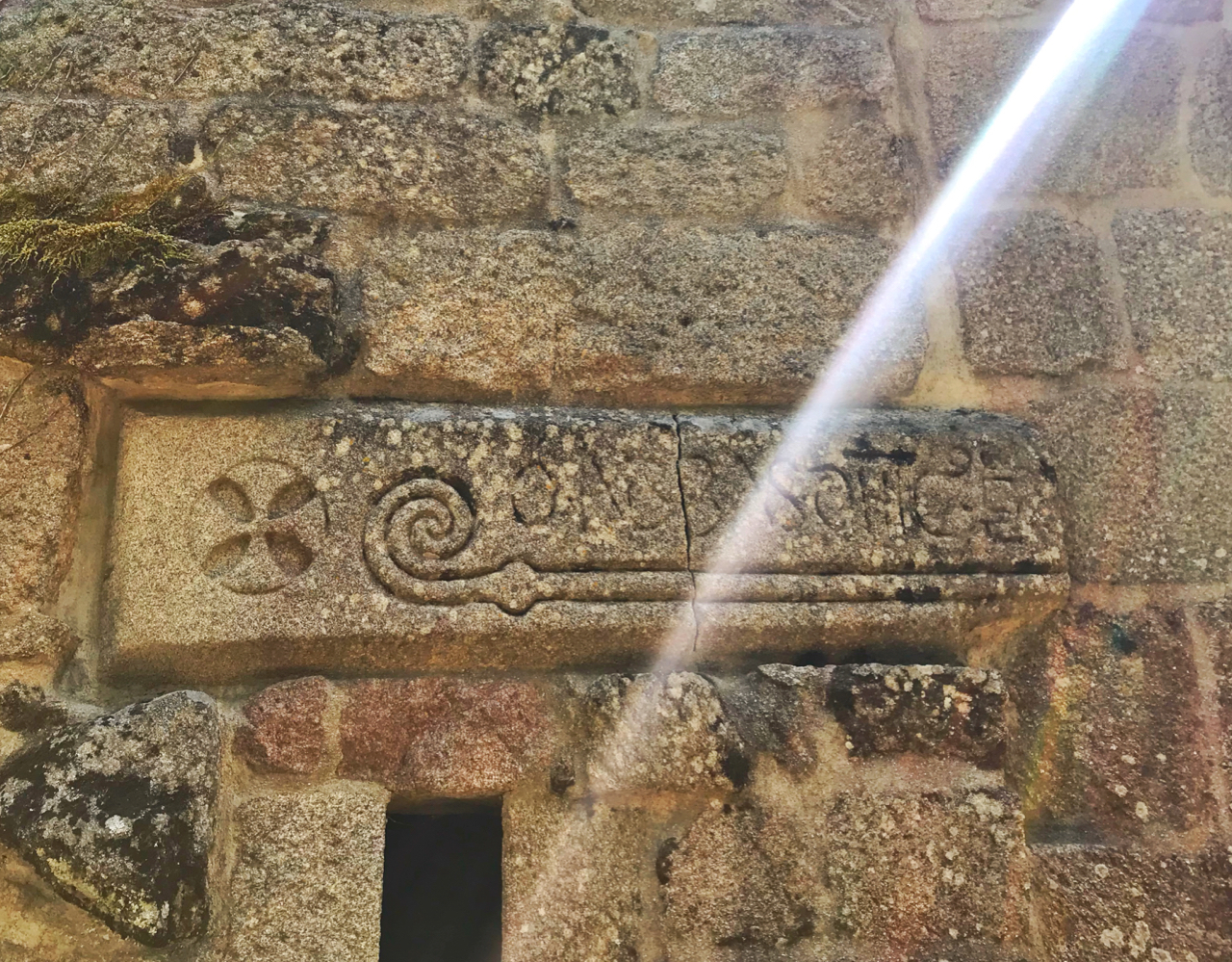
 In the middle of the forest lies yet another over thousand years old monastery. Galicia is practically
  (Galicia, Spain; September 2019)
 Born in 1495, the university of Santiago de Compostela is one of the oldest still functioning universities in the world. Initially it was the local archbishop Fonseca who thought that knowledge should be properly cultivated in his local hoods. And so he opened his swanky family palace to serve students and education. That was obviously not good enough as he ended up founding an entire university. The Fonseca college is still functional today – and a charming place to visit.
 In the middle of the forest there was a crystal clear river, straddled by an old stone bridge. There was river water welling up through a small fountain in the stone wall. And an ancient, weather-blackened monastery. Absolutely in the middle of nowhere. I hear it is more than a thousand years old.
 As I stood on the tiny inner courtyard overlooking the Eume river valley I could not help but wonder how and why sites for monasteries were once chosen. Was it the result of a spiritual experience of the founder, on-site? Or simply strategic, to keep an eye on the locals? In any case it must have been incredibly difficult to start from scratch, and not just carry up and install the granite bricks, but to create an infrastructure with water and food delivery to uphold survival of sometimes dozens of monks.
 (San Xoán de Caaveiro, Fragas do Eume, Spain; September 2019)
 One night in Salzburg there was a little train that took us aboard and climbed up the hill, all the way to the top. Strong fortress walls welcomed us (or perhaps rather said “keep out, strangers to the city!”). There was a simple Austrian dinner in a simple wooden restaurant with a view. There was a waitress who was happy it was her last shift as she confused the orders and languages needed (her job cannot be easy on her mind).
 (Salzburg, Austria; July 2019)
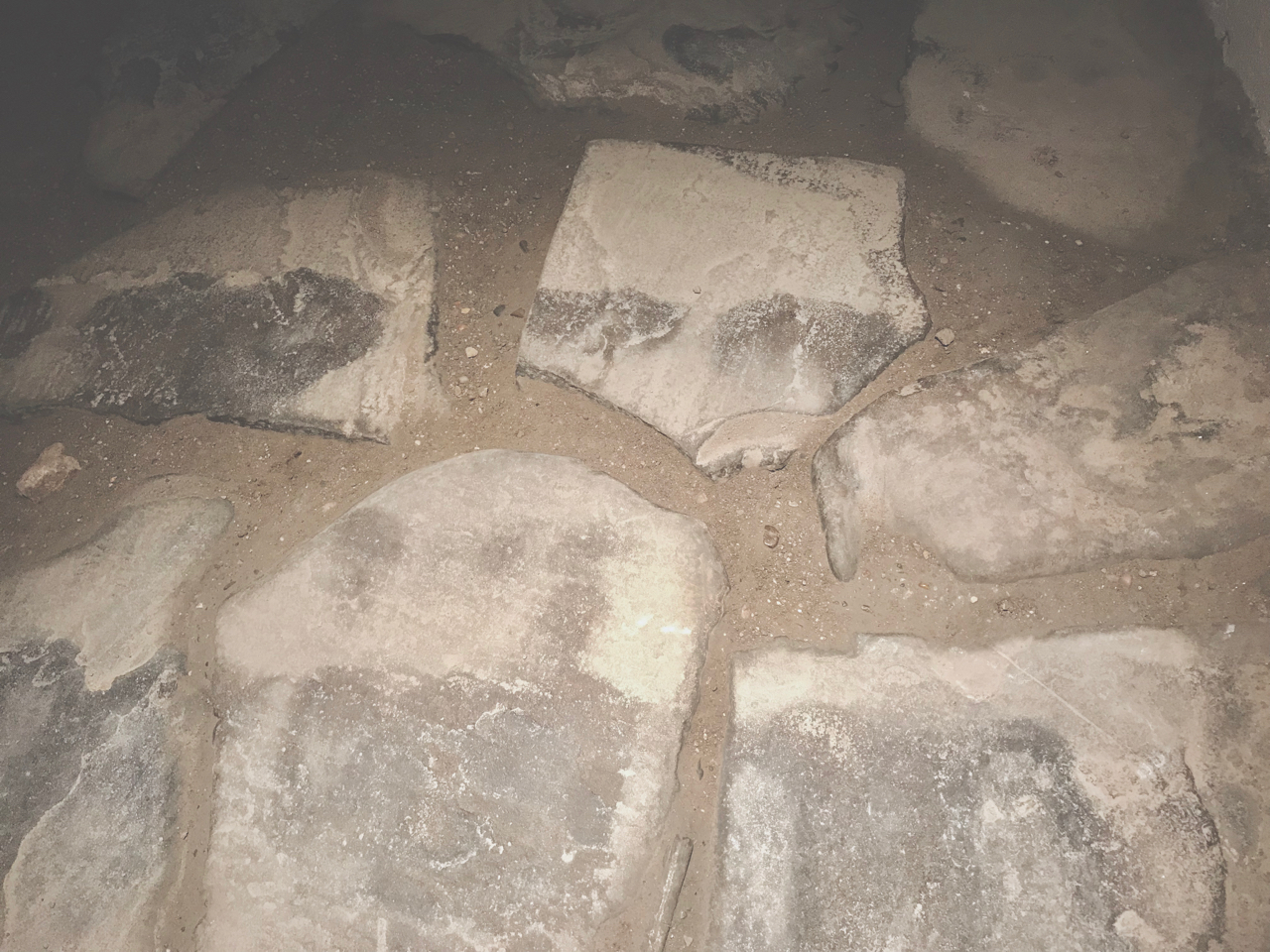
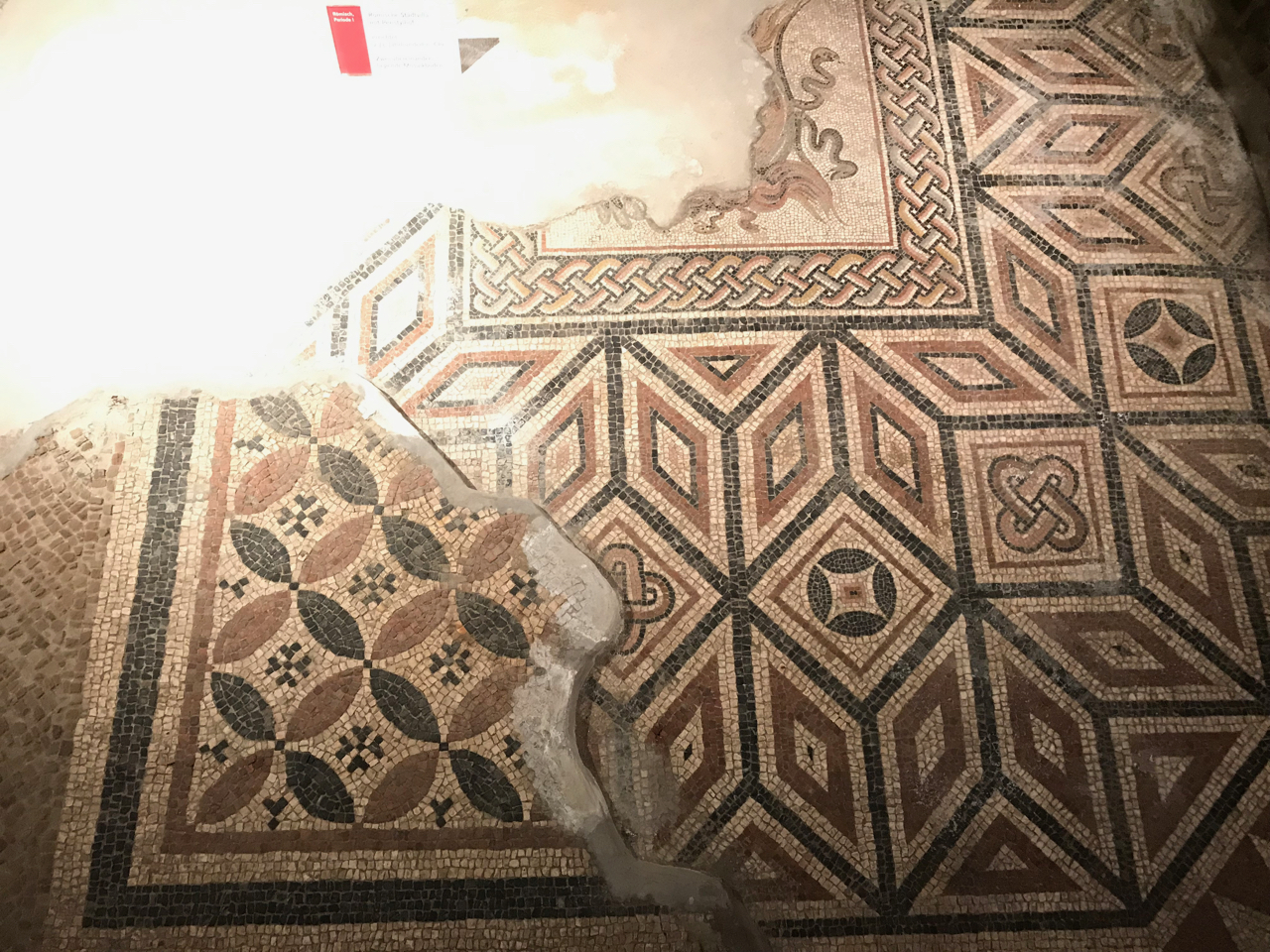 Deep under the cathedral of Salzburg, one lucky team of archeologists discovered old Roman street pavings and house floors. What a thrilling sight it must have been, to slowly brush away dirt and debris from what once was the surface of the city.
 (Salzburg, Austria; July 2019)
 I stepped into another of the magnificent European cathedrals, this time in Salzburg. Just like in so many other places, a church has stood here since the 8th century AD. Since then, the church has been rebuilt two times: once after a fire and once because of other severe damage. This is the story of most magnificent European cathedrals: the church we see today is often not even the church of the medieval townspeople. And even if it is, we would hardly recognize the version that served the townspeople 1000 years ago, with so many alterations and additions.
  In the 1960, the lovely people of Salzburg added 5 new bells to the 2 surviving, 17th century bells. One of the bells is named Barbara, which certainly is an odd name for a bell. She joins the other lady bell Maria, along with the gentlemen bells, to form the total set of seven bells. Sometimes bells are needed in the war, you see. Not because of their beautiful form and peal, but because they can be melted to aid the death of people. What a change of profession for a church bell indeed.
  (Salzburg, Austria; July 2019)
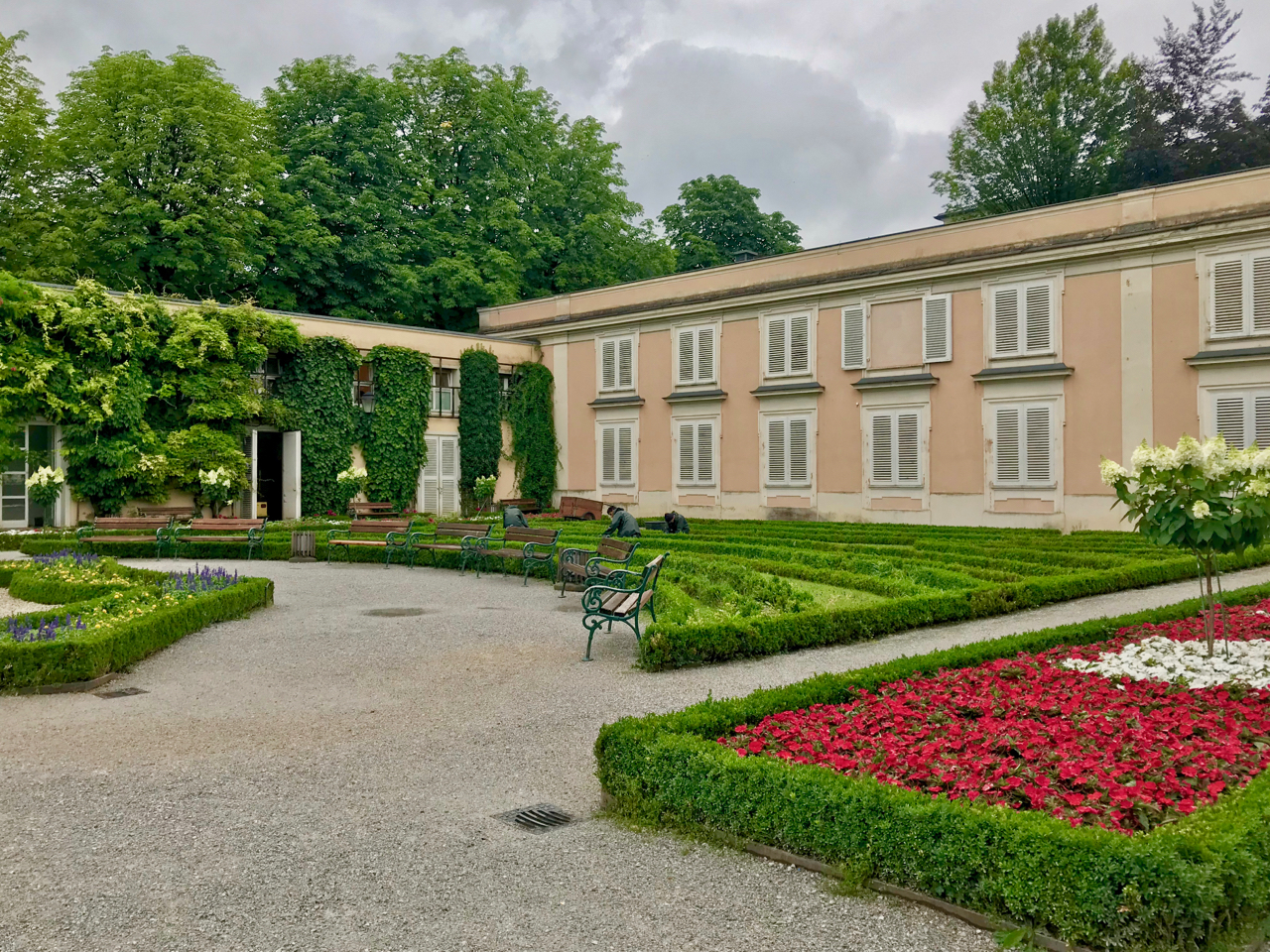 If one is an archbishop with ailing health, why not just have a palace built next to the center of the city one shepherds? This was how the Schloss Mirabell was born – although the archbishop and his wife would not have recognized their beloved home as little as a hundred years later, when it was rebuilt into its current shape.
 (Salzburg, Austria; July 2019)
 The view from my hotel room window. If only zeppelins were still the fashionable way to transport through the air – then I might see the observatory in its originally designed use: a docking site for zeppelins bringing travelers in and out of Manhattan. Such a courageous space-age dream was built to come true, but never put to good use.
 This blue marble