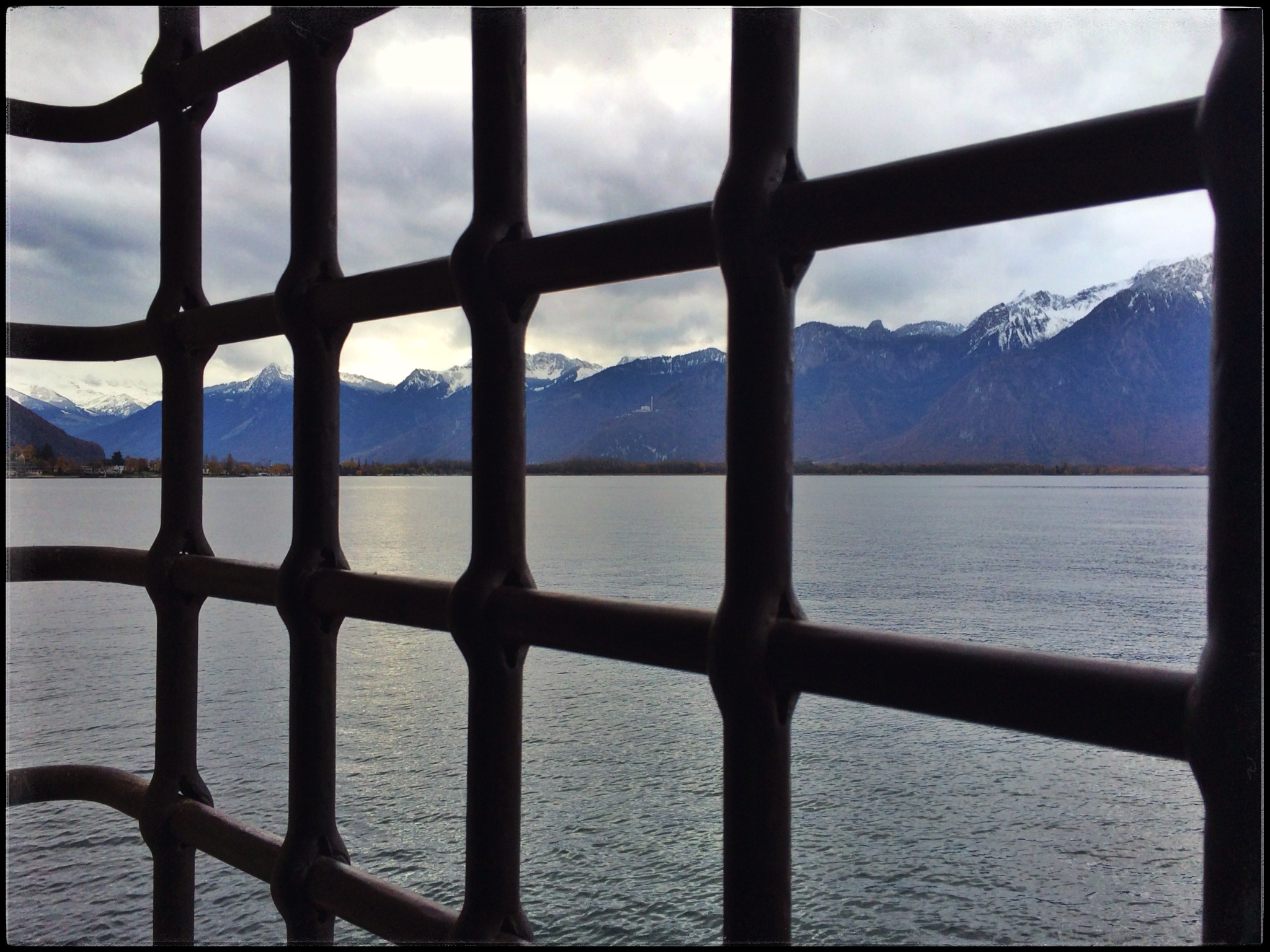
 Did chateau Chillon receive extraterrestrial visitors in times past? Surely such a gorgeous spot overlooking the lake and the snow-capped Alps is worthy of a tourist visit from outer space?
(Chateau Chillon, Montreux, Switzerland; November 2014)

Did chateau Chillon receive extraterrestrial visitors in times past? Surely such a gorgeous spot overlooking the lake and the snow-capped Alps is worthy of a tourist visit from outer space?
(Chateau Chillon, Montreux, Switzerland; November 2014)
 We reached the bottom of the staircase and stepped into a gloomy vault. Seven pillars held up the ceiling, barely lit by the lost rays of light that from time to time bounced into the dungeon. How dreadful it must have been for François Bonivard to sit here for six years, chained to one pillar. And how dreadful it is that once again the cause was that of faith; or supporting the Protestant reformation.
Lord Byron recognized the scent of drama, too, and it grew on him during the rainy, unforgettable “Year Without a Summer” of 1816. Oh, the most fantastic tales he, Polidori, and Mary and Percy Shelley conjured! Frankeinstein, Vampyre – and a curious, gloomy poem about a forgotten soul withering in the dungeon of chateau Chillon.
Perhaps Byron sat in the vault for hours. Perhaps he imagined what it must have been like to be chained to a pillar, believing oneself to be trapped below the water level. Perhaps he found nobility in that limbo between no-life and nothingness. As I thought of the selection of chilling stories chateau Chillon has collected during the centuries, I could not help but wonder why he chose to befriend the thoughts of a libertine prisoner who ended up free, instead of growing a liking to the sad fate of the many women tortured and then burned as witches in the courtyard? 
A double dungeon wall and waveHave made—and like a living graveBelow the surface of the lakeThe dark vault lies wherein we lay:We heard it ripple night and day;Sounding o’er our heads it knock’d;And I have felt the winter’s sprayWash through the bars when winds were highAnd wanton in the happy sky;And then the very rock hath rock’d,And I have felt it shake, unshock’d,Because I could have smiled to seeThe death that would have set me free.(Lord Byron)
 (Chateau Chillon, Montreux, Switzerland; November 2014)
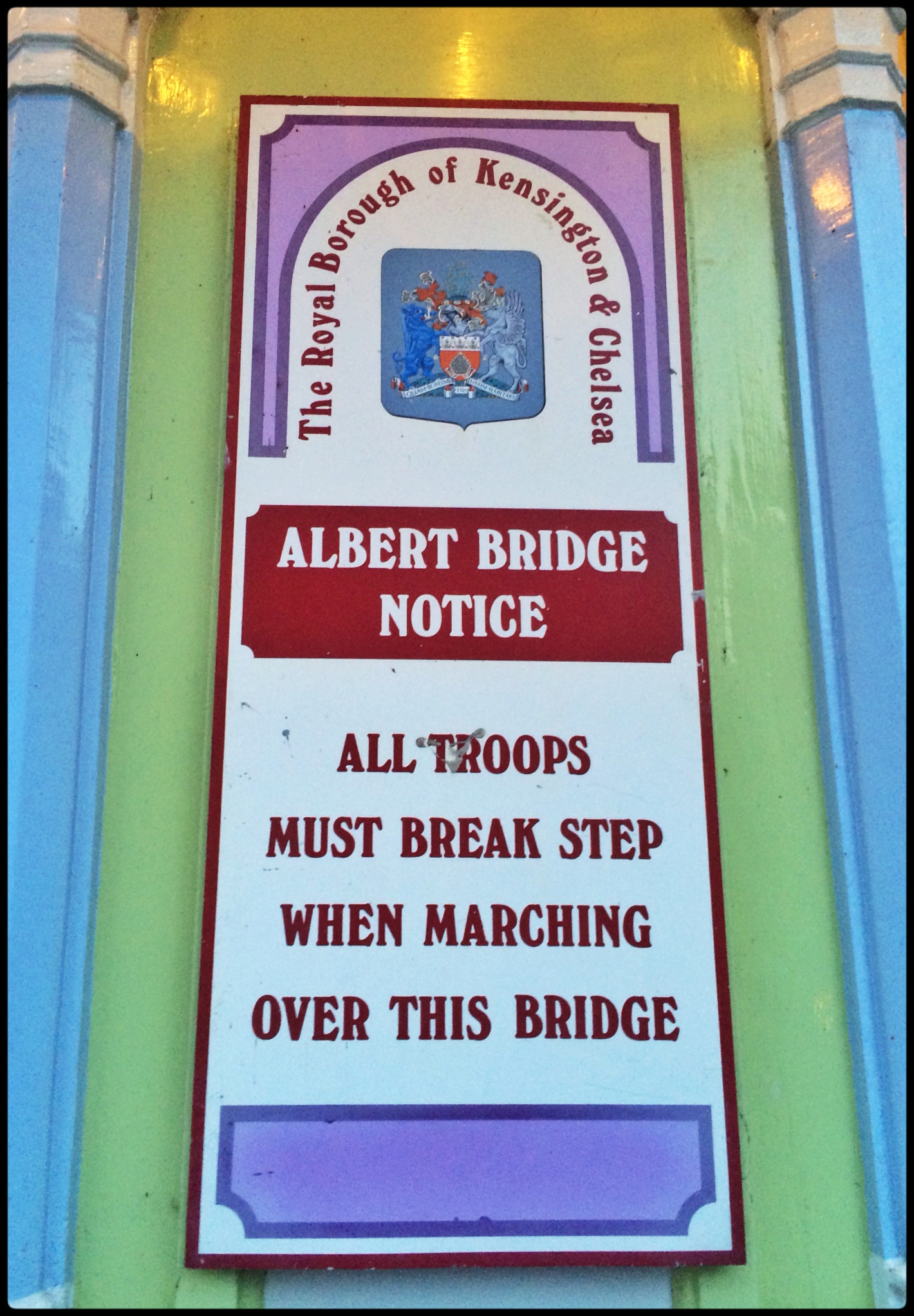
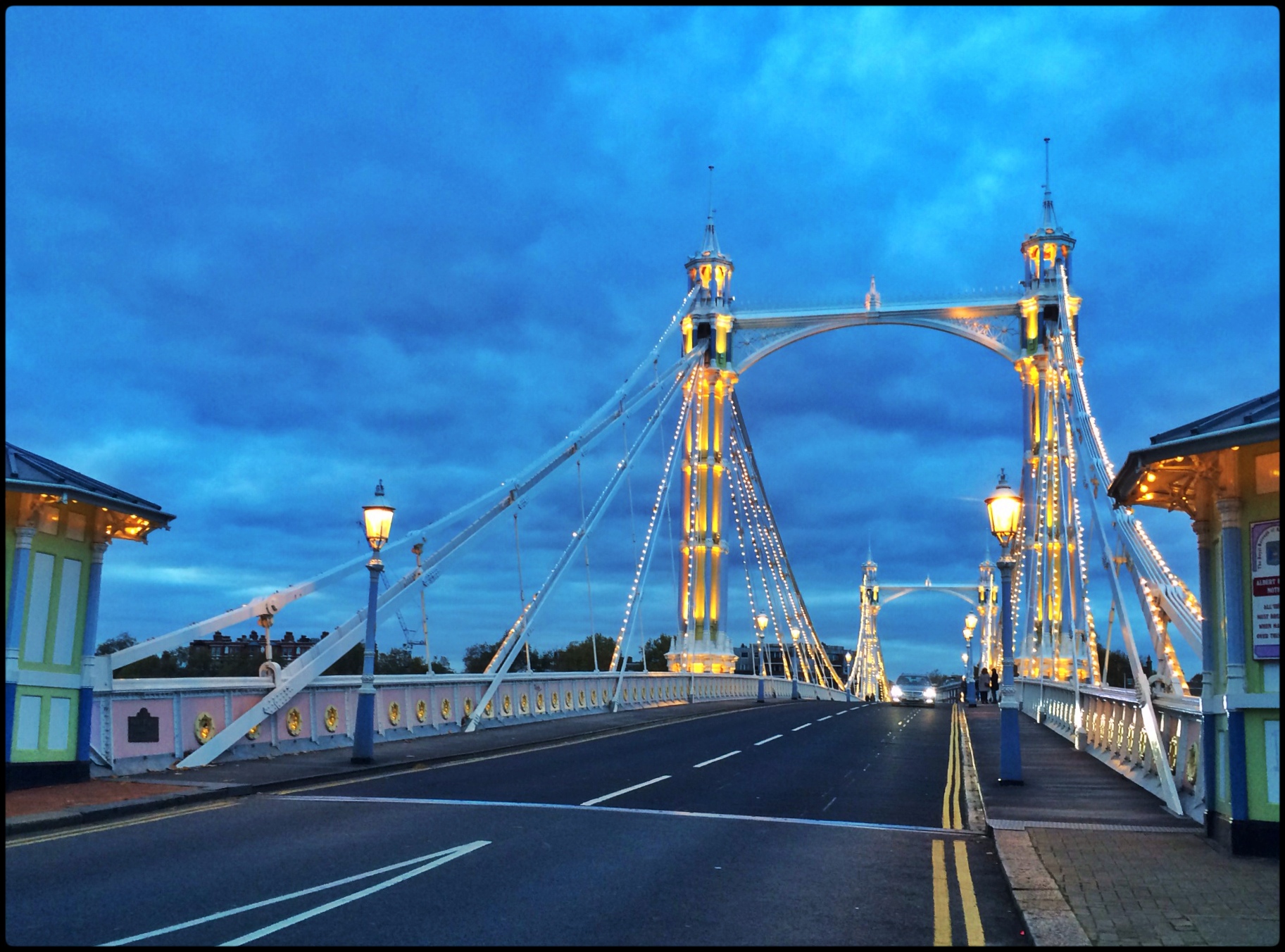 Is it the gate to an amusement park? No, it is just the Albert Bridge, crossing from Battersea Park to Chelsea. Only the British would find a practical reason to paint a bridge pink, blue, and green and decorate it with thousands of lightbulbs. Apparently this makes it more visible to ships in bad weather. And only the British would keep a bridge that was quickly useless as a toll bridge, ill constructed to hold motor traffic, and generally rotting away only a decade after its grand opening. They fondly named it the Trembling Lady and issued strict orders that all troops must break step when marching across.
And fortunately, only the British would choose to renovate the bridge after its first 100+ difficult years, giving it a new coat of pink, blue, green, and gold, and even replacing the lightbulbs. The Albert Bridge goes on into its second century revamped and fit for a prince.
 (London, UK; October 2014)
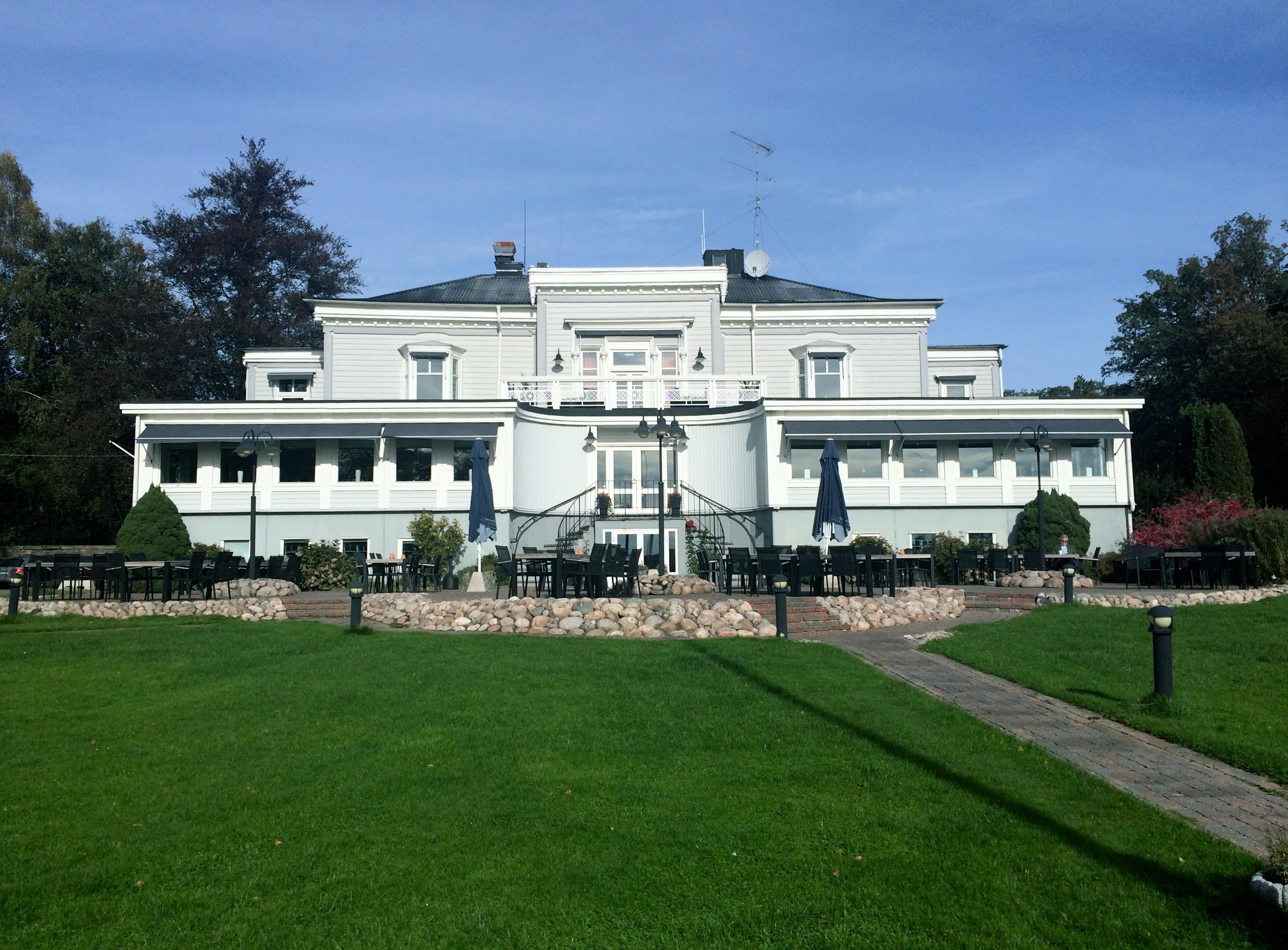 Ten minutes in the sunshine was all I had, before crawling back inside for yet another session. My ten minutes were less than a blink in the time of the manor, standing for 200 years on a foundation 500 years old. If time is an illusion, how many comedies, tragedies, and lifetimes happened all at once when I walked over the grounds?
(Aspenäs manor, Lerum, Sweden; September 2014)
 The manor had seen war, and hosted wounded soldiers. It had survived a siege and arrest of a rebel after being stripped of its handsome garden statuettes. When nobody cared about the past, and the future was spearheaded by the Olympics, somebody had the grand idea of clearing the Helsinki streets of drunkards and shooing them into the manor. Out of sight is out of mind, except for the house that diligently cared for them for forty years.
Two decades later the house cares for those who wish to escape, or gather, or simply breathe. Opening the creaking door I discovered a room more like a salon. Oh! the oriental rugs, the heavy chinz, the enormous crystal chandelier! And yet, how newly it all had been restored. Sinking down on the downy bed I stared out of the window, over the lawn towards the stream floating by. Garrison, hospital, drunk ward – in the storm of progress the appreciation of the past is often waved away. When space was the new tomorrow in the 1960s, all hardwood floors were covered with linoleum and everything that reminded of days gone by was swiftly cleared away.
Time, as we perceive it, only moves forward, but there is a major change in the third-millennial minds compared to the Atomic Age. We preserve traditions, restore old houses, and attempt to return to nature and pure values. I could not help but wonder: in this ever-accelerating world of ours, where technology races alongside science and our greedy minds, when, and how, did we end up appreciating the past, legacy, and crystal chandeliers?
(Hirvihaara manor, Mäntsälä, Finland; September 2014)
 Once upon a time a powerful kind of people reigned on Crete. Nobody knows exactly where they came from. Nobody knows what they called themselves, but we call them Minoan based upon one of the legendary kings. We know how they wrote but we cannot decipher what they wrote, nor how they spoke.
With their plumbing, construction knowledge, rituals, and art they were perhaps even more sophisticated than the ancient Greek. They traded, fought wars, and sailed the seas. Like so many ancient civilizations they worshiped a mother goddess, before the world gave way to male main deities. They loved bullfighting thousands of years before the Spaniards.
 And then the Santorini volcano blew up into a cloud of fire and ash, shook the grounds and seas, and threw never-ending walls of water against the coast of Crete. Villages were wiped away in by the tsunamis and ports and ships were shattered against the mountains. Badly crippled, the Minoan empire could not keep the Mycenaean invaders away. And when everything was almost lost, the Dorians arrived and wiped out the remains. And so what once was self-evident became fable. A thousand years later, Homer and Plato were reciting stories old as legends.
Standing over the ruins of the once story-spun palace of Festos, I cannot help but think how things would be today should Minoan smarts have survived. How would the world have turned out if they had not taken the secret of plumbing and flushing toilets to the grave 3500 years ago?
The answer is lost in the cacophony of afternoon cicadas and drifts away in the scent of dry pine needles and hot earth.
 (Festos palace and Agia Triadha village, Crete, Greece; August 2014)
 “Welcome to Matala George. Today is life. Tomorrow never comes” with daisies on a dazzling white wall. Lazy afternoons grooving underneath a thatched roof. Tripping by the flipped A in “Hakuna matata”. Happy people dancing, toes twirling in the beach sand, under the Matala moon. Soul searchers like Joni Mitchell, Cat Stevens, Janis Joplin, and maybe also George, the Beatles George. The tired ones retreat to their caves in the rock and sleep on beds once carved out for the Roman dead. At each creeping dawn, tomorrow peered at the Flower Children over the rock ledge and decided to go elsewhere instead, if just for a day.
One day tomorrow came, along with those who thought the ancient tombs were better held sacred when prawled by tourists in swimsuits. Curious people came in throngs, too, to feel just a tickle of the magic without ever daring to throw themselves into living for the day. Matala became a site of pilgrimage, where the last remaining hippies were photographed as they ambled about their homes.
I stayed just for day, too. Maybe, just maybe, after I and the hundreds of tourists had gone, somebody lit a fire on the beach. Maybe a few dark shadows with smiles gathered around the flames. A guitar, a drum, and a few breaths while staring at the blackened water. Then music swirling up towards the milky way, voices, joy, and chasing today beyond midnight.
Who knows, perhaps some are still searching their souls under the Matala moon.
 (Matala, Crete, Greece; August 2014)
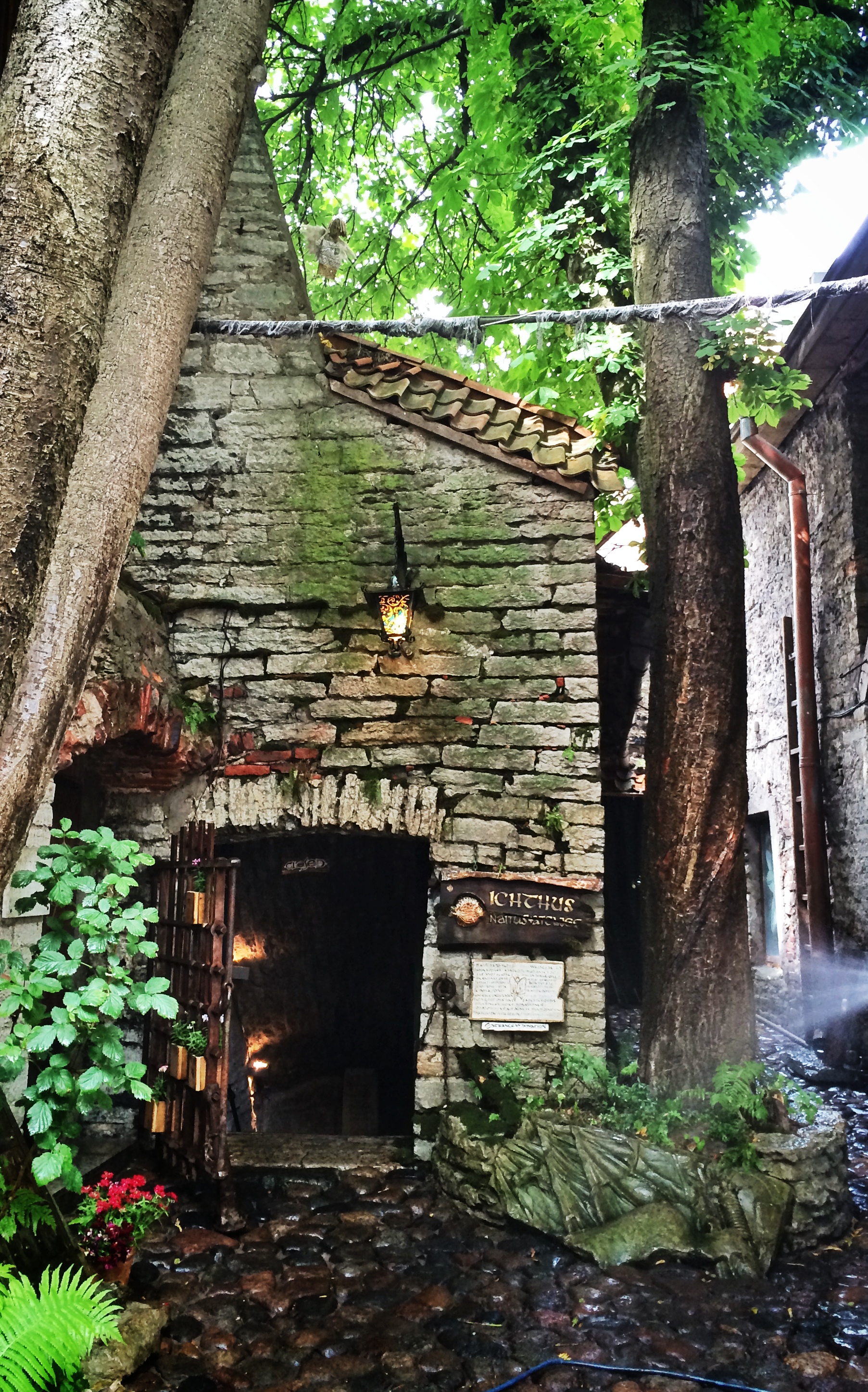
800 years ago she stood as a safe haven and retreat for those wishing to know God and themselves. She was created to bring the Christian God closer to the people, to open their hearts with the help of Dominican monks. She also had business sense: in the heydays she provided shelter to produce up to four kinds of beer for the good Blackfriars.
But the greatest wars on Earth are always about religion. Faith is another word for subjective truth. Congregations loyal to Rome were not in fashion when the Reform spread northward from Germany.
Reform in the 16th century meant also reform of the buildings of worship. And so she was dismantled, piece by piece. Some of her brick was incorporated into the great cathedrals of Tallinn. Other pieces were scattered into buildings and city infrastructure around the Old Town.
But the vault of Power remains. As I stood still in the center of the room I could hear my own rambling mind. Why, I think heard something else, quietly swirling by the tip of my ear. Centuries later, the echoes of the chanting monks still bounce off the walls. The worn stone floors invited for a moment of tranquility in this crazy hurried world.
And then a lady tourist in great awe of the ceilings kicked the candle on the floor. It flew a good meter, splashing stearine as it went. No more echoes of monks and no more impressions of power in the air. Amidst minor confusion, apologies, and good intentions we relit the toppled candle with a miniature matchbox strangely enough provided by the lunch restaurant just an hour ago as a gift to all customers.
Coincidence, perhaps, or perhaps not? One thing is certain: regardless of temples of worship and candle-lit moments, tranquility is a state of mind.

(Dominican monastery, Tallinn, Estonia; July 2014)

In 1991 the Soviet intelligence left Estonia in a hurry. Walls had come down, both in divided cities and in the minds of those who built them. Just a few weeks earlier, in some places the walls had had ears. And eyes, enhanced by wide-angle cameras. Ashtrays were bugged and 60 rooms of the one and only Viru Hotel in Tallinn were tapped. If you exclaimed aloud that you were out of toilet paper it was delivered to your door within 5 minutes. In-room breakfast was served when the hotel heard you were awake. The radio to KGB headquarters and Moscow was running hot.

Conversations between hotel guests were listened to by bugged ashtrays and dinner plates. Oh, the fate and woes of the kitchen staff who by mistake put such a plate in the dishwasher!
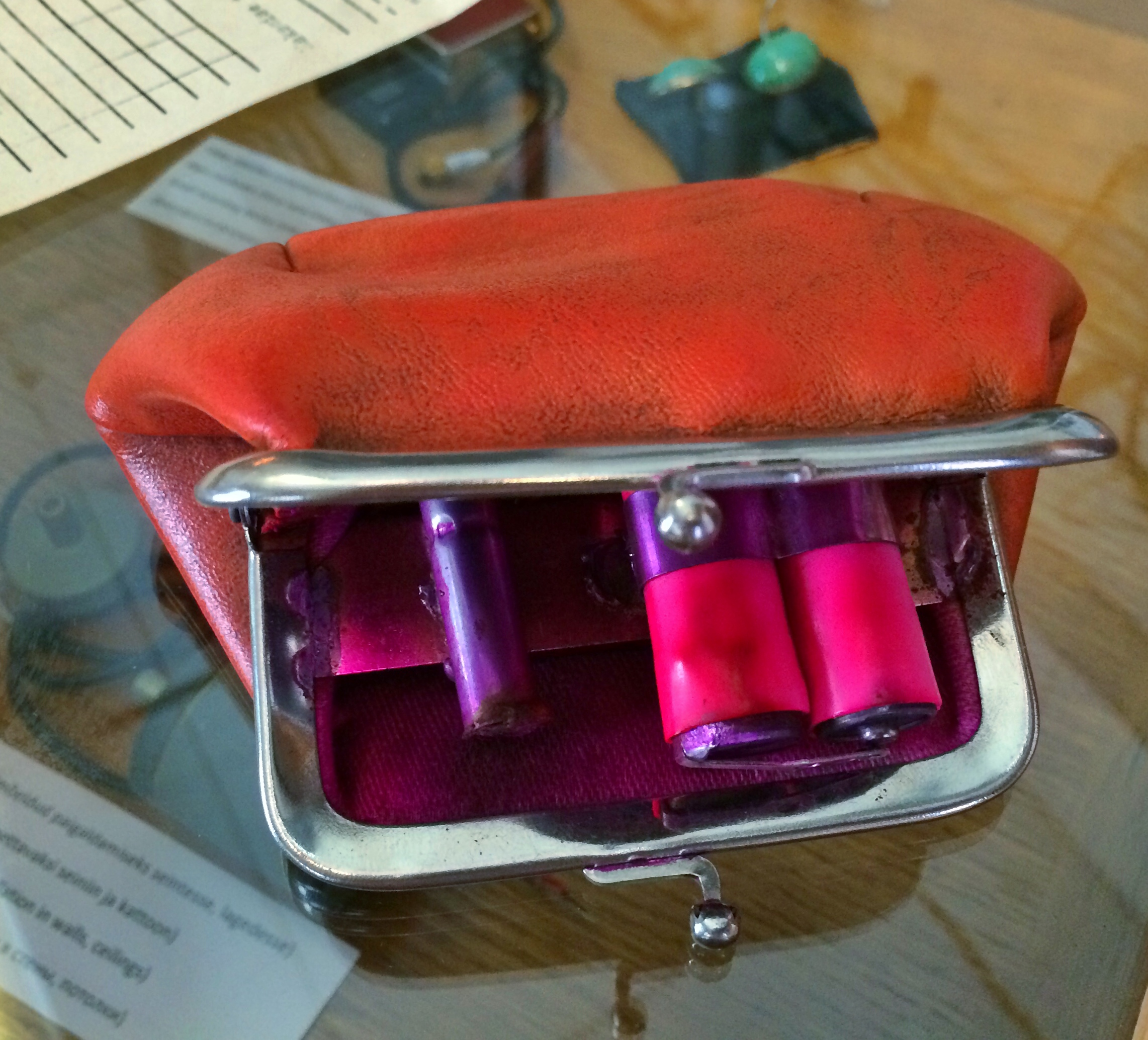
Spying on Western guests was not considered an offense but a pure business matter. Stealing from hotel guests was, however, quite another matter. Grabbing and opening this lovely red purse triggered a paint bomb: whoosh out came a puff of red powdery paint, in your face. Contact with water just made the paint stick better, so washing off your sin was not an option.
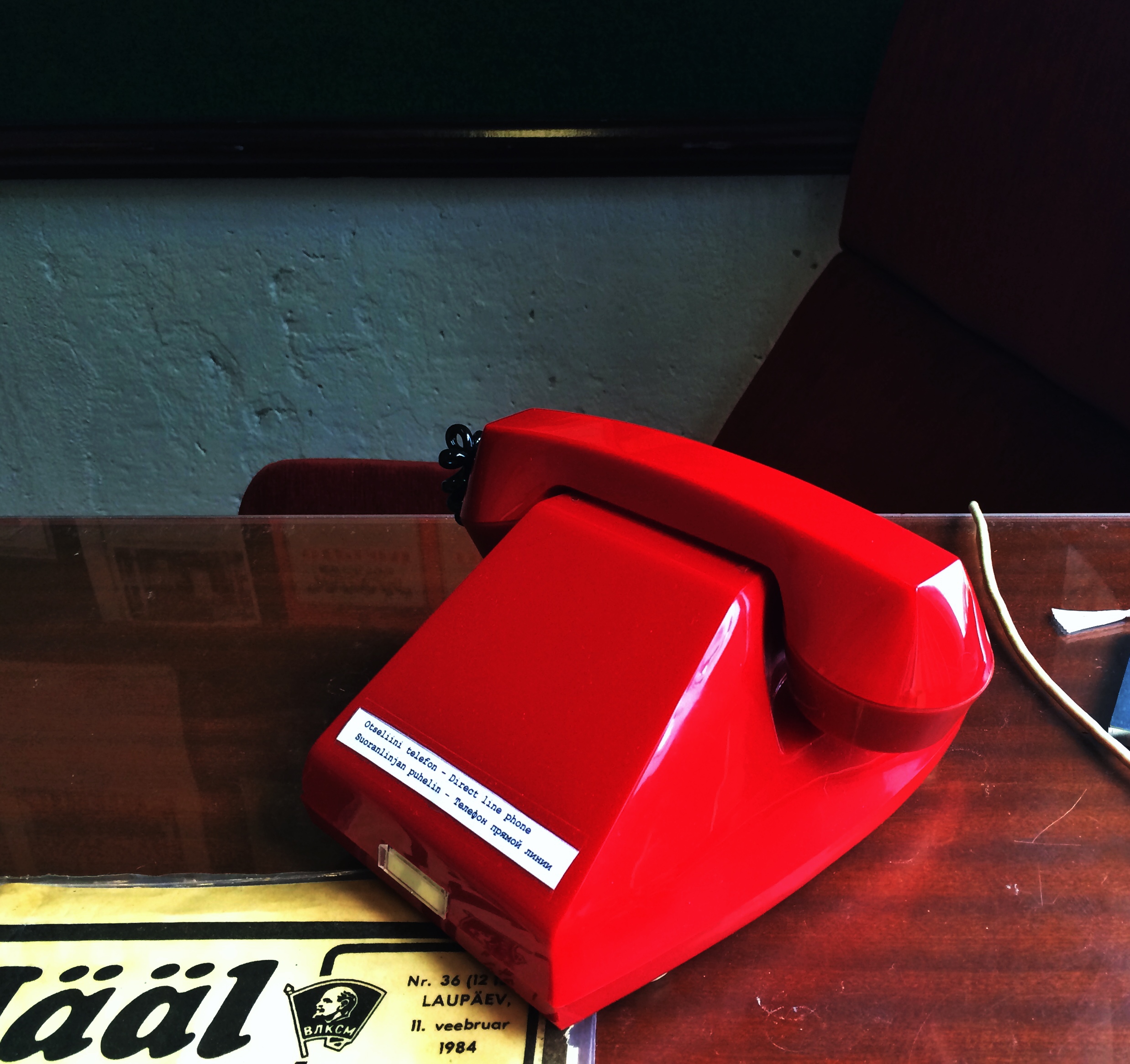
And then change arrived: a new world, and the old world was locked and left behind for decades to come. Papers scattered across the table. A few radios ripped off, others left where they once stood. The red telephone with no dial was deemed useless: nobody would ever pick up again at the KGB Tallinn headquarters.
Nothing lasts forever. And when it is time to go we show our true colors and single out those objects we wish to keep. The radios went with the spies but not the poor lonely red telephone. Yet 20 years later it is the center of the room and attention once again. The world turns in wild loops and we can only guess the fate of the once so important radios.
(KGB Museum at Viru Hotel, Tallinn, Estonia; July 2014)

In brilliant sunshine began a perilous voyage. As we cast off, little did we know that mother Nature had decided to let the sun bask on the market square while shrouding the archipelago in thick mist. Soon the sea smoke rolled in and wrapped our little boat in a blanket of nothingness. No sound, no horizon, no nothing except for white stillness.
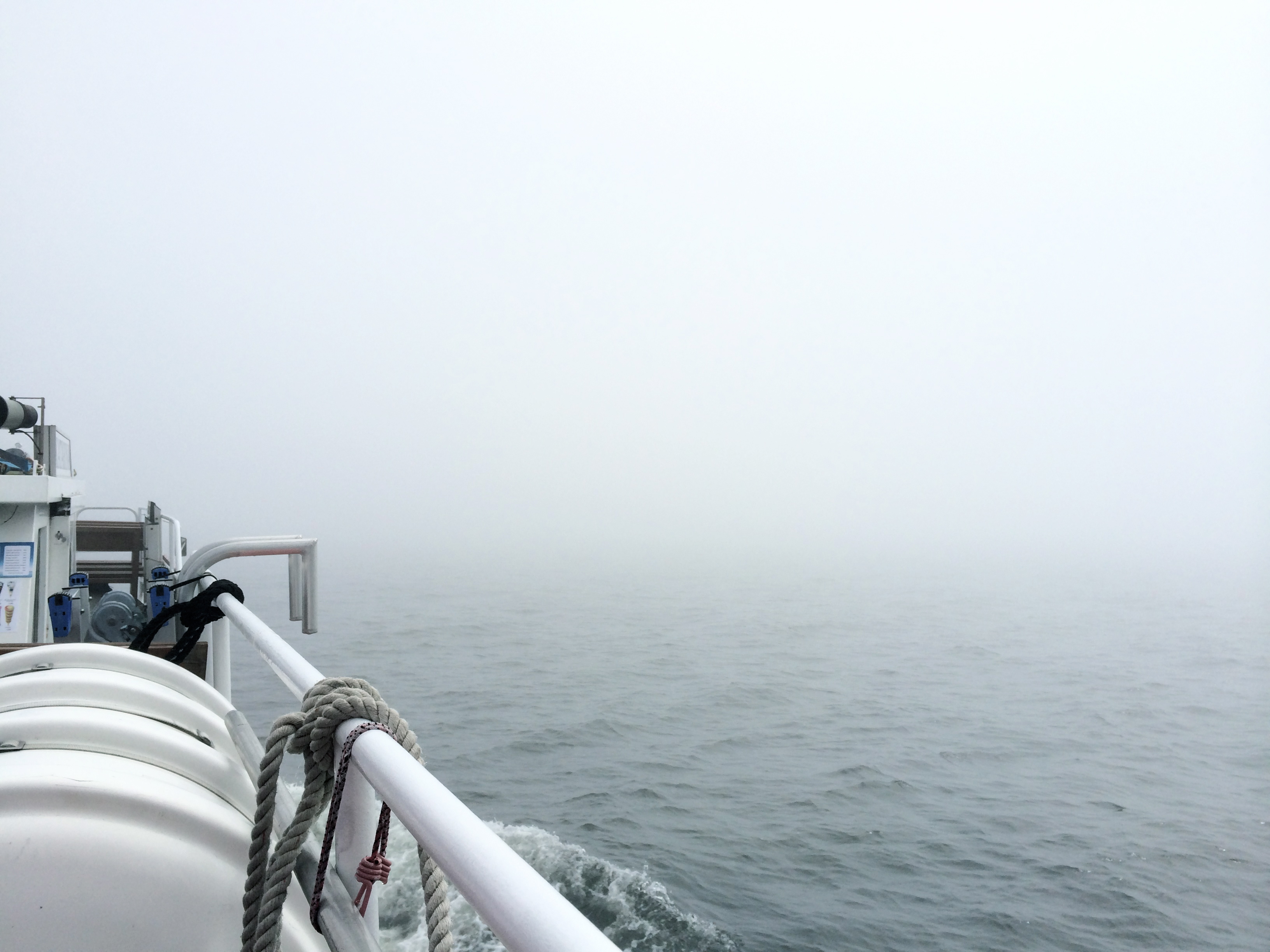
According to the charts, somewhere near us was a smattering of rocks breaking the waves. Perhaps starboard? Port? Who knows, even sufficiently deep under us fortunate souls? We wound down the engines and let the ship glide, hoping to discover our destination. Anguish, what does one do when the gadgets point to a few meters ahead but there is nothing but whiteness in sight? Hoooooonnnk the captain called with the horn, hoping for a yip, a yell, a hello, over here!
Indeed, over there it emerged from the shroud: Söderskär islet, all alone in the world between Finland and Estonia.
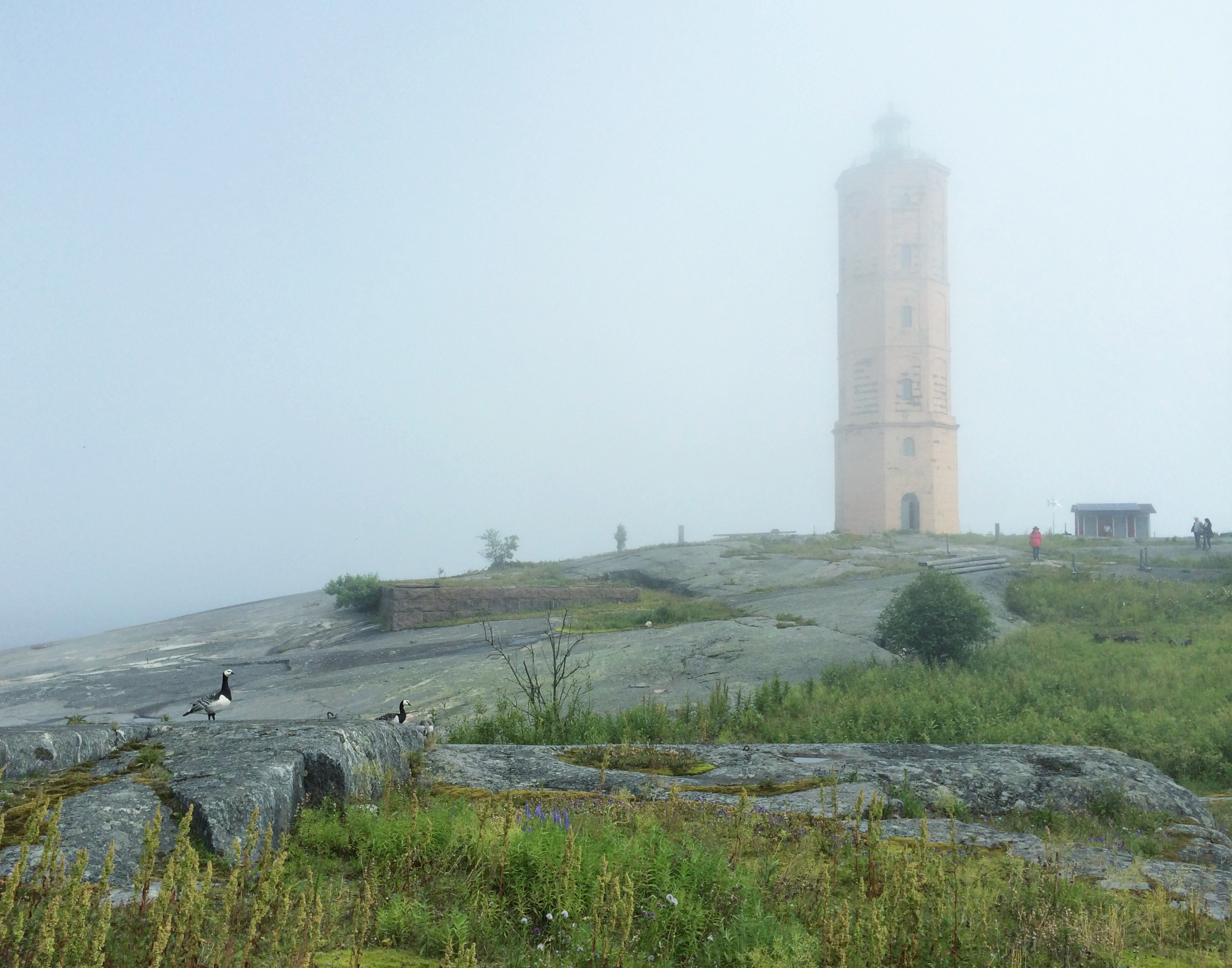
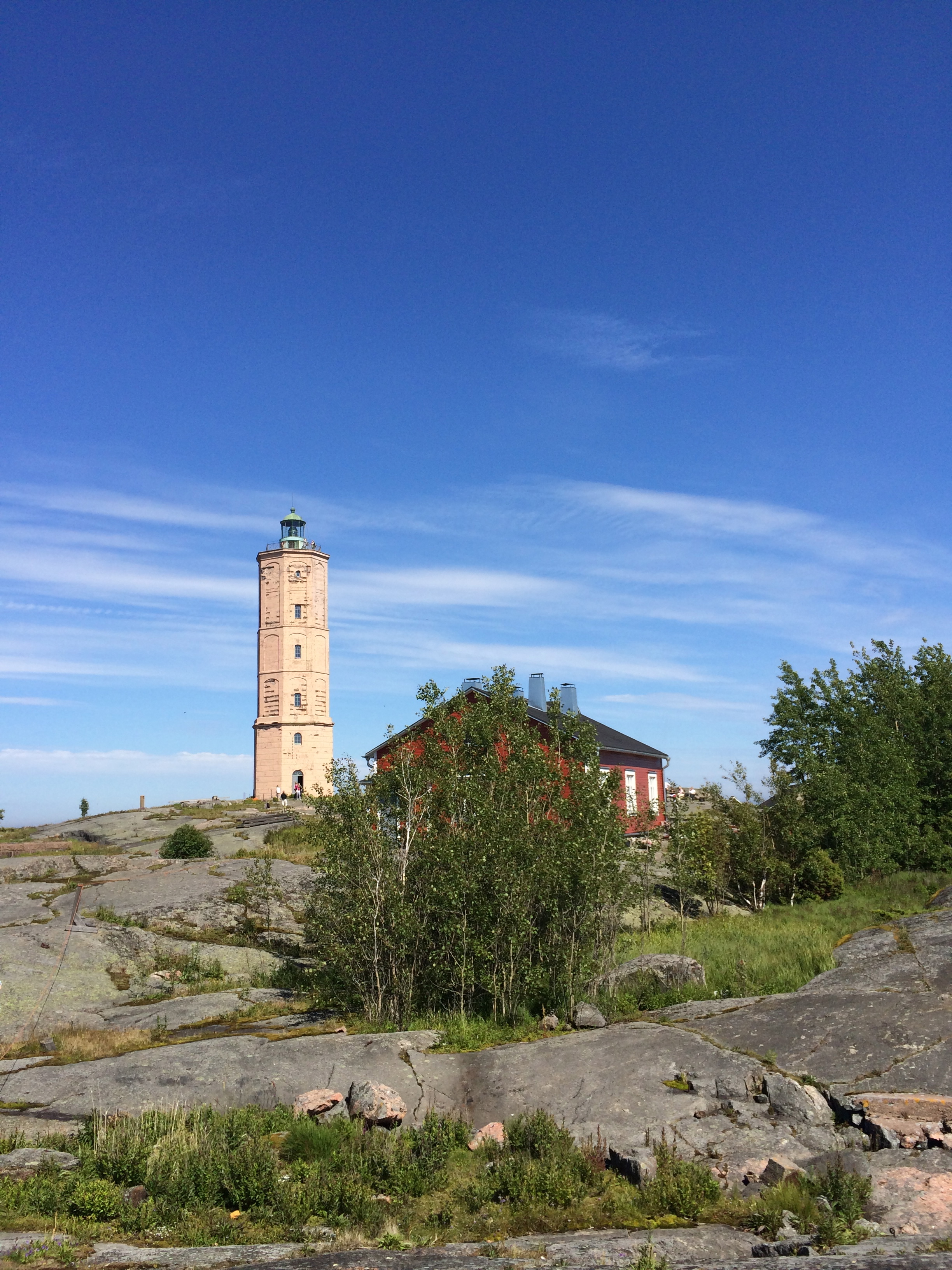
Once upon a time not so long ago a mariner pilot, the lighthouse master, the lighthouse guard, and their families called Söderskär home. Tempests, swells, and scorching sunlight were the bountiful bonus on the job – and off the job. Life was rough and lonely until some years ago when the light was finally extinguished forever. What once swept the horizon with a bright beam turned into a dark tower looming in the moonlight, the ghost hand that waves homebound ships welcome.
And suddenly dark towers and a gray white world were wiped away by the June winds and all that was left was a brilliant blue. On a beautiful day even a lightless lighthouse can come to life.
I stood by the lantern and looked over the cobalt vastness. Virgina Woolf’s poor heroine never made it to the lighthouse. Tove Jansson’s moomin family did complete the voyage, and spent a summer discovering themselves and the world beyond the known. At a lighthouse islet there is no escaping reality, no fleeing from the now whether it is sunshine, storm, or snow. Close your eyes and try to dream but the sea is always on the other side of your eyelids. Everything changes but the sea is constant.
“Moominpappa leaned forward and stared sternly at the fuming sea. ‘There’s something you don’t seem to understand,’ he said. ‘It’s your job to look after this island. You should protect and comfort it instead of behaving as you do. Do your understand?’
Moominpappa listened, but the sea made no answer.”
(From Tove Jansson’s Moominpappa at sea)
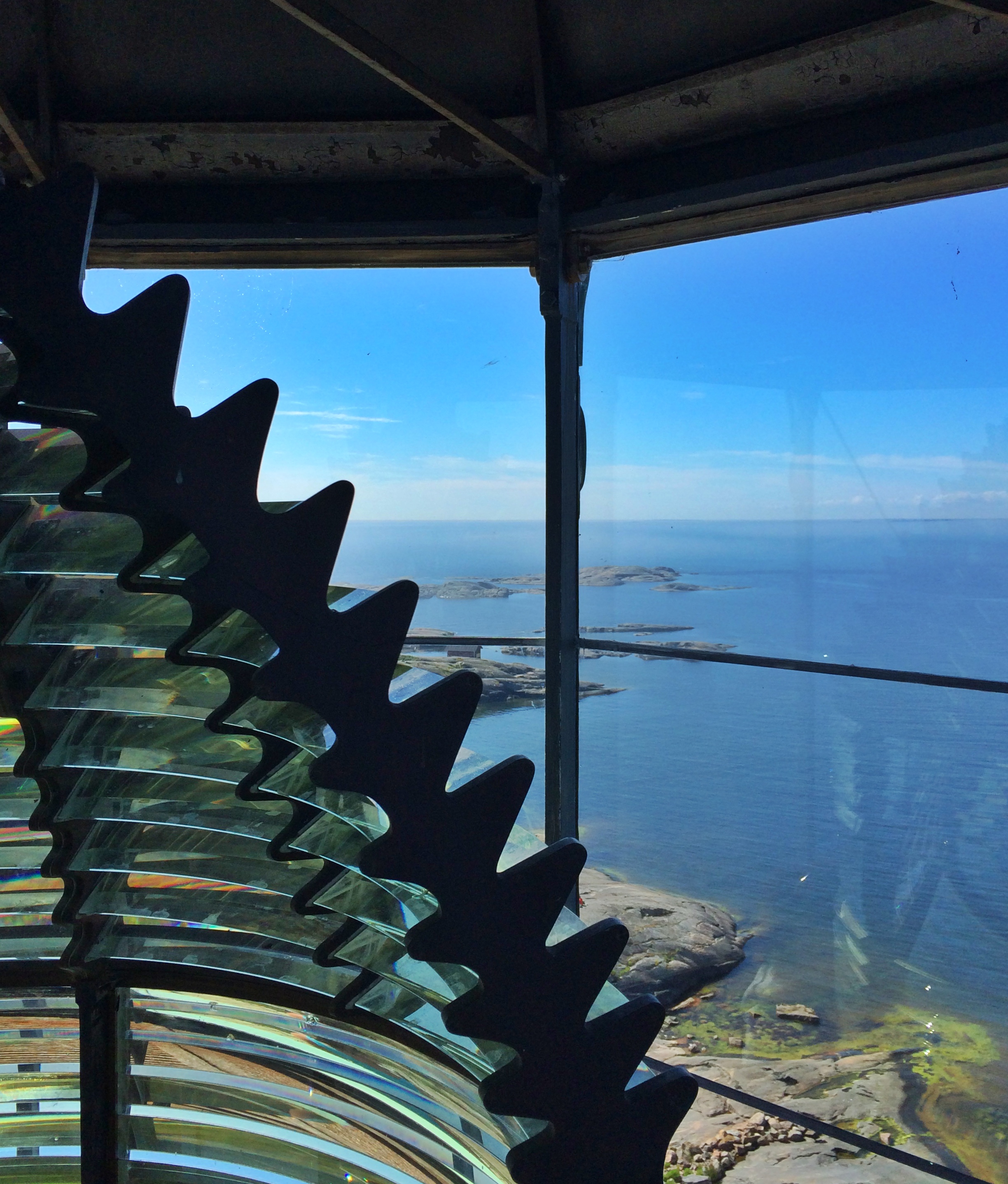
(Söderskär, Porvoo archipelago, Finland; July 2014)
 This blue marble