
 “We cannot leave Nepal for the last time without seeing Everest”, I recall my colleagues stating. Our social business startup was doing great and it was time to let it fly unassisted. This visit was to be the last one for the project. And no, we could not leave Nepal without seeing Mount Everest.
One early morning I found myself on a little prop plane, skirting the mountaintops, on my way to the most dangerous airport in the world. Lukla requires clear skies, and small planes on full throttle going up and full brake going down. Just watch any YouTube video and you’ll see how the pilot slams on the brakes and maneuvers a hasty hairpin turn before hitting the rock wall at the end of the runway.
And if you dare, observe takeoff: leaving Lukla some days later, our pilot slammed full throttle before lifting brakes and sped on the readily downward-slanting runway like he had a death wish. Grown men screamed in their seats as we zoomed down the runway, where at the end the only options were either liftoff, or crash down over the precipice into the valley below.
We lifted, as you can guess. Thank goodness. To be continued.
 (Lukla airport, Nepal; November 2016)
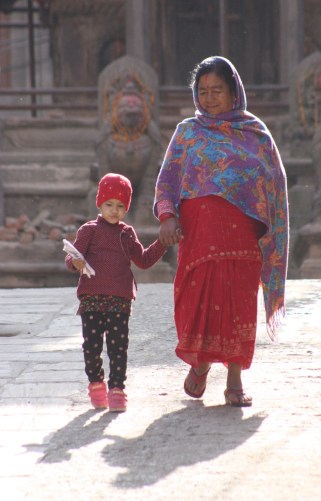 So much red color. Flip-flops even on a cold winter’s day.
 Different looks and appearances – but Nepali on the inside.
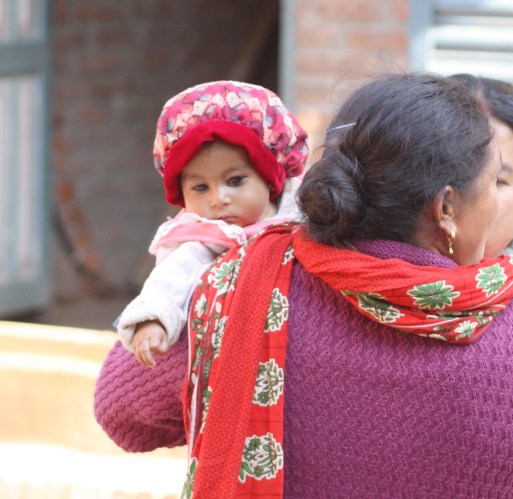 Children with black kohl around their eyes to ward off evil.
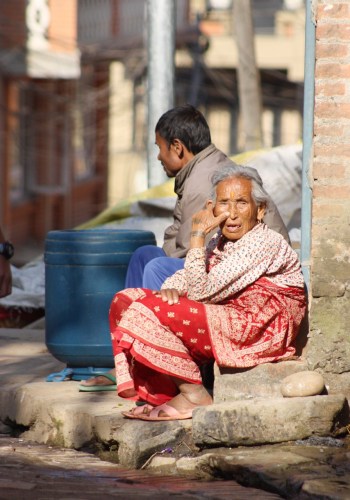 Women at work. Or resting from work, if only for a moment.
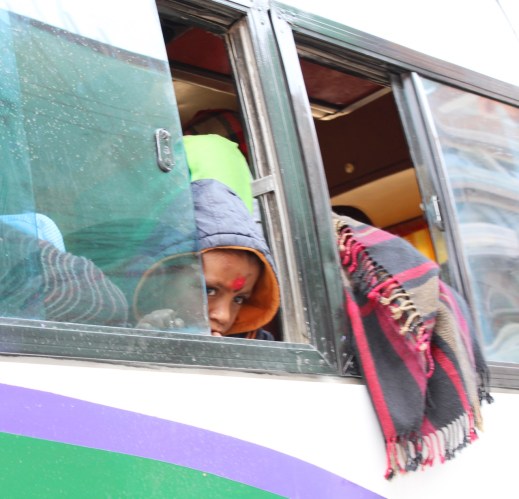 People going this way or that way.
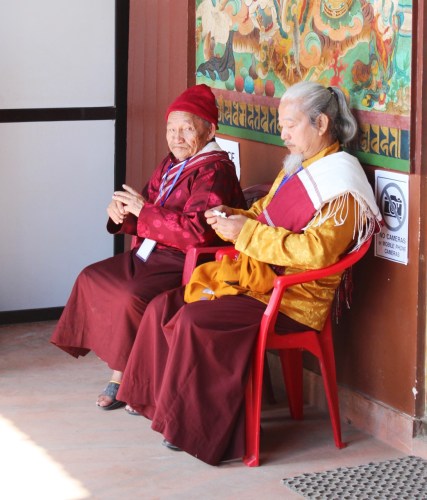 People just sitting still, observing the world go by.
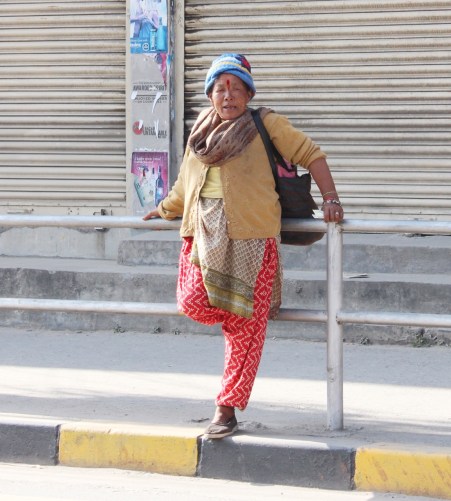 People waiting, without a worry in the world.
 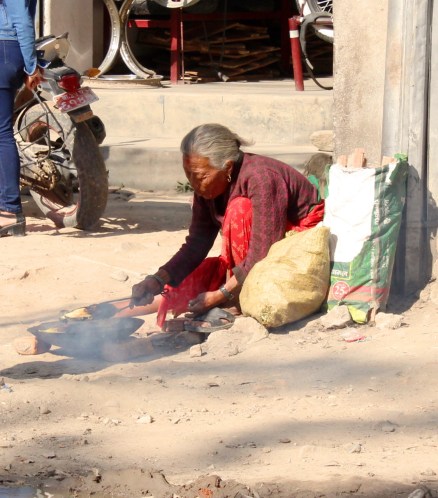 People doing their trade by the street side.
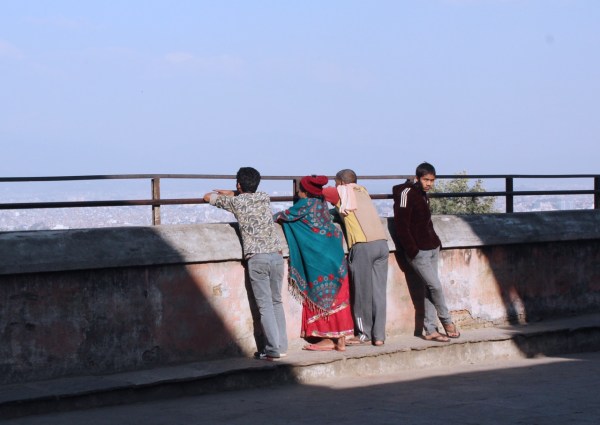 (Kathmandu, Nepal; November 2016)
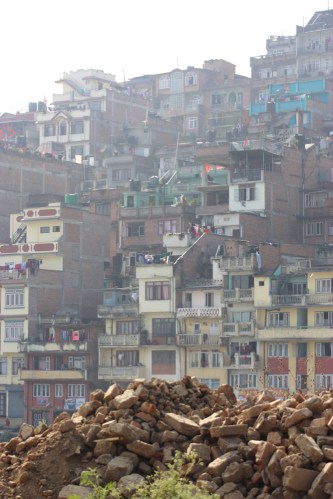 In April 2015, a
 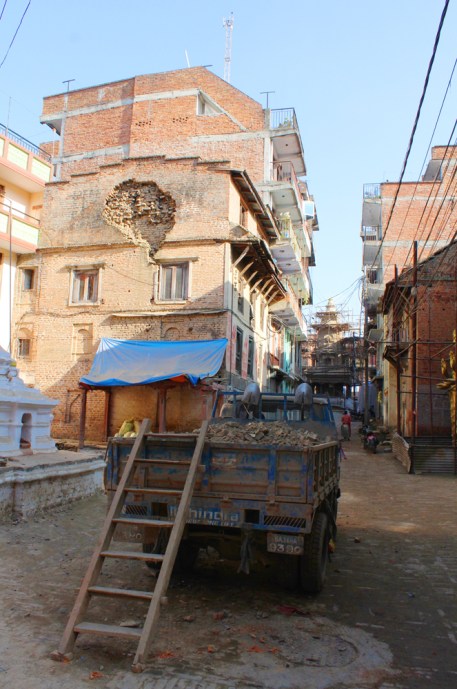 It is the cracks in the walls that makes a building dangerous; more dangerous than actual visible damage. Fortunately, buildings can be taken apart and repaired. But the earthquake has left cracks in the sturdy Nepalese people, too. Not just because they lost so many material things, but because everyone lost either friends or family, or a means to income, or a part of their cultural heritage, or a part of their own identity.
 (Kirtipur, Nepal; November 2016)
 “Give us a B-side of Kathmandu”, we had said to our guide, some hours and adventures earlier. “Something you wouldn’t show to first-time visitors, something hidden.” As we walked down the steps into a dark alleyway in Kirtipur, avoiding a suspicious-looking dog, I wondered what we were up for this time.
 Our tablecloth was what looked like a flowery bed linen, spread out on the carpet. We sat on the edges of it, sharing the floor as a table.
 We had to try the food he said. All of it. And the bread, too. I’m glad we did. It was delicious. Apart of the black beans that set my mouth and throat and everything below it on fire.
 (Kirtipur, Nepal; November 2016)
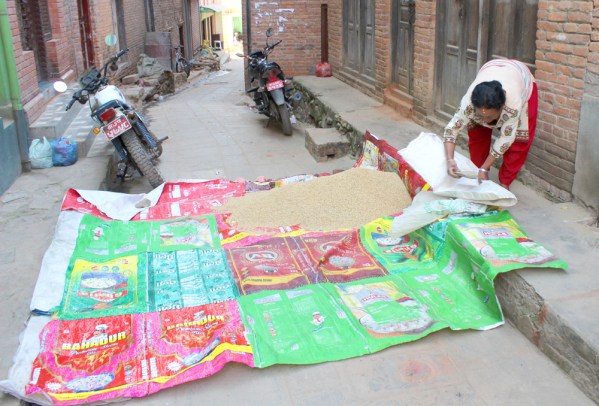
 In Kirtipur it is easier to breathe. Easier to move, too. The only things to watch out for are ducks, and women working on the steps of their houses. Living is peaceful here. One can use the entire street to clean one’s daily rice harvest.
 One might prefer to wash one’s laundry in the front yard instead of the backyard. No passing cars around to soil it as the town is practically vehicle-free. And besides, the daily gossip fix is served, too.
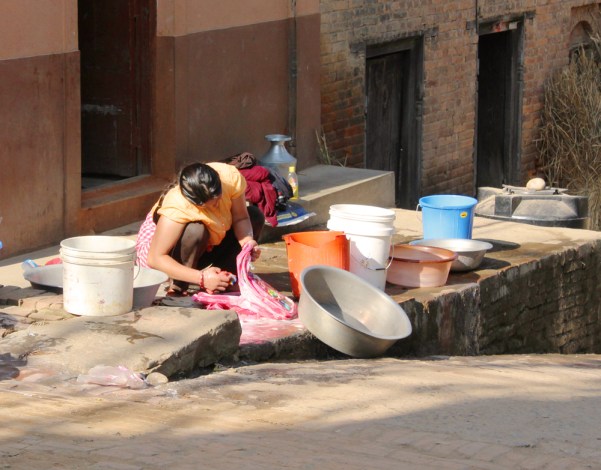 Kirtipur is a traditional Newar town. The Newar people are said to be the original inhabitants and owners of what most tourists identify as Nepal: the area around Kathmandu valley and all things Nepalese. “Nepal” is even a variation of the word “newar”.
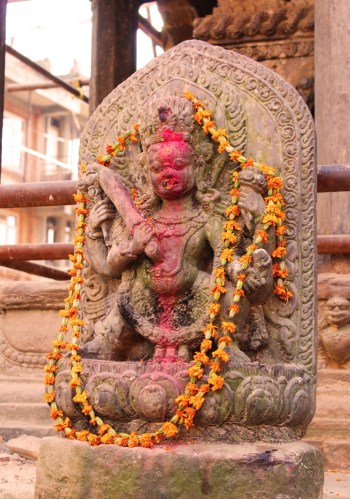 (Kirtipur, Nepal; November 2016)
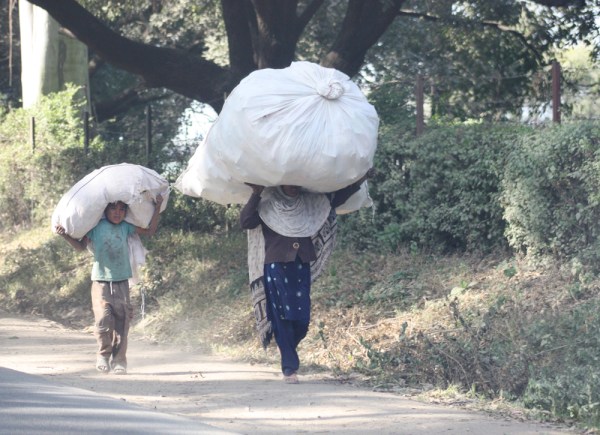 Kathmandu in morning rush hour is a new adventure, every day. One may not wish for such on a daily basis, but usually adventure barges on us without giving us a choice to enter or pass. Neither did the elephant that suddenly stepped out on the road, causing us to swerve and miss its tusks with 30 centimeters (an elephant? In Nepal??).
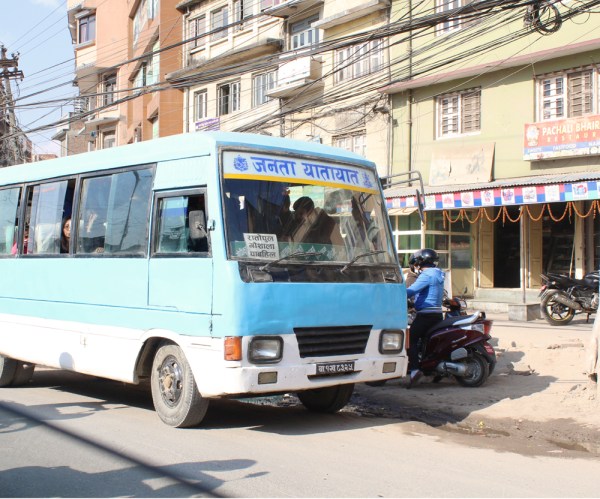 Amidst the dust and exhaust and noise there are snapshots of life. Bus drivers whose job is to every day make the best out of the traffic.
 Dogs sleeping on the pavement, not caring one flying fruit that people step over them and car wheels pass them a meter away.
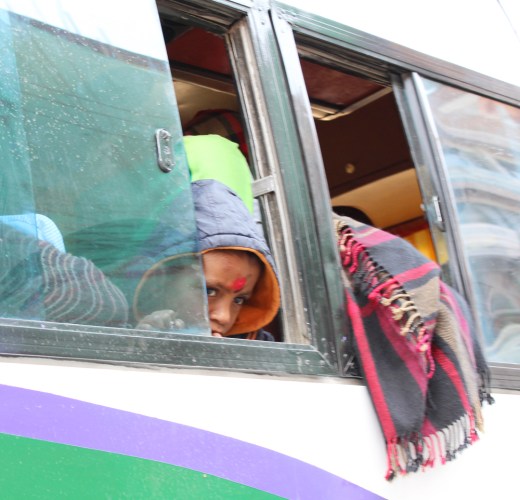 People going to work, and mothers with children going to school or visiting relatives.
  Tuk-tuks running on cooking gas. And way too many motorcycles. One taxi driver said traffic has exploded in the past 20 years and that if nothing is done by the government to restrict traffic, 10 years from now, decent daily commute in Kathmandu will be impossible.
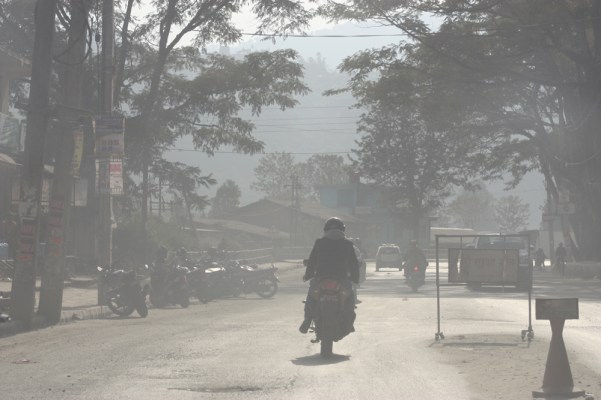 Kathmandu, Nepal; November 2016)
 Oh, the crowds! It is a Saturday picnic in the middle of Kathmandu. People sit on blankets, eating and chatting. Dogs chase each other or their tails. Children chase pigeons and each other. All the commotion is to celebrate the completion of restoration of the Boudanath stupa, after the
  The community celebrates because restoration was a community effort, in a country where the government is very slow in rebuilding the premises of people’s lives.
 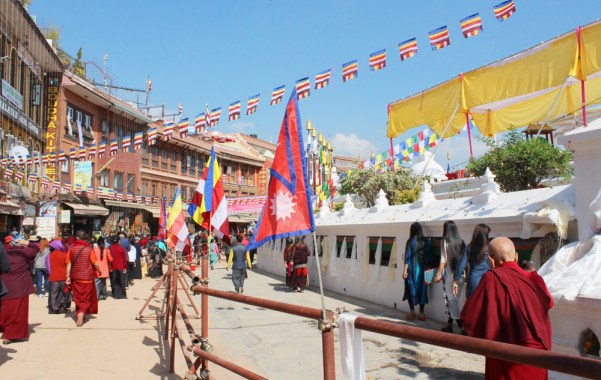 We joined the Tibetan monks in red robes in the kora, or circling of the stupa. In Nepal, every sacred Buddhist site must be circled clockwise. This means quite a lot of circumnavigations of mani stones, sacred stones with inscriptions, often sprinkled on popular trekking routes in the mountains. But this time the kora was celebratory. People spun prayer bells and walked along the shiny white wall accompanied only by their own thoughts.
 This is how humans take over the planet, and mold it to their liking. Qatar is a strange place from above.
 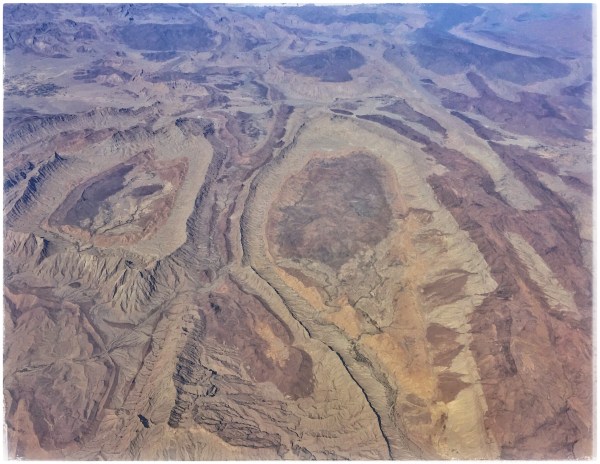 This is the land where it never rains. Possibly Southern Iran or Pakistan. The last resort for humans to mold, when everything else is utilized.
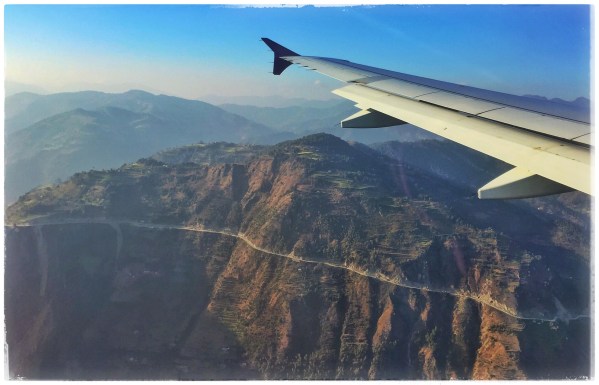 This is how we build vertically when we have no horizontal space. We cram hills and mountains with rice paddies and grazing areas for goats.

 This blue marble