 What do you do when there is no way to climb right up without hitting the mountains? Climb like the birds do: circle around like an eagle in an updraft.

(Kathmandu, Nepal; January 2015)

What do you do when there is no way to climb right up without hitting the mountains? Climb like the birds do: circle around like an eagle in an updraft.
(Kathmandu, Nepal; January 2015)
 What if your little daughter or sister was proclaimed to be a manifestation of a goddess at the age of five? What if she was carried away to a temple and locked up except for ceremonial processions? What if she was never allowed to smile in public and her feet were never to touch the ground outside? What if priests worshiped her every day and tourists gaped in awe or reverence when she appeared at the window?
And what if she, by showing the first signs of puberty, was to suddenly become a mere mortal again? If she had to go through a crash course of finding an identity other than deity, learning how to read and write, and how nobody can be commanded outside of the temple?
To be a Kumari is to be whisked beyond reality, just to crash into mortality a decade later. Today Kumaris are expected to find a place in society – yet only half a century ago they were expected to be served throughout life, and to keep on living without purpose and direction.
As I gazed up towards the child goddess in the carved window I could not help but wonder: what can life be like when one has reached the ultimate and beyond already before adulthood?
(Royal Kumari Che temple, Kathmandu, Nepal; January 2015)
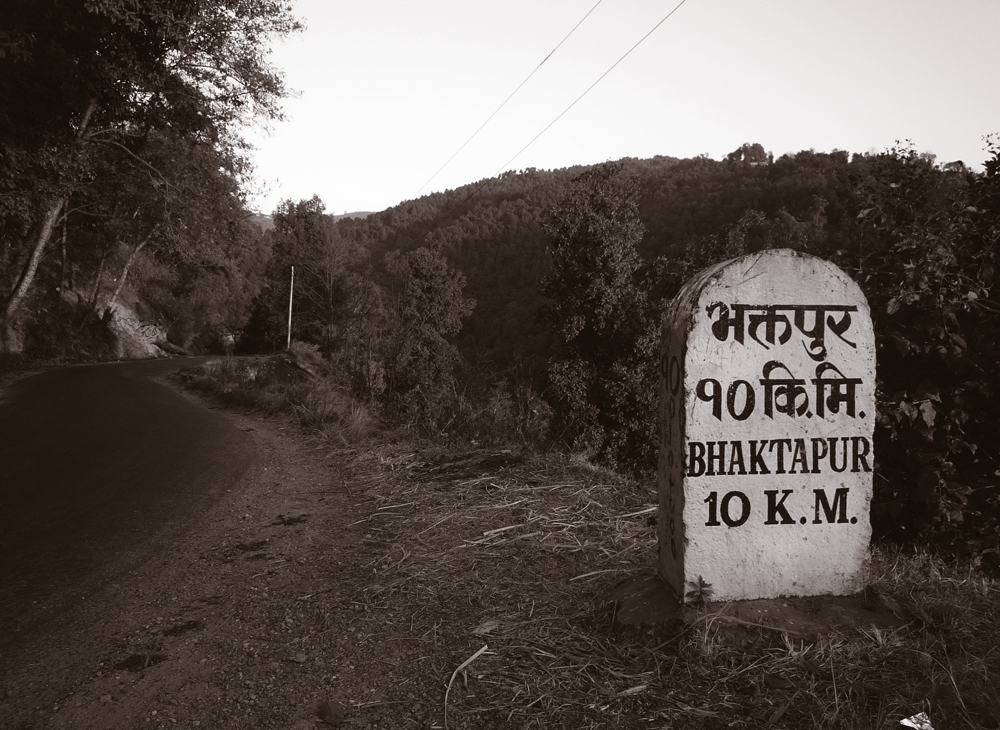
Once upon a time there was a late night drive into Bhaktapur. Paying the UNESCO World Heritage Site entrance fee to a dodgy guard in an even more dodgy booth lit by fluorescent lights. A guest house, dinner outside and a room with no heating.
And an early morning in bed, curled under the covers in a freezing cold room, sounds of drops heavily falling on trees in the courtyard. The scent of rain in the air. Monks chanting behind the courtyard in the temple square, chiming little cymbals and bells. Absolute calm.
 This time it was different. It was busy. It was weddings. It was school children swarming on the temple square. It was a lady without a leg enjoying the spring sun. It was a goat enjoying the spring sun. But it was still temples, thanka paintings, woodwork, and ancient red brick buildings fully determined to last many more earthquakes.
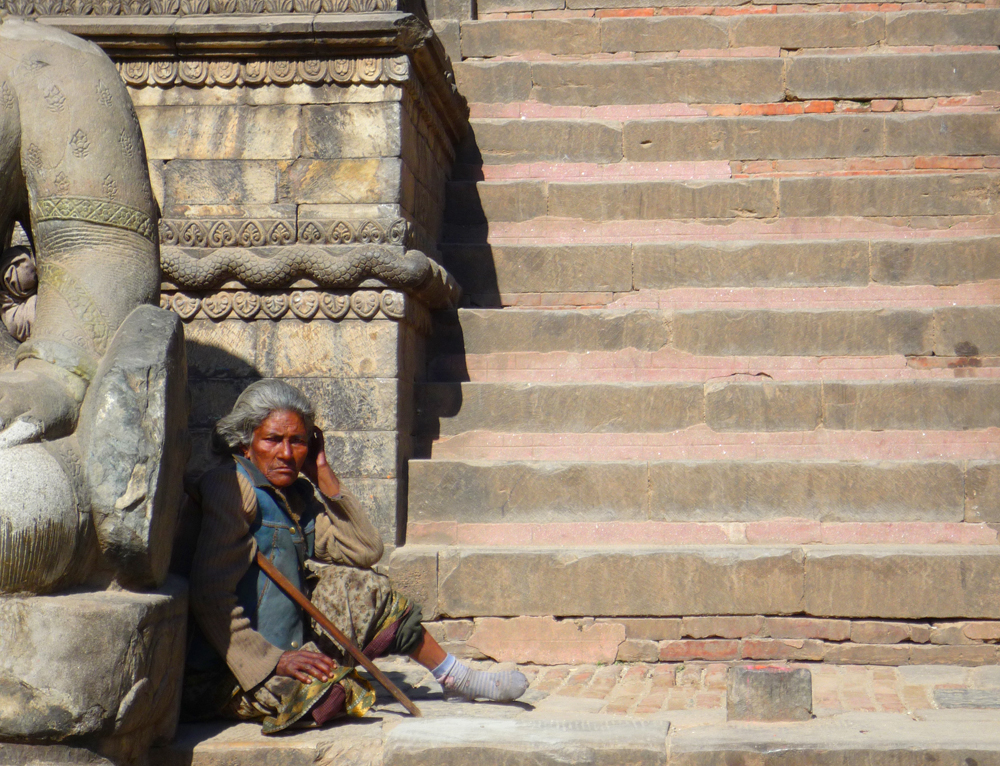
(Bhaktapur, Nepal; January 2015)
 How many Hindu deities are there? 3? 3000? 330 million? A different number is thrown into the air every time somebody dares to pose the question. The stories of Iliad and the names and attributes of Greek deities are holiday reading compared to the embroidered tapestry that is Hinduism.
How much must Hindu children struggle in school in order to remember even a small fraction? Perhaps some child stayed up late to memorize the story of Narasimhadeva, the lion god who slayed the demon king?
 Or that Vishnu the protector god travels on the back of an eagle?
 Or that goddess Kali is the manifestation of destruction, blackness, and power over time?
Kathmandu is crowded with temples. Each temple holds several deities, or forms of deities, each and one somehow interlinked back to the two main gods Shiva and Parvati. Dizzying: how can anyone choose who to worship and for what specific purpose?
Perhaps the number of gods is irrelevant: there may be as many faces of God as there are people. The ancient Hindus believed there were 330 million souls on this planet – and thus also 330 million deities: one for each one of us as we all are manifestations of God. Perhaps this is the truth? After all, the common greeting “namaste” translates as “I greet the divine within you”.
Perhaps it does not matter. Perhaps what matters is the thought that is carried with the tika dye and chime of bells. Perhaps all that matters is that the pigeons carry the prayers whispered to rice grains with them, up into the heavens.
 (Kathmandu and Bhaktapur, Nepal; January 2015)
 Kathmandu valley is a pot brimming with dust, exhaust gas, and smoke. On sunny days a thick, warm-tinted, dry haze hangs over the city. Finnish, a master of subtlety, has a word for that sun-tinged haze: auer, also known as päivänsavu (day smoke).
While auer may be one of the most beautiful words in the Finnish language, on the second day in Kathmandu I was coughing and sneezing my airways inside out. How surprising to learn that made-in-Bangladesh generic allergy medicines can alleviate pollution irritation.
And how lovely to escape out into Nagarkot hills on the fifth day, if only for a night. And what a night. There was a sunset over the valley, a hilarious birthday dinner celebration, learning to play the Tibetan singing bowl, making a sarangi band play “happy birthday” twice because we missed it the first time, and later working on the computer in bed by candlelight in a room that never knew heating.
And there was a sunrise, to the East right off the Himalayas. No dust haze, just heavy dew hanging over the air before a clean, clear day began.  (Nagarkot, Nepal; January 2015)
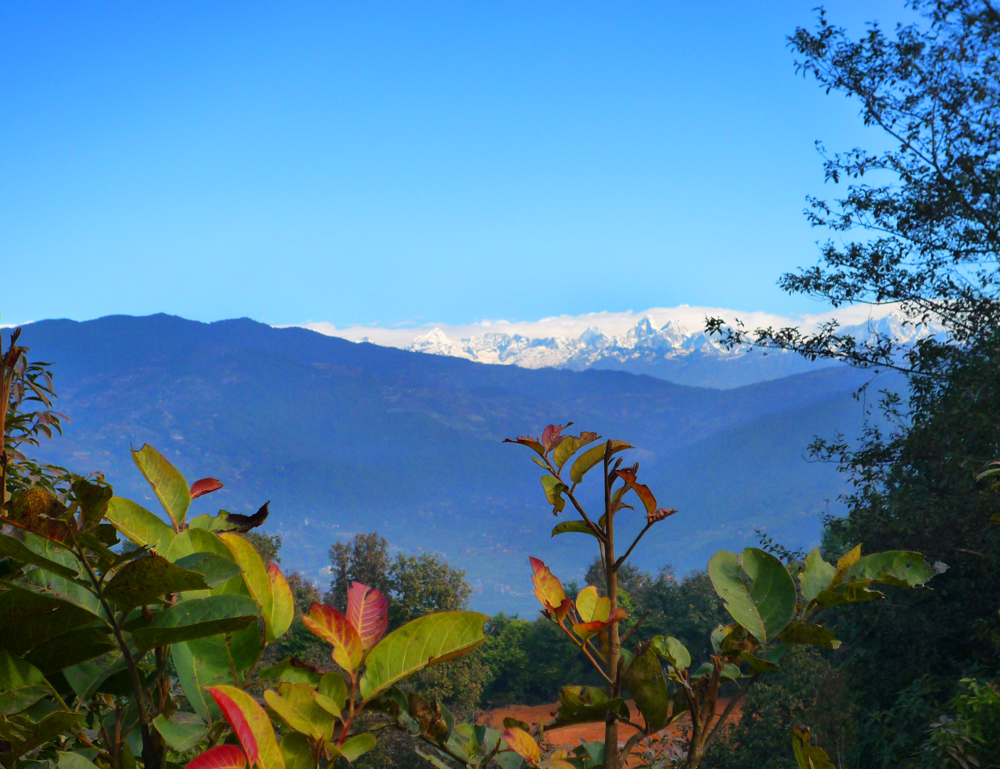
All the birds have flown up and gone;
A lonely cloud floats leisurely by.
We never tire of looking at each other –
Only the mountain and I.
(Li Po)
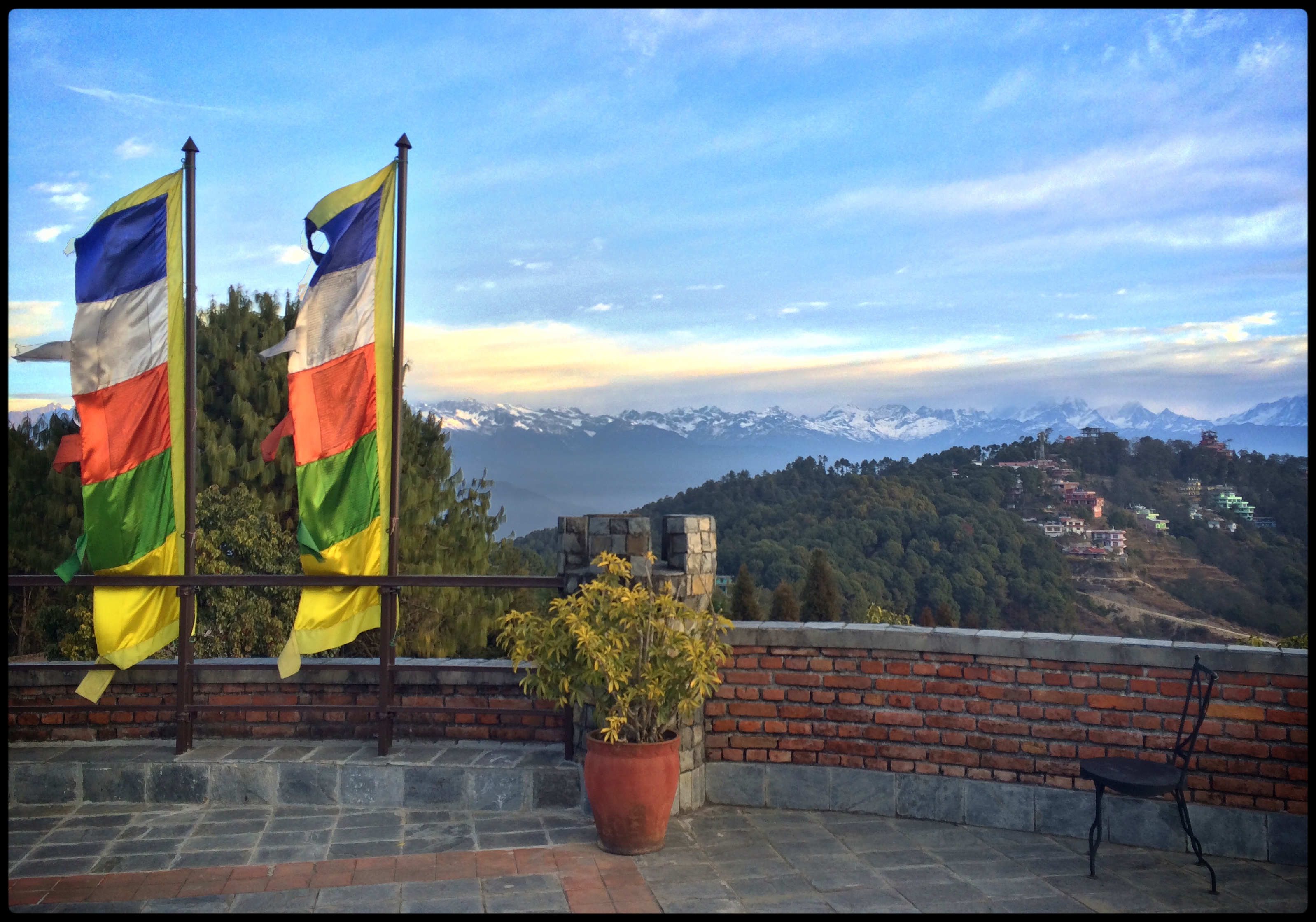 (Nagarkot, Nepal; January 2015)
 Scandinavian children grow up remembering cold days outdoors and warm floors indoors. Goretex overalls and muckshoes. Nepalese children grow up remembering cold days outdoors and no heating indoors. Wool layers and proper shoes – if they are lucky.
 Scandinavian children grow up remembering communal daycare and after-school clubs. Nepalese children grow up remembering village teaching rooms, NGO schools, and English private schools – if they are lucky.
 Scandinavian children grow up remembering endless streams of hot water from a faucet, dishwashers, laundry machines, and saunas. Nepalese children grow up remembering endless streams of cold water from a faucet, the pride of the family-owned village water distribution system, and a maid doing the dishes and laundry – if they are lucky.
 Scandinavian children grow up remembering boxy houses and lawns and dogs and cats and maybe rabbits. Nepalese children grow up remembering gorgeous temples and flowering trees and dogs and cats and chickens and pigeons on the temple roof and a cow in the street and a goat on the market square and eagles in the sky.
We are all same but different.
(Kathmandu, Nepal; January 2015)
 Once upon a time, lord Shiva wanted his wife Parvati to learn that the world was an illusion. Parvati found it difficult to understand that material things such as food could be completely disregarded. She became angry – and poof she disappeared. And suddenly there was no more food. People and animals and nature starved. Lord Shiva became nervous, then upset, then desperate. He begged for his wife to return. And she did – and immediately she began to make food for the world. She taught her husband that as long as we are on this plane of existence, and made of matter, we cannot completely disregard material things.
 Parvati is also called Annapurna, goddess of nourishment. Up high in the Himalayas there is a mountain called Annapurna. Perhaps it is under this mountain’s watch that Kathmandu valley seems to be brimming with food?
 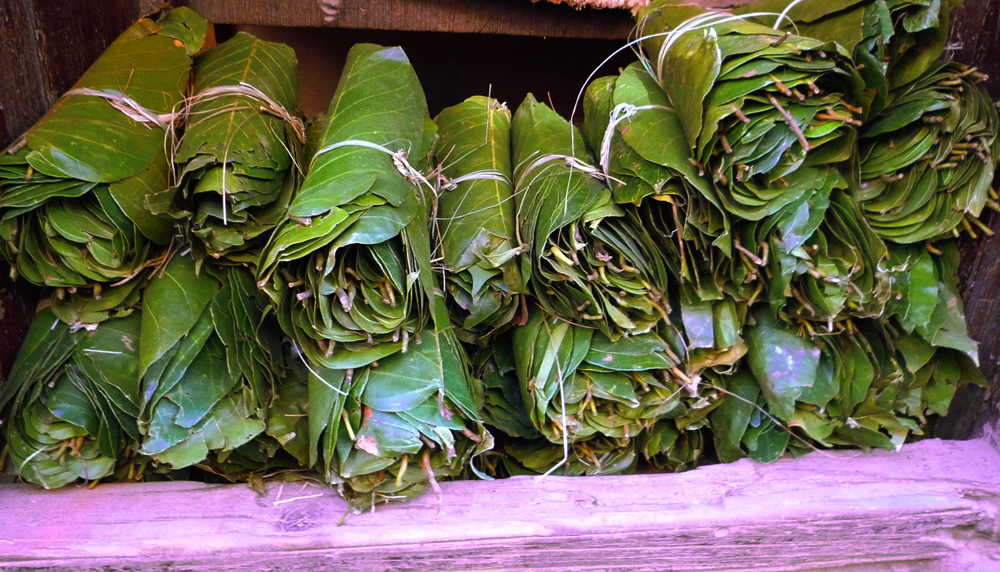 (Kathmandu, Nepal; January 2015)
 Stuck in traffic on our way to Lalitpur and the orphanage. “No time for love” he proclaims, words spelled in red letters behind a Tata truck carrying water canisters. Next to the words he has carefully painted a set of eyes and added Nepali script I cannot decipher.
I find it hard to believe the Nepalese have no time for love – or anything else they desire. Even if the traffic is terrible, nothing is organized, the power is out several times a day, and nothing works like in Germany, the Nepalese have time to care about beauty: drape themselves in the most fabulous fabrics, wear colorful woollen hats, and even decorate their cars with flowers. Beauty created is love for the world – beauty bestowed is love from the world. The Nepalese are all about beauty and thus I dare to think the owner of the car is wrong. There is always time for love in Nepal.
 (Kathmandu, Nepal; January 2015)
 Life is so much more present in Nepal than it is in Western countries. And so life is also much more present at Buddhist temples than at our Christian churches. There is no wheelchair access – one must often climb many steps to the top of a hill, where the view is stunning. There is no one solemn building but many places to worship: shrines of various deities and images of Buddha, and places to leave little oil lamps burning together with a thought or two. Or why not send a thought to the universe by spinning a row of prayer wheels?
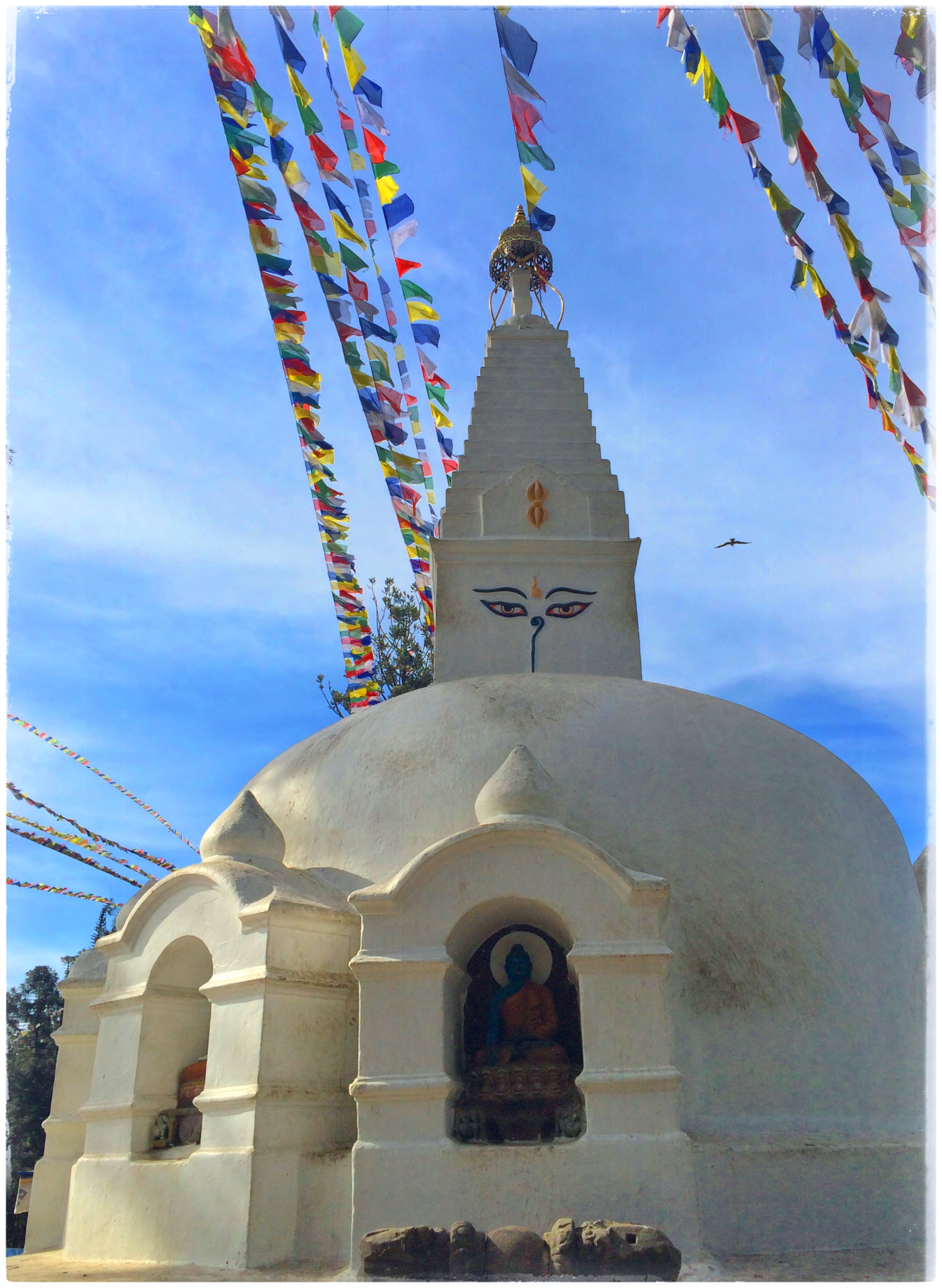 Flower garlands, rice, and red tika dye color the holy statuettes with reverence. Prayer flags wave in color, tightly spun around trees. Incense slowly releases quiet prayers into the wind of the world. Here faith is an integral part of life and the philosophy of living. Faith is imperfection: old torn prayer flags beaten by the wind. Faith is equal: the wealthy mingle among street dogs and beggars. Faith is living: children chasing each other around the stupa. Faith is moving on: birds perched on the limbs of a deity feasting on offer rice grains.
As I squinted at the eyes of Buddha on the stupa, ever watching over Kathmandu valley, I could not help but reflect on the difference between a Western church and a buddhist temple: in a church we are to walk in, wipe the smile off our faces, stop talking, light a candle, and sit down in solemn silence. In the Swayambunath temple we are to walk in together, gaze at the sun, talk with our family, light an oil lamp, and have moments of meditation at our own leisure. And perhaps offer a garland of strikingly orange flowers.
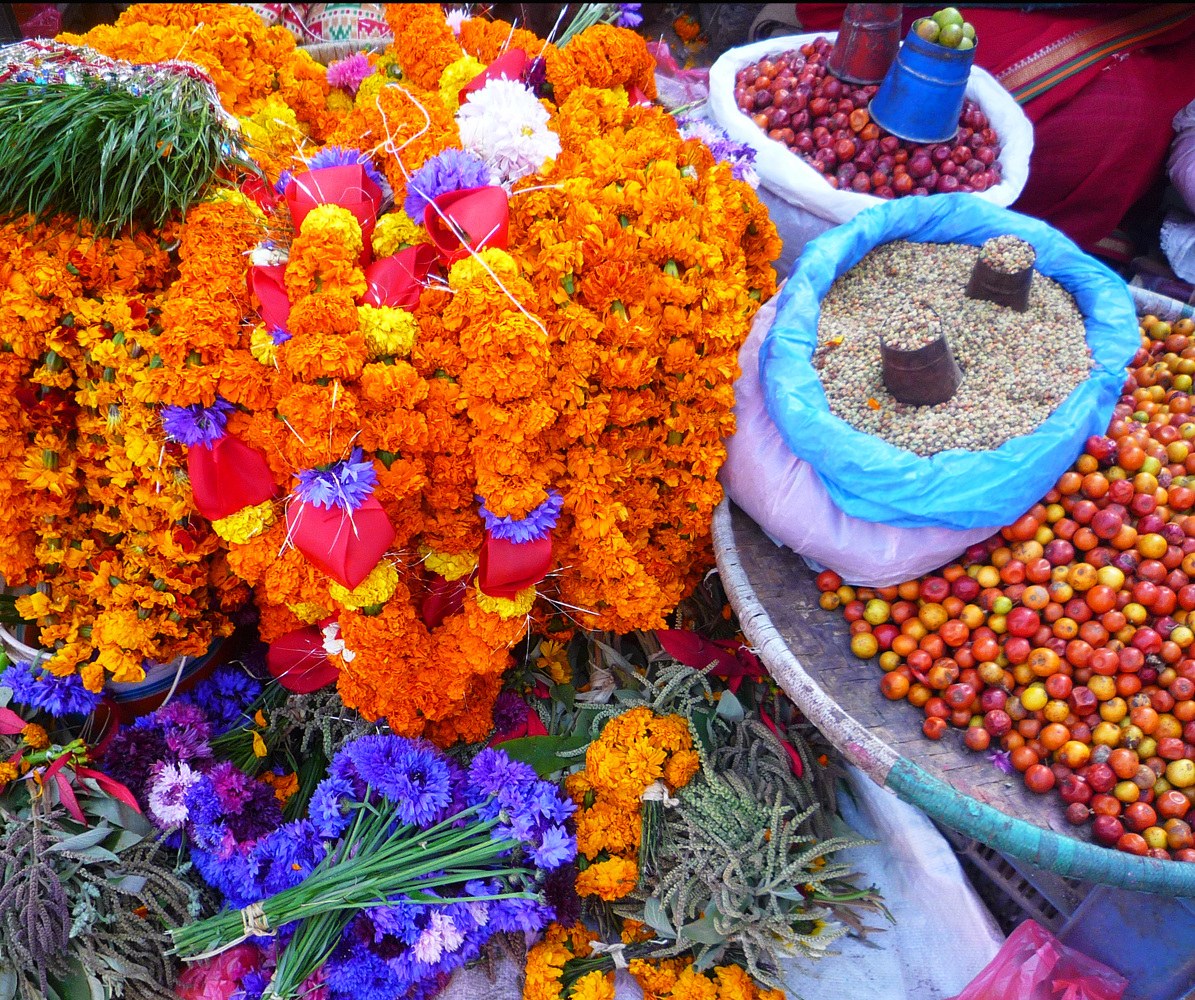 (Swayambunath temple, Kathmandu, Nepal; January 2015)
 This blue marble