
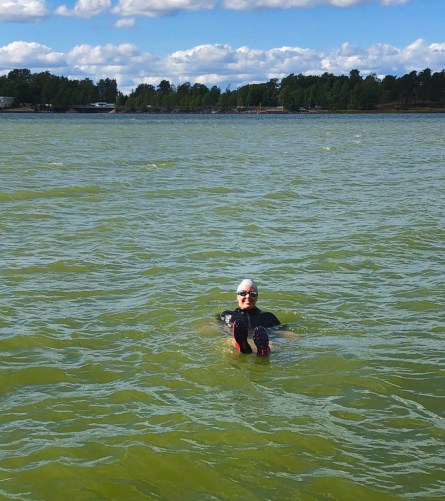
 One beautiful August morning, there I was, bobbing in between two scraggy islets in the outer archipelago of Stockholm, wearing sneakers, wetsuit, goggles, swim cap, and a colored team t-shirt. A drone circled above us and there were camera people in the water, too. Along with about 350 other colleagues, like groups of colored ants clawing away at the water, drifting from shore to shore.
Swimrun means swim and run. No time to change gear in-between. The original swimrun is 41 km on this same group of islands, although we only completed a 9 km course. And it was more than many of us ever dreamed they would accomplish. Some were 60 years old, you see. Others were scared of swimming in open water. And quite a few were nervous about running such a long distance. But everybody had a buddy and a tow rope for pulling a tired swimmer, and it was not uncommon to see people pushing their colleague in the back, making running just a tiny bit lighter.  The company I work for aims to have a healthy workforce. The local Nordic managing director takes things a notch further. This year it was the swimrun. A few years back nearly 300 of us climbed a mountain in Norway. We have also biked around Skagen in Denmark, spent an entire day outside in a snow mobile suit in -27C in Lapland (some of us got cold burns), and gone horseback riding on Iceland.
And so the entire company swam and ran between the islets of Utö in Sweden, pushing, pulling, and coaching each other until we crossed the finish line, one team at a time. Because it was never about winning a race against anyone else except for ourselves and our prejudices about our own capabilities and performance. And quite a few witnessed their own minds reset to new levels of at-minimum-achievement. (Utö, Sweden; August 2018)
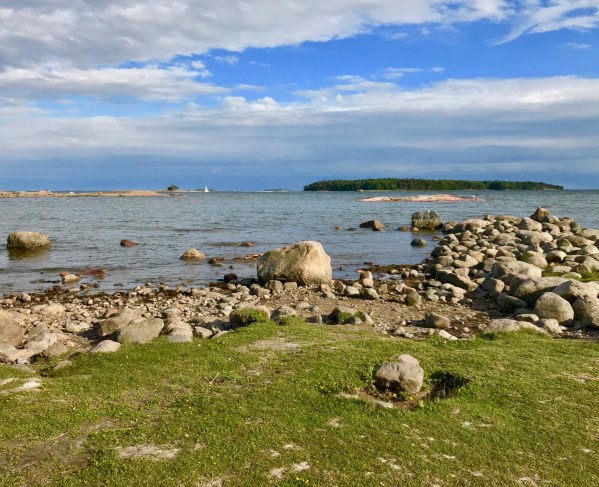 Dear Lauttasaari island, you have been good to me. You have been my safe haven for years. A place to hide and to just stare at the (mostly windy) sea.
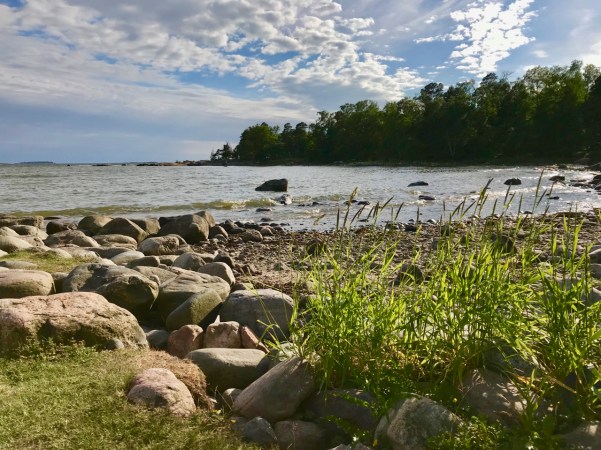 Dear Lauttasaari, I will miss your sea, sunshine, and the vast open space. The ships leaving for various Baltic port cities, and the sound of broken ice blocks floating on the water in spring.
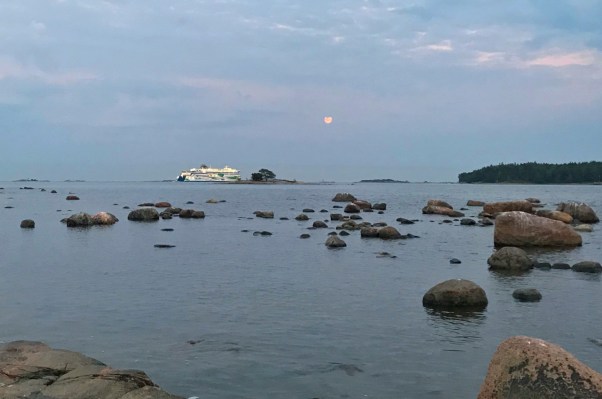 (Helsinki, Finland; August 2018)
 Perhaps once this was a busy street, crowded with horse-drawn carriages, pedestrians in fine suits and long dresses, and dogs and children running around? Now it is simply quiet and idyllic, with greens shooting up between the cobblestones that get to rest most of the day.

 Once upon a time, a young crown prince went salmon fishing by a whitewater surrounded by scraggly old pines and water-polished rocks. He discovered he could wade between a number of little islets, surrounded by foamy flying currents and leaping salmon. After just a day he and his princess were in love with the rugged place, one that was Nature’s own and nobody else’s.
  Years later, the crown prince returned, now as the Emperor of Russia. He rediscovered his love for the wilderness and said, “let us build a house for us. Let it be a simple, wooden fishing cottage. Let it be a Finnish house on Finnish grand duchy soil, for the Russian emperor to be.”
 And so the house was built as were the wishes of the crown prince. It was simple but of skilled making, and out of the best materials. There was a kitchen – and to the horror of the staff, the Empress Maria Feodorovna cooked in the kitchen with her own bare white hands. There were beds upstairs – but whether anybody slept in them overnight is not known, as the Emperor’s fleet was moored right beyond the last bend of the river, by the coast. The Emperor is rumored to have chopped his own firewood – also quite unheard of. But then again, who would hear or care? Such things are what hideaways are for. Even for the greatest of royalty.
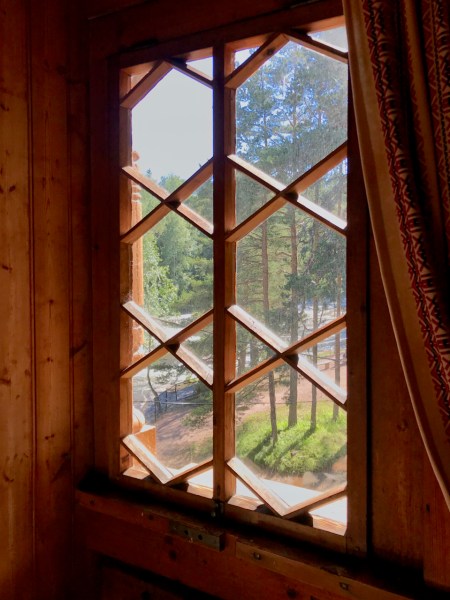 (Langinkoski, Kotka, Finland; June 2018)
 The long, wooden house stood by itself in an overgrown meadow of high grass and flowers, shyly exhibiting brand new walls painted red, sparkling white corner posts, and a sturdy, new roof. Why shyly? Because its exterior was nearly 300 years younger than its timber construction. It is not with complete comfort that one bears new clothes after loving one’s only outfit for centuries.
 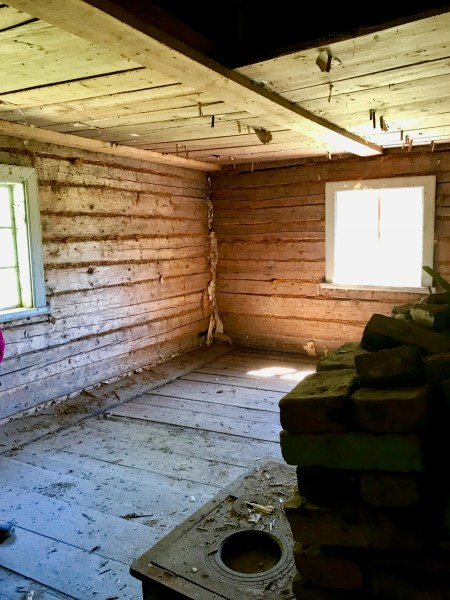 My great-grandfather and great-grand uncle were born in this house. They were not born in this meadow though. Before the house was dressed in new clothes, it was dismantled, every log and plank numbered, carried a few dozen kilometers further, and built up again from scratch. Why? Because someone thought it was a valuable piece of history and should be kept under a watchful eye.
 (Pernaja, Finland; June 2018)
 Stavanger is surprisingly quaint, and somehow a little whimsical, too. I never thought this town would consist of white, impeccably restored cottages. Pink roses seem to be a popular gardener choice.
 (Stavanger, Norway; June 2018)
 Standing still and exploring the oceans. Old and new, side by side. The ship, serving as home for any guest for a few weeks at most, is much larger than a four-storey house, serving families for generations. Which one will outlast the other? My vote goes to the already aged house.
 (Stavanger, Norway; June 2018)
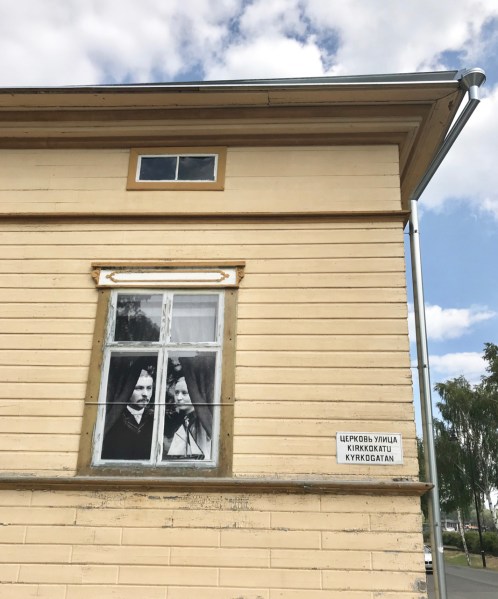 Who is the turn-of-the-century couple peeking out through the window? And why is the street sign first in Russian and only then in Finnish and finally in Swedish? Uusikaupunki is filled with old wooden houses containing many mysteries. And so many stories, if only they could even whisper of half of what they know.
 (Uusikaupunki, Finland; June 2018)
 This blue marble