 From up in the air, the Tower Bridge looks like a lego bridge next to the huge modern skyscrapers of the City. But then again it is from another millennium.
(London, United Kingdom; April 2016)

From up in the air, the Tower Bridge looks like a lego bridge next to the huge modern skyscrapers of the City. But then again it is from another millennium.
(London, United Kingdom; April 2016)
 Road trip to Odense, across the Great Belt; innovation, ice cream, and I even remembered to bring my sunglasses. Never a better Monday.
(Great Belt bridge, Denmark; February 2016)
 Who knew that Latvia had the most Art Nouveau buildings in all of Europe? I surely didn’t. How lovely would it be to live in a wedding-cake house: pastel-colored building decorated with soft shapes, vine leaves, theatrical masks, or lions and angels? Until one steps inside to discover that while the narrow, tall windows are beautiful, they do not let in much light at all. The outside matters more than the inside. And while the inside may be dark, it is certainly decorated.
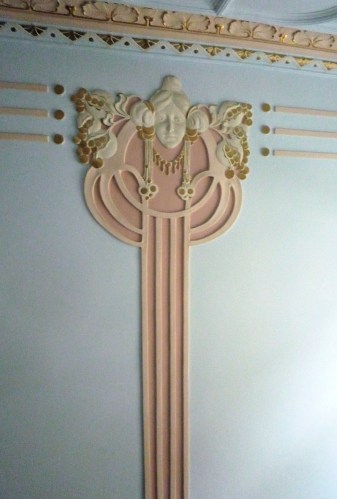 I wonder who lived in all of these houses? Were there enough wealthy Latvians in Riga in the turn of the century, or were most inhabitants of foreign ethnic origin? And what does it feel like to live in a blue-white building watched over by two huge bored long faces? Who ever saw them during a post-opium-laced-tea dream and decided, “I know, I will put them on the roof of my next house – what a grand idea!”?
 To the contemporary mind, Art Nouveau seems less like new art and more like old art. Perhaps the shapes and the wholeness of the style, from architecture to art, was fresh. But covering a house in white cream the shape of seashells, lions, statues, and vine leaves sounds more rococo than new. Perhaps it was art nouveau that Ayn Rand’s hero architect could not stand in the Fountainhead? I cannot blame him – but I can state that today’s buildings are a bore compared to the whimsy of art nouveau, new art a century old.
 (Riga, Latvia; February 2016)
 It always rained in Antwerp. The cold was the kind of wet central European cold that penetrates any warm clothing and settles in the bones. The cobblestones were uneven to walk at and I felt sorry for generations of horses that had to negotiate them day after day until the day they died.
The old town was quiet. Most bars and restaurants were closed. I wondered where they got their business from, and when. Antwerp used to be a bustling diamond merchant city (and it still is to a sense). But nothing can be seen on the streets. The diamonds have always been hidden.
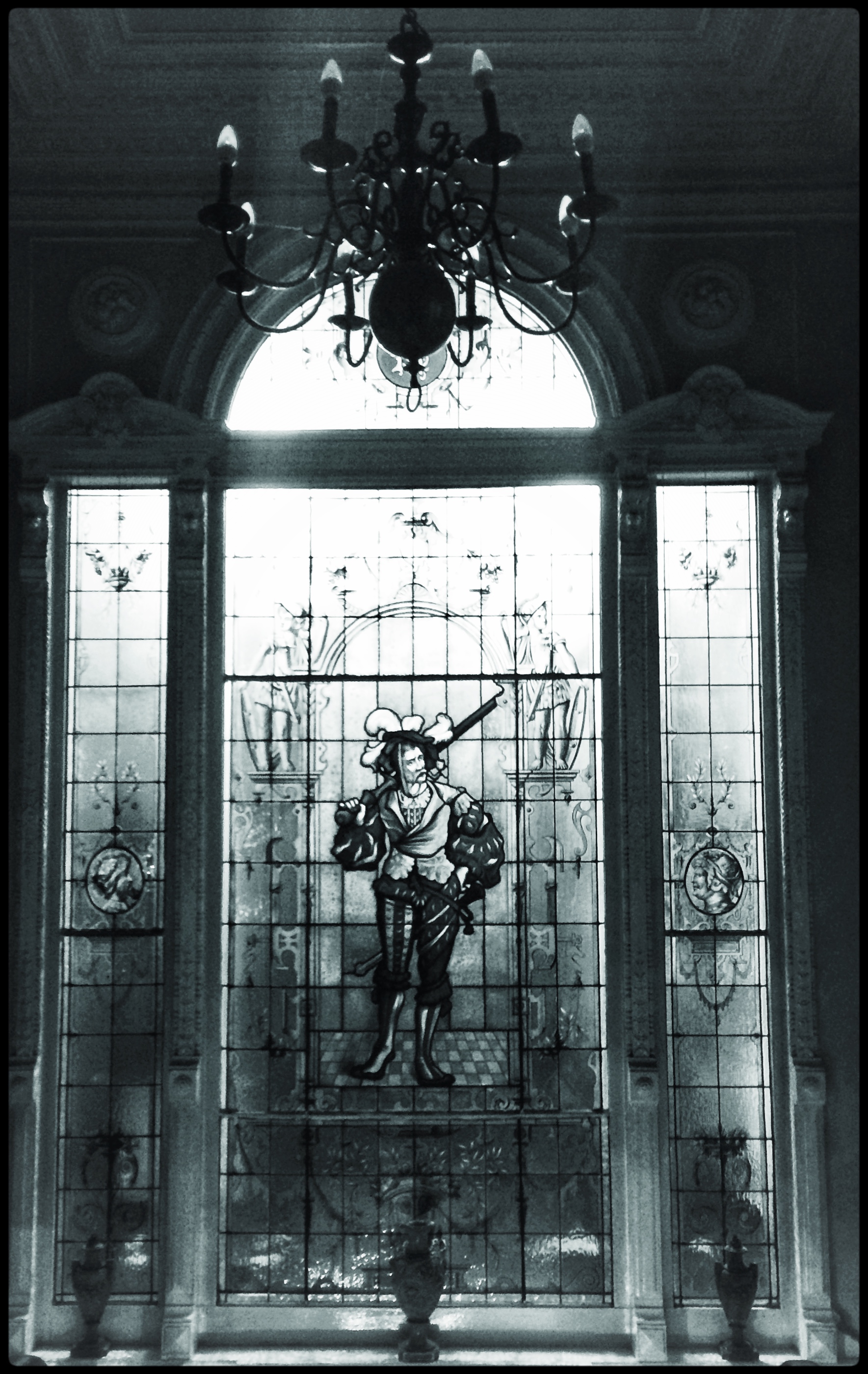 Hobbling on the damned cobblestone streets in my heels I thought of the kilometers of water running in channels underneath the city. Antwerp used to be like Amsterdam. Someone thought more cobblestones were a more practical solution than smooth waterways.
I passed the cathedral and thought of Rubens’ fleshy naked angels inside. In the dark and rain it seemed that Antwerp would benefit from pink fat little angels outside the cathedral as well, scattered in the city.
When I finally slipped through the doors of the hotel I thought how lovely it was that one man who lived 400 years ago is remembered by the world for his pink fat little angels. There is much love for life in the work of Rubens, something this cold, edgy world never seems to have enough of. Perhaps some angels and bare warm skin would be an effective remedy against its cold and troubles? (Antwerp, Belgium; January 2016)

For years I pulled my own existence out of emptiness.
Then one swoop, one swing of the arm
that work is over.
Free of who I was, free of presence, free of
dangerous fear, hope,
free of mountainous wanting.The here-and-now mountain is a tiny piece of a piece
of straw
blown off into emptiness.These words I’m saying so much begin to lose meaning:
existence, emptiness, mountain, straw: words
and what they try to say swept
out the window, down the slant of the roof.(Rumi)
We slipped quietly in, sat dow on the cushions, and listened to the chanting monk. And I found myself unable to close my eyes; the snow-capped mountains and fluttering prayer flags were too beautiful a sight. How can one sense emptiness with eyes open and filled with beauty?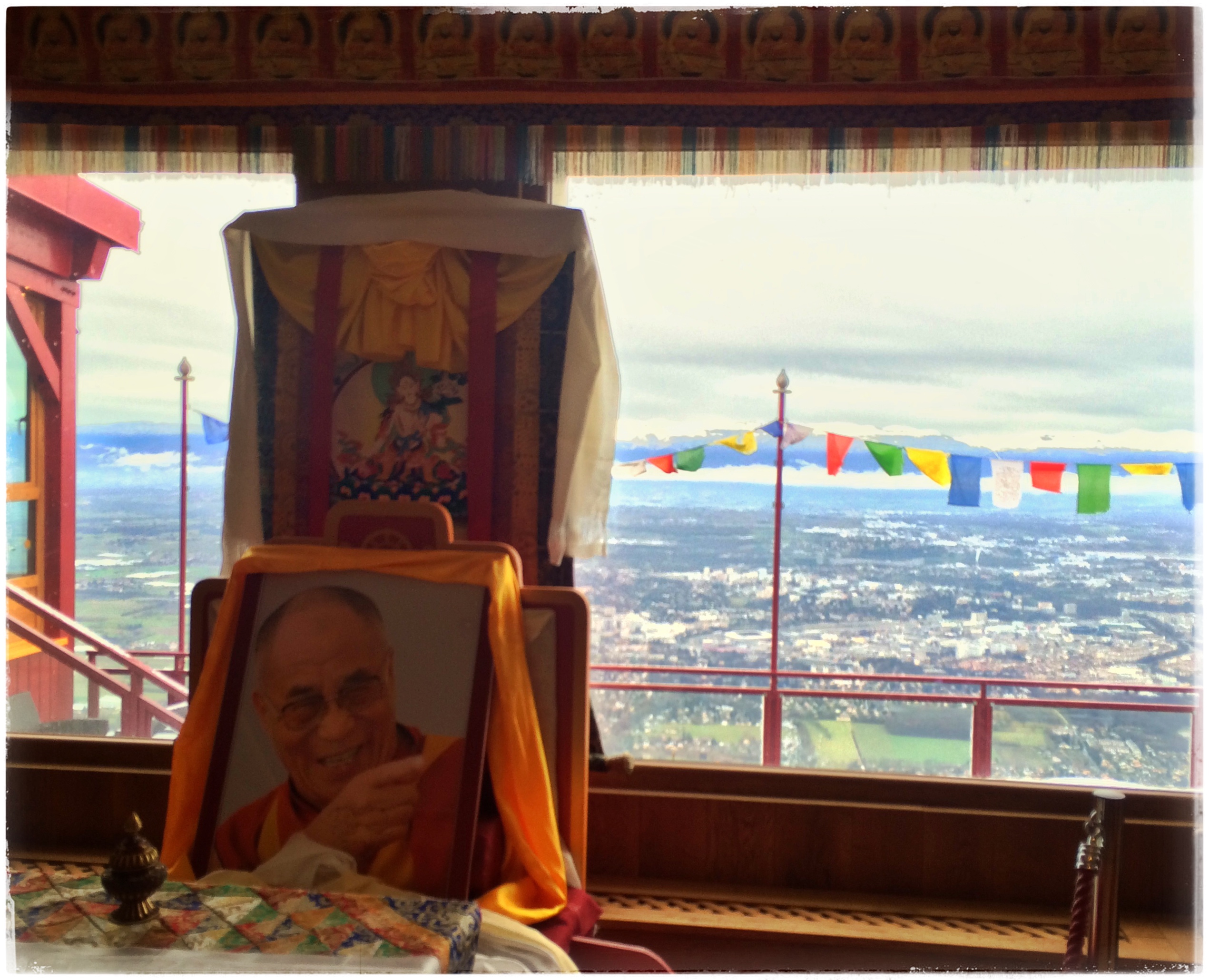 (Shedrub Choekhor Ling monastery, Saléve, France; January 2016)
 I did not know the Geneva Convention actually exists on paper, with seals and signatures. Well, it does, and it is displayed at the International Red Cross and Red Crescent Museum in Geneva.
I did not really ever think of what happens to families after the war. What happened to the children who got involuntarily separated from their parents in Rwanda during the genocide, or what happens to families when new borders are drawn between homes of relatives. I did not know about all the people working resiliently to restore family links.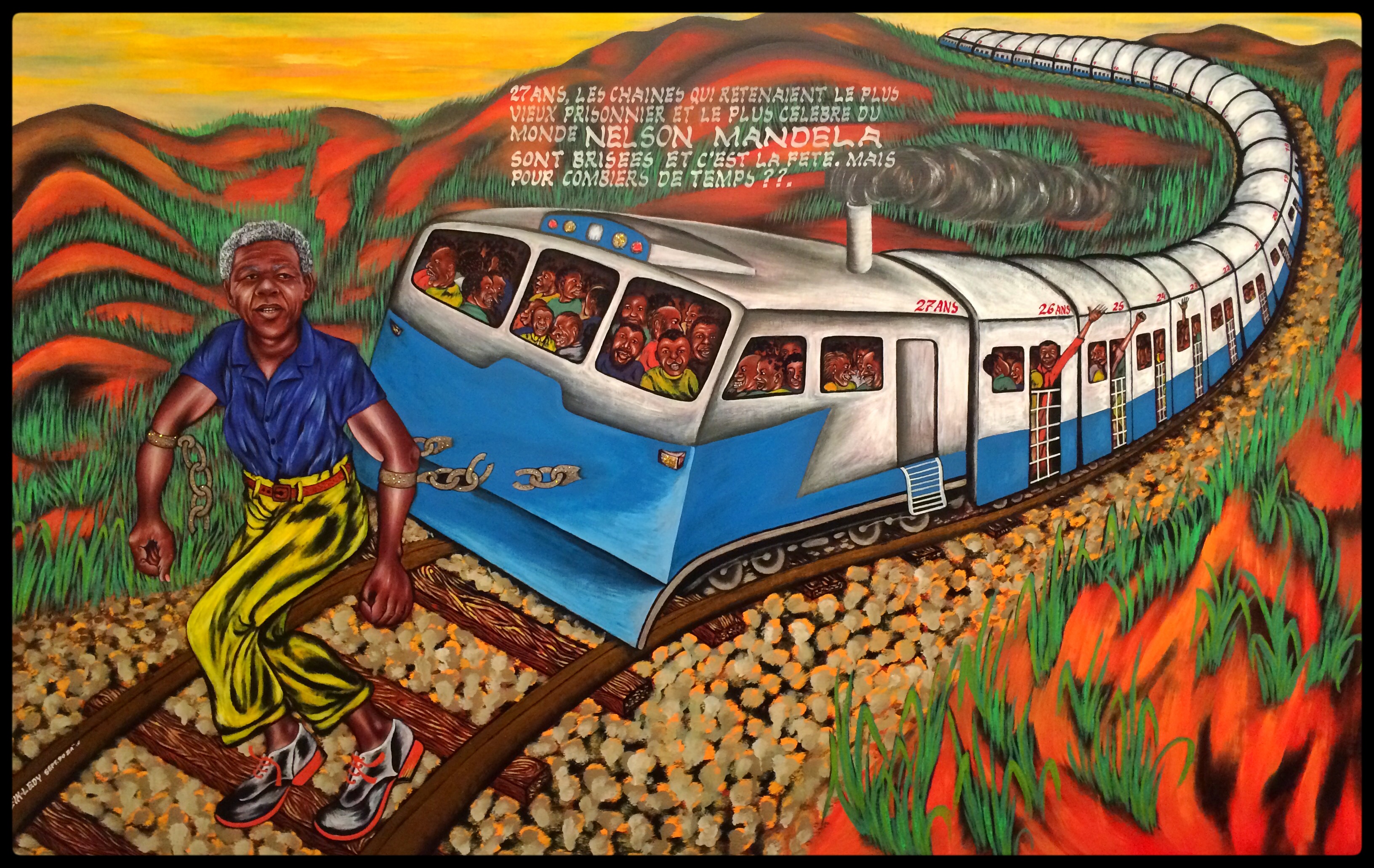 I did not really know how the Red Cross and UN operate when visiting prisons, prisoner camps, and other conflict areas where humanity is at risk. I had no idea what a prison visit report could look like – or the lengthy discussions that took place during World War II about whether or not to react. And I did not know the International Committee of the Red Cross recently considered its inability to act as a moral failure.
I come from a country which is neutral and safe – for now. It has not always been, and it has not yet reached 100 years of independence, but safety is all my generation knows. We call our cozy country the “bird’s nest.” Even if I travel much I have never ended up in serious conflict areas. Even if I have worked with charity I have never worked with people in conflict or post-conflict zones.
I do not know much of the protective and humanitarian actions that happen behind the curtains of the 10 o’clock news. But after visiting the International Red Cross and Red Crescent Museum I know a little bit more – and I am deeply touched. 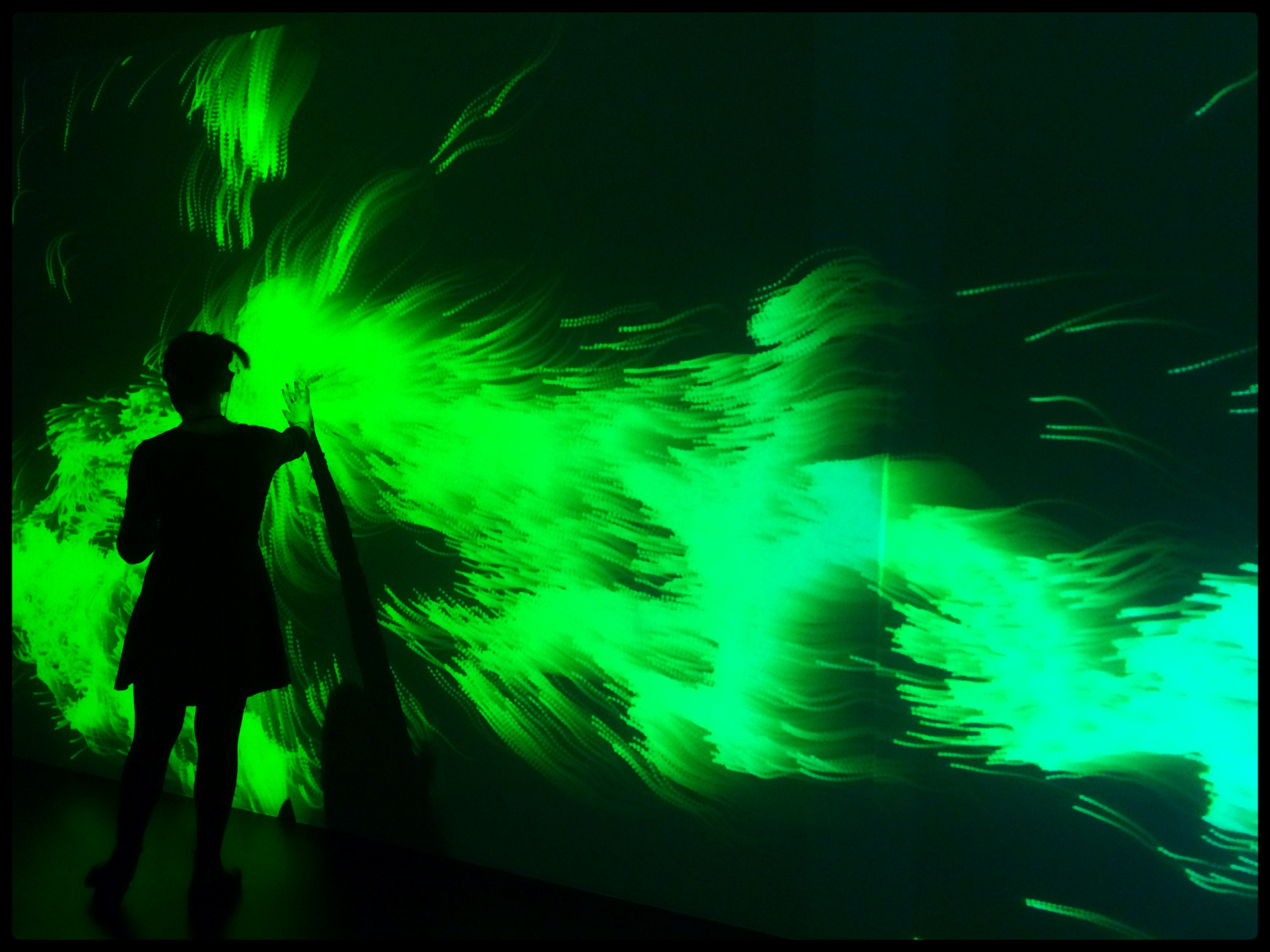 (Geneva, Switzerland; January 2016)
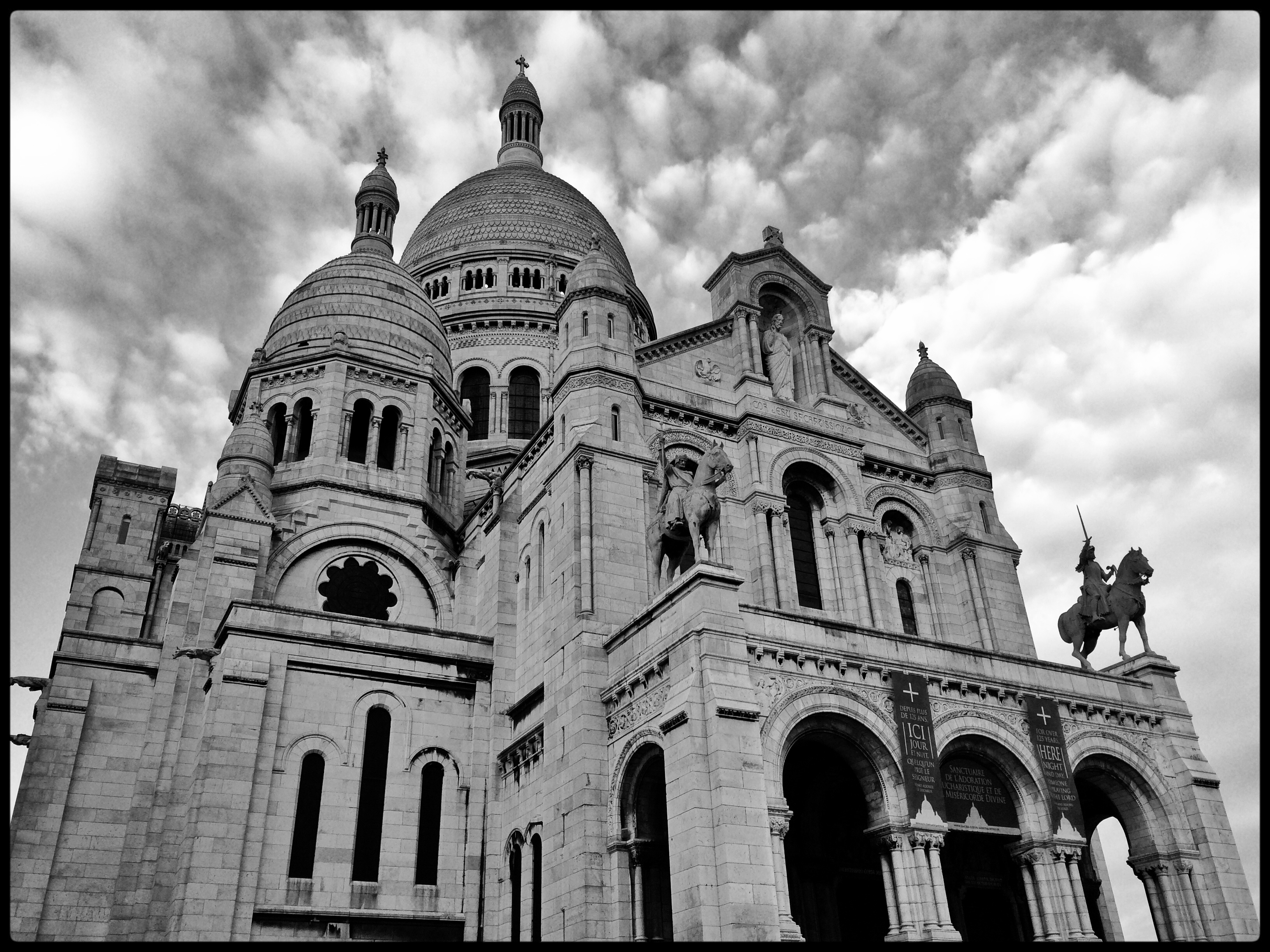 Any given Monday one could work. Or one could stroll around lovely Paris. One could slip into the quiet vesper mass in Sacre Coeur, and listen to the priest’s candid conversation about the recent terrible incidents in Paris. One could choose a more secular form of enjoyment and admire the paintings on the Montmartre market.
Or one could simply pause between these two alternatives and enjoy the bleak December sun setting over the city.
Work can wait. This is Paris after all.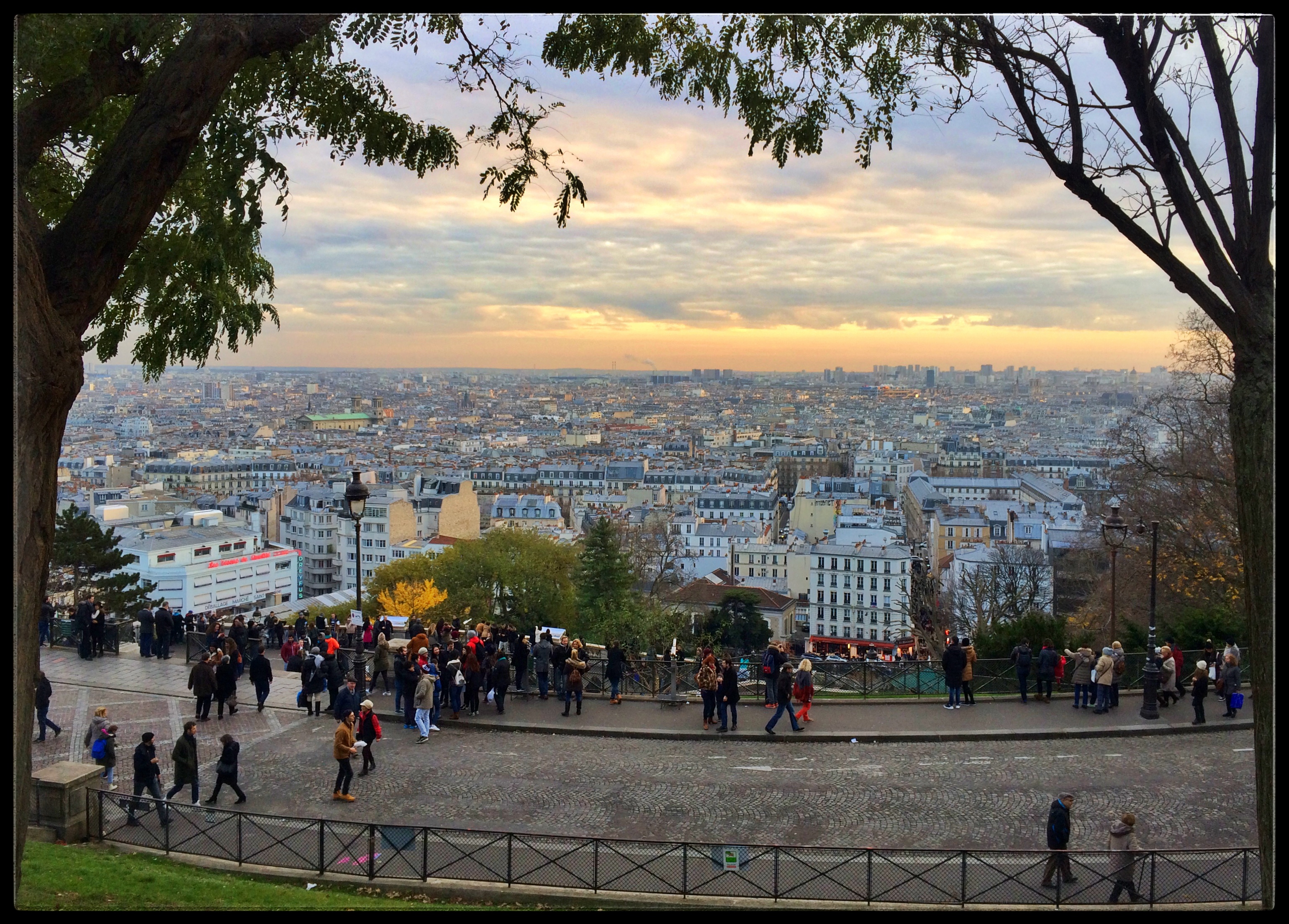 (Paris, France; December 2015)
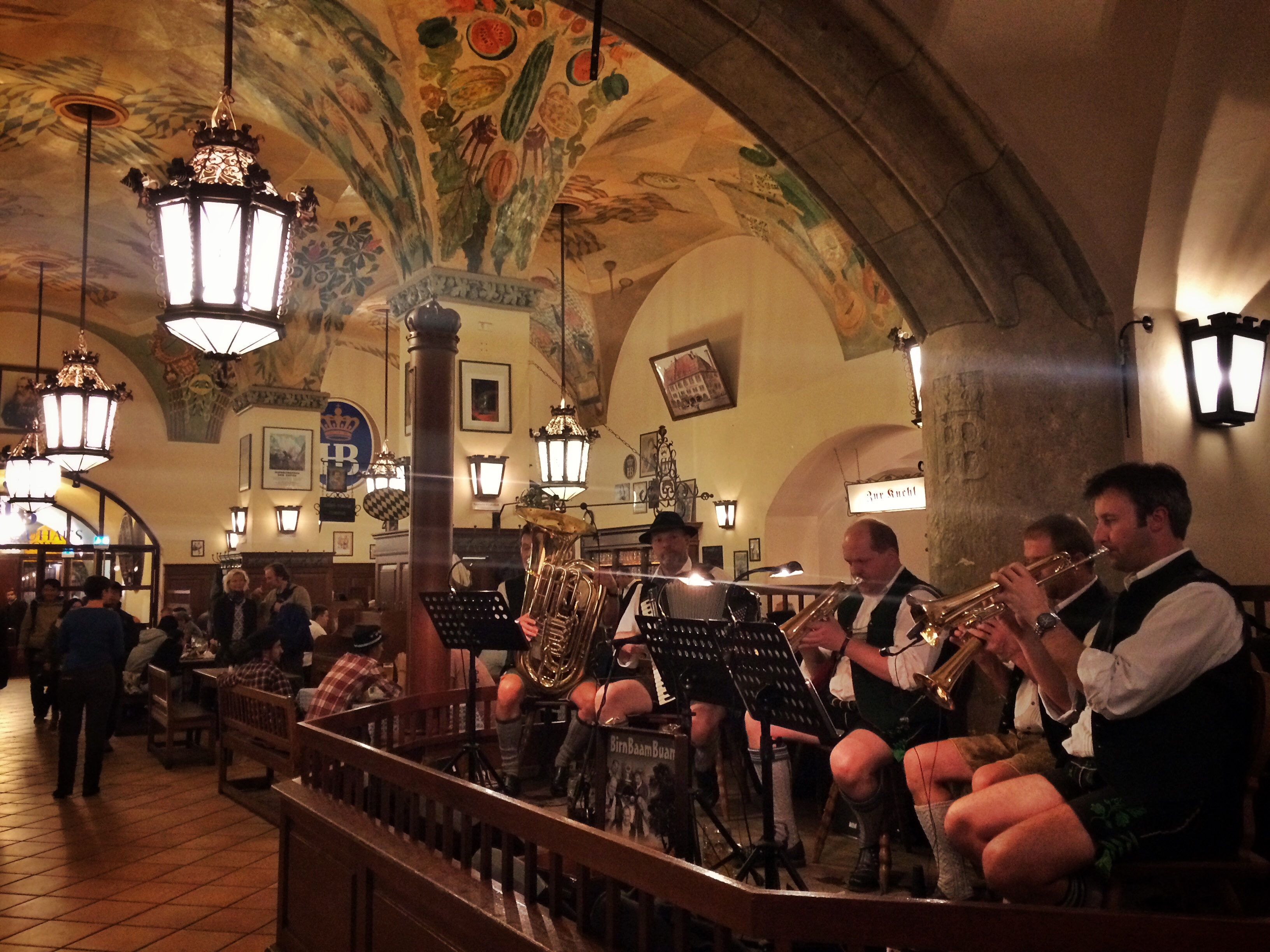 Beer, pringles, sausages, and sauerkraut. Accompanied with musicians in suspenders and/or lederhosen and happy schlager music. Indeed, what a cliché. And what an unashamed reality at Hofbräuhaus in Munich.
I do not like beer. There was no wine. The beer came in one-liter pints. In order not to shame the hallowed halls of the Hofbräuhaus I had to buy a one-liter pint of beer, one of the handful portions of beer I have ever purchased myself in my life. It was actually surprisingly tasty. There is a photograph as evidence but do not think I will share it here. Eins, zwei, g’suffa.
(Hofbräuhaus, Munich, Germany; November 2015)
 This is the front yard of my Stockholm crib. It also happens to be the backyard of the Crown Princess of Sweden and her prince consort and children. Catching the last daylight and some fresh air between office and dinner, it is surprisingly easy to get lost in the park. The English-style landscaping is from the mid-18th century when even a park did ideally not look like any human hand had shaped it – only God’s hand.
Take one wrong turn and you may be faced with a Chinese pagoda. Get lost in the squirming lanes again and you come face to face with a Roman tent -looking pavilion. Or a round royal lunch pavilion. Or the ruins of a castle. Or the royal castle of the Crown Princess and her family.
As I circled around the Chinese pagoda and turned back towards candlelight, tinkling cutlery, and a cozy evening meal, I thought of how lucky I was to have this place as my front yard if only for one day a week.
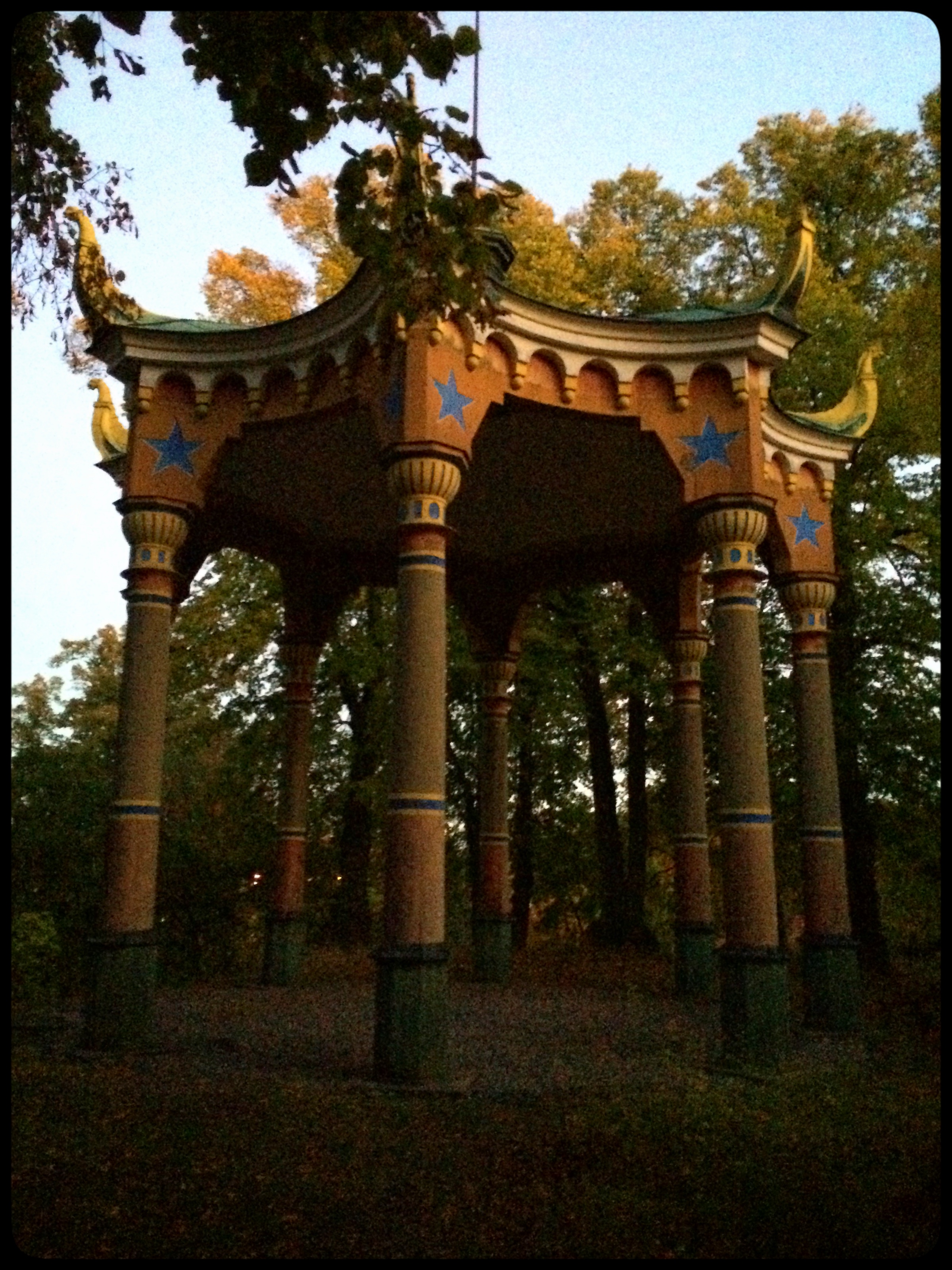 (Hotel Stallmästaregården in Hagaparken, Stockholm, Sweden; October 2015)

At Seminyak beach I jumped into a Bluebird cab. “Take me to Tanah Lot temple, please.” “It is quite far and we would need to agree on a price” said the driver. The sole reason for why I chose to endure the crazy-drunk-Aussie-vibe of Seminyak for one night was to see Tanah Lot temple. We agreed on a price and began the squiggly journey out North through the Aussie beach settlements.
Nearing the location I casually asked my drive how to get catch a cab back to Seminyak. “What do you mean catch a cab? There are no cabs at Tanah Lot” he replied, puzzled. No way to get back unless you had a hired car or were on a tour bus. It was too far to hail a scooter back into town. I had driven all the way out to see Tanah Lot but in worst case I would be stuck there for the night.
Fortunately, after settling the meter fare and offering a nice extra he agreed to stay and wait for me for an hour. I made him promise, swear on his mother, that he would not leave me stranded.
Slightly worried I slipped through the gates, through the touristy stalls, and hurried down to the beach – along with a few hundred other tourists. And there it was: a temple that was built on a rock, withstanding the crashing surf and only accessible during low tide. The most photographed site of Bali, and one of the holiest temples in Indonesia. Time stood still. Tanah Lot took my breath away for a full hour and a half, until I realized I should probably try my luck to see if the driver was still around.
He was. That wonderful, incorruptible man. He had been pestered by four separate tourist groups, offering him huge tips and double fare and whatnot to take them home. It could have been me in the late afternoon, desperately trying to get a ride back into town. But I had a ride. The Balinese once again proved to be more reliable than many other cultures (Finns excluded).
We rode ahead of the sunset back to Seminyak. I had a camera full of photos, and an image burnt forever onto my retina: of Tanah Lot temple surrounded by a constant crashing surf but unyielding, like a courageous heart.
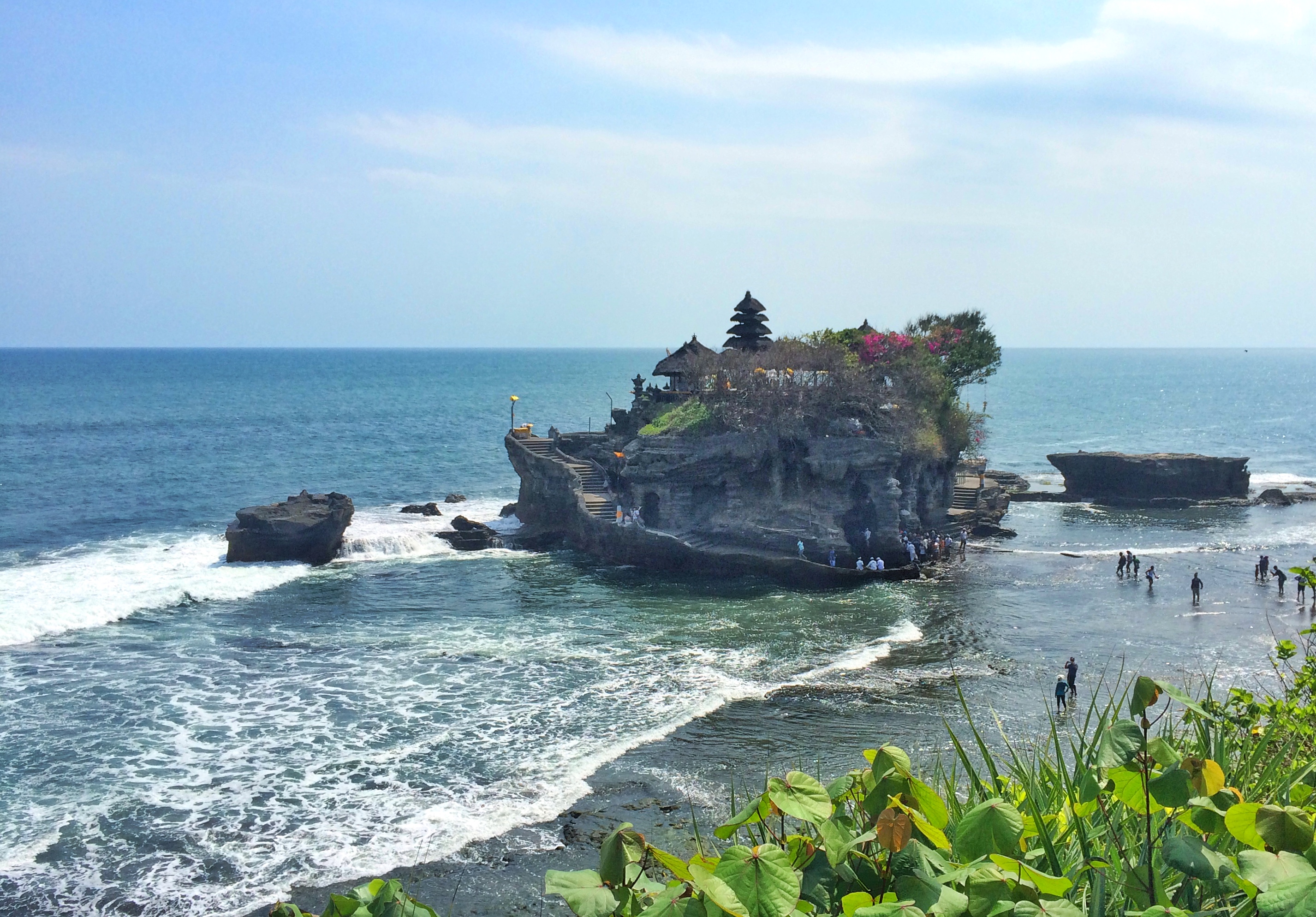 (Tanah Lot temple, Bali, Indonesia; August 2015)
 This blue marble