This blue marble

– and yet it spins


Leave a comment

Chocolate will save us all

pierreStepping into Pierre’s is like visiting a whimsy old granma. Each table has different height, different chairs, and a different lamp. Some tables are draped with carpets. Others are decorated with roses.

But in the end, who even remembers the decor when there is chocolate on the menu? Gorgeous hand-made truffles, rocky road, and broken chips decorated with cranberries. Cakes that weigh a ton and infuse with a will to live, if only for another piece of the same.

For me it is the hot chocolate that gives me hope that there is goodness in this world. For me it is that big steaming cup with gooey chocolate, stirred with a pinch of sea salt, some caramel, a spoonful of honey, and whipped cream on top. All I need on a cold, bleary Friday morning after an intense day and night of work the day before. Give me chocolate and I can dare to hope it is all going to be okay.

(Chocolats de Pierre, Tallinn, Estonia; February 2015)


Leave a comment

How does one live after being a goddess?

kumariWhat if your little daughter or sister was proclaimed to be a manifestation of a goddess at the age of five? What if she was carried away to a temple and locked up except for ceremonial processions? What if she was never allowed to smile in public and her feet were never to touch the ground outside? What if priests worshiped her every day and tourists gaped in awe or reverence when she appeared at the window?

And what if she, by showing the first signs of puberty, was to suddenly become a mere mortal again? If she had to go through a crash course of finding an identity other than deity, learning how to read and write, and how nobody can be commanded outside of the temple?

To be a Kumari is to be whisked beyond reality, just to crash into mortality a decade later. Today Kumaris are expected to find a place in society – yet only half a century ago they were expected to be served throughout life, and to keep on living without purpose and direction.

As I gazed up towards the child goddess in the carved window I could not help but wonder: what can life be like when one has reached the ultimate and beyond already before adulthood?

(Royal Kumari Che temple, Kathmandu, Nepal; January 2015)


Leave a comment

Bhaktapur

nepal-29-web

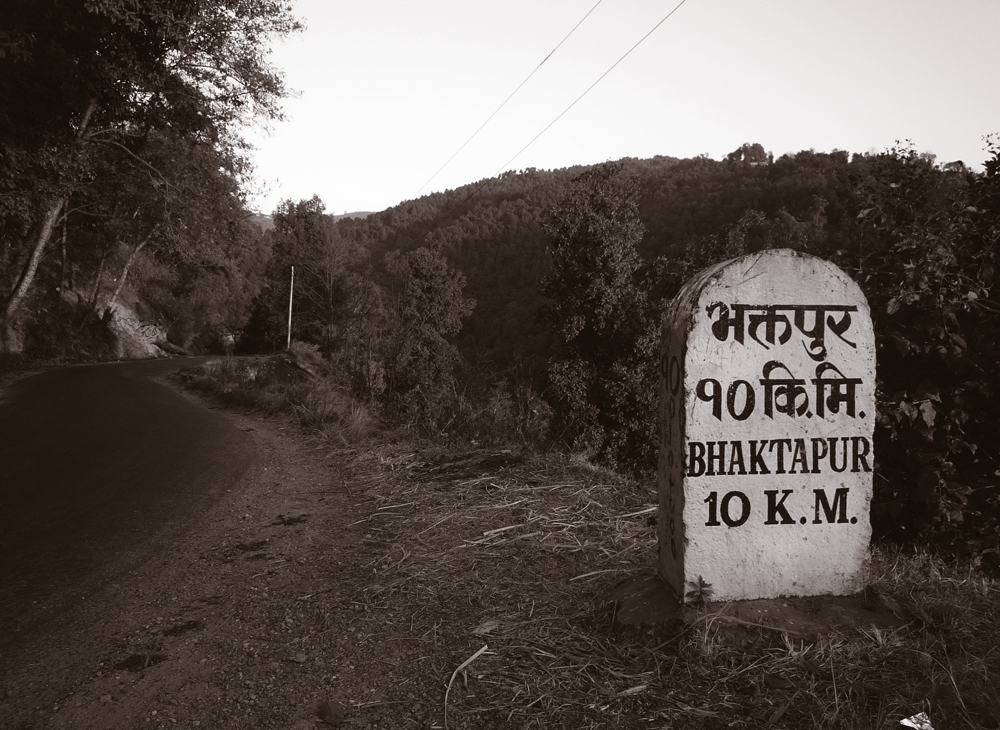
Once upon a time there was a late night drive into Bhaktapur. Paying the UNESCO World Heritage Site entrance fee to a dodgy guard in an even more dodgy booth lit by fluorescent lights. A guest house, dinner outside and a room with no heating.

And an early morning in bed, curled under the covers in a freezing cold room, sounds of drops heavily falling on trees in the courtyard. The scent of rain in the air. Monks chanting behind the courtyard in the temple square, chiming little cymbals and bells. Absolute calm.

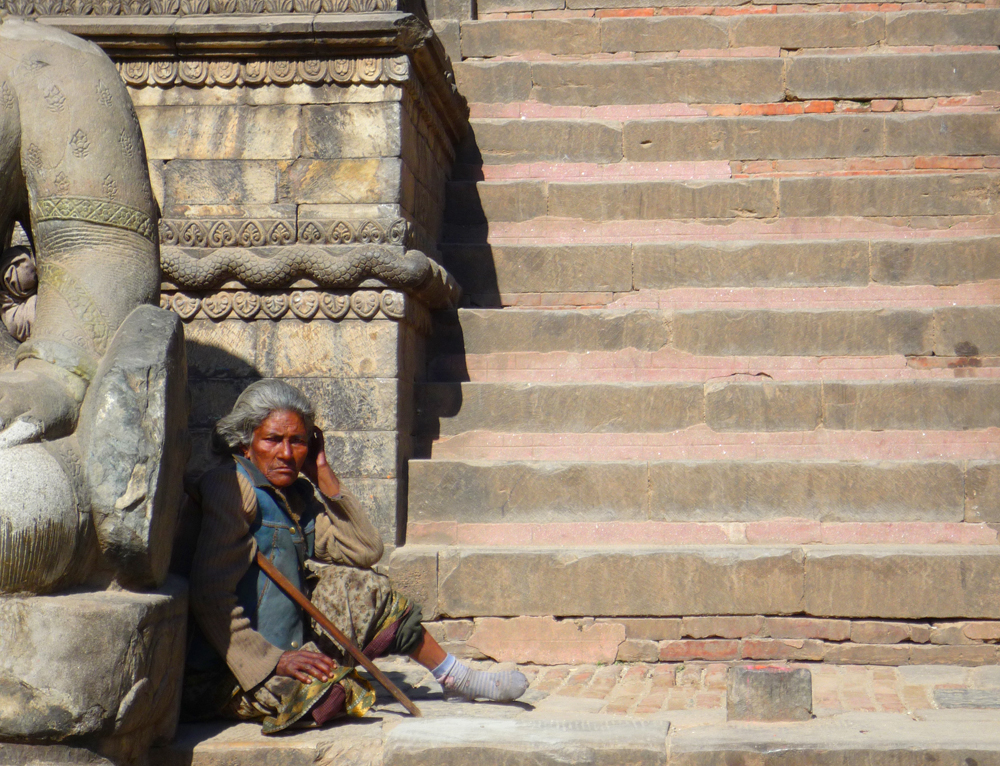
nepal-20-webThis time it was different. It was busy. It was weddings. It was school children swarming on the temple square. It was a lady without a leg enjoying the spring sun. It was a goat enjoying the spring sun. But it was still temples, thanka paintings, woodwork, and ancient red brick buildings fully determined to last many more earthquakes.

nepal-4-web

(Bhaktapur, Nepal; January 2015)


Leave a comment

330 million deities

nepal-24-webHow many Hindu deities are there? 3? 3000? 330 million? A different number is thrown into the air every time somebody dares to pose the question. The stories of Iliad and the names and attributes of Greek deities are holiday reading compared to the embroidered tapestry that is Hinduism.

How much must Hindu children struggle in school in order to remember even a small fraction? Perhaps some child stayed up late to memorize the story of Narasimhadeva, the lion god who slayed the demon king?

nepal-22-webOr that Vishnu the protector god travels on the back of an eagle?

nepal-23-webOr that goddess Kali is the manifestation of destruction, blackness, and power over time?

Kathmandu is crowded with temples. Each temple holds several deities, or forms of deities, each and one somehow interlinked back to the two main gods Shiva and Parvati. Dizzying: how can anyone choose who to worship and for what specific purpose?

Perhaps the number of gods is irrelevant: there may be as many faces of God as there are people. The ancient Hindus believed there were 330 million souls on this planet – and thus also 330 million deities: one for each one of us as we all are manifestations of God. Perhaps this is the truth? After all, the common greeting “namaste” translates as “I greet the divine within you”.

Perhaps it does not matter. Perhaps what matters is the thought that is carried with the tika dye and chime of bells. Perhaps all that matters is that the pigeons carry the prayers whispered to rice grains with them, up into the heavens.

nepal-8-web(Kathmandu and Bhaktapur, Nepal; January 2015)


Leave a comment

By the Monkey temple

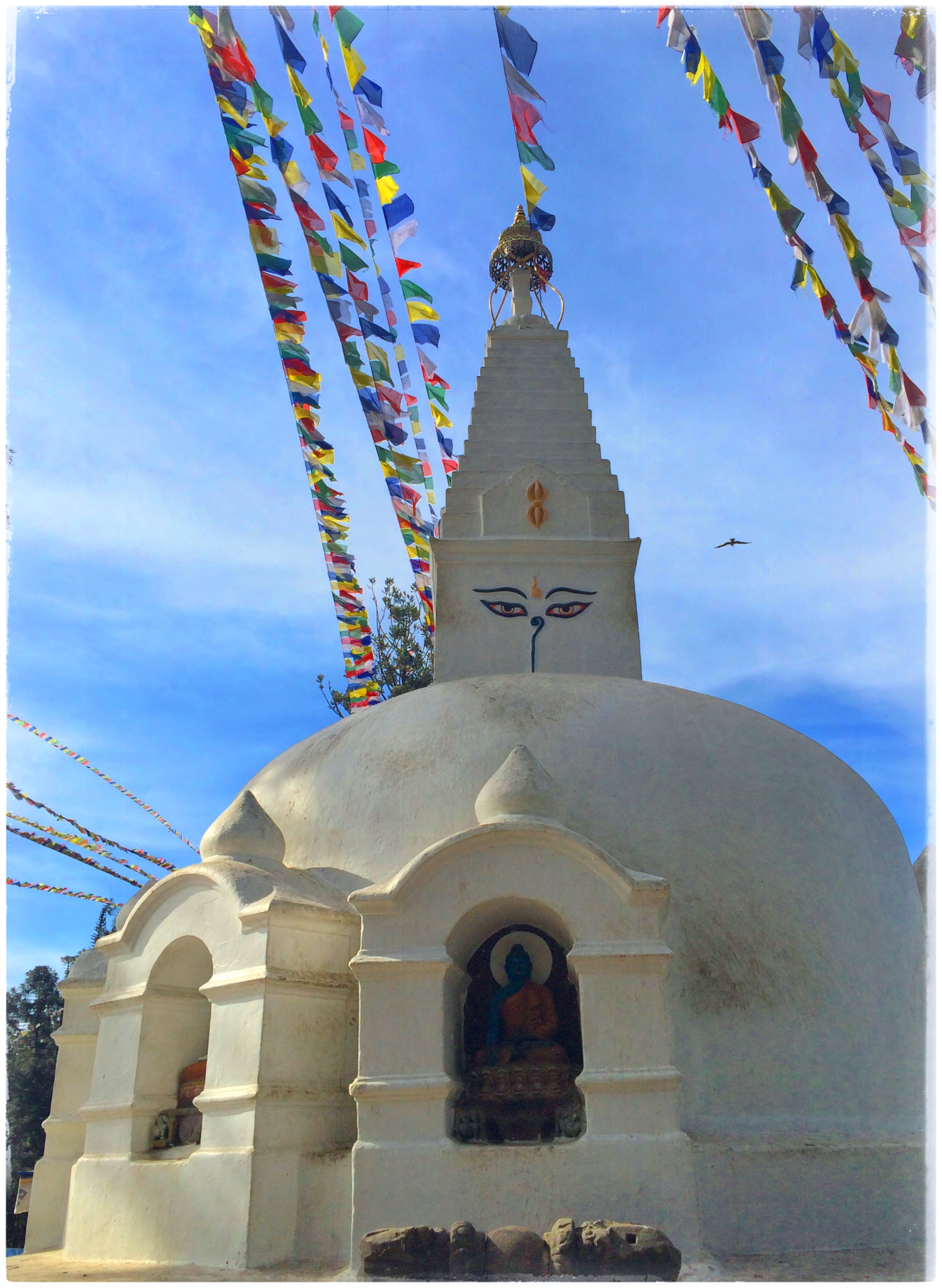
prayerflags-1Life is so much more present in Nepal than it is in Western countries. And so life is also much more present at Buddhist temples than at our Christian churches. There is no wheelchair access – one must often climb many steps to the top of a hill, where the view is stunning. There is no one solemn building but many places to worship: shrines of various deities and images of Buddha, and places to leave little oil lamps burning together with a thought or two. Or why not send a thought to the universe by spinning a row of prayer wheels?

monkeytemple-2Flower garlands, rice, and red tika dye color the holy statuettes with reverence. Prayer flags wave in color, tightly spun around trees. Incense slowly releases quiet prayers into the wind of the world. Here faith is an integral part of life and the philosophy of living. Faith is imperfection: old torn prayer flags beaten by the wind. Faith is equal: the wealthy mingle among street dogs and beggars. Faith is living: children chasing each other around the stupa. Faith is moving on: birds perched on the limbs of a deity feasting on offer rice grains.

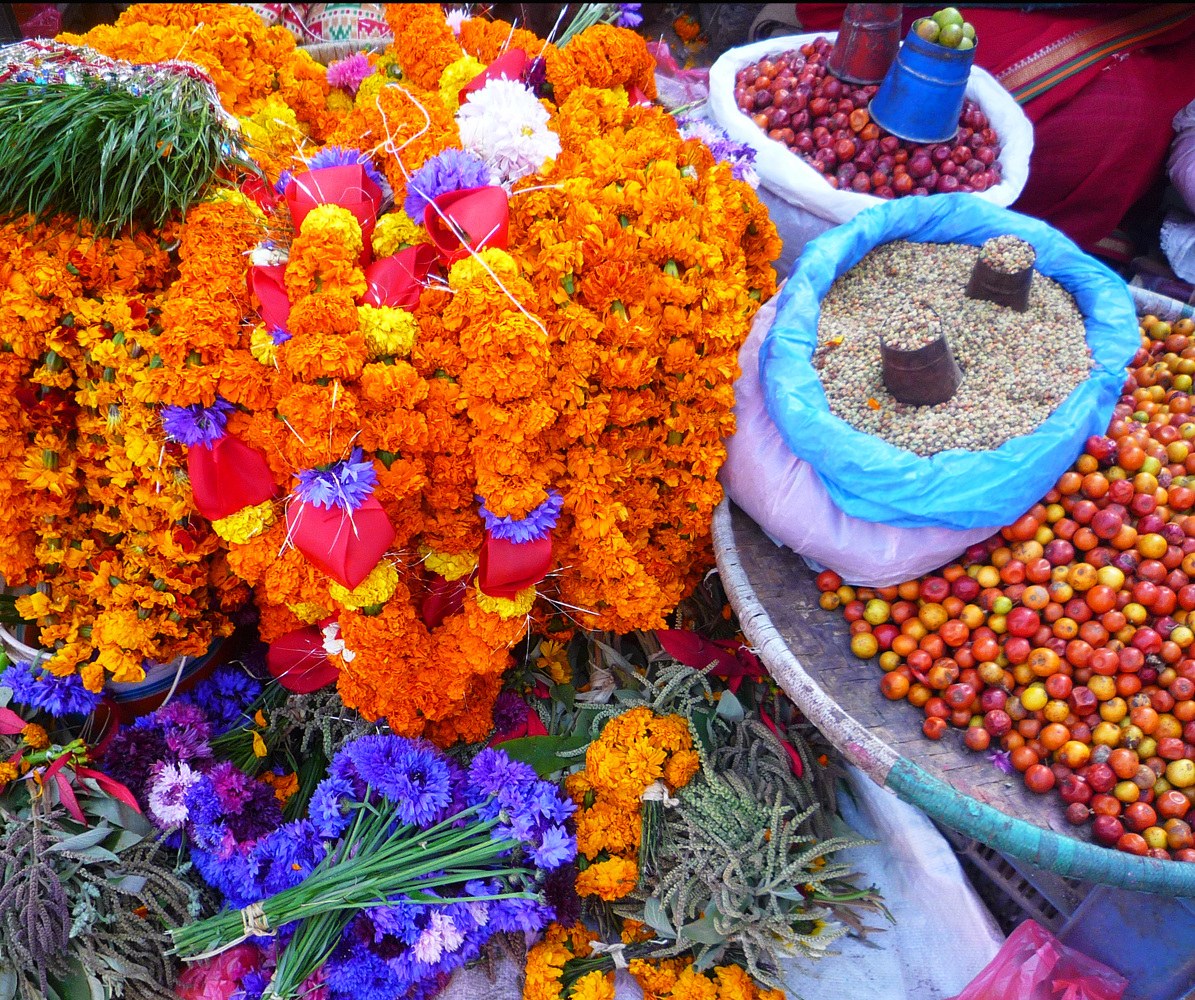
As I squinted at the eyes of Buddha on the stupa, ever watching over Kathmandu valley, I could not help but reflect on the difference between a Western church and a buddhist temple: in a church we are to walk in, wipe the smile off our faces, stop talking, light a candle, and sit down in solemn silence. In the Swayambunath temple we are to walk in together, gaze at the sun, talk with our family, light an oil lamp, and have moments of meditation at our own leisure. And perhaps offer a garland of strikingly orange flowers.

nepal-6-web(Swayambunath temple, Kathmandu, Nepal; January 2015)


Leave a comment

Finnish inherited blindness

aaltohouse-2

There were white surfaces, and light wooden floors. Clean edges and no frills. There were practical tables, durable chairs, and simple lighting. And it was all so Finnish we did not think it was all too marvelous. We shrugged; of course the home we grew up in had several Savoy vases. Of course we ate our kindergarten lunches on the Stool 60 and the table with L-shaped legs. They were designed by a Finn to be used by Finns.

And so it was difficult to set our minds on the wavelength of quiet reverence of the American party that joined us on our tour of Alvar Aalto’s home. What did they see that we did not? I washed my thoughts with images of American homes, focused really hard, and stared squinting at the Tank chair. After some effort I began to catch glimpses of how different the zebra upholstery and the simple curved frame was from everything that was ordinary across the Atlantic. How our fellow tourists saw the boxy, minimalistic shape of the house so extraordinary, and how everything Aalto is both Finnish and resonates so with the Japanese. I blinked – and the magic was broken. I was back in a room that felt homely and familiar.

Aalto is wired into our cultural inheritance, and it surfaces with symptoms of inherited blindness for things others consider singular. Things we consider for granted others collect as design items.

As I stepped back out into the bleary January Saturday I wondered how much we could learn about ourselves if we could only step out of our own cultural contexts? And how much more beautiful and wonder-full the world would suddenly become?

aaltohouse-1(Alvar Aalto house, Helsinki, Finland; January 2015)


Leave a comment

The crookedest street

lombardstreet

Once upon a time there was a street so squiggly that people came to see it from far. To drive down it was sightseeing. To walk down it drunk was daring. To photograph it was expected.

And yet the roses did not mind. They thrived, covering every spot of earth in between the zig-zagging road. Because they had the most beautiful view of the Bay. Because for them, what was crooked to most people was normal.

(Lombard street at night, San Francisco, USA; December 2014)


Leave a comment

The chocolate factory that made no chocolate

ghirardelli-1 On the edge of fog city stands a chocolate factory. Built out of red brick and with shining blinking lamps, it is just like Charlie’s chocolate factory. Amidst the ice cream and chocolate fountains and heaps of chocolate bars one blissfully forgets that the buildings are only a charming but thin shell. No chocolate has been made at Ghirardelli’s for years, and after extensive googling I still am no wiser as to where the chocolate comes from.

Perhaps I must heat myself a cup of mint cocoa and consider the possibility that Ghirardelli’s chocolate is shipped from outer space – and is literally heavenly.

ghirardelli-2(Ghirardelli Square, San Francisco, California, USA; December 2014)


Leave a comment

The secret minds of sea lions

IMG_3196.JPGSea lion group cuddle? Hardly: life as a sea lion is all about who is the most competitive, rowdy, and sizey.

That wonderful moment when there is just enough space for a stretch and just enough cuddle for warmth? Someone will push you into the chilly water. That moment when you have proclaimed yourself as the king of the bachelor pontoon? A seagull will bomb you.

And yet there are those huge, mature individuals who find a spot, carefully balance their heavy heads vertically over their necks, point the muzzles toward the sky and never mind the world that turns.

And as I stood by the Pier 39 I realized that zen finds sea lions when they feel secure about their place in the world. Oh how wonderful it would be to dive into the minds of these characters of extreme.

(Fisherman’s Wharf, San Francisco; December 2014)