 From up in the air, the Tower Bridge looks like a lego bridge next to the huge modern skyscrapers of the City. But then again it is from another millennium.
(London, United Kingdom; April 2016)

From up in the air, the Tower Bridge looks like a lego bridge next to the huge modern skyscrapers of the City. But then again it is from another millennium.
(London, United Kingdom; April 2016)
 London, it’s been three weeks and how I missed you! I missed circling around the city in the morning light, almost looking in through the Queen’s bedroom window, and almost hitting the Shard with an airplane wing. I missed having sushi for lunch down Oxford street, and I missed the crazy traffic and even crazier cabbies. I missed the morning rush in the tube where nobody elbows and everybody is Sorry and I never have to carry my suitcase up or down the stairs by myself if don’t wish to.
 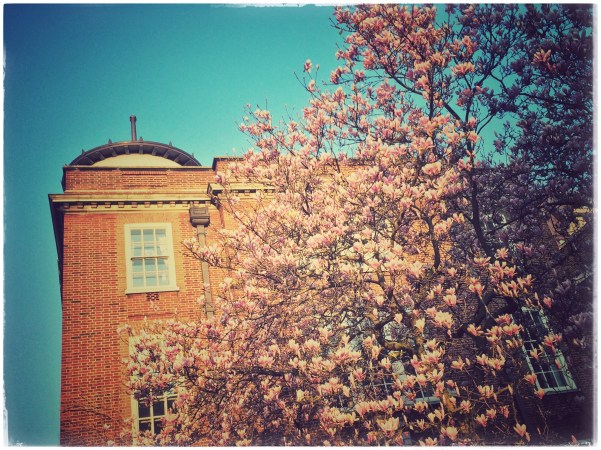 This St Patrick’s Day is pink, not green. Magnolias galore, even off Piccadilly. While most people were mainly occupied with where to find green beer, I occupied myself with Les Misérables, along with a theater full of teenagers and university students. Even the miserable lives of Victor Hugo’s characters were glamorous – although nobody wore much pink.
As I walked back to the hotel, pushing through the St Pat’s celebration throngs in Theatreland and Soho, I thought of the infinitesimal likelihood that I would be born into a world where I can admire magnolias, see musicals, and have dinner in a European city any time I wish. Had somebody thrown the dice again I would most likely have been born into a life not very far from the Les Misérables scenes. Or perhaps I have been, on multiple occasions, during other lifetimes? Perhaps this lifetime is the exception, unless I work very very hard towards becoming a better being?
As I crossed Piccadilly on my way out towards Green Park, I resolved to try harder to be grateful, even when I mostly would feel like being miserable. Because even my most miserable day is probably a dream-come-true to another person.
Ingratitude is the dark side of adaptability: we humans constantly recreate our zero-point of reference by weighing it against our surroundings. We adapt, because otherwise we would not stay alive. And when we adapt, we forget that our gratitude should be weighed against an absolute scale, not one that moves along with our ever-changing aspirations and subjective setbacks.
I walked underneath the pink magnolias again and in the dark they were as gray as the rest of London. I sincerely hoped that, as evolution pushes the human species further towards greater challenges that require adaptability, gratitude would not become an extinct trait.  (London, United Kingdom; March 2016)
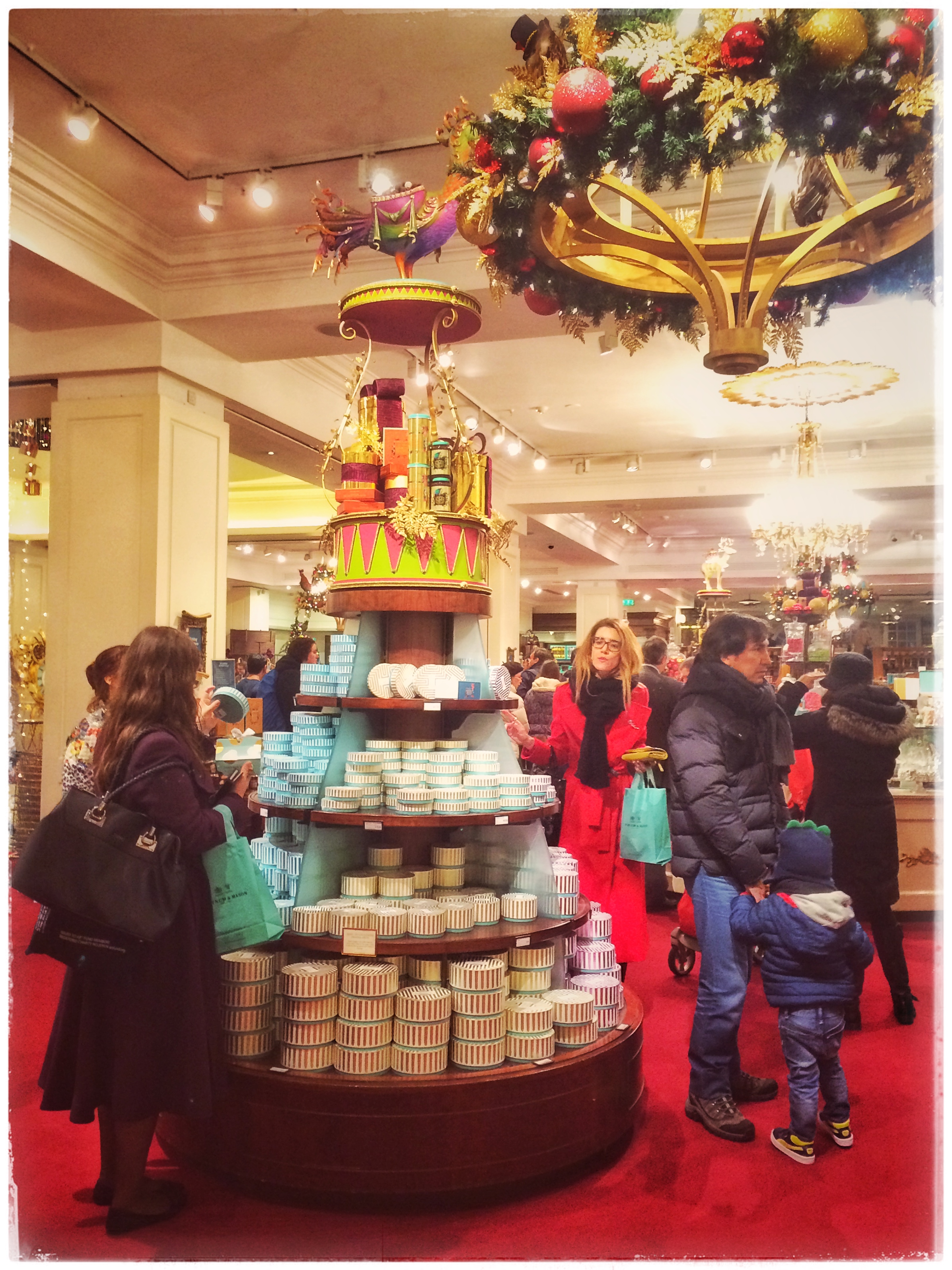 Ah! Florentines! Clotted cream biscuits! Proper English tea! Per kilo if you wish. And all a 3-minute walk from my favored hotel at Green Park. The tea is not quite like English Twinings or Brodies Irish breakfast, but the beautiful jars make up for the missing point or two.
The English have made a wise decision to hog all the best tea to themselves – and export the scraps swept from the floor of the tea processing factory to countries who know nothing of tea. My sister discovered that Twinings outside of the UK tastes of cardboard, whereas Twinings sold in the UK tastes delicious (same goes in my experience for Taylors of Harrogate). The answer to her inquiry was that “we export tea that caters for the international taste”. Yes indeed – it would, as long as those tastebuds never taste proper English tea served in the UK.
For the past 15 years I have imported all my tea from Holland, Malaysia, and the UK, and when possible, from Nepal as well. But nothing beats the experience of stepping into the Twinings tea shop or the Fortnum & Mason paradise in London. Fortunately my monthly visits to London allow to uphold the sense of luxury – and my tea stock.
 (Fortnum & Mason, London, United Kingdom; December 2015)
 Sporadic smog and frequent blue skies. This is London today. 50 years ago it was the other way around. As we circled above London in the busy morning air traffic, I thought of the generations of Londoners between the ramp-up of the Industrial Revolution in the 19th century and 1960s when the Clean Air Act began to take visible effect. These people did not see much of a sun unless they found their way out of the city. In 1952 during the Great Smog, thousands of people died and thousands more were made ill by the toxic filthy pea soup that hung over London for 4 days.
Today there is the chance to see a blue sky over London, even without rising a kilometer into the air. Of course the view from up here is much more stunning.
 (London, United Kingdom; October 2015)
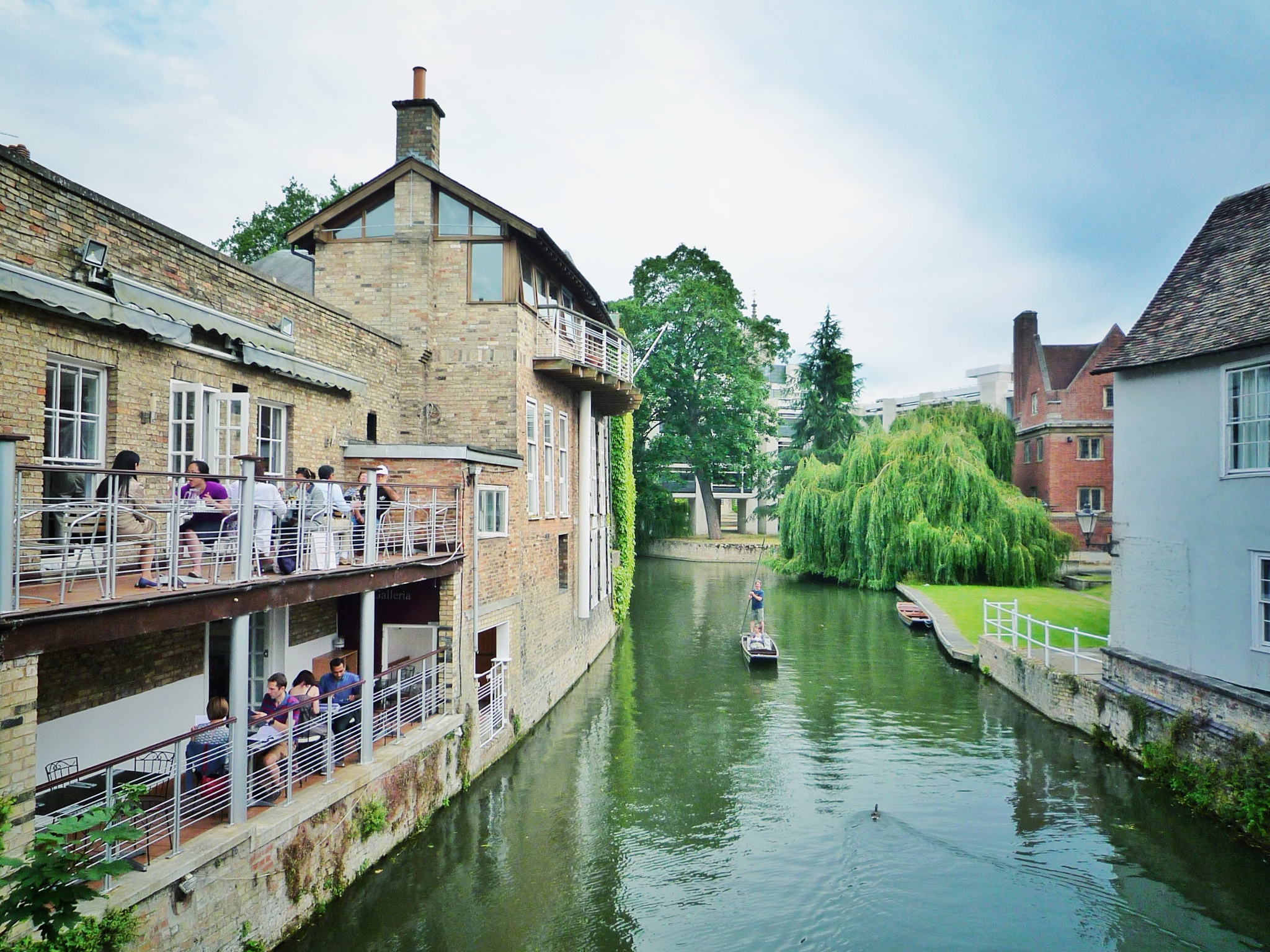 Happy to be back in Cambridge, where punting, flower skirts, panama hats, and Pimms with lemonade never go out of style. Where dozens of church bells play their own melodies every Sunday morning, and where cows grazing mingle with people walking dogs in the park.
 Happy to be back at my old school, and to have a reunion with fizz and formal hall style dinner, and to hang out by the pub by the Mill Pond in the sunshine, just like in old times. Sometimes it is a lucky and wonderful thing that schools and classmates do not change.
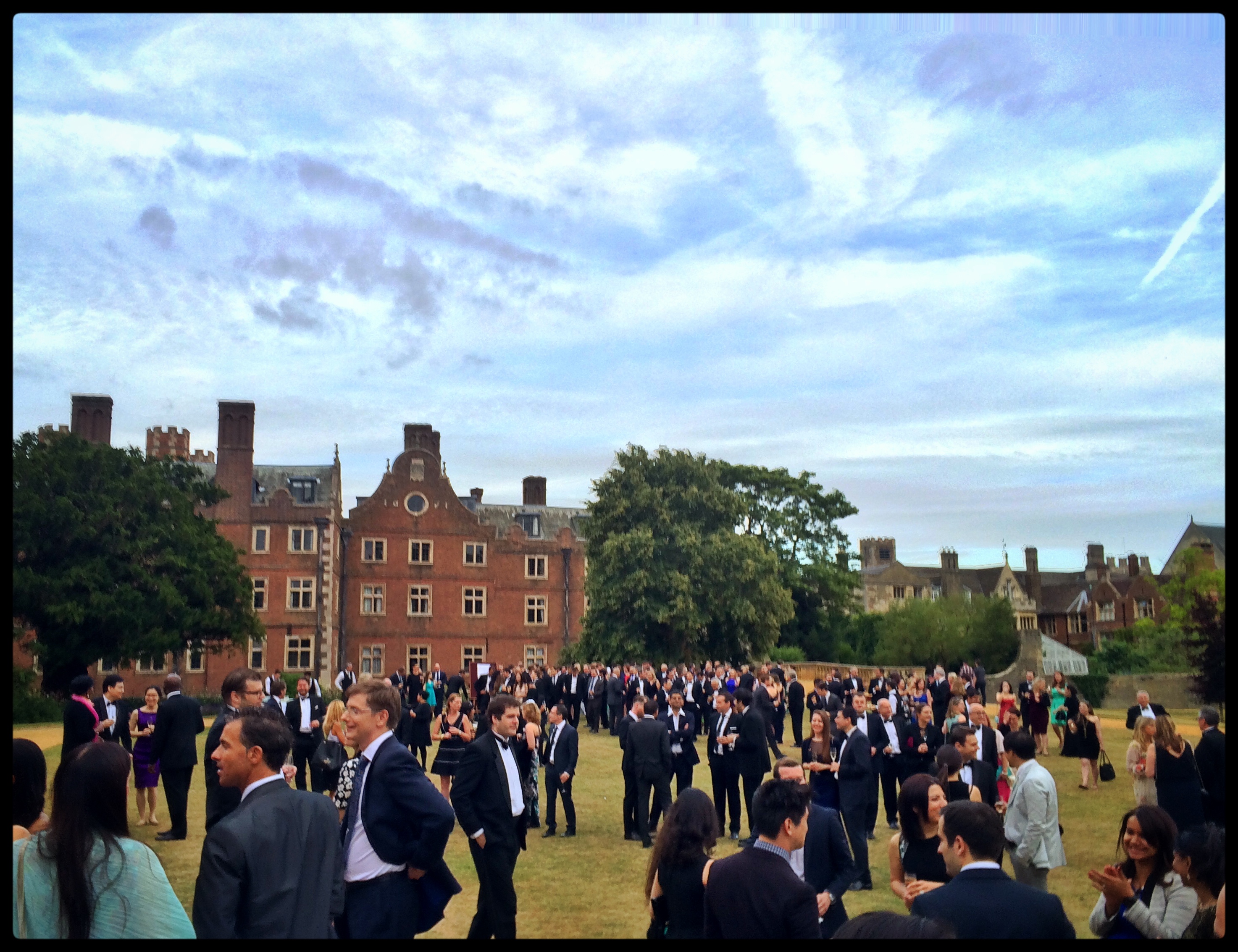 (Cambridge, United Kingdom; July 2015)
would I were
In Grantchester, in Grantchester! –
Some, it may be, can get in touch
With Nature there, Or Earth, or such.
And clever modern men have seen
A Faun a-peeping through the green,
And felt the Classics were not deadBut these are things I do not know.
I only know that you may lie
Day-long and watch the Cambridge sky,Until the centuries blend and blur
In Grantchester, in Grantchester ….(Rupert Brooke)
Happy to be back in Cambridge. Rupert Brooke felt it, too, as he longed for Cambridge and Grantchester meadows from his apartment in Berlin in the spring of 1912.
103 years later we ditched our luggage with all their Polish dust at the hotel, grabbed Prosecco and strawberries and the picnic blanket and headed for Grantchester meadows, river Cam, and the summer sun.
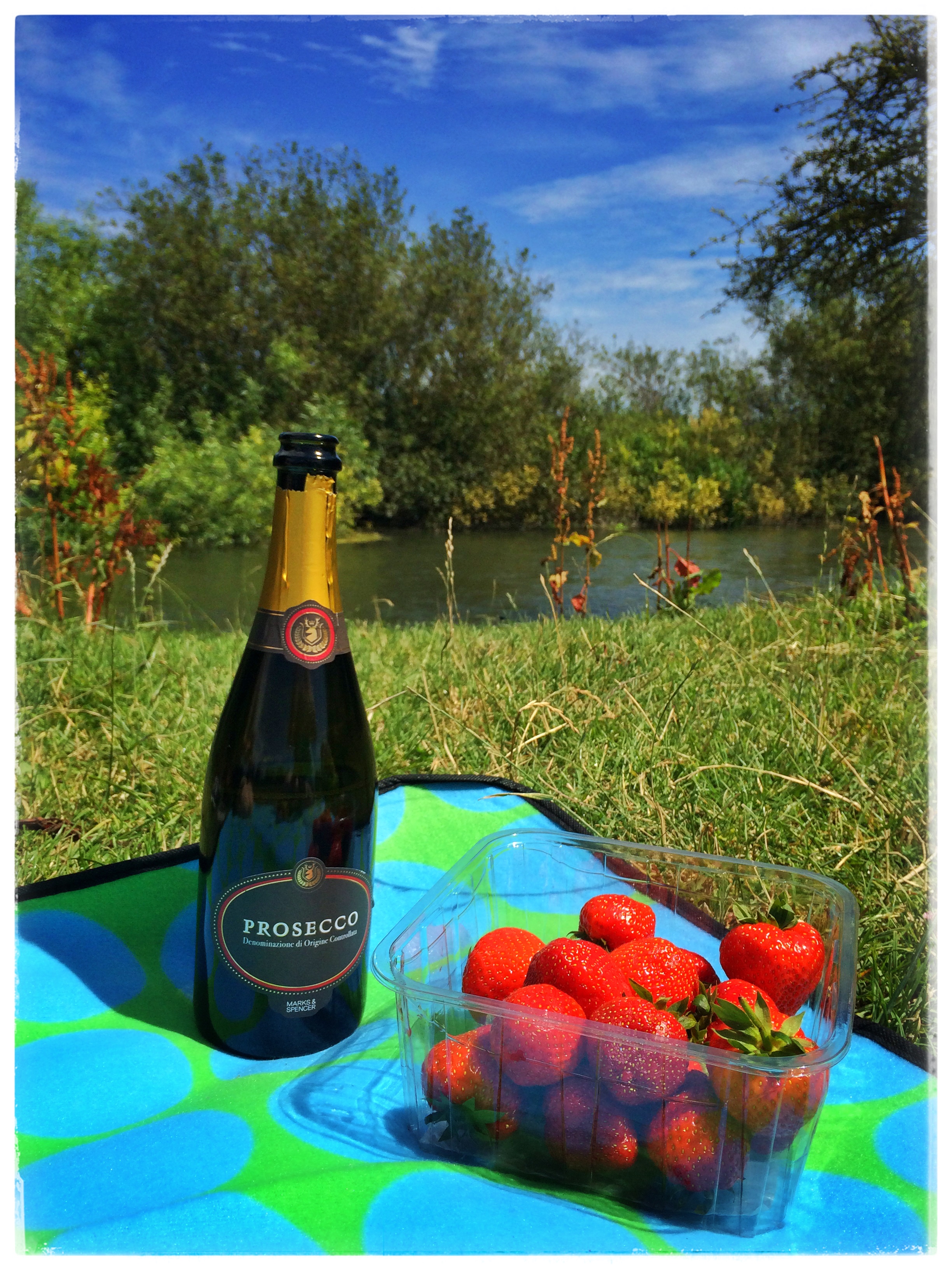 Hours later, heavy from soaking up the sun, we climbed over the cow fence into the Orchard at Grantchester, where Brooke and his friends Virginia Woolf, E. M. Forster, John Maynard Keynes, Bertrand Russell, and Ludwig Wittgenstein once used to sit and repair the world with the power of thought, word, and verse.
The church clock may no longer stand at ten to three, but there is always honey for tea – and fresh scones with jam and clotted cream.
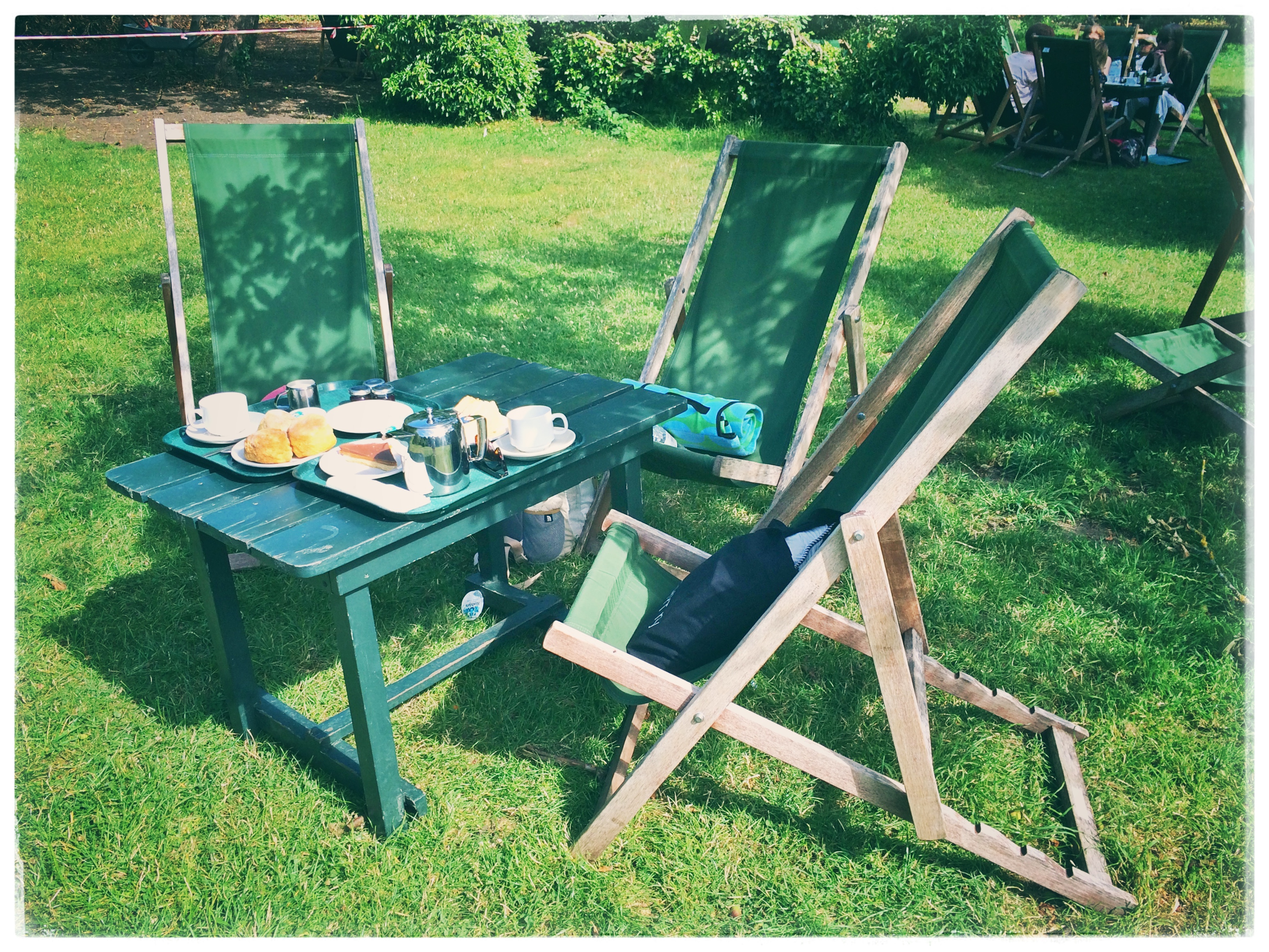 (The Orchard tea garden, Grantchester, United Kingdom; July 2015)
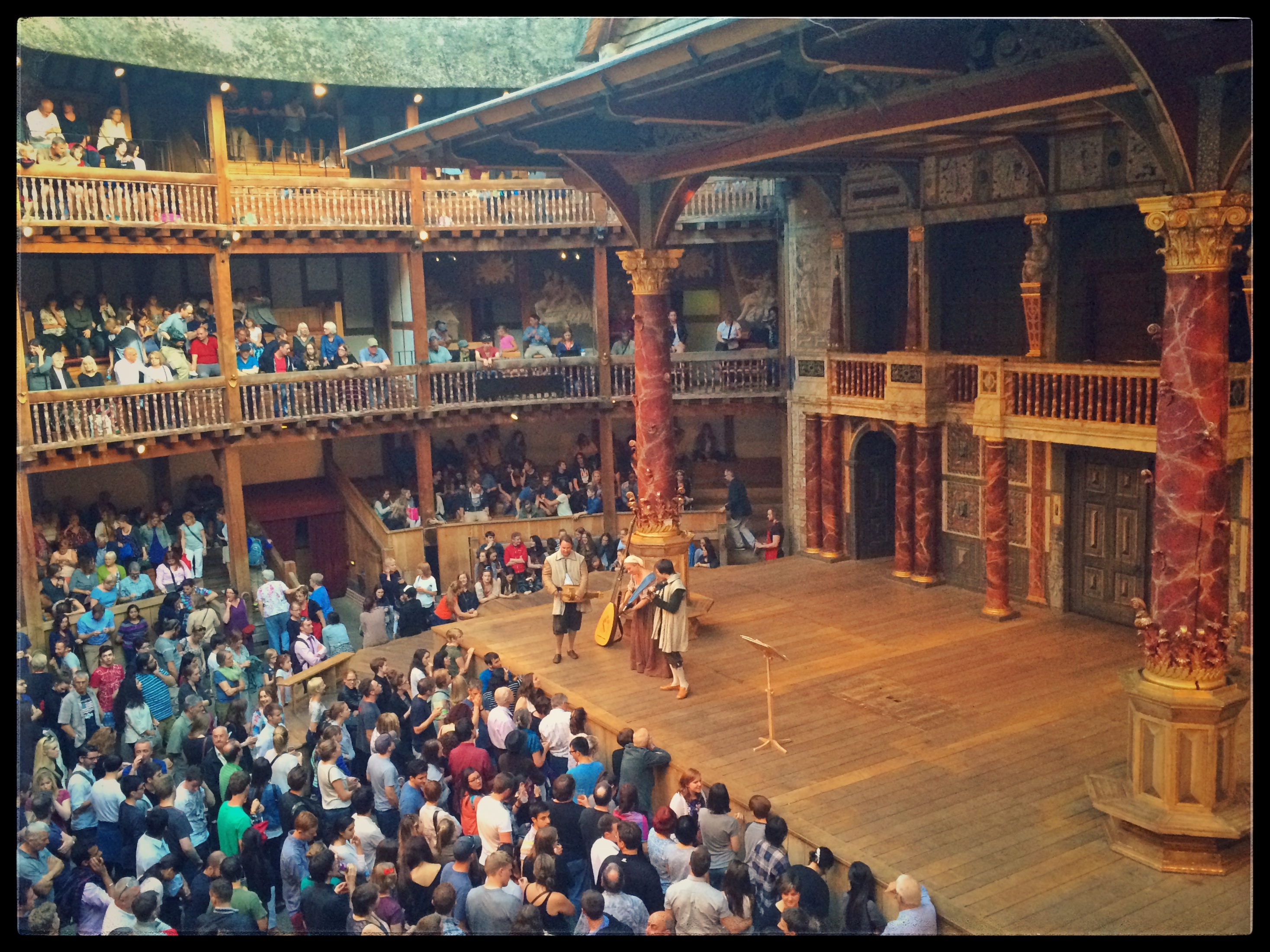 Facing up against tube strike, sitting in the cab for 1 h 15 minutes from South Kensington to Southwark, wolfing down a wonderful pre-theater dinner at the Swan in 45 minutes, and we made it to the play at the Shakespeare’s Globe. As You Like It was classy and wonderfully fresh, with Celia and Rosalind cracking the audience up, as two loons living to love and loving to live. Even the airplanes landing at Heathrow were given a part in a 17th century play.
Drinks and barbeque food were served outside and allowed in, to recreate the feel of Elizabethan times. Alluding to the same feel we asked if throwing food at the actors was allowed. It was, with the disclaimer that the actors might well throw some back. Seeing how they tormented some poor selected ones in the crowd we did not doubt the warning. Next time we will certainly bring both roses and rotten tomatoes.
This time the choice towards roses would have been easy.
(London, United Kingdom; July 2015)
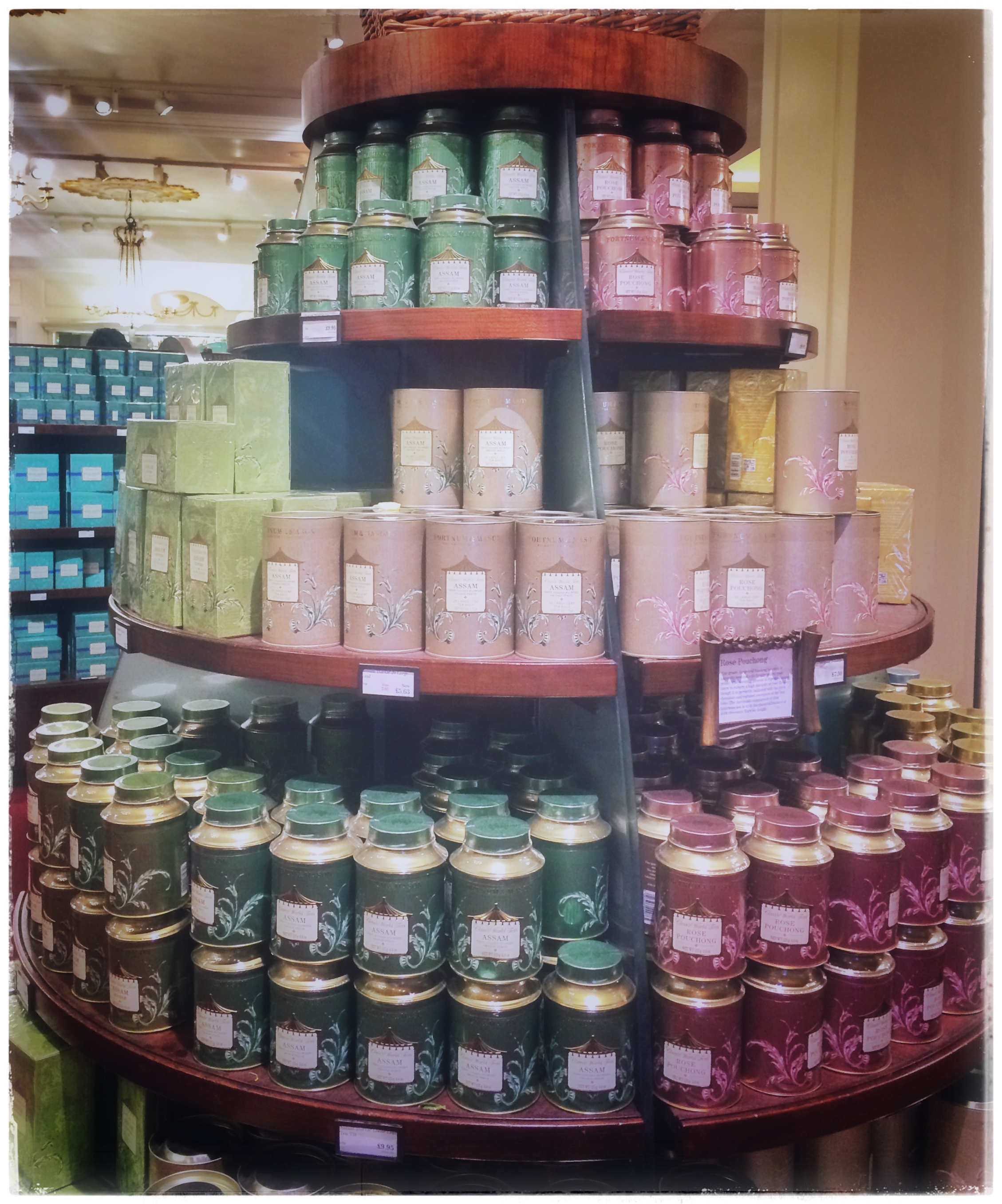 Oh! Towers of butter cookies and tins of fragrant tea! Boxfuls of florentines and heaps of marzipan fruit. That’s marzipan shaped to look like fruit, not the other way around. Tea rooms and picnic hampers and lovely flowers. I am glad to be back at Fortnum & Mason, the candy land for adults.
 Tea is healthy so I will have some. And marzipan crafted into perfect disguise as an apple cannot be anything but healthy, right? Now where could I hide until the lights go out and I have these treasures all to myself all night?
 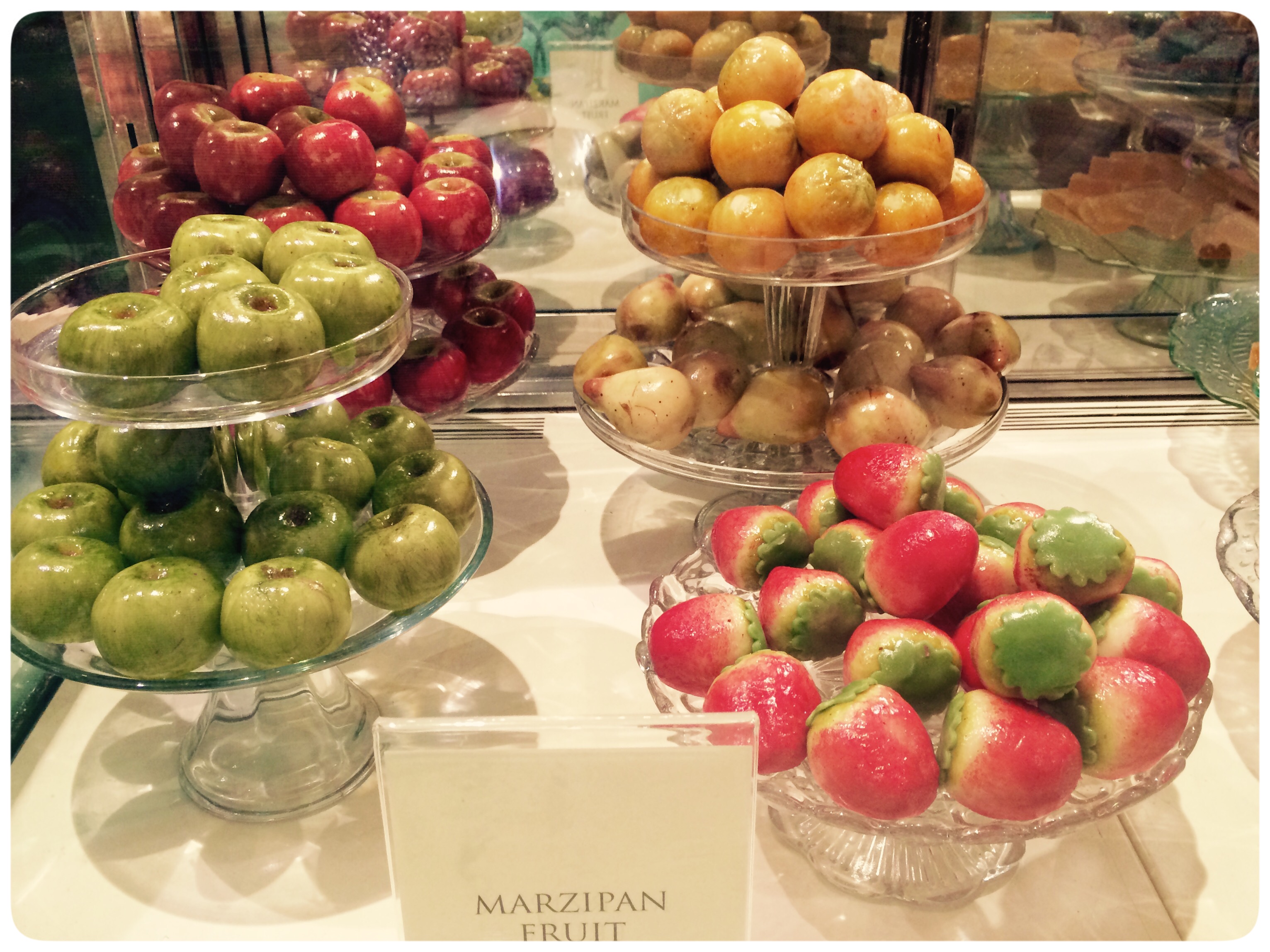 (Fortnum & Mason, London, United Kingdom; June 2015)
 London I missed you! Where else in Europe can one have fresh sushi and peeled edamame beans every day for lunch at every street corner? Where else can one have Korean food in a restaurant filled with Koreans, and a choice of 30+ stylish rooftop bars and restaurants, and get lost in Central Park? Or always find comfortable high-heeled shoes for sale at Clark’s, and afternoon tea with scones and clotted cream and jam in any fancy hotel or restaurant?
And where else do I feel tired after dragging my suitcase through the tube stairs and escalators, get mud on my pants because of oily rainwater splashes from the street, and feel underdressed at a City restaurant where everybody else is a slick banker?
And most of all, which other European city lives under severe immiment terror threat, with machine-gun armed guards at railway stations, police everywhere, and people going on with their busy lives as usual? Not because they do not think of the realities, but because many are a generation grown up under the frequent IRA bombings and attacks lasting from 1970 to 2001. That’s 31 years of fear and uncertainty.
And yet, like it has been for 150 years, Claridge’s is serving afternoon tea from bone china every day. This imperturbable attitude is quintessential for the English. Keep calm and have a scone.
(London, United Kingdom; June 2015)
 The phantom of the opera: what an exciting book from a different world for a 17-year-old! History, ghost story, and romance all entwined. Half a lifetime later I finally saw the original production in London, at Her Majesty’s Theatre. Oh the glitz and glamour, the mystery, the troubles of love! Also, oh the numbers of Asian tourists taking selfies in an eerie glow produced by cell phones in the dark theater. And what class: a play in its 29th year could be bland, worn out, a conveyer belt production. But not the Phantom: spotless, gorgeous scenery and costumes, a Christine with an angel’s voice, and a Phantom with true acting skills.
Two hours later, as I walked back to the hotel, I could not help but wonder how Gaston Leroux would have felt, had he known that his book was being staged and acted out still 100 years after it was written? Would he have written a different kind of ending, knowing that 100 years later, to have a crippled, deformed face does not lead to a loveless life spent in hiding and desperation?
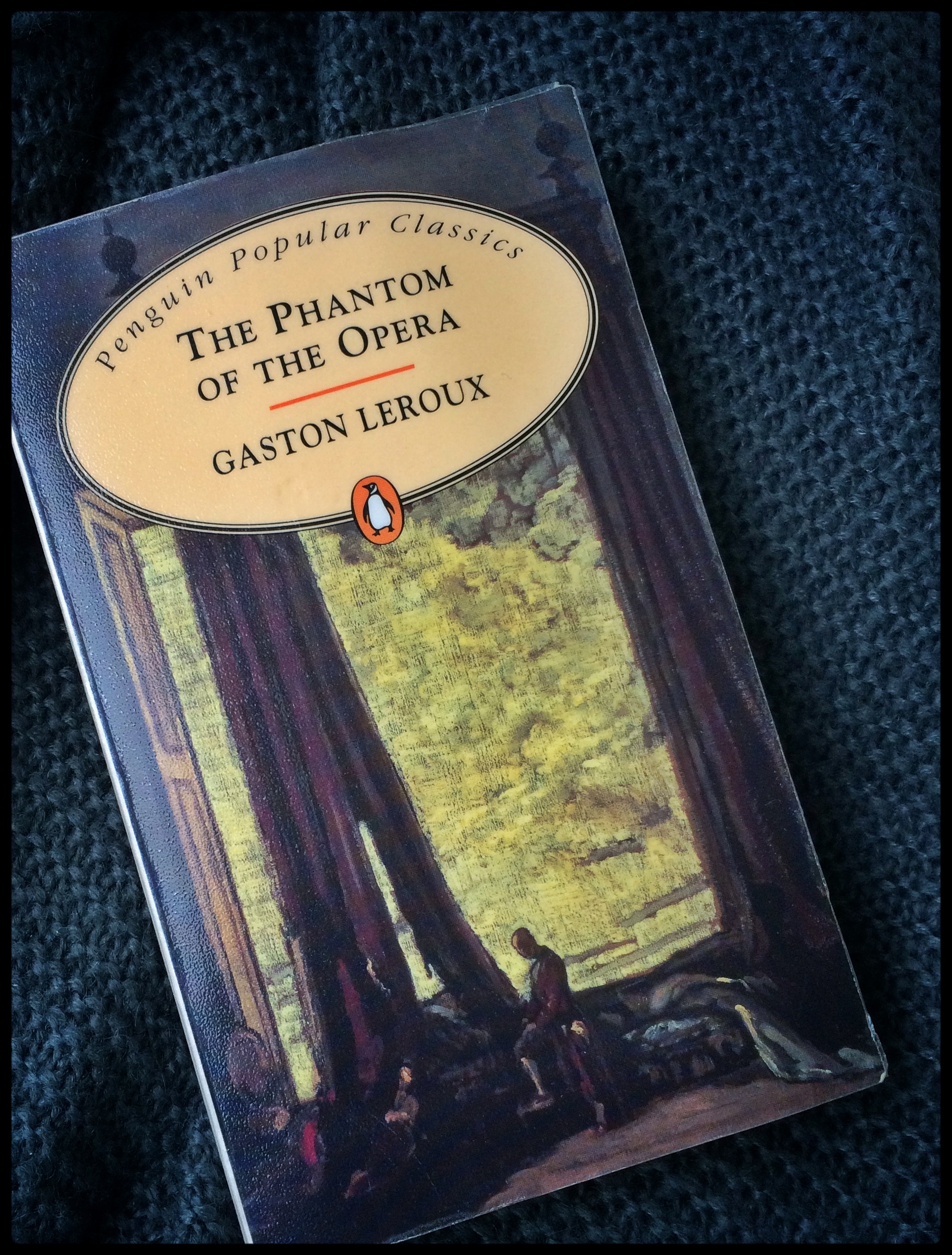 (Top image courtesy of The Phantom of the Opera).
(London, United Kingdom; June 2015)

 This blue marble