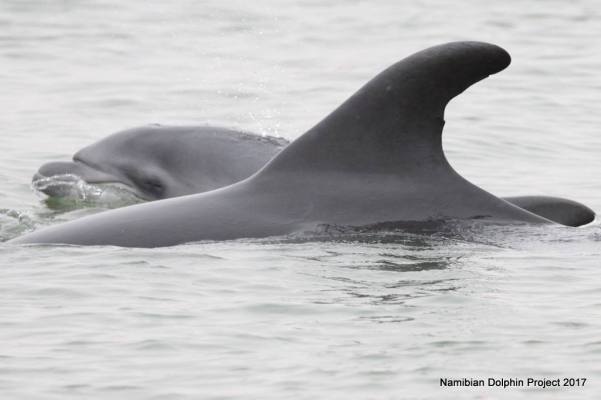
 So much of the lives of dolphins and whales remains as a mystery. We only see what happens on or near the surface. Most of our study data is biased to surface activities, and when we submerge hydrophones and other tools we are still mostly blindfolded: either we drop in something that only records behavior when animals are nearby, of we tag them but cannot really see what they are doing, and thus miss the big picture.
And so many whale species are rarely spotted alive here; they only make themselves known when stranded, and often either dying or dead.
To a random observer it might look like we are collecting bits and bobs of data just for the sake of details. But for example weather is used to predict the probability of a sighting, and the probability is for example going into a model of distribution of animals in the area, if this is the research question asked. If the weather is poor and we see some animals, it is possible to model their actual existence in a certain area based on how easily they really were to spot vs. what amount we probably missed due to poor conditions. There is some heavy, predictive data modeling going on in the background.
In essence, population ecology and much of cetacean (marine mammal) research is post-hoc analysis, meaning that the minds of scientist work different from those with my own background and working in controlled test-environments of laboratories. We would pose a question, a hypothesis; and then design and conduct an experiment to test this hypothesis. In cetacean research one collects lots and lots of data systematically, and interrogates the data afterwards to answer several research questions. Many times there is no hypothesis when one goes out to collect data, but the research questions can be asked by going backwards in time to look at years and years worth of data, to find a pattern. In Kenya we collected much information on fishing activities: locations of harpoonists, fishing dhows, and nets. Combined with dolphin sightings one could map out a picture of how fishing activities change the routes the dolphins prefer to take in the area.
In the Amazon, much of the data collection was analysis of social groups of branded animals: who interacts with whom, which animals are seen together year after year who has calves and where do the calves go when they grow up.
And yes, from time to time we see whales, too. We capture data in an opportunistic fashion. This whale was enjoying life and barrel-rolling, flipping its fins, for twenty minutes. Dolphins like to bow-ride boats, but today was the first time I saw tiny Heaviside’s dolphins bowride a humpback whale. Double joy.
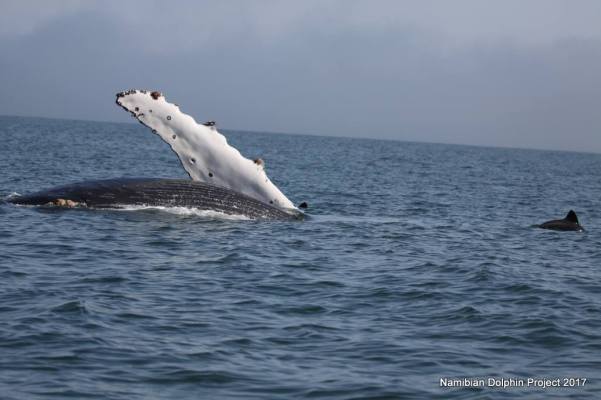 (Walvis Bay, Namibia; July 2017)
(Photos courtesy of Sea Search)

 On the way to Solitaire one must cross the Tropic of Capricorn. This is the southernmost location where, depending on the season, the sun shines down from directly overhead. it does not really feel tropical on the other side. Warm during the day perhaps, but freezing cold at night.
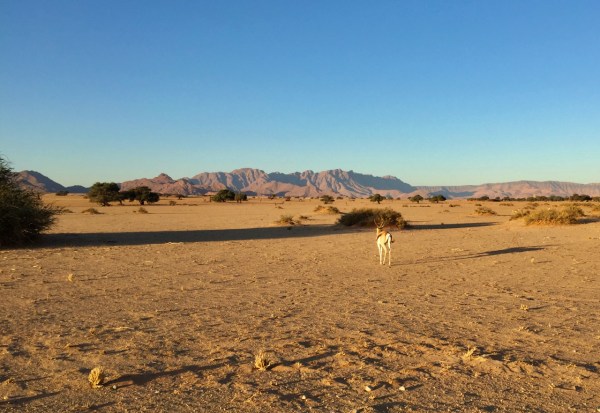 East winds are here again, blowing from the desert for a few days. In Walvis Bay we probably have 27 degrees Celsius on land, and we can feel the hot desert winds out at sea and witness the sand storm behind the dunes. The dunes have obtained a black rind that indicates a shadow: the wind has blown the edge of the dune over toward the sea.
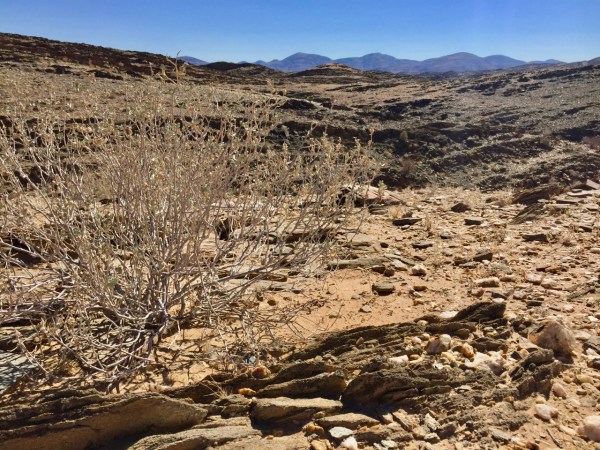 (Namib desert, Namibia; July 2017)
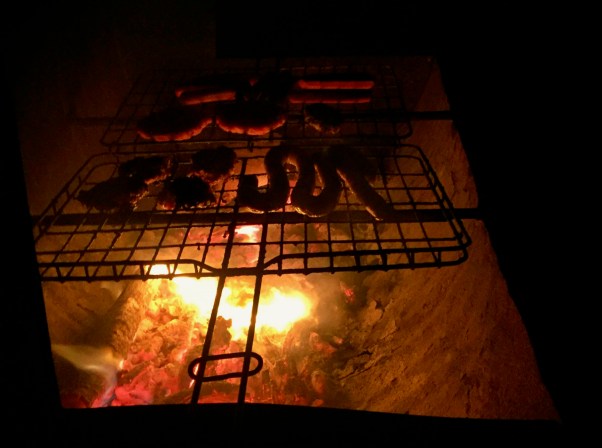 The Namibians sure like their meat. And their barbecue, which here goes by the Afrikaans word “braai”. And what’s on the braai is most likely not pork or beef or mutton. Perhaps chicken if you are lucky, but most likely oryx, kudu, or buffalo.
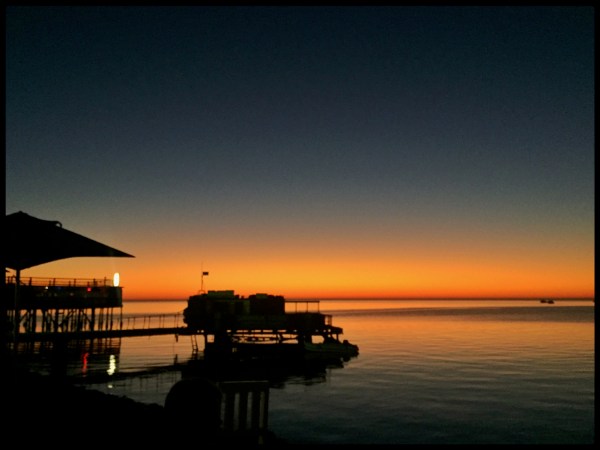 (Walvis Bay, Namibia; July 2017)
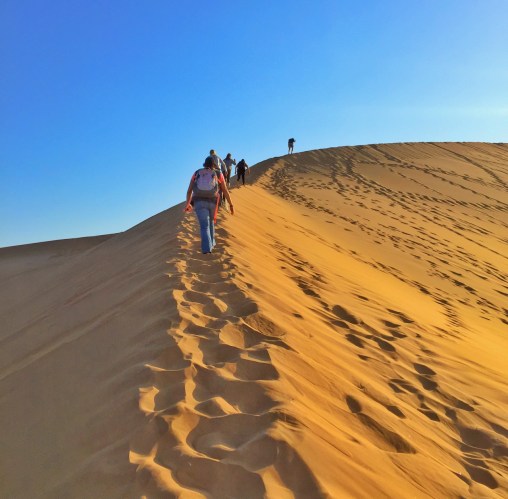 Today I was exposed to so much sand there will be sand in my belongings still one month after returning home. There is a row of dunes between Walvis Bay airport and the town. Dune 7 is the most famous one of them (why?), and does not migrate too much. It is meant to be climbed up and run or boarded down. Dune 7, like any dune, is best ascended barefoot, along the ridge. Descent happens really anywhere one prefers. It is a bizarre sight to see people, young and old, running down a 200 meter tall dune at an angle of 45 degrees without tumbling.
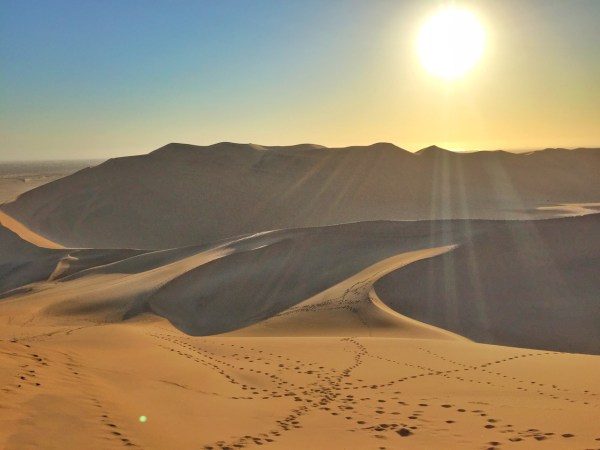 (Dune 7, Walvis Bay, Namibia; July 2017)
 There is an area in the Namib the locals call the Moon Landscape. It really does look like a moon landscape with soft craters and hills made of sand and soft-polished rock. If you scream here, it is highly likely that not a single living thing with ears will hear you.
 Most of Namibia is traditionally uninhabitable, and people have always flocked to the rivers and oases. Because the other choice is a desert with no water bordering on an ocean with too much water, and none of it potable.
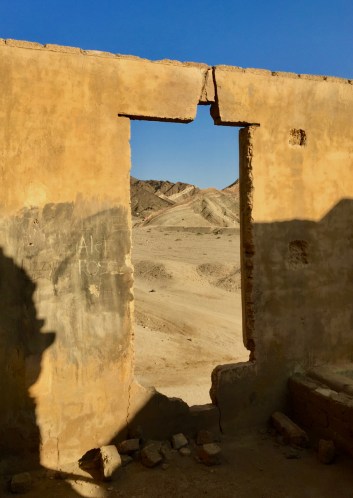 On our day drive we passed three jeeps in a junction in the middle of the wide-open desert. There were three families out on a Saturday drive, drinking beer and driving around the desert. This, and tailgate picnics, seems to be the best Saturday pastime for locals. It is as if the locals do not get enough of the hostile empty hot nothingness but actually embrace it. The human species truly is adaptable.
 (Namib desert, Namibia; July 2017)
 These days there are many drilling efforts around the coast of Namibia, lead by people believing there are great resources of oil to be extracted. Just recently, small amounts of oil were found outside of Walvis Bay. Perhaps in 5 years’ time the entire town and its industrial port will serve an entirely different function.
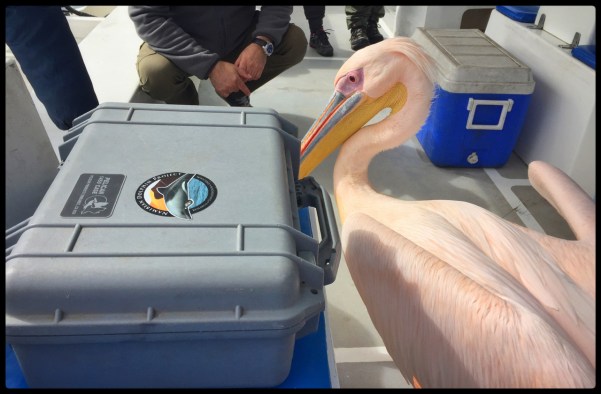 Not even a pelican can break into a Pelican Case. Thank goodness, as the cameras inside are not cheap.
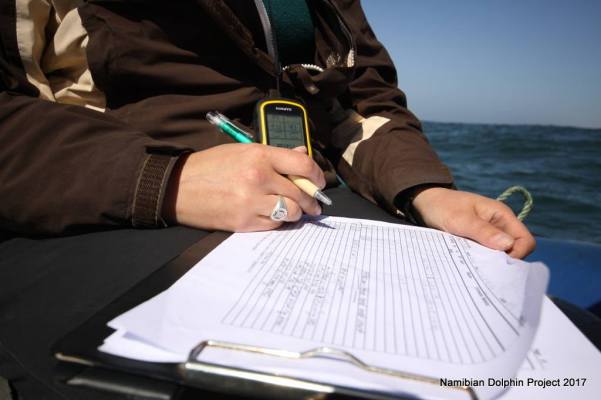 Someone has to be the data monkey, and I never really mind the job. On a rare, sunny day I do not need to wear gloves. Underneath that windbreaker are two (!) fleeces and a merino wool underlayer. Yes, this is Africa, still. And freezing cold, misty, and humid most of the time, due to the Benguela current that pulls up right from Antarctica.
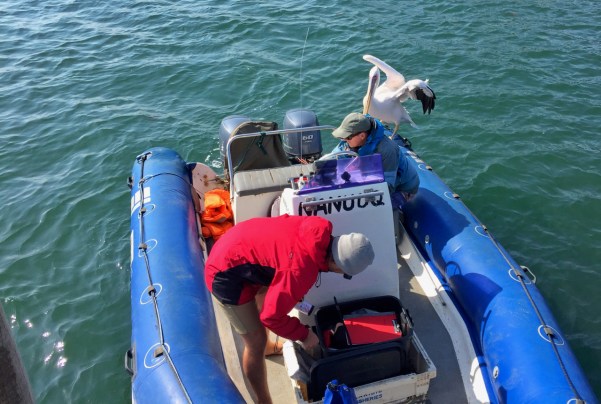 (Walvis Bay, Namibia; July 2017)
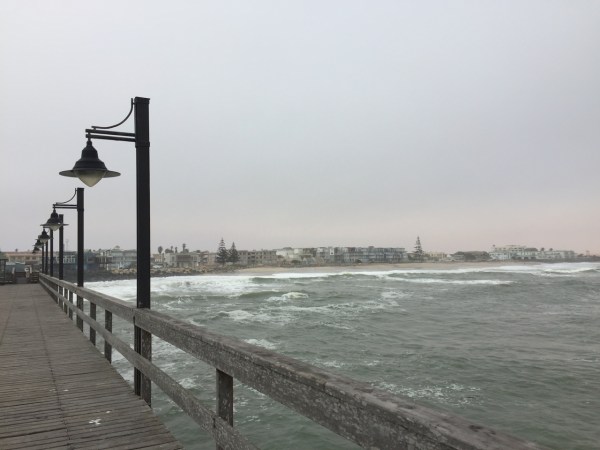 The ocean was raging today in Swakopmund: huge, furious, white-capped surf waves and a deep green undertint.
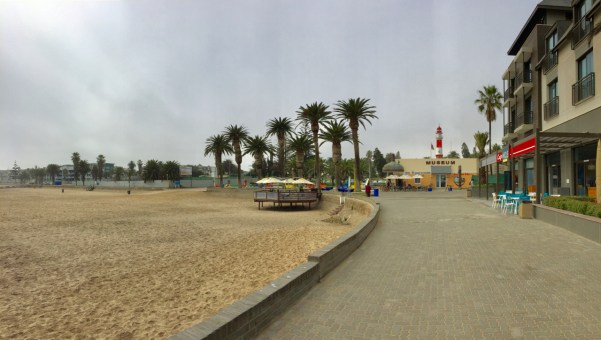 Swakopmund is a cute, little, heavily German-influenced town. It is not cozy and it has the broad, grid-like streets of an American town, but there are a couple of pedestrian shopping streets and a nice waterfront. There is even a German-owned curiosa shop stock-full with memorabilia from the German colonialization time, when Namibia was the “German Southwest Africa”. It would seem that many Germans are interested in the history of their African colony, but I could not help but wonder if it really was such a glorious and justified time as the memorabilia make it sound like?
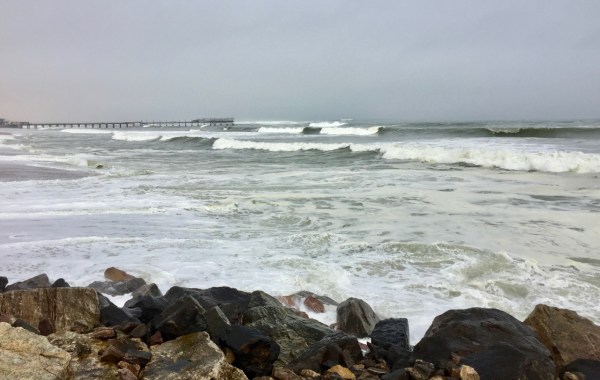 (Swakopmund, Namibia; July 2017)
 This blue marble