This blue marble

– and yet it spins


Leave a comment

Newnham girls, you walk in beauty

newnham-5The beauty of Newnham college in Cambridge is hidden behind brick walls – girls need to be protected from the outside world. But let me show you the way in, through the gates…

newnham-6…and you are welcomed by roses, peonies, squirrels, and majestic red-brick buildings. And sometimes the faint melody of a flute or violin drifting through an open window.

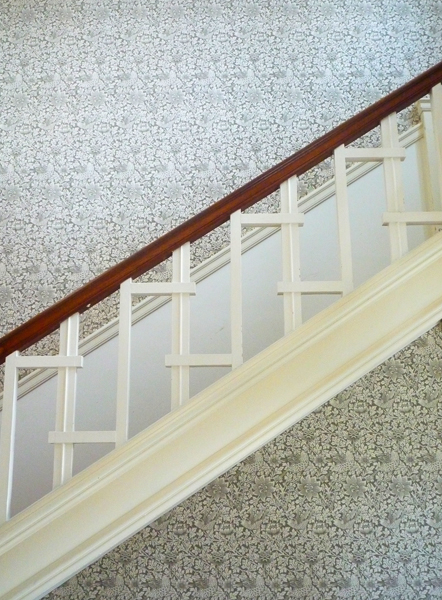
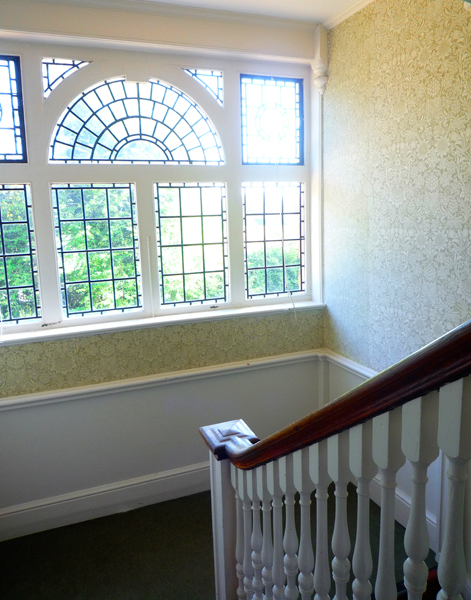
There is true beauty on the inside, too. Winding stairs…newnham-1…and Victorian wallpaper by William Morrisnewnham-2…and less winding stairs…

newnham-3…and sunlight…

newnham-4…and the ghost of a 19th century curly-haired girl in a pastel-colored muslin dress, reading a love letter by the window…

(Newnham College, University of Cambridge, UK; June 2011)


Leave a comment

Oh, who can ever be tired of Bath!

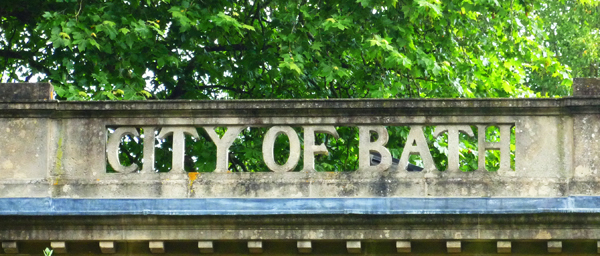
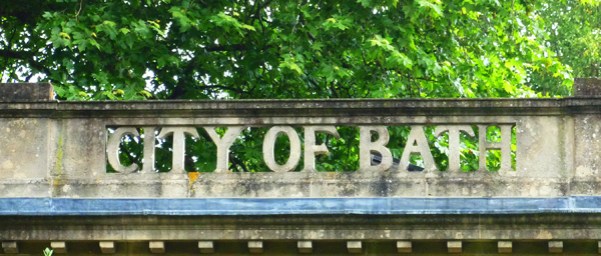
bath-2When I lived in the UK I wandered around the lovely streets of Bath for a weekend. Just like Catherine from Jane Austen’s Northanger Abbey I wonder, who can ever be tired of Bath?

“A fine Sunday in Bath empties every house of its inhabitants, and all the world appears on such an occasion to walk”bath-16“they hastened away to the Crescent, to breathe the fresh air of better company”

This lovely piece of green pasture is marked on an old map as “never to be built upon”. The Bath city layout is sprinkled with circles, squares, and crescents, and even contains one circus.

bath-12They set off in good time for the Pump-room, where the ordinary course of events took place; Mr Allen, after drinking his glass of water, joined some gentlemen to talk over the politics of the day and compare the accounts of their news-papers; and the ladies walked about together, noticing every new face, and almost every new bonnet in the room”

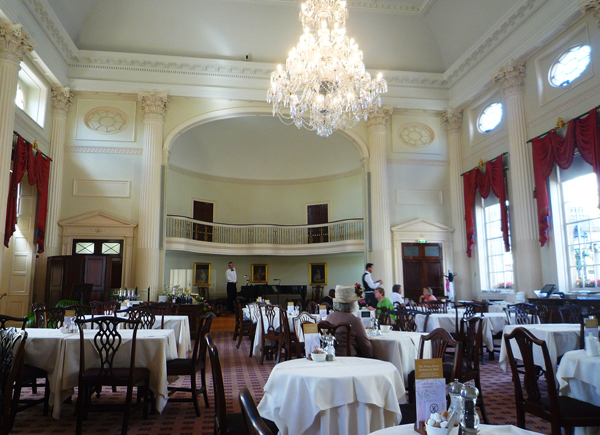
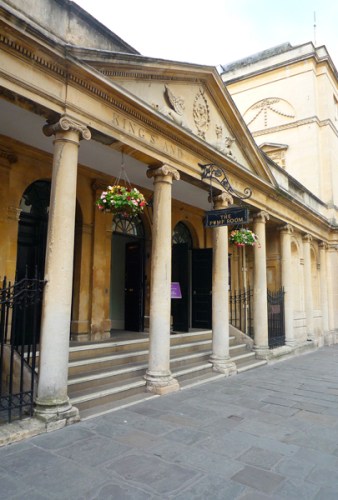
The Pump Room is open for a delicious breakfast, lunch, or afternoon tea. Wander in at breakfast time, after 9.30 am, and the sunny room, with light tunes of violin and piano floating in the air, will be all yours. Try the spa water – it’s not half as ill-tasting as in many other places. These are the “lower rooms” of Jane Austen, where ladies and gentlemen “took the waters”, along with “Oliver bisquits” (delicious but heavy on calories), during the day, and enjoyed conversation and dance during the night.
bath-14bath-1“Edward has been pretty well this last week, and as the waters have never disagreed with him in any respect, we are inclined to hope he will derive advantage from them in the end”

The thermal waters of Bath bubble up from three springs in the Roman Baths, over a million liters per day. The baths are beautifully restored and the excellent audio tour easily keeps your wandering around for 3 hours.

bath-15

bath-5Hoping to dip your toes into the famous thermal water? Finally Bath has a spa again. The Cross Bath, and the all-new Bath Thermae Spa, are located behind the Roman baths. Half a day just flows by in the hot thermal waters, aromatherapy steam rooms, spa treatments, lovely restaurant, and rooftop pool.

““I could not tell whether you would be for some meat, or only a dish of tea, after your journey, or else I would have got something ready… Perhaps you would like some tea, as soon as it can be got.” They both declared they should prefer it to anything”

Afternoon tea in Bath is not to be had without the Bath Bun, or the Sally Lunn Bun. Fluffy and round, split in half, dripping with hot butter and brown sugar syrup with a hearty dash of cinnamon… the secret recipe and the tea room have served thirsty and hungry visitors for over 300 years, which I think Sally Lunn would have been very proud to know.bath-2All quotes by Jane Austen (Northanger Abbey, Persuasion, personal letters)(Bath, United Kingdom; June 2011)

Leave a comment

What do you imagine when you think of Sherlock Holmes’s London?

holmesOn a day off I made a quick nip into the world of Doyle and the London of Sherlock Holmes. In the sunshine, under a clear blue sky, it was odd to imagine the smog-filled city of 120 years ago, where so much splendor of the upper classes mixed with so much filth and poverty of the lower classes.

In the times of Sherlock Holmes lived also Charles Booth. Instead of investigating mysteries, he investigated social classes. With his team he color-mapped all of central London, house by house, by the social class of the inhabitants.

povertymap-3My usual haunts of Marylebone/Mayfair/Bayswater were among the wealthiest areas of town (see below – the street with a horizontal line is Oxford Street). How interesting to note that the blocks had wealthier people inhabiting the street sides, and poorer people living in the courtyards.

povertymap-2Whereas Union Street, nowadays Riding House Street, was labeled poor and criminal. povertymap-1 How easy it is then, to forget that the world of Sherlock Holmes and Oscar Wilde’s heroes encompass a vanishing 10% of the worlds within London. Most of the remaining 90% never saw more than a glimpse of the splendor of living, entertaining, and society of the people we think of when we think of turn-of-the-century London. Many of those 90% were happy to have a pair of shoes on their feet, and food for the following day.

(Museum of London, London, United Kingdom; March 2015)


Leave a comment

How does one live after being a goddess?

kumariWhat if your little daughter or sister was proclaimed to be a manifestation of a goddess at the age of five? What if she was carried away to a temple and locked up except for ceremonial processions? What if she was never allowed to smile in public and her feet were never to touch the ground outside? What if priests worshiped her every day and tourists gaped in awe or reverence when she appeared at the window?

And what if she, by showing the first signs of puberty, was to suddenly become a mere mortal again? If she had to go through a crash course of finding an identity other than deity, learning how to read and write, and how nobody can be commanded outside of the temple?

To be a Kumari is to be whisked beyond reality, just to crash into mortality a decade later. Today Kumaris are expected to find a place in society – yet only half a century ago they were expected to be served throughout life, and to keep on living without purpose and direction.

As I gazed up towards the child goddess in the carved window I could not help but wonder: what can life be like when one has reached the ultimate and beyond already before adulthood?

(Royal Kumari Che temple, Kathmandu, Nepal; January 2015)


Leave a comment

330 million deities

nepal-24-webHow many Hindu deities are there? 3? 3000? 330 million? A different number is thrown into the air every time somebody dares to pose the question. The stories of Iliad and the names and attributes of Greek deities are holiday reading compared to the embroidered tapestry that is Hinduism.

How much must Hindu children struggle in school in order to remember even a small fraction? Perhaps some child stayed up late to memorize the story of Narasimhadeva, the lion god who slayed the demon king?

nepal-22-webOr that Vishnu the protector god travels on the back of an eagle?

nepal-23-webOr that goddess Kali is the manifestation of destruction, blackness, and power over time?

Kathmandu is crowded with temples. Each temple holds several deities, or forms of deities, each and one somehow interlinked back to the two main gods Shiva and Parvati. Dizzying: how can anyone choose who to worship and for what specific purpose?

Perhaps the number of gods is irrelevant: there may be as many faces of God as there are people. The ancient Hindus believed there were 330 million souls on this planet – and thus also 330 million deities: one for each one of us as we all are manifestations of God. Perhaps this is the truth? After all, the common greeting “namaste” translates as “I greet the divine within you”.

Perhaps it does not matter. Perhaps what matters is the thought that is carried with the tika dye and chime of bells. Perhaps all that matters is that the pigeons carry the prayers whispered to rice grains with them, up into the heavens.

nepal-8-web(Kathmandu and Bhaktapur, Nepal; January 2015)


Leave a comment

Roaring twenties in Riga

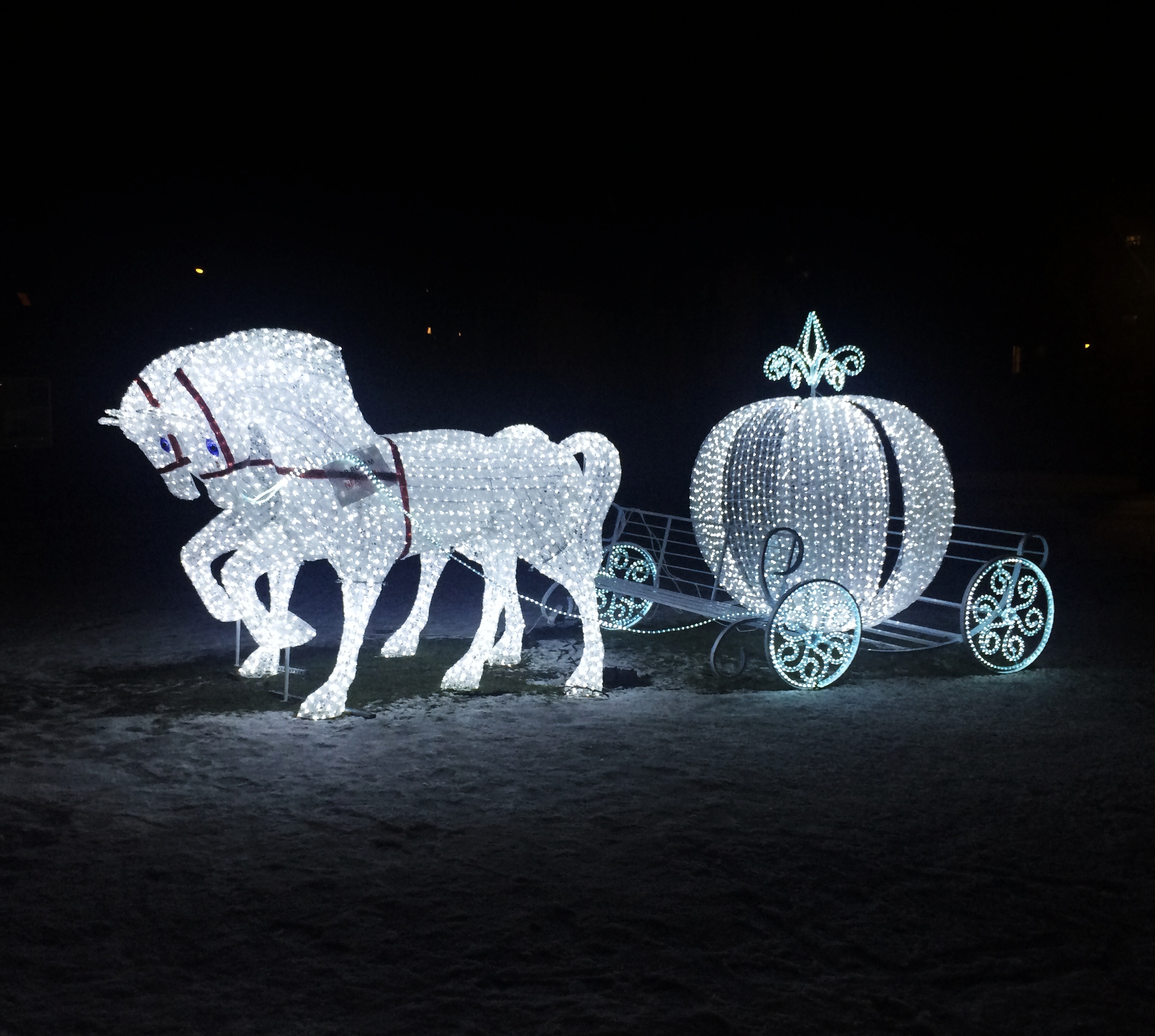
Riga-5Once upon a cold winter’s night there was a grand house that, if you stepped inside, whisked you back into the roaring twenties. Hot blazing torches welcomed the guests of the night. The most stylish ones arrived in horse carriages of pure light.

There were pearly white balloons floating about. There were strings of pearls cascading down from palm trees, white wispy feathers, and crystal chandeliers. And later there were neverending showers of golden confetti.

There were jazzy pearly ladies floating about. There were more feathers, black ties, and gentlemen who rivaled the great Gatsby in style. And later there was dancing in the showers of golden confetti.

It was a night of celebration and magic. As the guests stumbled back out into the frosty snowy morning, it was a night with two hours of sleep left.

Riga-6

(Ziemeļblāzma Culture Palace, Riga, Latvia; January 2015)


Leave a comment

Ready for tonight’s performance

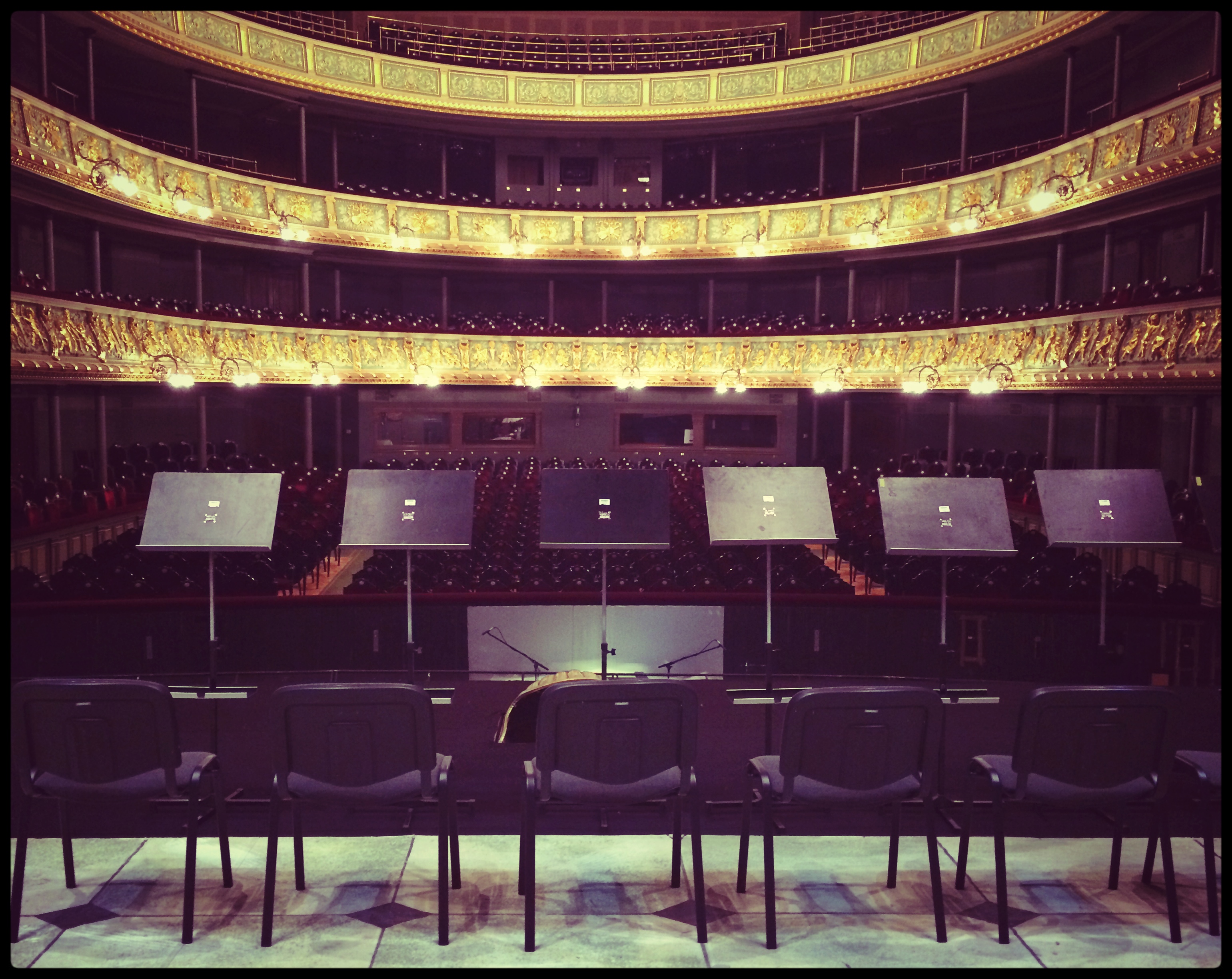
Riga-4Red velvet, a huge crystal chandelier, and four kilograms of gold make worthy premises for tonight’s performance. How lovely it would be to sit up there on the first balcony when the first tunes for the Barber of Seville shoot into the air. But alas, it was not to be this time.

Upstairs was a gorgeous red room with high windows that was once used as the rehearsal room for the ballet. This time its walls heard the most soulful arias accompanied by a single piano. And this was no rehearsal but a lovely surprise. How lucky we were.

Riga-3(Latvian National Opera, Riga, Latvia; January 2015)


Leave a comment

Gold rush blues

saloonBack to 1852 and the gold rush. When saloons were rowdy and smelled of sawdust. When bourbon was cheap. When paintings of half-dressed beautiful ladies on a picnic was considered daring art. When there was no plastic and no need for 4 “cash only” signs.

Last time I was here I drank cheap port out of a scotch glass. I debated with a bartender who looked like Dr Phil and had been banned from Canada. I listened to gray-haired hippies with cobwebbed trumpet sleeves singing blues.

This time I drank GT out of a proper glass. I was scolded by the bartender, a lady in her 60s. I listened to a fantastic gray-haired blues band and there was not a single hippie in the saloon. Life goes on. The saloon survived the 1906 earthquake. I wonder whether it will survive the next big earthquake. If that happens during my lifetime I will be back. Perhaps then it will be time for a bourbon and some more blues.

(The Saloon on Grant, San Francisco, USA; December 2014)