Lovely ones, I have a confession to make. Before this trip, I did not even know Bordeaux was a city. I simply thought it was a region that produces wines. I cover my shame with the thought that I’m not quite as bad as my American friend who thought Amsterdam was a country. Yet, what a gaping hole in all-round education, at least according to the French!
Surprisingly, thus, Bordeaux turned out to be a decently sized city – with awful traffic jams. Aside from the hopeless journeying through rush hour streets, Bordeaux seems to embrace progressive ideas almost in a hippy fashion – and most have to do with wine. For example, no pesticides or herbicides are allowed in Bordeaux, so one sees very few lawns and much overgrown weeds and flowery meadow-like patches. If you have a garden you have three choices: pluck the weeds by hand, pour boiling water over them, or let them be.
In old times, sheep would graze between the rows of vines. Now one either has sheep, plows the ground, or, again, lets the weeds be. Instead of poisons, Bordeaux and its farmers and wine growers grow forests and ensure biodiversity of those animals that eat insects and worms. Bats were reintroduced for this reason. During vine flowering season, the vines are sprayed with female pheromones that confuse male butterflies and insects who cannot find the females based on a scent gradient. They end up going into the meadows and forests where the eggs are also laid. Hopefully.
Surprisingly, with all focus on quality of the terroir and the wine, only very few Bordeaux wines bear an Organic or Biodynamic certificate. The winemakers must comply with about a million different stipulations in order to be able to call a wine Bordeaux + sub-appellations, and therefore they wish no further compliance to difficult rules. And if the harvest is at risk, many want to retain the option of taking to sturdier measures. In a world of high-performance farming and synthetic and short-term culture, it is refreshing to see that when it comes to quality wines, the market drive is for organic, natural solutions simply because people can taste the difference and are ready to pay for it. Thus, any Bordeaux wine bought in the store is most likely nearly if not completely organically produced. If only the same were true for most groceries!
Bordeaux winemakers make the wine their ancestors made. The regulations to follow to be allowed to use appellations on the bottle are an incredible catalogue of rules to adhere to. Crudely put, the end result should be that as a customer you know approximately what you get, year after year. Since the system is mainly for preserving tradition and maintaining quality and therefore brand equity, there is not much room for creativity in making a Bordeaux wine. Some bend the rules by for example adding only 1% of the second wine in the first (a Bordeaux is always a blend). Others make wines that only bear a Bordeaux label or break the rules so the bottle only says the wine is from France. We fell in love with a delicious little rosé from Chateau de la Grave that was bigger than its body: it had been matured in oak barrels like a white wine. This wine was not a typical Bordeaux but, oh, it stole my heart for as long as I had it in my glass.
The intricate system of what one is and is not allowed to do in order to make a Bordeaux wine got me lost, especially after the first glass. Fortunately, most of us only need to know where to find a bottle, and how to open it. Easy peasy, thank goodness.
(Bordeaux, France; July 2016)

 I only know that you may lie



 The aquarium of Biarritz is one of the grand, old aquariums in Europe, originating in the 1880s. Since 1933 it has moved to a fabulous, art deco building that on the outside looks like it grew from the bedrock, and on the inside feels like you are part of a never-ending maze in the ground.
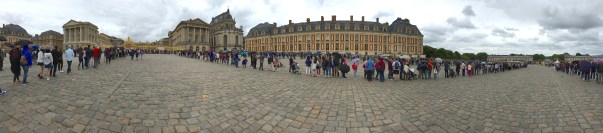
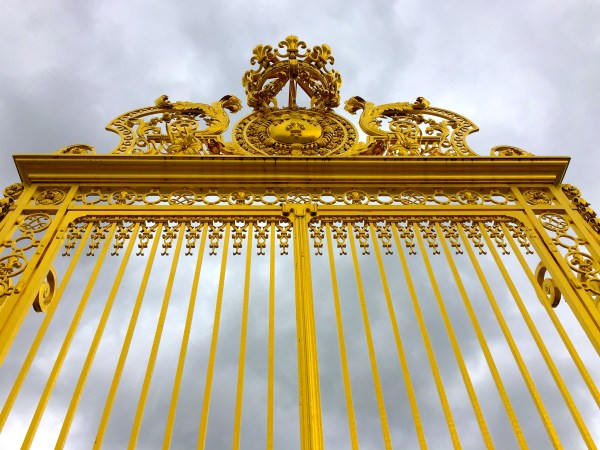 One day we ventured out to Versailles. Turns out we were not the only ones. During most of its history, Versailles has hosted a busy front yard bustling with horses, carriages, and working people. Today it can look down upon a few hundred meters of zigzagging, well-ordered lines of people waiting for entry.
 Versailles is a thing of beauty – feminine beauty by today’s standards. But a man of power and stature in the 17th century saw different ideals to aspire to. In Louis XIV’s time, the height of manliness was a soft, plump, slightly rounded middle-aged cherub face and angelic curls. A wig of course. And a man of court was to carry red or blue garments and a lace neckerchief; and wear high-heeled dancing shoes, along with shorts that left his tight-covered legs visible for admiration.
 As we watched the never-ending rows of paintings depicting some seriously flamboyant men, my sister pointed out that the function of the 17th century men’s sense of esthetics was to appear as peacocks, or those male tropical birds that show off with bright colors and dance and make decorated nests. Indeed. Louis XIV’s idea of a dream “man cave” was to decorate it with cherubs, gilded vines, Roman gods, and fountains. Not exactly a fanfare to masculinity in today’s terms.
 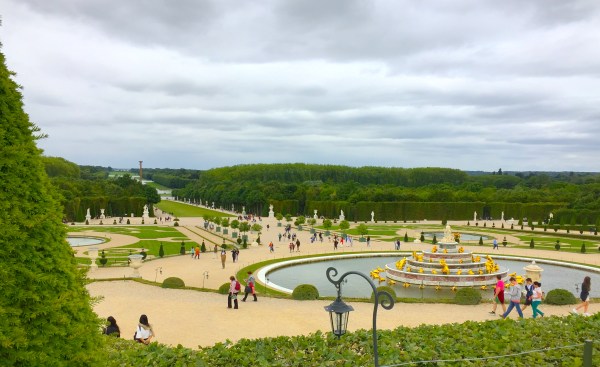 But men of the 17th century also saw warfare, murder, death, and violence as part of normal daily order of things. Being out in the battlefield, dirty and bloody, seeing comrades die was not too far from reality, even for the highest commander. Perhaps a balance was needed – and hence all the gilded vines and angels off-duty?
 As I walked through the flowery gardens of the Versailles, I could not help but wonder: were men of Louis XIV’s era emancipated in respect of a female identity alongside a very masculine identity? Or were they repressing their male identities in comparison to a strong, feminine-directed collective sense of esthetics? Did these men of the Sun King’s time truly consider cherubs cool interior decorations for their walls, or were they forced to think they needed to consider them befitting a man’s house?
 (Versailles, France; July 2016)
 As I browsed through the stock-full shelves of the Shakespeare and Company book shop, I pondered what it is that makes a city a writers’ and artists’ city. Why is it that in the 1920s Paris was the place to be, and perhaps today one should be in Berlin? Why did so many artists congregate on the French Riviera in the end of the 19th century (was it just the peculiar light?)?
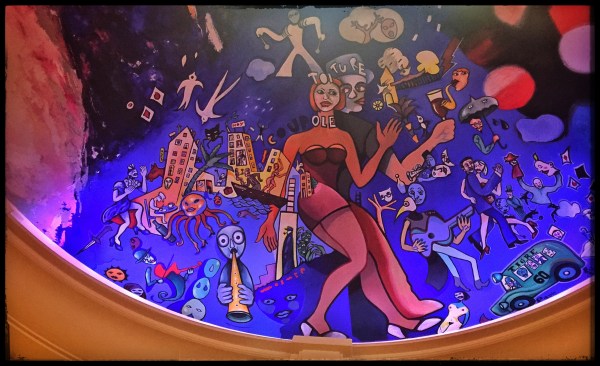 Google made me none the wiser, except for one important factor: money and cafés. A writer thrives in a location which is esthetically pleasing and has good cafés where one can observe life – but that even a poor creative soul can afford. Places like Brooklyn and San Francisco, and St Germain-des-Pres in Paris, used to be hot hangarounds for creative people – until so many came that the area became “too hipster” (now define it if you please) and the poorest but also coolest full-time aspiring artists had to move out to find yet another inspiring haunt.
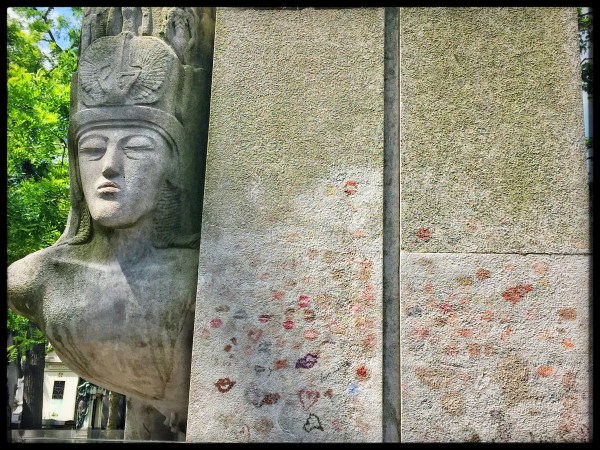 Perhaps it does not matter where one writes, as long as one is surrounded by things that inspire. Or perhaps it does help to be allowed to crash at for example Shakespeare and Company, to punch away on the age-old typewriter in the corner, or to bounce around ideas and angst with fellow aspiring writers in-between shop duty.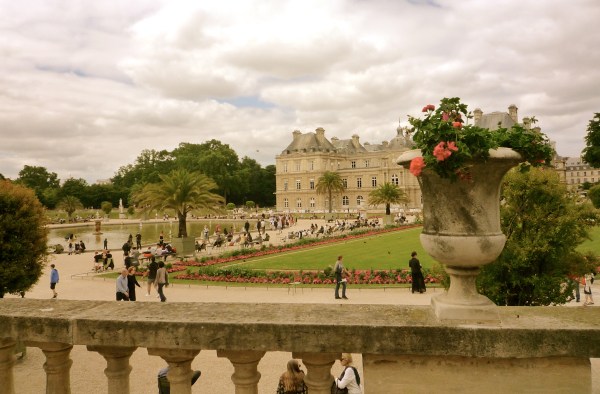


 King’s Cross-St Pancras was only a train station to me. A place that took me to Cambridge, a place of transition. Nobody told me that behind the huge buildings was a whole hipster world, with an art school, happenings, interesting buildings, and a Dishoom. Dish-yum.
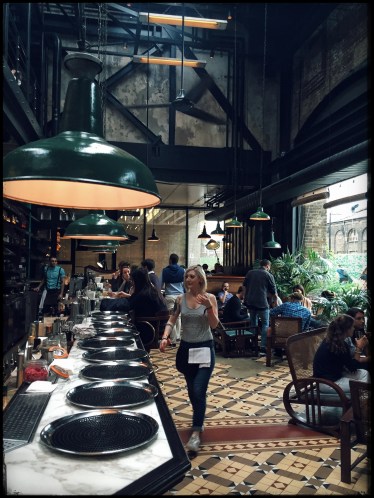 (London, United Kingdom; June 2016)
 Hello little sleepy St-Paul-de-Vence. Beneath your car-free cobble stone streets, green facades, and chirpy birds I can sense a a vibrant energy bubbling under. I wonder if I drank from that fountain and stayed here, would I morph into an artist?
  While it must be terribly hot in the summer and dark and windy in the winter, right now it is just right. Ice cream weather and a splendid day for sketching the beginnings of a masterpiece. Many people come to stay for a while, but Chagall never left. I can understand why.
 (St-Paul-de-Vence, France; May 2016)
 Here up North, gardening is serious business and all about flowers. Perhaps a bench could be in order. Or, if one has courage, a teensy weensy fountain. Or, for the most brave: a little statuette.
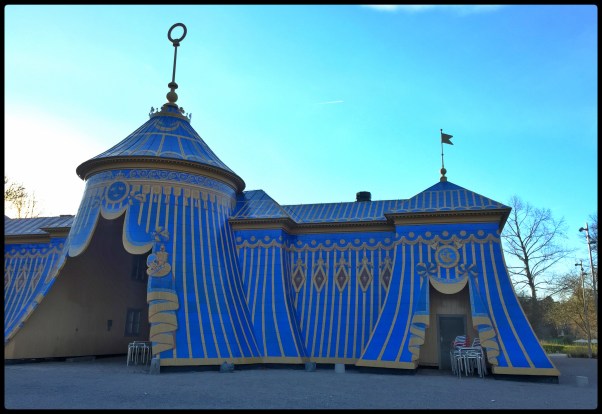 And, folly of follies, should the king become utterly completely bored with his beautiful castle, well, how about building a little garden shed, with just two wings and about 30 windows, for the king to move into? A little like a boy moving into the empty toolshed in the back of the garden? The king of Sweden did exactly this. Gustav III lived his last summers in his “garden shed” – until he was shot during a Venetian style masked ball.
  (Royal Haga Park, Stockholm, Sweden; April 2016)
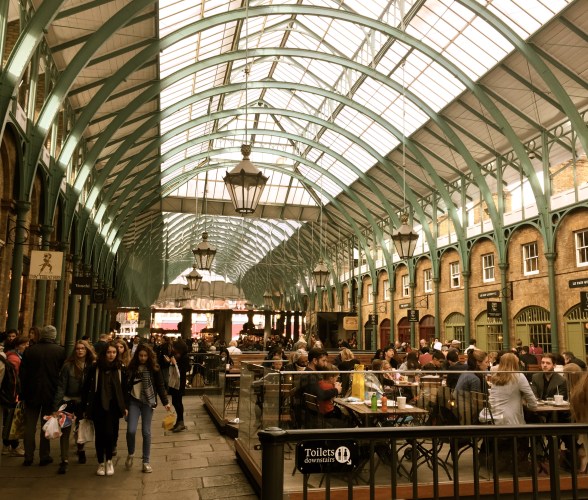 Once it was a field. Then, the suburb of gentry. Later, a fruit and vegetable market; and during its darkest times, the playground for ladies of the night and lost poets. Today, Covent Garden is a market again – and one of the most timelessly hip ones (if that is not an oxymoron).
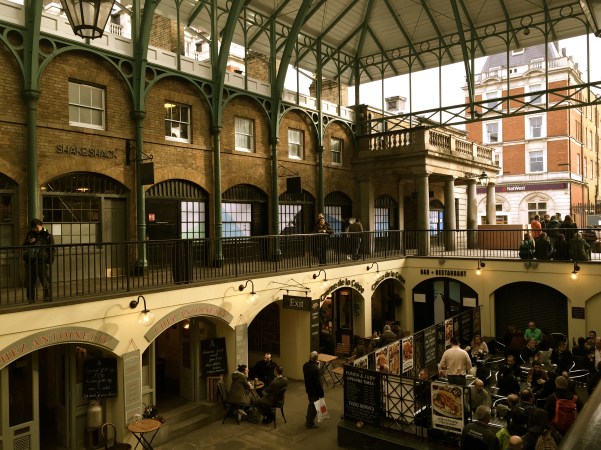 (Covent Garden Market, London, United Kingdom; April 2016)
 This blue marble