
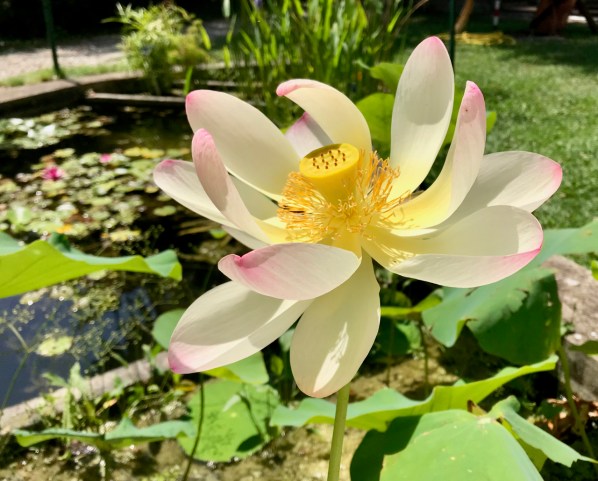
 To the buddhists, the lotus is a symbol of purity and transcendence: its feet bathe in the muddy bottom of the pond while its flowers and often leaves, too, rise into the pure air above it all. It is a reminder that one can have one’s roots entangled in mud and mess while still keeping a clear and pure mind above it all.
As I walked around the botanical gardens of Bologna I thought of how my own feet were currently so deeply embedded in the mud and mess and madness of this world. And how it seemed that the level of mud was rising dangerously close to my head. With honesty to myself I admitted that my head was probably already covered in spatters of mud, messing with my mind.
It is easy to see one is messed up. It is much more difficult to pinpoint how, and what to do about it. I almost wrote “and how to get out”, but really, getting out never helps. It is all about getting in, and working it out from the inside.  This year I have been following a personal development plan which revolves around identifying negative energy inside and around me. One of its action points is to repeat to myself when needed, “I am not my emotions”. I have found myself repeating this mantra over and over again these past few months. Another action point is to KonMari incoming energies, impressions, and matters: sort them at the door and not letting every single one in. And if needed, put the newcomers in separate rooms, close the doors, and deal with them later. I have found that my mental rooms are nearing overcrowded.
 Robin Sharma says that because a lifetime is precious and finite, there is no time for negative emotions. At all. That thinking a negative thought is to waste the time it takes to think that thought. This may sound like a highly platonically theoretic view, but when I think of all the time I spent dealing with negative emotions the past year I could probably amass a few weeks of life better spent doing other things. For example fully enjoying the botanical gardens of Bologna.
A dear friend once criticized me for being too solution-oriented. For offering my help in solving a problem when she would rather just wallow and swim in it for some time, until perhaps a solution slowly emerged. She gently told me that not all people want help, because not all things can be helped. Her words hurt me so much that I could not bear to spend time with her for two years. Some years ago I learned that not all problems can be solved. Not immediately, and perhaps not ever. Accepting the company of a deep injury for the rest of my life was possibly the toughest lesson I have learned in life so far.
And so I continue to trudge on through this life with my feet in the mud. As long as I remember to stretch upwards into the clean air, keeping my head relatively pure and sane like the lotus, I will be alright. 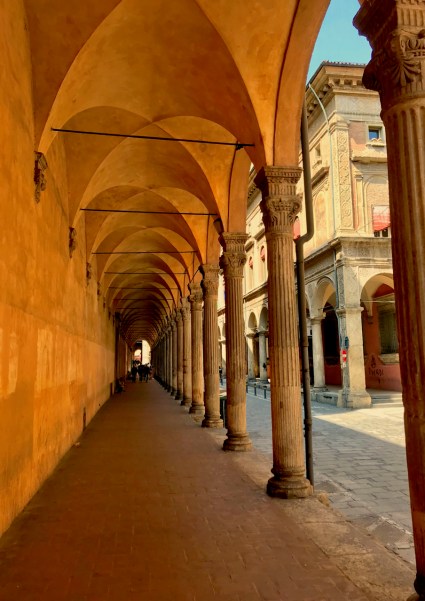 (Bologna, Italy; July 2019)
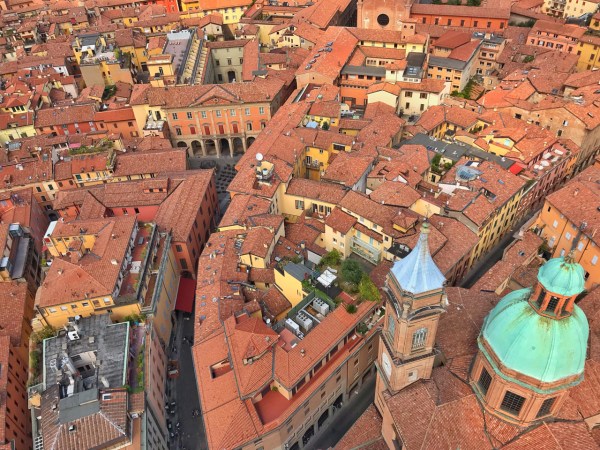 Bologna was once a Roman city. It is easy to see this from above: all streets lead to the central square (and one presumably to Rome). But Bologna is older than Rome: it was originally the home town of many Etruscans.
  Each city has a local flavor of oddity. Bologna’s flavor is a penchant for building towers. Up to 100 towers in the late medieval ages, historians have concluded. Why? Who knows, but certainly one ruler would not have budgeted for all those towers so there must have been quite a few builders. Perhaps it was fashionable to have a tower in one’s backyard, ensuring that the family was viewed as having sufficient importance?
 (Bologna, Italy; July 2019)
 We did not really plan to visit Bologna. It was never on any bucket list of ours. We knew of Bologna, of course – because of bolognese sauce. Who wouldn’t?
 It turns out Bologna is the perfect city to get lost in for a weekend – literally lost. No map needed. The maze of old Roman streets contains the most quaint and interesting discoveries. And it is nearly impossible to encounter bad food in the old town area. I cannot understand why Bologna is not better advertised as a city break destination.
  (Bologna, Italy; July 2019)
 Oh, such a change: from wheat noodles and sauce, lard on rye bread, and very few non-meat options to an abundance of antipasti, tapenade, bread, and cheeses. Fresh gelato. Wonderfully fat green olives. Aioli. Salvation.
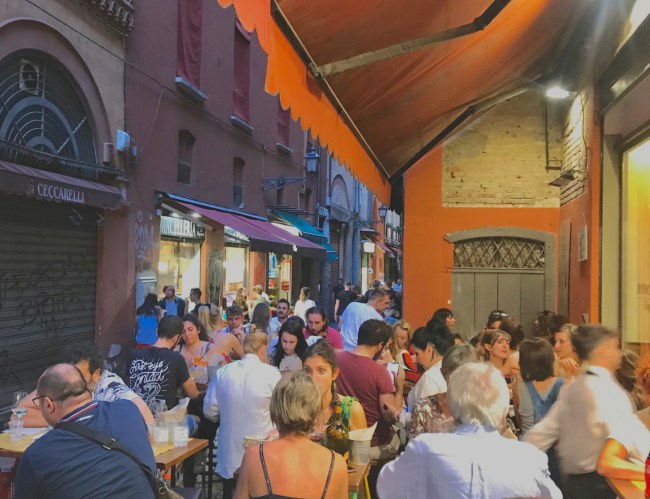 I find myself exposed to several “food capitals” this summer: I am still in San Sebastián, the city with the most Michelin stars; and writing about the food capital of Italy: Bologna. What else can one say but “go there and eat everything that’s put in front of you”? It is bound to be a success.
  (Bologna, Italy; July 2019)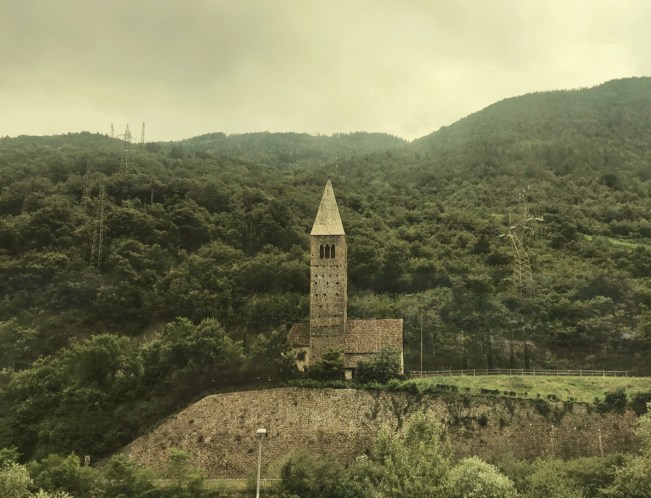
 Swoosh: across the Alps and into a way-too-fancy airport hotel where I spent a good 6 hours in a meeting. All I truly experienced of Italy was the sveltering heat outside and a plate of penne all’arabbiata.
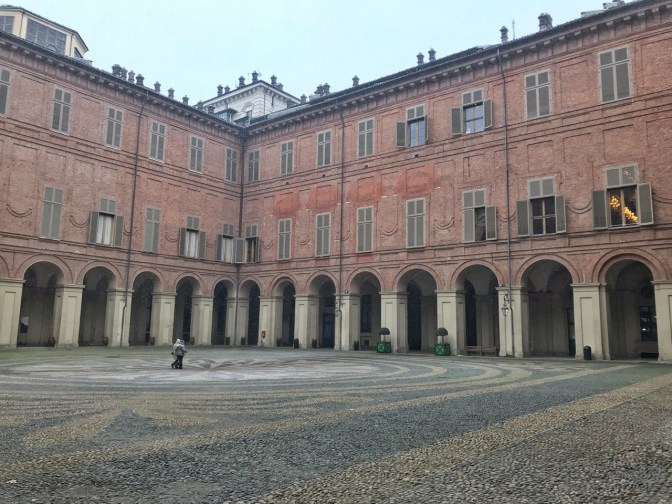 Snow in Turin. We are not even on high altitude and yet this place in Italy is as cold as up North in Denmark.
  (Turin, Italy; January 2019)
 Good morning, Turin. And what a cold and bitter morning it is. Even the rooftop pigeons are nowhere to be seen. Come to think of it, how come we only see pigeons when the temperature is relatively warm? Where do the thousands of pigeons living in any major European city go to on cold winter days? They must have places to warm up of which we know nothing. They must have secrets.
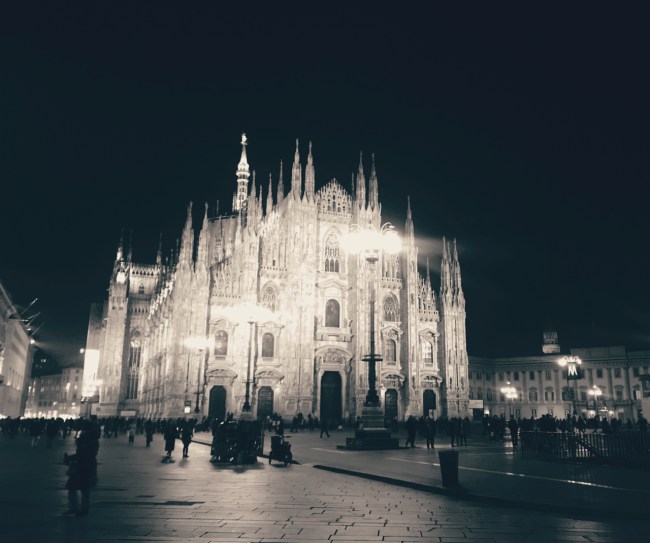 This was my first visit to Milan without visiting the
  I took this picture so I could complain about the uniformity and lack of identity of business hotels. But now I think such a complaint would sound obnoxious, privileged, and humble-bragging about my supposedly “glitzy” working life. Yes it entails lots of sleek hotels in exciting cities. Yes it entails lots of flying and yes I have two airline elite tier membership cards.
 This blue marble